A framework for making tech more accessible to all

From AI to cybersecurity, web pages to mobile apps, a new book offers tools for including people with all kinds of disabilities.

By Shelly BrisbinMay 19, 2026 4:14 pm, ,

Most people can agree that accessible technology is a good thing — even an essential thing.

Accessibility allows people with a variety of disabilities to use the web, apps or other digital tools required to do one’s job, attend school and perform life tasks.

But what’s actually needed to make full inclusion happen, and what can organizations do to make it happen?

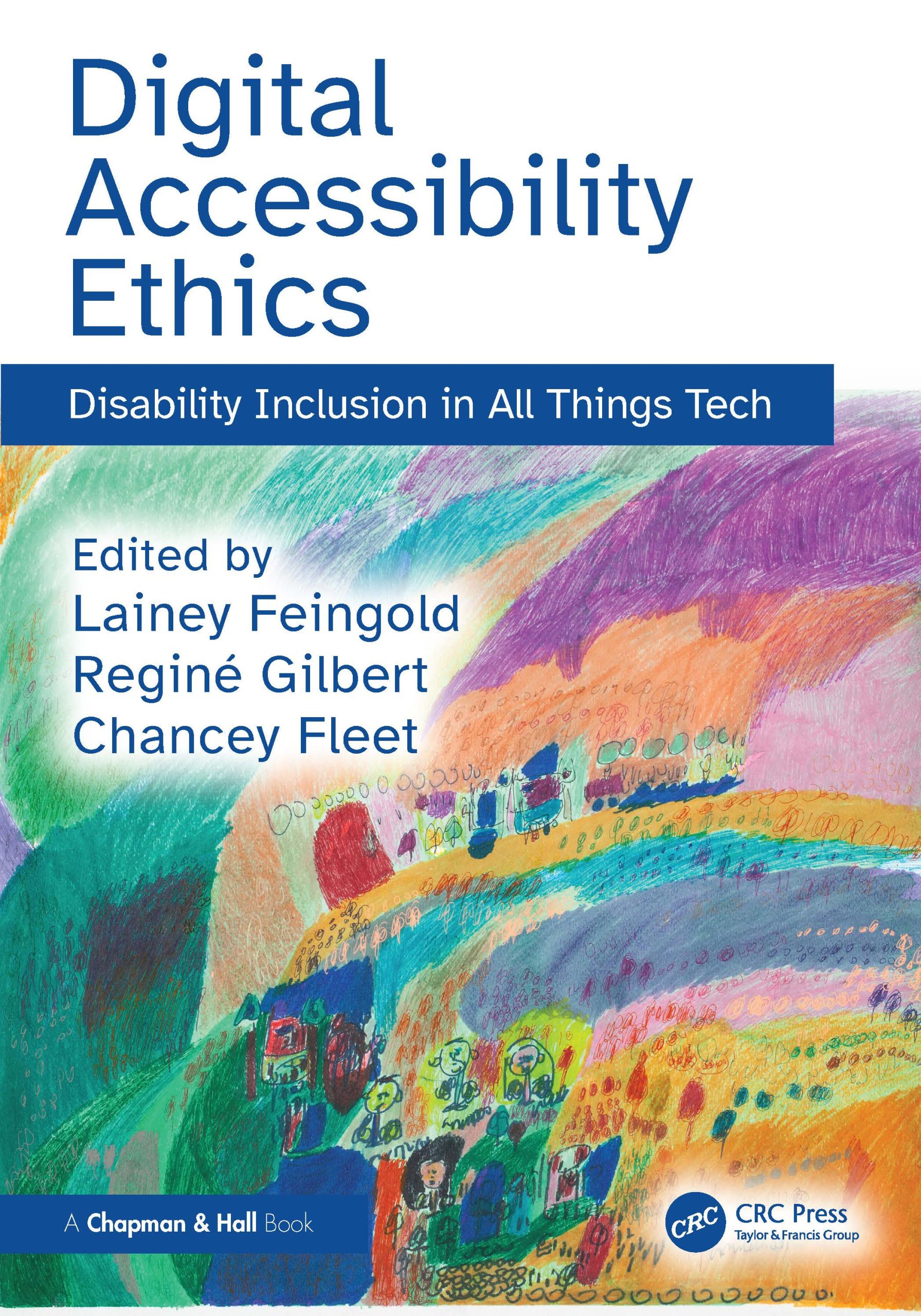
These are a few of the questions at the heart of “Digital Accessibility Ethics: Disability Inclusion in all Things Tech,” a new book written and edited by experts in the field, respresenting many disabilities and many parts of the world.

Lainey Feingold is a disability rights attorney and one of the book’s editors. Jutta Treviranus is the director of the Inclusive Design Research Centre and professor at OCAD University in Toronto, formerly the Adaptive Technology Resource Centre and the author of a chapter on AI ethics.

They spoke to Texas Standard about the book. Listen to the interview in the player above or read the transcript below.

This transcript has been edited lightly for clarity:

Texas Standard: Lainey, I want to start with you, a big broad question. What is digital accessibility?

Lainey Feingold: That’s a great question. And you kind of hit it on your intro because digital accessibility is the quality of technology that allows disabled people to fully use it in all ways, in all capacities. So employees using tech for work, students applying to college, doing their work in college, finding out what the lunch menu is — absolutely everything.

Tech should work for everyone. And that’s the premise of our book.

Well, your book advances what you call a “digital accessibility framework.” What is the framework and why is it needed?

Feingold: Yeah, we’re introducing here, for the first time, a digital accessibility ethics framework. And the framework is basically an actionable three-part tool.

One part is values, because ethics are always based on values. So values like honesty, transparency, privacy, inclusion, things that make the difference between disabled people being included or not.

This is not an academic book. We want this framework to be in the world. So the other two parts of the three-part tool are actions to bring those values to the workplace, in the school, the radio station, everywhere, and questions.

We call it the power of the pause. What if we stopped while we’re buying our next tool or writing our next document and said,” hmm, who are we excluding? Who are we including?” So actions, questions and values — that is the framework and it’s needed because too much of today’s technology still doesn’t work for disabled people.

So people who aren’t disabled may think about providing accessibility as sort of the right thing to do, as kindness or a charitable act, or they see it as avoiding risks from the government or from lawsuits. Are those framings too simple or do they fit into the framework you’ve created?

Feingold: Couple answers to that: Yes, too simple. Some fit in the framework, like legal compliance is an ethics value. And so, avoiding legal risk is part of the ethics. But when you skip accessibility, the risk is far greater than legal risk.

We talk in the book about health and safety risks. Someone from the Bahamas wrote about what happens when emergency information is not presented in a way that deaf people can get it because there’s no captions. Or blind people can’t get it because it hasn’t been designed right. So there’s health and safety risks.

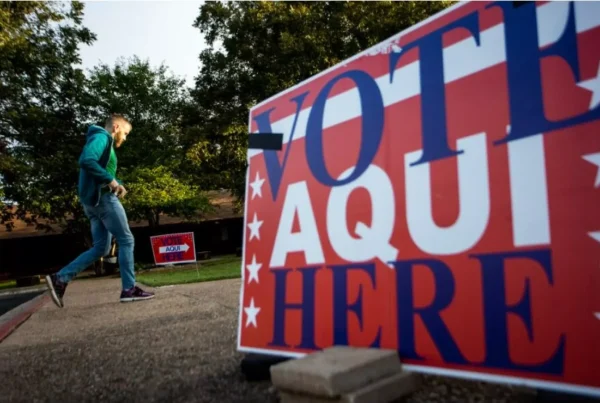
There’s risks to democracy. We have a chapter about voting. Everything is online today. So what if a candidate’s website is not accessible? What if the ballot isn’t accessible?

So risks are part of it, but accessibility is not charity, and it’s not kindness, and we can’t depend on it. Accessibility is a civil and human right around the world, so this framework and the values are grounded in the human rights in the full inclusion.

Right, so it’s the right thing to do, but it’s because it’s a right that you are extending to everyone.

Feingold: All the values, like privacy. Like if a system, say cybersecurity, we have a really good chapter on that. And you have security systems to log onto your computer. If a blind person or a person who can’t hold the mouse can’t get in, then they have to ask someone and the security’s broken.

So it’s all those things that make up the ethics framework.

Jutta, I wanted to bring you into this conversation. You wrote an entire chapter about the ethics of accessibility and AI. And in it, you say that AI amplifies existing patterns. Why is that bad for accessibility and inclusion?

Jutta Treviranus: Thanks for asking that question. I want to add to Lainey’s response, because one of the things that we’ve learned, certainly during the pandemic and during many crises, is that if you create a world that works for the individuals that are struggling, that are currently facing barriers, the world, the systems that we create — whether it’s employment systems, emergency systems — will work for us when we find ourselves struggling.

And we are definitely in an environment and in a time when there’s crisis after crisis. And so the ethics are not just to benefit people who are currently facing barriers or people with disabilities, they benefit everyone. They would benefit us when we age, when there is an emergency, when there is a disaster, when there’s a pandemic.

I think that’s a really interesting point of view. I can think even of something like image description, right? Sometimes it happens that the thing isn’t loading on my website and the image isn’t there. And if somebody had taken the time to do image description, I would at least have that to rely on.

So even as somebody without a disability, you could benefit from this just thoughtful framework and including that from the beginning.

Treviranus: Yeah, and accessibility is choice. So giving people the choice, recognizing that people are in different situations, different circumstances, and they have different needs, and therefore there are choices.

It isn’t just a single entry into all of the things that we need access to.

So looping back to AI and this amplifying existing patterns, I think you’re starting to answer that question already. But why is it bad that it’s just continuing sort of habits that we’ve relied on?

Jutta Treviranus: It’s bad for a number of reasons.

So as you said, AI copies what it knows about you or knows about all of us from existing data and it replicates that. So it’s taking what it knows to do from what we’ve done and it makes it more efficient and scales it.

If you think about people with disabilities at the moment, or anyone that is currently struggling, the existing system is not very good. But AI amplifies and automates the discrimination that already exists there.

So if I’m an applicant for a job and I put in an application, if AI is used to determine who is going to get the interview, it will look back to see who have been successful employees in the past and what is the average ideal employee. And if I’m not average, if I not like those individuals, then I’m not going to get employed.

Similarly, academic admissions. It will try to find a pattern from the past, a successful pattern from past. So AI is not only pasting our past onto our future, but if you look at what data does AI have about us, it’s very biased data, and it’s missing many individuals. So those individuals will become invisible in the AI systems as well.

Disability, for lots of reasons, is not represented well within the data. The information about disability, or that is on the web, is a bit of a cesspool of discrimination, stigmatization, myths about disability, disability as somewhat pitiable, etc. So AI will amplify that in the content that’s produced, but especially in the decisions, when it’s making decisions about people that are not average.

You’ve raised a ton of questions in my head. I guess the first one I want to ask is are there prompts that we can ask AI to make as corrective, or is this something we need to go back and teach differently. Because like you said, what’s available is so bad for it to learn from.

Treviranus: Yeah, so many people think it’s a data problem. Why don’t we just add data about people with disabilities and their needs into the systems? And there are emerging AI technologies where some of that can be done.

But unfortunately, unless we address the fact that it is a statistical replicator or that it’s feeding on statistics and that quantitative statistics drives AI, even if we have full proportional representation of people with disabilities, it will still roll with the average.

So one of the things that I’ve been doing throughout my career is gathering data about people. So this is over 40 years. I’m asking people, what do you need to participate in society? What do you need to thrive? And the answers are so diverse.

And in order to plot them, because it’s a data set, it looks like a starburst. And I call it the human starburst. And what you’ll note about the human starburst is that 80% of the needs are clustered in the middle. They’re the average needs. They’re very close together. They’re similar.

And then as you move from that center, there are needs that move further and further apart. And then at the edges, it’s very jagged. And the needs are very different from each other.
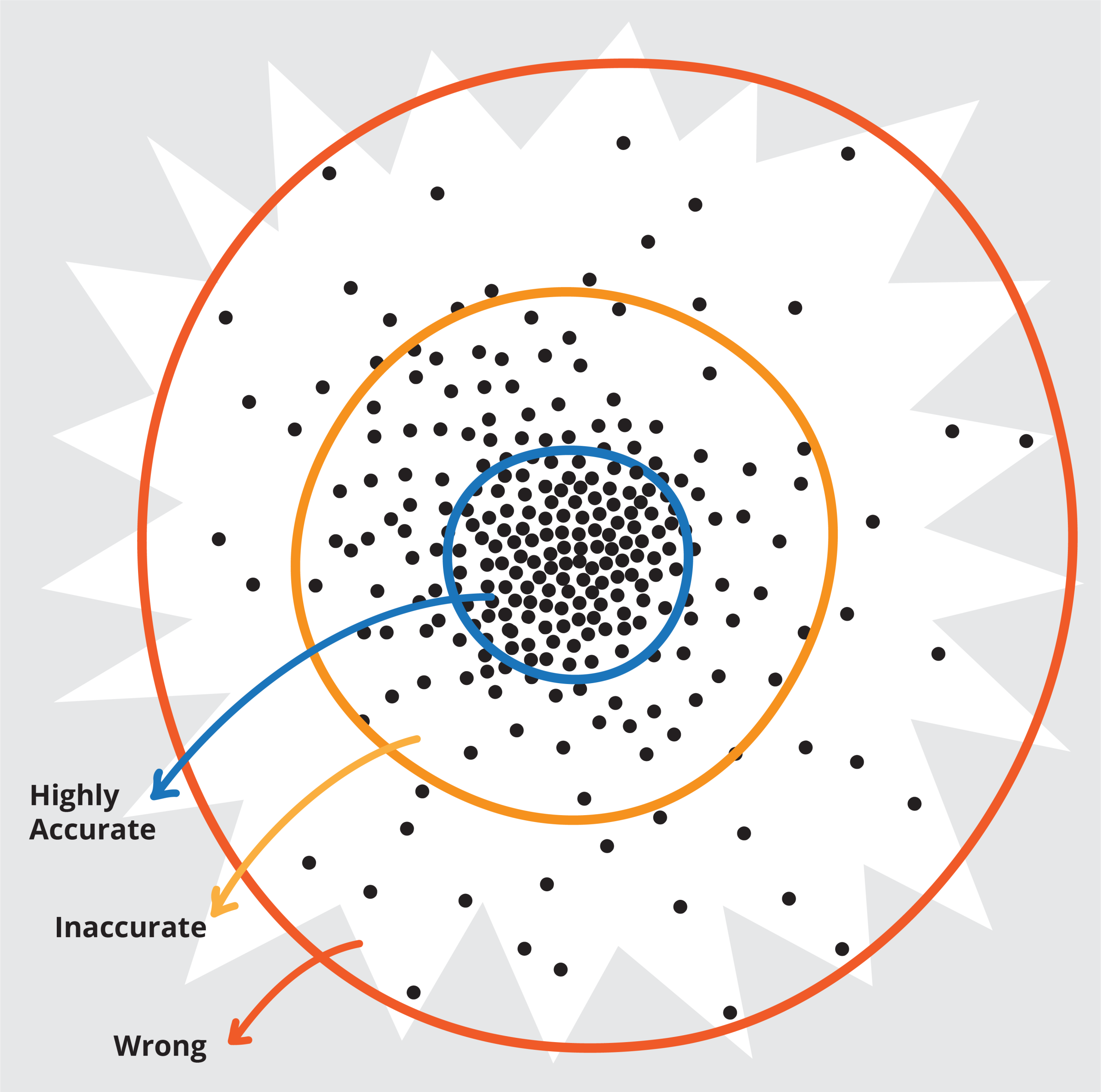
Courtesy, Jutta Traviranus

Starburst showing the needs that are not met and the needs that are inadequately met.

People with disabilities and people with intersectional barriers tend to be out at that edge. And since we’re using statistics to make decisions, and this predates AI, what we know about statistics is any determination that’s made about a population using statistics will be right for that 80% in the middle, or generally right. It’ll be inaccurate as you move away from the middle, and it’ll be wrong as you get to the edges.

And so the decisions that AI makes about people with disabilities whose needs tend to be out at that outer edge and very diverse will be wrong. And that has huge implications.

So adding data is not going to change things because the data about the individual will still be very different from the next person.

You use a phrase in the chapter that you wrote for this book that’s really striking and this gets to your point that the critical needs of the minority can be outweighed by meeting the trivial needs of the majority.

So we talked about meeting those basic needs to thrive, but I think this gets into another point, which is something that would make a huge difference in the life of someone with a disability is outweighed by this 80% who this is a “nice-to-have” versus a “must-have,” right? Could you talk more about that?

Treviranus: Yeah. And so of course, this is not a pattern that AI introduced. It’s in our culture. It’s our conventions. So if we think about majority-rules decision-making, or democracy without human rights, if we rule with the majority, the majority will be far more complacent. They will focus on more trivial needs.

So if, say, we’re in a neighborhood and we’re voting whether to spend budget on the critical needs that will keep a child alive — which will not be of interest to most of the people in the neighborhood — versus “let’s fix the potholes in front of our driveway”… If we’re simply using majority rules and people say “this is what my priority is” and “this is what I want to vote for,” then the majority will overrule the minority.

And this is a pattern that happens in all sorts of ways — marketing. If we choose with economies of scale, there’s no economies of scale for something that only a few people require, even if it’s very, very essential. And so a firm will not pick a product to invest in that doesn’t have impact in numbers, or that doesn’t produce a large customer base.

So what happens when we use statistics to automate and we turn our decisions over to a statistical replicator — and that’s what AI is, it’s mechanized statistical reasoning — then we are amplifying and automating that pattern and we’re taking away the choice.

When the choice was human, then somebody could say, “oh, but wait, this is an exception. We should do something different here.” But we’ve taken away that opportunity to make the exception to recognize that the way that we’ve been making decisions here statistically or with the majority or with economies of scale doesn’t work here and it’s gonna be wrong.

And one area where it’s most striking to me right now is in medical decisions. So, even before AI, we were pushing towards evidence-based medicine. And that is wonderful. We should use evidence about what works and what doesn’t work.

But if that inclination to use evidence-based medicine means that we don’t actually look at the individual and recognize that they’re not average, then that harms that individual. And that’s what’s happening.

We have what’s called, and this is a fairly difficult term, iatrogenic death and illness, meaning death and illness not from the illness, but from the treatment, because the wrong choice has been made about the treatment.

And so AI is used now to make many, many medical decisions in medical calculators and triage. And the decisions are therefore about the average using the data of the average and not the individual. And so people are dying because of that.

Well, Jutta, I want to get to something that my producer Shelly and I talk about a lot. AI has led to a lot of amazing tools that do uniquely benefit disabled people, from detailed descriptions of one’s surroundings to making autonomous transportation possible for people who can’t drive.

So how can we square these wonderful advances with the kinds of risks and inequities that you’ve been talking about?

Treviranus: People with disabilities experience both the extreme benefits and the extreme harms of AI.

When we’re using AI to become more average or to be able to do the average things, then it works wonderfully. It’s a life-changing system. There are so many tools that are emerging that help to address the barriers that people are experiencing so that it can bridge those barriers, whether it’s seeing, hearing, writing, speaking, etc.

But even there, there are issues because it works the best for the people that need it the least, that are closest to the average, and it works for the worst for people that need it the most.

So frequently there’s the assumption that it’s been fixed. An employer will say, “well, you can use AI to do that, so we don’t actually need to help you in any other way.” And that creates this additional disparity. It fragments the disability community, where some people are benefiting greatly, but the people that are struggling the most are not benefiting.

But yes, you’re right. You were asking how do you square that and I think what we need to do is to rethink how we design things as well, and consider, start not from the middle of that human starburst that I was talking about, but to design AI and other systems right to the edge because that’s where we also find the greatest innovation and that’s where we can predict the cracks or issues or crises to come because people who are already struggling are frequently the ones that are most vulnerable to the emerging crises and that will mean that we are better prepared and that the AI will be more innovative, because it isn’t the complacent middle that comes up with the innovations.

You don’t need the change, but the individuals that are out at that outer edge of the starburst that really need change to happen and that have great ideas because they have to live resourcefully and constantly be thinking about how can we change things for the better.

Lainey, I want to get back to you, you wanted to add to that?

Feingold: Our dream for this book is that it gets used. And so we have a couple chapters, like there’s a chapter written by a woman in Australia who has a facial difference, a facial disability. And her chapter is about what it means when she relates to AI things.

Like we’re so used to having facial recognition on our phones. What if your face is not the typical face? What if you’re not in the center of that starburst, you’re on the edges? So she writes about her experiences with that and for suggestions to make the AI work for her.

There’s another chapter that’s called “Tech-Facilitated Discrimination” that’s all about AI tools at work. And the author talks about bossware, those technologies that employers use to count your keystrokes or make eye contact and make sure you’re in the thing. Well, what if you don’t have eyes and you can’t make eye contact? And what if you have autism and you’re not looking directly at the camera?

Of course, there’s intersection with all this because if you’re a dark-skinned person, if you are a Black person, there’s other issues with the AI recognizing your face. So in every chapter, we have these takeaways where both these authors, for example, are saying here are the values that are impacted when you use facial recognition or you use these other technologies that are using AI.

And then there’s a chapter about buying tools. Everybody is buying stuff with AI in it. So how can we stop the flow of bad AI, the bad part that you to write so eloquently about before we buy the things? What questions can you ask when you’re buying a new program, when you’re buying employee tools, when you are buying stuff for your students, what do we ask to stop it?

So the AI piece is so big right now, like you’re recognizing, and I think the beauty of the digital accessibility ethics framework is there’s going to be new technology tomorrow. Like today it’s all AI. But the values are going to stay the same, and the process of asking questions and taking action so we live those values are gonna stay the same or are gonna grow. They’re not gonna disappear. Hopefully we’re not going to live in a world without values.

I bet there are a lot of people listening who are a bit intimidated by this conversation, who are intimidated by the idea of AI in general, or just don’t feel like they are on the leading edge of technology or innovation. Can you talk about why this book is also for them?

Feingold: You know what else? I think a lot of people are intimidated by the word “ethics.” We have heard that already, like, “oh ethics, this is not something I can relate to.” You know, “I’m not an ethicist.”

We got people, advanced readers to say things. And Karen Nakamura, who’s a professor at University of California — Berkeley, kind of answered that question and saying this book is a must-read for anyone who is involved in design, in procurement, which just means buying things.

You know, what program are you using for your social media? And are you using the tools for inclusion that are already built in? Must-read for anyone who is involved in the design, procurement, or use of digital technologies, that was her answer.

So the book is full of stories, the book is full of strategies. We have 39 authors from 10 countries, about half of whom are disabled. Together, we have 600 years of experience in accessibility and disability advocacy and work, so we want this to be a tool everyone can use, and we try to write the chapters in ways that there’s something for everyone.

This framework, you mentioned technology is going to change. AI is the thing right now. How does it keep pace as technology evolves and changes?

Feingold: That’s a really important question, and one we struggle with. One thing we want to say is that this is not a set-in-stone framework, like, “oh my god, I have to study for a test so I know all these things.”

The values — we say there’s 10, but some of those 10 have three words in it, like privacy, security, confidentiality. So these are, I would call them universal truths and values that are going to be part of our society for the next technology.

The actions and questions we give throughout the book — all 39 authors, about 150, maybe 200 questions — are all samples. You know, when you go into your workplace and you’re saying, “oh wow, we’re buying a piece of technology so our students can access their books online” or access your course material…. The actions in your campus may be different, like, “oh, we really better make sure that our lawyers who are negotiating our contracts to buy things know about this.”

Because there are entire conferences about buying technology, which they call procurement. But really, all of us are buying. What apps are we using? Often disability isn’t even mentioned. Digital accessibility is like the baseline for disabled people being able to use technology. It’s that baseline. So we really tried as hard as we could to make it future-proof.

That was a big motivator. We can’t have a book come out, because we’ve been working on this book like three years, turning the final proofs in November. So it’s already, by May, when we’re having this conversation.

There’s new information out there. There’s new technology. But the values and the idea that we should be asking questions along the way and we should be taking actions to stop the exclusion that is currently happening, that’s gonna work with whatever technology comes down the road.

Jutta, is there anything else you want to add?

Treviranus: So I think the values that we’re talking about here are to everybody’s benefit. I mean, there are systemic advantages by virtue of following these values. And I think we can all admit that at the moment, we’re not going in a great direction.

And unfortunately, what we’re doing is we’re employing tools that are going to take the choices away from us. And it started with other disruptive technologies, but it certainly is present now with AI, where we’re handing our choices, our decisions, over and we are handing them over to replicate or to copy the way that we’ve been doing things.

What I like to say about AI, but I think it relates more to ethics, is that it’s like a magnifying mirror of our current conventions and assumptions. And it gives us time to reflect, is this really the direction we want to go? Are we, with the way we are acting, with the decisions that we’re making, heading in a good direction for humanity as a whole?

Those ethical precepts, the framework that’s there, is allowing us to step back and think, how does this benefit all of us as a society?

Feingold: I want to add one thing. I said these values are going to be our values. They’re so basic: privacy, confidentiality. Nobody thinks about the fact that if you go and buy something online with your credit card, you can do that independently. It’s designed for independent use, but it’s leaving out people if it’s not designed for disabled people, too.

So these are the values that feel universal, but we acknowledge in the book, maybe there’ll be new values coming in. In the conclusion, we say we’re proud of these 32 chapters, but we can envision 32 more and 32 after that, with people applying this framework, molding the framework to their needs.

Like I said, we have 10 different countries represented in the author group, and we want this to be something that is relevant globally. And that means the framework of values, actions, questions is solid. The pieces of it will change as we move forward.

So we really want people to understand that we really want anyone to use it. So it’s not academic. Don’t be afraid of the word “ethics.” Don’t be afraid of the word “accessibility.” Back to the beginning, you know, accessibility is just so we can all be part of the digital world. That’s what it is.

Treviranus: And one of the questions we encourage people to ask is who are we missing with this particular choice who is now excluded in using and benefiting from our design.

Feingold: And what assumptions am I making about who’s going to use it? Oh, I’m building something. Well, a blind person would never use that. But no, blind people can use everything. It’s not the blindness that creates the barrier. It’s the technology that we don’t design and create for everybody.

If you found the reporting above valuable, please consider making a donation to support it here. Your gift helps pay for everything you find on texasstandard.org and KUT.org. Thanks for donating today.