‘Just good-time stuff’: Bob Livingston talks new memoir, Cosmic Cowboy years and Joe Ely

‘Gypsy Alibi’ details the musician’s life – from Lubbock roots to “Viva Terlingua” and beyond.

By David BrownDecember 17, 2025 1:22 pm, ,

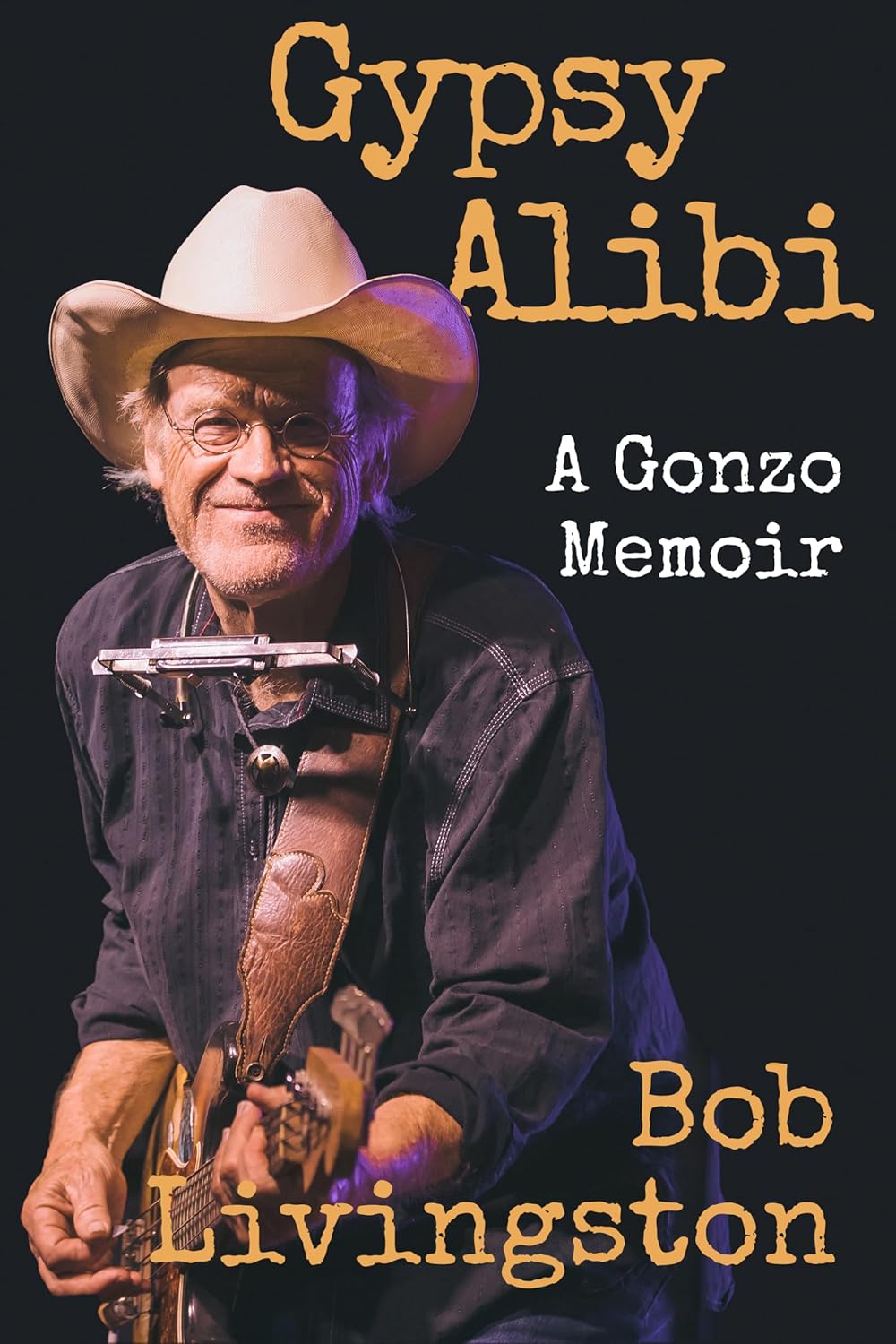
When Texas Standard first spoke with Bob Livingston about his new memoir, “Gypsy Alibi: A Gonzo Memoir,” it was before news about the passing of Texas music legend Joe Ely had become widespread.

In his memoir,  Livingston has a chapter on Ely, and so a new conversation with the artist was picked up from there. Listen to the interview above or read the transcript below.

This transcript has been edited lightly for clarity:

Texas Standard: Bob, I feel like whenever we talk about Texas music of a certain time and place – say from the, oh, I don’t know, late ’60s, early ’70s – in and around Austin, you’re sort of a connective tissue that ties together so many artists.

You founded the Lost Gonzo Band, so closely tied to Jerry Jeff Walker, lots of musicians from Lubbock who came down to Austin during that special time in Texas music. How close were you to Joe Ely?

Bob Livingston: So I was going to Texas Tech in about 1968 and ’69 and I had heard about Ely and I wanted to see him and I went to this little club that he was playing in Altura Towers. It was like an apartment building.

But they had a little club and I came in to see them and he’s like sitting on this amplifier and he had a hi-hat, like a drummer’s hi-hat, for a back beat and he has this funky guitar that he had bought off a bum in Venice beach – it was seashells glued all over it with glitter. And he had pulled the seashell off, but the glue and glitter was still there.

And so he was really in an attached way and he would fidget with things and get up there and play. But he was playing these songs that, you, know, I was not aware of – Dave Van Ronk and Howlin’ Wolf and stuff like that. And so in a way, he was a big influence on me, to bring me to that music.

And, you know, we became friends, but I mean, I got out of Lubbock before he did. I took off and then reconnected with him when he got down to Austin. So we were good friends and hung out.

And I remember once he asked me to, he says, “well, I was just thinking, you know I need a bass player and maybe you had come out and play with me on some gigs.” And I said, “yeah, well, what kind of music you doin’ now?” And he said, “you know, pissed-off rock.”

“Really? Well, what were you pissed about?”

He goes, “everything.”

You know, he was just a character, and very artistic, but a very loving, interesting man.

What is it about Lubbock, do you think? I mean, you think about all those musicians. We were talking about Joe Ely, there’s you, of course, Buddy Holly, Terry Allen, Mac Davis, Waylon Jennings, Delbert McClinton, Lloyd Maines… Flatlanders, including Joe, but Butch and Jimmy Dale.

Why have so many great musicians come out of that place?

Well, you know, they’ve been trying to answer that question for a long time. I don’t know if you ever heard about the movie “Lubbock Lights” that Amy Maner did. It was a documentary. And I just remember Terry Allen in the movie said, “We’ve always been trying answer that question. Close as we can get to it is aliens.”

So just there’s not a lot to do in Lubbock. And if you’re a kid, and especially interested music, you learn the guitar, the British Invasion comes over, it just blows everybody up over there. And they, everybody got guitars and started singing and even writing their own songs at a pretty early age.

And of course, you know, I was not aware of Mac Davis. He was older than I was. And of course Waylon didn’t really connect. But these other guys, the Flatlanders and Terry Allen, you know, they were just iconic characters.

You know, we’re in Lubbock, in this very conservative place, but these guys were artists and I just gravitated toward them rather than other people. And it’s just they grew out of the cotton fields, I guess. They chopped cotton like I did as a kid.

» RELATED: Friends say ‘Lord of the Highway’ Joe Ely brought West Texas on the road with him as he made a global impact

What turned you on to music in the first place? Was it seeing the Beatles on Ed Sullivan like so many people or was it something else?

Well I was already into music. My brother Donald was a musician – taught guitar, taught students. He taught Jesse Taylor his first guitar lessons and he was a big influence on me and he could play anything and play all these songs.

The first thing I got was a ukulele. I learned how to play that. “Nothing could be finer than to be in Carolina in the morning.” And I just, you know, you put the top two, three, the chord structures are a  lot the same. And I just got into it.

And then when, of course, the Beatles… I skipped church to go down in the basement and watch the Beatles on TV and it just changed everything in the world – everything.
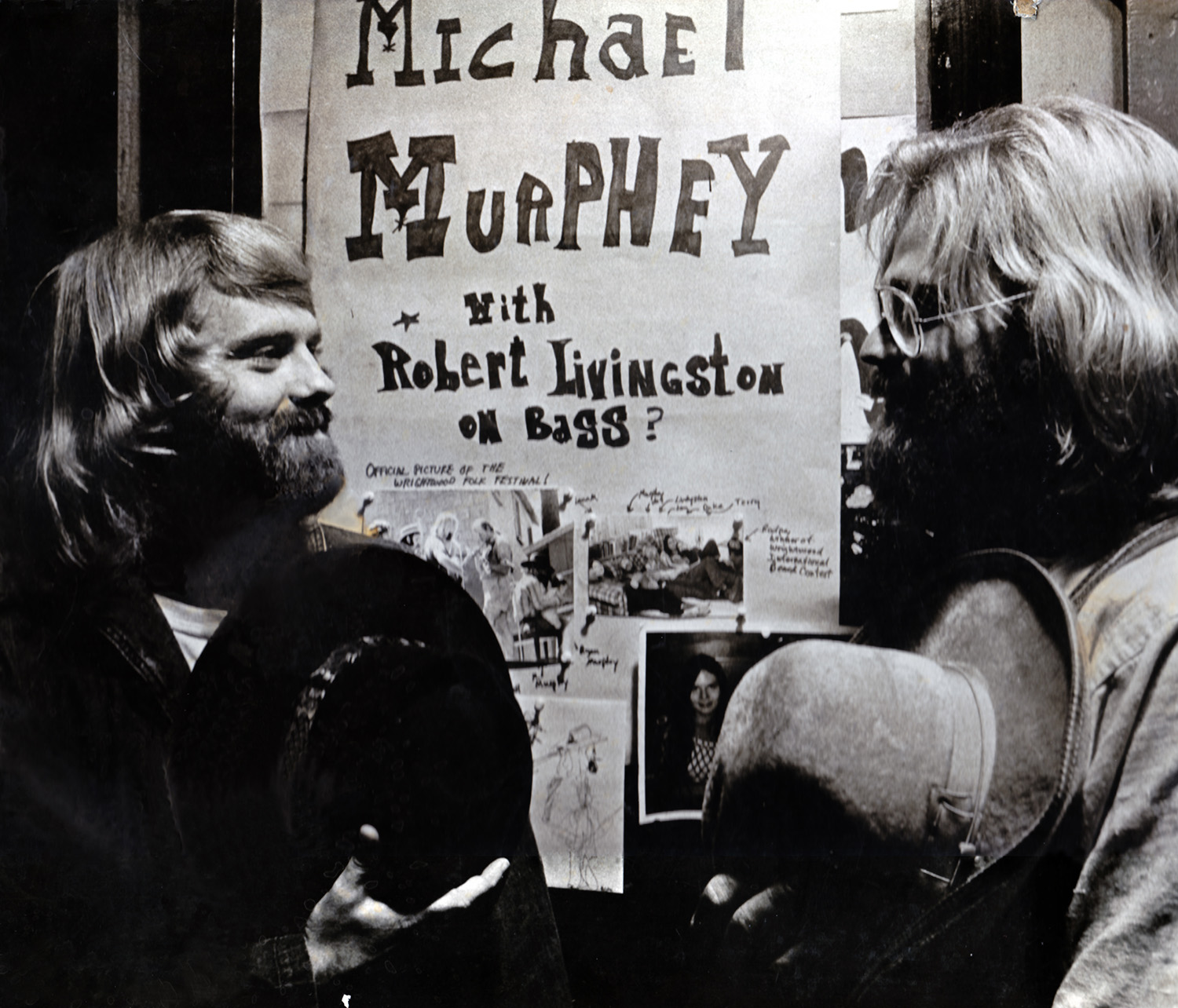
Courtesy of Bob Livingston

Michael Martin Murphey (left) and Bob Livingston chat outside the Rubaiyat in Dallas in 1971.

I know you were getting up with Michael Murphey way back in the early days when you were really getting serious, becoming a professional. And Michael Murphey wrote this song called “Cosmic Cowboy” that came associated with the music that you were such a big part of.

I’m wondering if you can answer the question, what is a cosmic cowboy, Bob?

Well, we had been playing with Murphey. We made that first album, “Geronimo’s Cadillac,” and I used the word “cosmic” a lot for some reason. It’s “cosmic this” and “that’s cosmic.”

And he started calling me Cosmic Bob. And he actually made a belt, a hand-tooled belt. I still have it with “Cosmic Bob” on the back, and stars.

So we were in New York City and it was “cosmic this” and “cosmic that” and up on the roof of the Holiday Inn by the pool and I might have said “he’s Cosmic Cowboy” and he started writing the song and he wrote it on the spot and it’s kind of the same way “Home with the Armadillos” – it represents sort of a character, a vibe of cosmicity that we were part of.

And it was cosmic. And the “cowboys” is just because we were from Texas and Gary Nunn, of course, he was a real, you know, in a way… I mean, he rode horses and he did ride and rope and hoot – and Murphey, as well. So we’d go riding horses up at Gary’s farm up in Oklahoma, and we would ride meet Indians on the trail – these Cherokee Indians that were riding the other way.

So a lot of that was happening and we were playing music, but we were Cosmic Cowboys.

How did you, as a cosmic cowboy, get hooked up with Jerry Jeff Walker?

Well, I had met Jerry Jeff in Los Angeles with Murphey. Murphey took me to the Troubadour and Jerry Jeff was opening for a Linda Ronstadt. And he came out on stage and sat down and his pants hiked up. And I noticed these boots, the coolest boots I’d ever seen. They were like hieroglyphics embossed on there or something. And we became friends.

When he moved to Austin, I was playing with Murphey. We had made that record. We were fixing to make a new one and Jerry Jeff showed up at a rehearsal and it was an instant band. And he said, “man, I got these songs and I’d like you to play on me.” So we, the whole band started, we made that first Jerry Jeff MCA record that has “L.A. Freeway” on it.

And, you know, Jerry Jeff looked for the world’s most primitive conditions to record in and Murphey… Like world-class studios. So we kind of went back and forth and the band just seamlessly was able to switch back and forth and we played. Jerry Jeff decided for good and we left Michael and that first album we made with Jerry Jeff was the one with “L.A. Freeway,” but the second was “Viva Terlingua.”

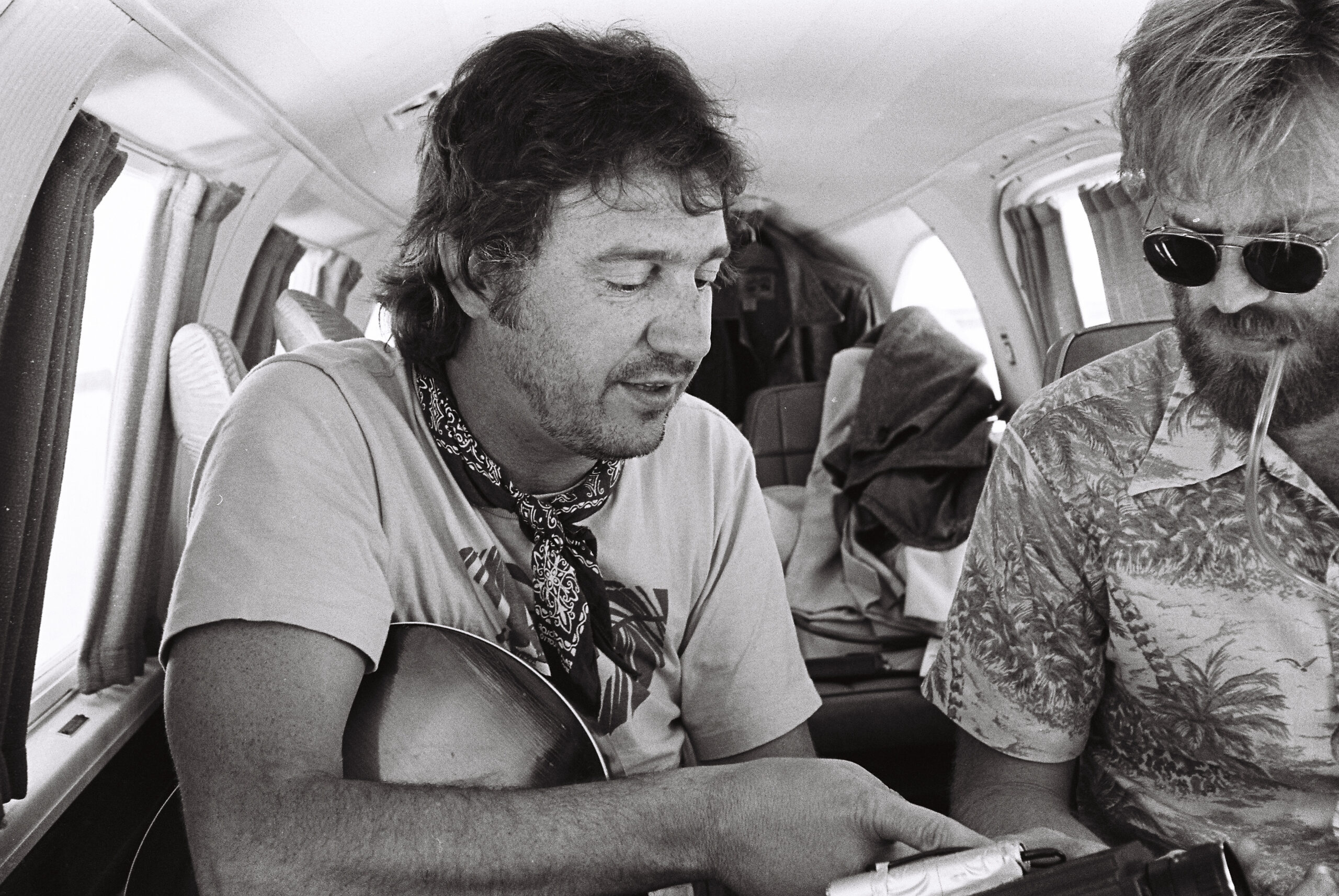
Photo by Gary P. Nunn. Courtesy of The Wittliff Collections at Texas State University.

Jerry Jeff Walker and Bob Livingston on tour in private plane.

I was gonna say, talk about recording in primitive conditions. I know there was all kinds of patching going on, trying to get the power out there to the building and all that kind of stuff.

Tell me a little bit about your participation in “Viva Terlingua.” Did you think that that was gonna be that seminal album that it became?

No, not at all. All of a sudden, we’re in the dance hall in Luckenbach, and Jerry Jeff had made friends with Hondo Crouch. He was like his surrogate father.

And so we showed up, and at some point when we were in New York, we were out for a walk and discovered this world-class mobile recording studio that was just parked on the streets. They were taping something inside a building, I think it was a Broadway play.

Jerry Jeff knocked on the door and said, “what is this?”

“Uh, it’s a mobile recording studio.”

“And can you go anywhere?”

And he goes, “yeah, we can go anywhere.”

“Well, will you go to Luckenbach, Texas?”

And they just looked at each other and said, “well, I don’t know where it is, but we’ll be there.” And they showed up.

And there was wires running everywhere and my mic’s hanging from the trees. And when they plugged the thing in, it blew out the power for miles around. And, you know, we’ve got our guitars, Jerry just mixing a big pot of sangria wine. We drink a little sangria and pick a song. When they finally got it together, they plugged it in and it worked.

And, you know, we had this really great sound system in there. But it was just ragtag, making up songs on the spot. He literally took that sangria wine recipe that he was making for us and made it into a song.

» GET MORE NEWS FROM AROUND THE STATE: Sign up for Texas Standard’s weekly newsletters

Right, right. Yeah, I think a lot of people know that tune.

You know, even though you’re so closely associated with that Austin music scene and that moment and some of the biggest names in the business at the time, I don’t think many people know what happened to you as the scene took a completely different turn in the ’80s – sort of became more punk rock and a little bit more pop maybe.

How did you wind up being an official ambassador of music for the U.S. State Department and what did that even mean?

Well, you know, my wife and kids had gone to India and they were in India for about four months and I was really missing them. And I just said, well, “why can’t I go there? “Jerry Jeff was on some solo tour with John Prine or something and he was gone.

And, I just went and I met a Fulbright scholar who was giving speeches all over the country and workshops. And I just thought, how cool you can see the country. And he said, “well, it’s a state department sponsor. And if you can convince them you’re an expert in anything from hydroponics to legal aid…” – he was a legal aid expert from Vanderbilt  – “…or country music, you may be able to get a gig” and told me to telegram New Delhi, which I did.

I told them “I’m a musician here.” And John Inman, great guitar player, he was also there. And so we traveled a 17-hour train ride over to Madras, and we auditioned for this public affairs officer named Timothy Moore. And halfway through the audition, he stopped me and he says, “hold on just a minute.” And he reached down behind his desk and he pulled out a banjo. And he said, “I’ve been waiting for you to walk through this door for a long time.” He was this disgruntled bluegrass player that worked for the state department, but he wanted somebody to play with.

So in 1987, we went over and did about 60 cities in India. And that started it all out. And it was just so much fun and interesting and what an adventure and seeing the country like this and playing for these people.

And then it became “hey, will you go to the Middle East? Will you go the Africa?”

“Yeah, we’ll do it.”

So, yeah, we went and played in Yemen and Syria, places like that.

Photo by Scott Newton. Courtesy of The Wittliff Collections at Texas State University

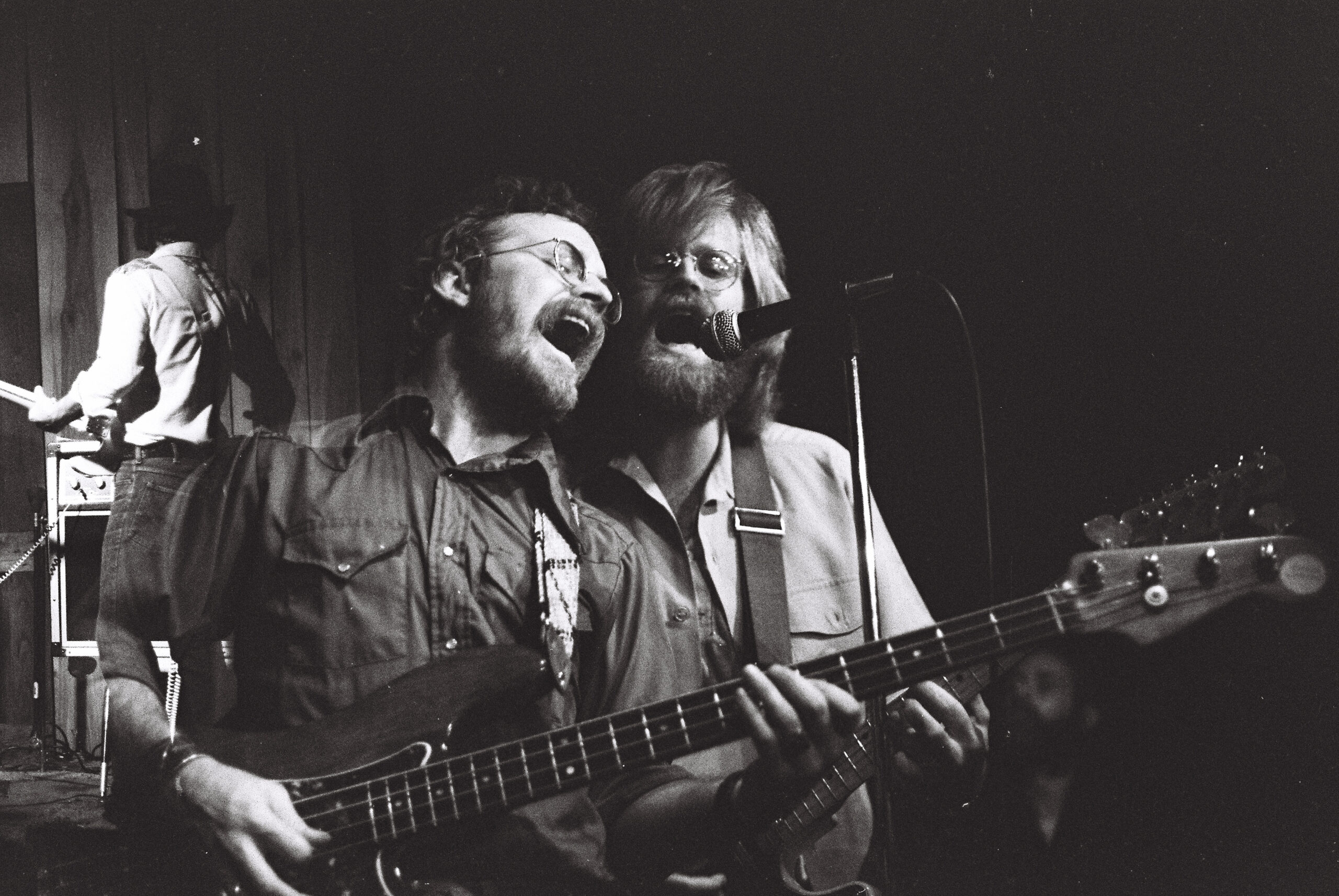
Gary P Nunn (left) and Bob Livingston singing in Lost Gonzo Band in mid-1970s.

And you’re sort of instructing people or informing people, telling people the story of American music, I guess.

Yes, exactly. When I was looking for an angle for this tour, I said I’ll do a history of American folk and country music. And they liked the idea. We would play, I’d tell them stories. I became a storyteller, sort of, by trying to inform the audiences of what this is about. They’d never heard of anything. They didn’t have any idea what country music was.

When I was introduced in Surat, that’s where Gandhi went to the sea to make salt, and he said, “Mr. Bob is here to play country music of America and to learn the country music of India.” So it was kind of like, you know, we’re here to play country music – what country? That’s the question, because they all have those folk traditions. And we tried to parallel them with the American folk tradition.

So should I be calling you “Mr. Ambassador” now or what?

Yes. That sounds good.

You know, it’s just so much fun and such an adventure. And they call me that. You now, Texas even… I can’t remember what governor it was, but he made me an ambassador of goodwill.

That’s so cool. “Gypsy Alibi” sort of seems like the perfect title for your story because it seems like one way or another, Bob, your time with the Lost Gonzo Band or traveling around the world, teaching people about American music and learning more about the parallels with others… Seems like the music almost became more than a career for you.
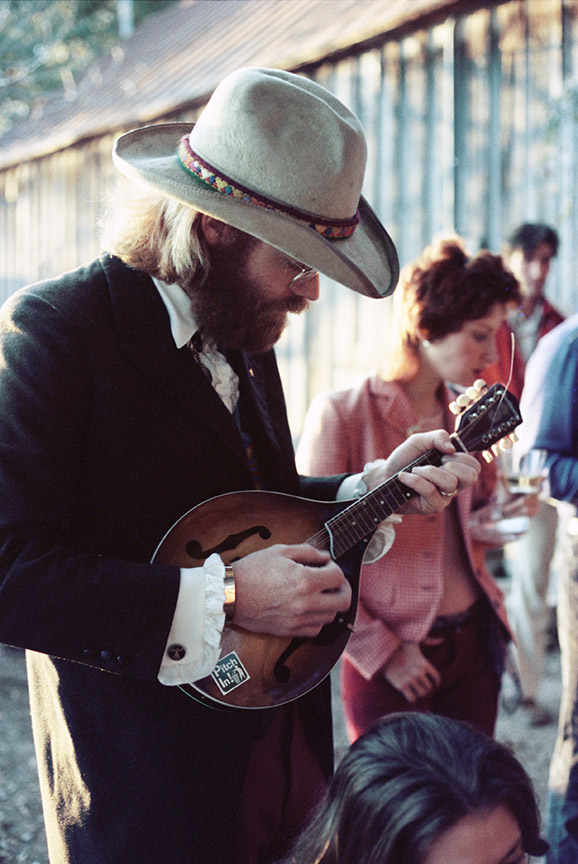

Absolutely. You know, music has a tendency to do that. People say,  you’re struggling, you don’t make much money, why do you do it? And none of us can answer except that it’s so in your soul and you just want to play. You want to be in front of an audience and you want make music – you want to write, you wanna tell stories.

And it became much more than career. I mean, I couldn’t imagine going anywhere. If you go on a vacation or whatever, I have my guitar with me and I always just depend on that and think of myself that way.

Yeah, it’s much more than a career. It’s a way of life.

Well, you’ve been really generous to talk with us about your book. I want to geek out just a little bit here for some of the music geeks that may be listening. And I say that with affection.

What’s your favorite guitar? You got a particular go-to or you got a favorite bass or a six-string or what?

I got them all. My guitar right now is a Gibson J-60. It was made in the ’90s. I’ve always played a J-45 acoustic guitar. The neck broke and I never was able to fix it right.

So great guitar and it’s been with me for the past 15, 18 years. It has a great pickup, it has this full range. It’s great to play and I do a lot of solos and it is like an orchestra and I play that.

As far as bass, I’ve got this 1967 Fender Precision. Which, you know, in ’66, that’s when they switched over from Leo Fender’s stuff in ’67. But they still had, on this particular bass, they still have all those 60’s parts and they put that together and it’s a kind of a one-of-a-kind bass and it’s the best. It just sounds so great.

I’ve got a couple other basses, a couple of other guitars, but these two are my go-to.

I can hear the love in your voice when you talk about that P-Bass. That’s so cool.

Alright, well, let’s have a little bit more fun here. Imagine, Bob, somebody wants to put together a playlist of five songs that define the music scene that you helped create. So you’re just down to five now.

What are you going to recommend for that ultimate playlist from Cosmic Bob to the rest of the world? What’s those five songs on that playlist?

Well, of course, we had spoken about the other day, London Homesick Blues, which was Gary Nunn’s song that he wrote about being cold and lonely in London. Actually, we’re mixing that album, “Cosmic Cowboy Souvenir.” Gary went with Murphey to do that in the Abbey Road Studios, I might add. But then he was left alone to his own devices and he picked up that guitar and he wrote that song.

When we recorded it, by the time we got to the second verse, everybody in the room knew the chorus, “home with the armadillos.” And they just took to it. So that’s gotta be right in there.

And, of course, “Cosmic Cowboy” – Murphey’s song – was a big influence as far as being able to pin the time and place where we were.

I have a song called “Original Spirit” and I always start my shows with that song because it puts me in the groove. It’s kind of a groove song and I can notice immediately right off the bat, people’s feet tapping. So I know I’ve got to them already. So it’s got the mojo for me to give to the audience and they get right into it.

Bob Livingston at Luckenbach 1974. Photo by Scott Newton. Courtesy of The Wittliff Collections at Texas State University.

I suppose another wild, crazy song that we would do with Jerry Jeff is “Man with the Big Hat,” which was a Steven Fromholz song. Everybody sang and when you get to that part – “the man with the big hat is buyin’, drink up while the drinkin’ is free – everybody holds their long-necked beers. A sea of long-necked beers in New York City, at a thrash rock called Tramps and displaced Texans from everywhere came to that show and they know every word to every song.

I remember the sound man, when I asked him how it sounded he just goes “It was so loud. It was so loud, I couldn’t believe it. I’ve never heard a louder band, but it wasn’t your fault because the people were so loud that was screaming and singing and I had to turn you up louder and louder.”

So that’s that, and of course “L.A. Freeway” is a big one, and just a lot of those songs still stick with you, and the people that wanted to hear. I’ve got a few, and I just wrote one with Michael Hearne about “Viva Terlingua,” and it’s called “Viva Terlingua Nights.” And so we’re going to be putting that out pretty soon.

That was a big time. And that album meant so much to a lot of people. We never knew it at the time because we’re just working. But, like Michael Hearne said, you know, he’s like 17 years old, heard that record, went out and bought it and learned every song.

I remember Dennis Quaid, I did a show with him and Dennis Quaid told me, “when I was a kid – 17, 18 – “Viva Terlingua” came out and I bought that album and all my friends bought it and we learned every song. We bought guitars, we started learning how to play.” He said “that was our ‘Sgt. Pepper.'”

That’s beautiful. That is a beautiful way to express that feeling.

I think the book’s going to have that similar effect on folks, because you know what ties this together? You’re describing all those songs. It’s the story, isn’t it? I mean it all comes down to the story.

Yes, that’s true. And you know, it’s a story of our lives and I was able to live it and it’s so rewarding, really, to have people come up and tell you, like Dennis telling me that, you never know how far something you do, how it reaches.

And, Bruce Robison, he said, “we listened to that so much and I listened to your bass and you had such a great sound, such a funky sound on your bass.” And Walt Wilkins told me that they tried to emulate the Lost Gonzo Band with his band and those harmonies and stuff because there were a lot of harmonies. And it was just good-time stuff.

It wasn’t something you’re hearing on top 40 radio. But still, I never played a gig with either Murphey or Jerry Jeff or Ray Wiley or any of those people that it wasn’t packed to the rafters. So that music really struck.

If you found the reporting above valuable, please consider making a donation to support it here. Your gift helps pay for everything you find on texasstandard.org and KUT.org. Thanks for donating today.