The kernel of reality found within the plots of dystopian novels might be one of the biggest reasons the genre tends to stick with readers. Think of the way books like “1984” or “The Handmaid’s Tale” have long been used to reference political, cultural and social currents since their publications.
For such a story to take place even closer to home could certainly leave an even greater impression.
Such is the case with the novel “Brother Brontë.” Set in Three Rivers, Texas, in the not-too-distant future, the story’s plot weaves in tech industrialist villains, book bans and police crackdowns in a way that might have some readers thinking about recent headlines.
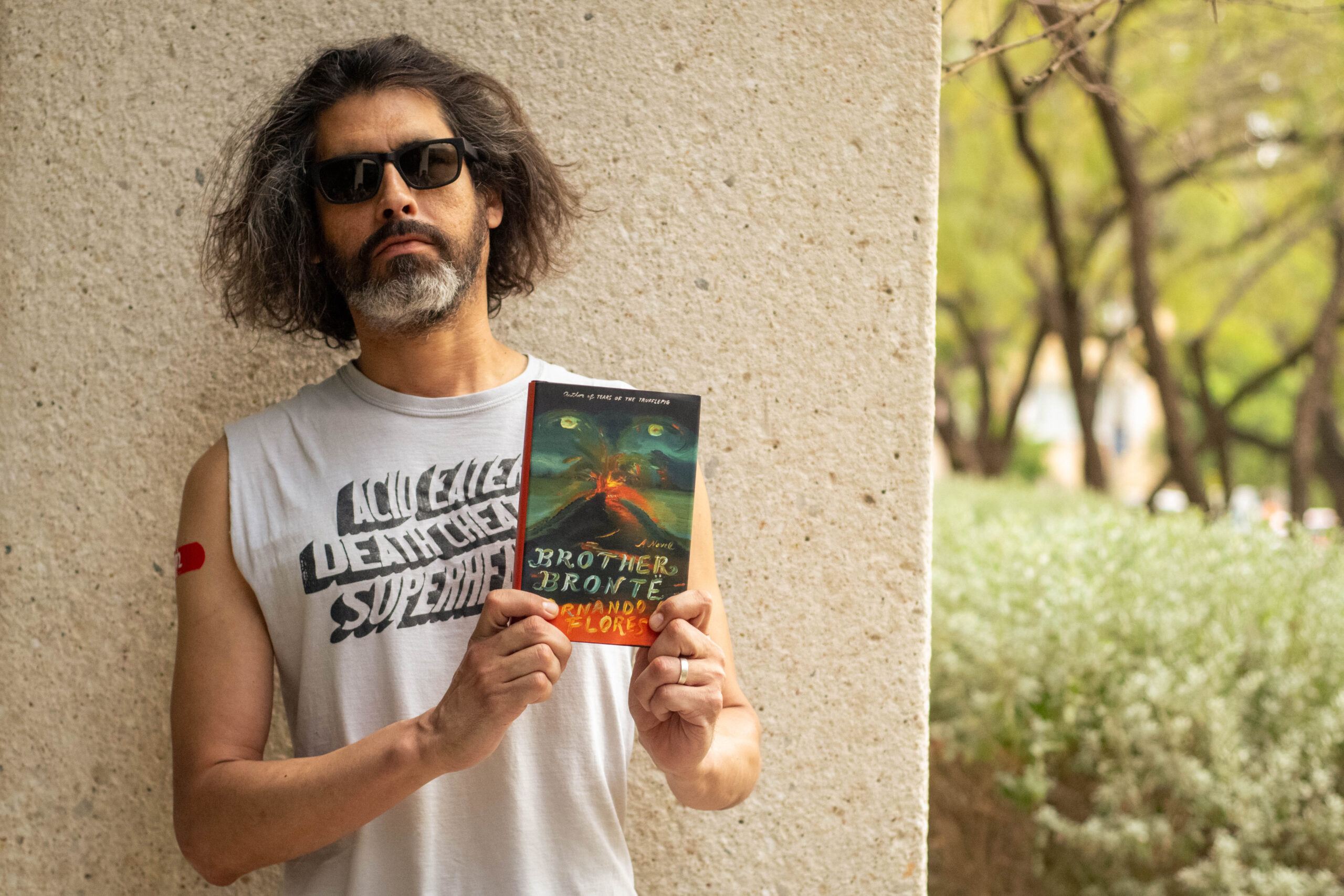
The book’s author is Fernando Flores, a Mexico-born writer raised in the Rio Grande Valley and now living in Austin. Flores stopped by the Texas Standard studio to talk about his book ahead of his appearance at the upcoming Texas Book Festival. Listen to the interview above or read the transcript below.
This transcript has been edited lightly for clarity:
Texas Standard: So from the start, the setting of your book is interesting. Three Rivers, which is a real place – today, a small rural South Texas town, but in your novel, it’s taken on quite a different character.
I know you grew up in South Texas in the Rio Grande Valley. Was there something about South Texas and perhaps the changes you’ve seen over the years that you really wanted to highlight with your depiction of Three Rivers?
Fernando Flores: You know, I don’t really think that I set out with any kind of agenda when I started writing this book. I’m kind of skeptical about having an agenda when starting a project, because then I’m just focused on the idea. Then I think it devolves into something like a novel of ideas for me. And I think I can’t approach it that way.
For me, it just came like a variety of things.
Usually like growing up in South Texas, and driving up and down from Austin to the Rio Grande Valley, you know, you pass through Three Rivers. And sometimes when you pass through, like at night, in the distance for a long time, you’re driving and there’s nothing. There’s darkness, darkness for hours.
And then all of a sudden you see the speck of something in the horizon. And it almost looks like they’re like the Wizard of Oz or something as you get closer and then, as you are there, you see these big glowing structures and you realize “oh, it’s like an oil refinery.” This is like a small oil town.
So, to me, that magical sense of like what can this be, this town … and also the name “Three Rivers.” You know, whenever we think of a river, we think of a singular river. Say we think of two rivers. All right, we’re comparing two rivers.
But three rivers? I think like the number three. Like three is a magic number, these kinds of things. All these kinds of thing were just like starting points for the setting and what this novel ended up becoming.
 Your previous novels draw from South Texas as well. Your first few were part of a trilogy. Where does “Brother Brontë” fit in?
Well, I think I call them like an unofficial trilogy. And I think, like, I changed my mind at some point.
Like, now I think that my unofficial trilogy of South Texas – if you want to say weird or dystopian kind of books – that first starts out with my first novel, “Tears of the Trufflepig,” which came out in 2019. And then my following book was “Valleyesque,” which is a collection of short stories. It was published in 2022.
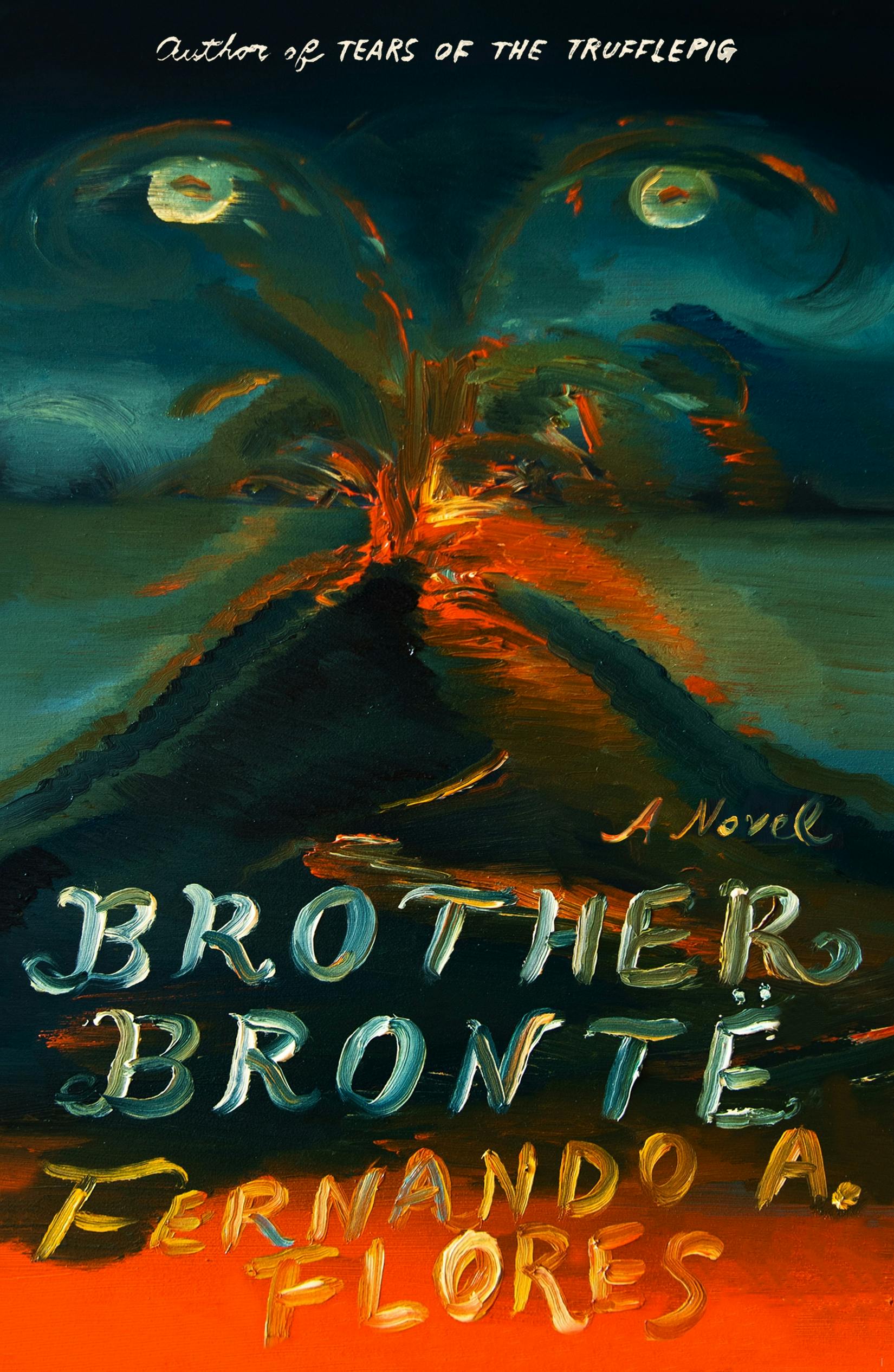
And then now “Brother Brontë,” for me, kind of like ties those things up for me. And visually, like the person who did the art, the cover of the books, Na Kim – who designed the book and painted them on canvas – I kind of tied them visually to her art and what she saw in the books that ended up being the cover the books. And she designed all three of them, “Tears of a Trufflepig,” “Valleyesque,” and “Brother Brontë.”
So to me, the whole visual sense of them kind of solidifies the trilogy for me. And, to me, like those are the … It’s kind of like I said, “unofficial,” but I don’t know. There’s something about them that I feel they’re all in conversation with each other.
» MORE BOOK FEST PREVIEWS: From underground roots to community hubs, new book documents the history of Black-owned bookstores
So this novel, “Brother Brontë,” primarily follows two protagonists, Proserpina and Neftalí, as they look into the final novel of a mysterious author amid a strict ban on reading.
Tell us about your protagonists. What inspires them and their quest?
I had this vision – if you want to call it that or something like that – of somebody in the future who was named after the Chilean poet Pablo Neruda. And neither “Pablo” nor “Neruda” are in Pablo Neruda’s real name. But one of those names is Neftalí. Neftalí is usually a name given to a male.
So I was interested in this idea of a person in the future who is named after Pablo Neruda. And her name is Neftalí, and it was a young woman. So I interested in what kind of person is this person? You know, who named her that as well. So these things, these questions, these ideas kind of led me to like… To this long labyrinth.
One time I was somewhere, I forget where I was, but I was sitting around and the song by Ramones, “Judy is a Punk” came out. And I was sitting around and I was listening to those lyrics, and it’s just like three lines over and over. I think it’s just, like, “Jackie is a punk, Judy is a runt,” you know?
I was like, alright. I know these people. I’ve hung out with these people. I’ve partied with these people. So I was like, what if the song was a novel? So that’s how her friend [Proserpina] came to be. All these things just kind of came together and with these ideas, the setting and everything, and I realized who these people were and the landscape of it just told me what it was.
As a writer, I’m there to work with the material that comes to me. I never feel that I come up with my ideas. I feel that they come to me and I’m trying to do my best using the powers of narrative and fiction and setting and all these things to make them work in some kind of way so that I can be rid of them forever and I can just walk. And I could be like, okay, I did something with these ideas that haunted me, and now they’re in a book and in a narrative that I am proud of, really.
Well, there is also a Pablo in your story, Mayor Pablo Henry Crick, and I bet you some people are going to make this comparison to Elon Musk and his impacts elsewhere in South Texas. I have a feeling you’ll be resistant to that, but I wonder how you would respond of people reflecting on your book as they’re experiencing current reality.
You know, I don’t think that I would reject. I’m fascinated by the idea of it because a book takes a long time to write. I started writing this book in April 2015. It was almost like 10 years from the moment of writing it to publication. So all these themes and all these things that exist in it have always been in there in all this time.
So I don’t know if I have a direct answer to it because that’s just the way that I work. I’m just open to all these things. You mentioned all these other books– I think you mentioned “Fahrenheit 451” in the beginning or “1984” – and to me … I wanted to have like a Texan novel that was part of that traditional literature, you know, because I feel that we didn’t have a novel that is part of that tradition of literature.
I’m not saying that my book is like at the level or on par. That’s not for me to say. But that was my intention. I wanted to be in conversation with those things and with the landscapes and the kinds of people that I knew and that I’ve been surrounded of having been living in Texas almost my whole life.
» GET MORE NEWS FROM AROUND THE STATE: Sign up for Texas Standard’s weekly newsletters
Yeah, I think that’s really interesting. I guess, why do you think that is important? Why do you want Texans to feel reflected in a future that isn’t necessarily a bright and shiny future?
I suppose because when we think of Texas books, we tend to look at the past. We tend to think of like, I don’t know, like Larry McMurtry. His books were heavily focused on the past, even the recent past – like “The Last Picture Show” was like, I don’t know, 10 years previous to when it was first published.
So he’s always looking to the past, and those are the kinds of landscapes that I guess our literature – when I say “our,” Texas literature – seems to be focused of or enamored with. And I’m enamored with that kind of literature as well. But as a writer, I’m always like, I cannot write those kinds of things. Why write those? Those kinds of things exists already. Why would I keep writing them?
My job, I feel, is to excavate, to get to these narratives that aren’t with us and to try to bring them to the fore, to try work with them and for them to try to exist and be their own kind of story out there. For people to read or not read.
I don’t take being a writer lightly. I don’t take it for granted. I’m always asking the hard questions like “why publish another book?” You know, so many books exist now than in the history of anything.
Every Tuesday is release day, every Tuesday there’s more books than ever. So why write another book? I really have to justify it unless I’m grappling with something that is, I don’t know, unknown and mysterious and maybe like unreachable to me and beyond my ability.
Unless those things aren’t there, then I don’t do it, you know? Because why? And those things just seem to be there when I was working on this book that I just needed to get to the end.
So do you have a hope that readers who pick this up, that there’s something that they come away with?
You know, I think of a reader as like each reader is an individual person and I’m like, I don’t know. I don’t know what readers see in books. I know what I see in books. I don’t know if I have a wish for somebody to walk away with something with my book.
Sometimes you walk away from something and you’re not really quite sure what it was. Sometimes our culture kind of demands an instant reaction from a reader or like if you see a movie that you expected to immediately know what you feel about it.
Sometimes there’s some kinds of works that you need to sit with them for a long time or for a while. Like I don’t know, I’m thinking like when every Stanley Kubrick movie came out, I think every one of them was panned and it took like years and years for his movies to be appreciated on a different kind of level, you know?
So to me, I think that those are the best books that affect me, the ones that really leave me something to grapple with, the ones that leave me unsure of what I just experienced, but that give me that feeling of like … That there’s something there that I really have to look at something within myself to be able to unravel, or something like that.
“Brother Brontë” will be featured at the Texas Book Festival in Austin during the weekend of Nov. 8-9.