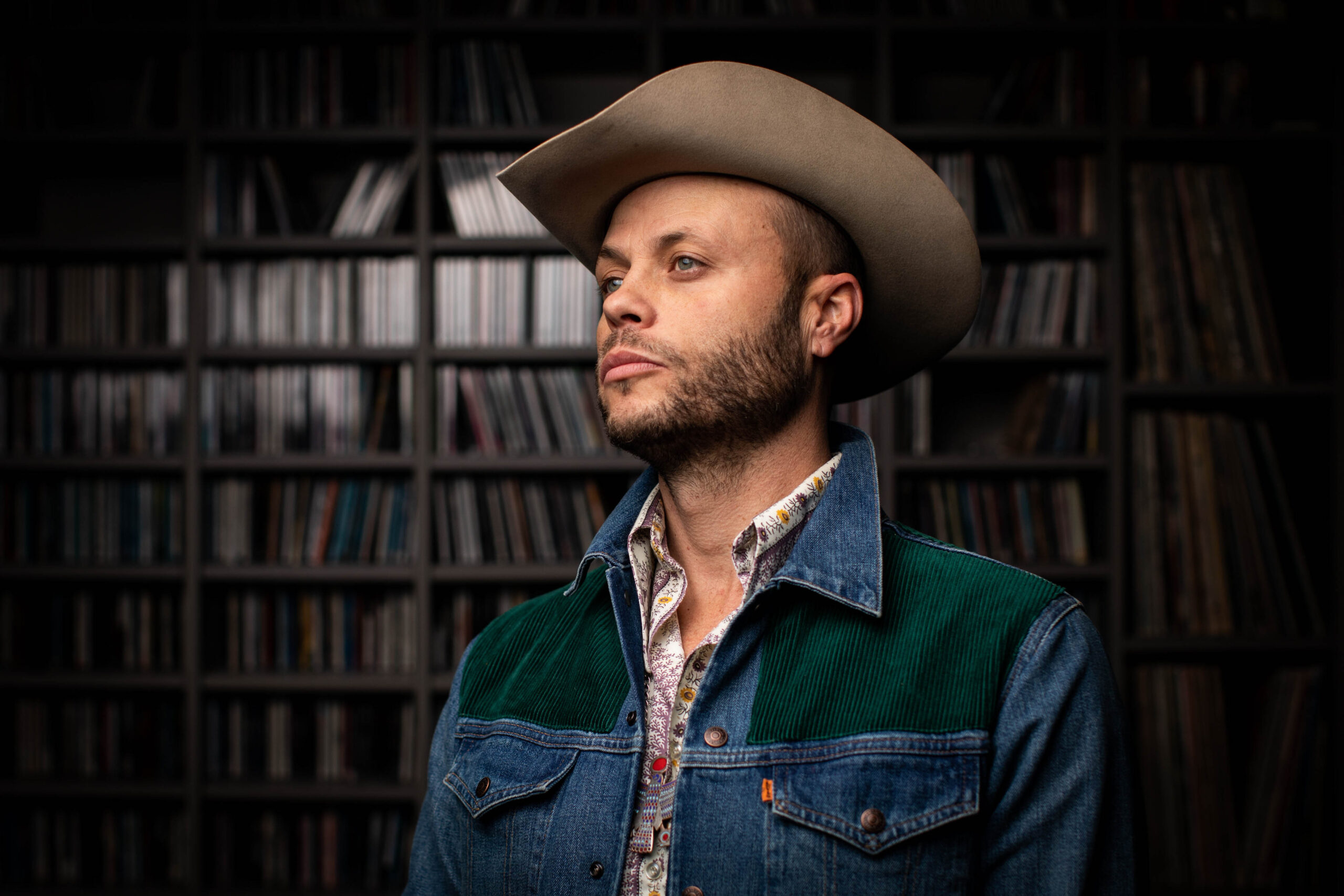
‘Take your version of Texas to the world’: Charley Crockett talks new album and recent success

“Dollar A Day” serves as the second album in the artist’s Sagebrush Trilogy.

By Michael MarksAugust 8, 2025 9:30 am, ,

People used to call soul singer James Brown the hardest working man in show business, but those folks probably never met Charley Crockett.

The San Benito native started his career strumming songs on street corners. Nowadays, he sells out big concert halls and arenas.

All this success hasn’t dulled his work ethic, that’s for sure. Crockett releases music seemingly as fast as he can make it. After dropping a record in March called “Lonesome Drifter,” he’s got another on the way this week dubbed “Dollar A Day.” Plus, he’s got a nationwide tour planned with another Texas musician of note, Leon Bridges.

Crockett joined the Standard to talk about his new album and recent success. Listen to the interview above or read the transcript below.

This transcript has been edited lightly for clarity:

Texas Standard: I gather you’re just taking a little bit of a break before you have to get back out on the road. Where’d we catch you?

Charley Crockett: I don’t know, I’m out here in big sky country, Montana. Just been, I’d say I was running from the law, but I think I’m running from some people a little more dangerous than that.

Well, you’ve been riding high on “Crucified Son,” one of the early releases from this new album “Dollar A Day.” You know, I was seeing some comments online and, man, you’ve got some hardcore fans. One of them: “Fun fact: Charley and his wife wrote this song together.”

And I don’t know if that’s true or not. Is it?

No, that’s right. I remember Taylor and I were standing outside of my bus. We were on the Outlaw Tour with Willie, and I was filling in for Bob Dylan because he couldn’t make the show there in New Hampshire. I shouldn’t say “filling in.” I mean, nobody fills in for Bob, but he couldn’t make it that night.

And I remember, talking about fans online, there was a lady being like, “‘Charley, you can’t fill Bob Dylan’s shoes Don’t you even try it.” And I said, “Ma’am, I’m not. I’m real sorry he couldn’t make it.'”

But he called me and told me that, you know, he loves Willie Nelson and it was his idea to start Farm Aid and don’t you forget it.
Wow, that’s so cool. Well, you know, some of these other comments are just kind of, you’re getting a lot of them. “Song of the Summer,” “Charley Crockett’s the best of the best.”

Something else that I found that was kind of interesting here. You know people have picked up on the fact that you are really, really churning them out with all that you’re doing on the road and everything. How do you find a chance to get into a studio and record?

Oh, well, you know, what can I say about that? You know, I don’t know if you ever heard of this movie Brad Pitt did called “Moneyball.” It was about this guy, Billy Bean, that, you know, was looking into data and analytics to get more out of players. And they tested it on the Oakland Athletics at the time they were really the worst team in the league or whatever.

And I think, in a lot of ways, with the music business, I tend to call it “moneyball” these days, which is they kind of throw money at a young artist and hope they go viral. And if it doesn’t work out, there’s always another one. And if one works out, it pays for a lot that don’t.

I subscribe to a different model. There’s two business models in this game. There’s the suits model, which is the one you see 99.9% of the time. 0.01% of the time it’s what we call the “Willie Nelson model,” which is – I think Bob Dylan had said – “you’re either five years behind or five years ahead of your time.” And you’ll find out pretty quick which one you are.

And I think when Willie and Waylon started recording in Nashville for RCA in the sixties, I think, you know, Willie was seen as kind of over the head of the country music audience at the time. I don’t think they had a lot of faith that he would break through as a singer.

Of course, he had already had some success as a songwriter – a lot a success – but I don’t know that they had faith in Willie as the front man, which of course, on “Read Headed Stranger,” which I think was around his 14th or 15th record, he proved them wrong.

» GET MORE NEWS FROM AROUND THE STATE: Sign up for Texas Standard’s weekly newsletters

But he had to get out of the scene to make that happen. He had to break off.

Yeah, he did. But see, back then, even though they didn’t understand how to market Willie, he still made a lot of records for RCA. Waylon was doing better on the charts in the ’60s, but these guys were still losing money out there on the “Hank Williams circuit,” we like to call it.

They were different guys. They were both very different. Willie was gonna, you know, he was kind of esoteric in his writing. And then Waylon really was never a straight-ahead country guy. He had more to do with that West Texas rock and roll sound than anything else.

But I think the difference is, man, is that they made a lot of records. And so the first record that ever got put out on me wasn’t the first I’d made. I’d make a couple of records before that. None of these suit types had any interest in those first couple of records. And I’d really only been signed as a favor, by an old agent of mine being totally misunderstood.

And so the first time I got any money, most of it went to paying for the record that I’d made – this record in Memphis called “Lonesome as a Shadow.” Most of that money went to making the record and the rest of it blew out the window with the publicist.

And because I wasn’t easily classifiable, they didn’t know what to do with me and it didn’t do too much and that was really it. That was the end of the story as far as they go.

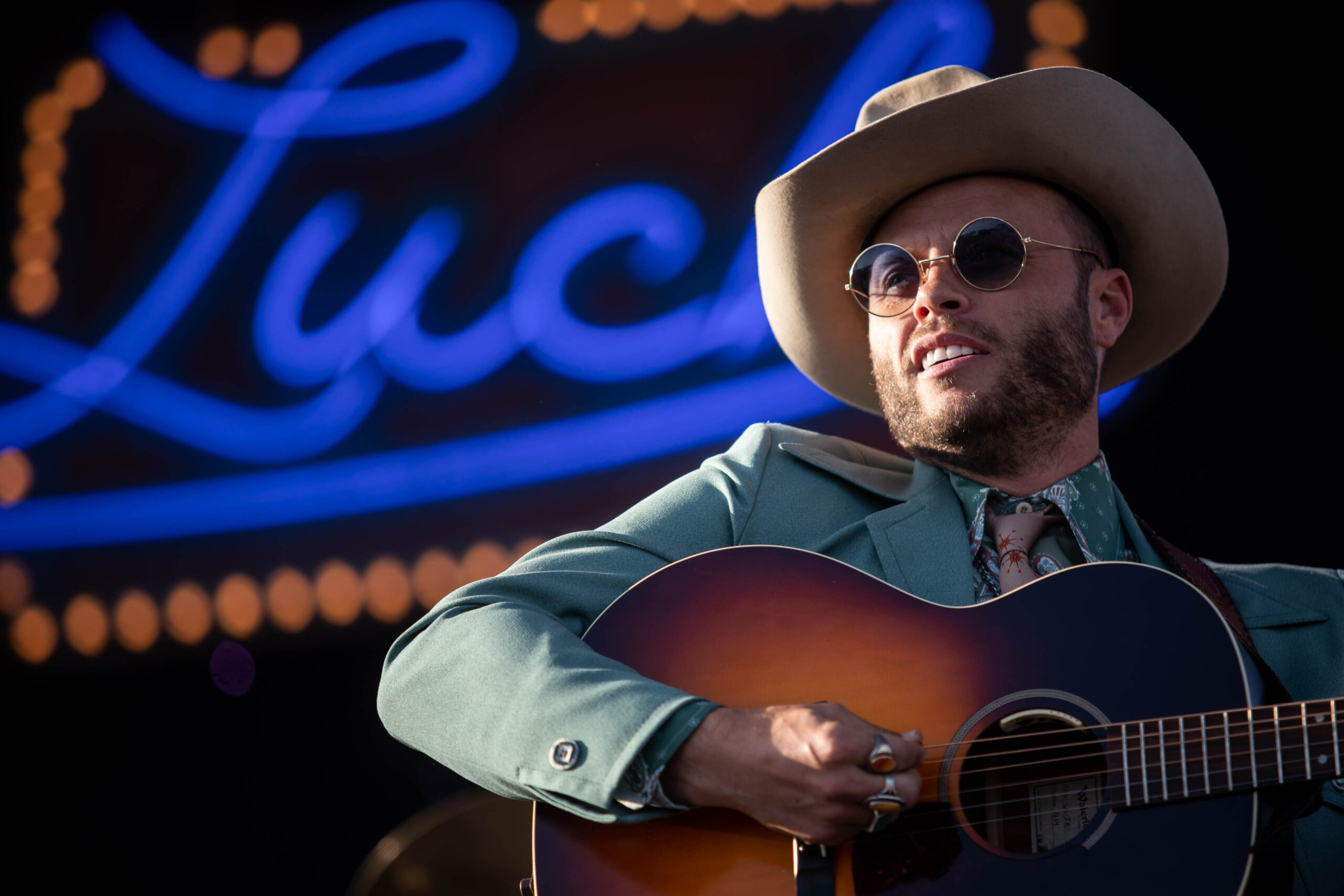
Michael Minasi / KUTX

Charley Crockett performs on the World HQ Stage during Luck Reunion on March 17, 2022, at Luck Ranch in Spicewood, Texas.

But where are you in this spectrum? I mean, it seems like you found a sweet spot between sort of wanting to do the kind of music that you wanna do and this sort of commercial success that can be so elusive and that everyone’s trying to drive you towards.

Well, I’m saying it’s like, you know, they gave me $75,000 the first time around. It didn’t work out in their eyes, and I went back to making records for $5,000.

That’s kind of what I’m saying, is if – you mentioned James Brown, or let’s take Aretha Franklin, for example – you know, she’d made a lot of records in New York before she went down to Muscle Shoals with Jerry Wexler, similar to how kind of Willie Nelson broke out. I think that was her 10th album, when she went down there to Muscle Shoals and finally found commercial success.

And a business model where the goals for, you know, kind of an unknown to break out on their first record… I mean, how do you even get there?

And so that’s really what it’s been, is that on this one, “Dollar A Day,” I’m 15 or 16 records in and I’ve got a lot of experience recording. I’ve gotten a lot experience finishing songs in the studio and it helps when I’m in the room with a guy like Shooter Jennings or I’d made “The Man from Waco” with Bruce Robinson there in Lockhart, which was really my first experience of being in a studio with somebody who had confidence in my own ability to write songs. I’ve never had anybody in the room actually have confidence in me as being more than kind of a vessel, if you know what I mean.

» NO COOKIE-CUTTER COWBOY: Throw it back with one of our early conversations with Charley Crockett

Yeah, I know exactly what you mean and you obviously are coming from a place of comfort and it sounds like you’re wearing the boots very comfortably right now.

It’s interesting, though, that you’re talking about this aspect of the music business, especially with “Crucified Son,” because you read those lyrics and it sounds like you are really wrestling a lot. I mean, if this is a reflection of what you’re going through, it seems like you are really wresting a lot with these forces, sort of feeling like you’re being – what is the line? “I walk out the door, they call me friends and drive nails into my name.”

It’s pretty heavy stuff when you pull back and think about it. It says a lot about what it takes to make it on your own terms in the music industry today.

Oh, man, you know, it’s like the music business is a lot like the stock market. The difference is the stock market, as high stakes and corrupt as it is, there’s a rule or two.

There aren’t any rules in the music business and managers are oftentimes in the most powerful position. There’s no regulation on them at all. Those guys are running games on you all day long. But as soon as you catch them, you’re the bad guy.

Well, I’ve got news for you. I say they shouldn’t have let me in, but they didn’t. I had to rob the damn place.

Well, it’s the biggest unregulated business I can think of right off. I mean, you talk about the lack of regulation, there’s a lot of people that got run over by those big wheels of commerce, no doubt about it.

But did you do this whole album with Shooter Jennings or was it just this one song or what?

Nah, it’s all “Lonesome Drifter” that I put out in March, it’s all “Dollar a Day.” We’ve got a third one. We’re calling it the Sagebrush Trilogy.

And what it really is, is I had made a deal with Island Records. It was my first time working with the majors and I wouldn’t have done it had they not given me all the things I asked for, which all I really cared about was creative and release control. And I got that there in the paperwork, which really was the main thing that mattered to me.

But I had “Lonesome Drifter” done, but I fully intended to get a bigger platform for the record, because I’m grateful to Americana music. I really am. If not for Americana, I doubt I would have shown up anywhere at all.

But it’s like the better known you get, the more you go out there in front of the American mirror and that mirror reflects what people see in you and they tell you that. And there’s a lot of, I don’t wanna call it a burden, but there’s lot of responsibility that goes along with that.

And like I said, I’m grateful for Americana music, but I never liked the classifications. It’s just like even dealing with country music. I’m very proud to be country, but I, oftentimes, feel maybe trapped in its conventions.

Which is why “region,” to me, can maybe be more accurate. And, you know, it’s like when you deal with L.A. and New York and, actually, especially Nashville, they tend to talk the Texas right out of you.

But the only thing a Texan can do to survive when you’re dealing with those people, is take your version of Texas to the world. And in that way, we’re in a unique position because the music business is – as great a town as Austin is – maybe one of the best things about it in terms of preserving my, maybe, authenticity is that the music business didn’t grow up in Texas in the way that it has in these other towns.

Doesn’t have that big infrastructure, yeah.

Yeah. And that can be a challenge when you’re going to Nashville and it’s a different region and, you know, you’ve got the Kentucky and the Tennessee and just the Appalachian influence there. You know, it’s really kind of more their town, and which I understand it should be. I mean, that’s the area they’re all in.

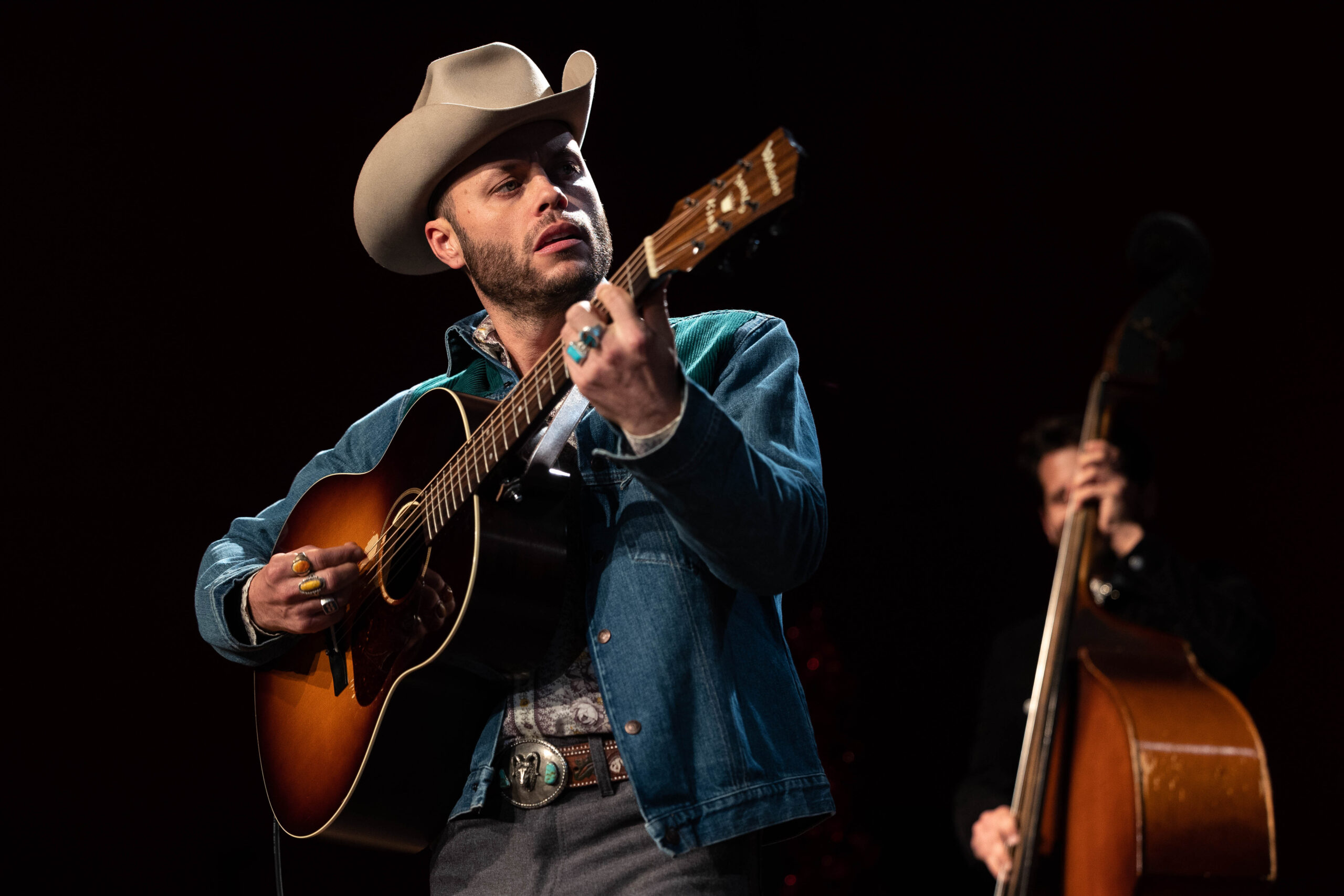
Gabriel C. Pérez / KUTX

Charley Crockett performs in the KUTX Studio in Austin on Dec. 16, 2022.

But let me ask… Forgive me for interrupting, because I have a sense – and you must have it, too – this feeling that you were… I wasn’t gonna say you’ve made it, but I’m gonna say you’ve made it.

I mean, you say the name “Charley Crockett”… You’re on, not just NPR’s Tiny Desk Concerts, you’re doing the Joe Rogan Show. I mean, you have fast become that name and you must feel like there’s a rocket strapped to your boots right now.

Was there a turning point? Was it the last album, previous album, that you think kind of made all the difference there, or was it the new record affiliation? Was it this work with Shooter, or what?

I think it’s just that… I’ve just been doing it. I don’t know how to say it. It’s like, you know, in a world where there’s so much kind of disposable content – or I don’t even want to call it “disposable” – but when it’s been like the song “El Paso to Denver” on this new record…

You know, we, Taylor and I, were standing outside of the bus after playing the Plaza Theater there in downtown El Paso, and we had a long overnight drive to Denver. And there are certain stretches of America that I get a certain sentimental feeling for. You know, that’s one of those routes that always sets my mind at ease, in a way – riding from El Paso to Denver, you know?

And, you know, the suits come and go. The money people, they come and go. And they’ve got a lot of ideas of what we ought to be doing. But I’m out here on the road and have been most of my life, you know, and when I say the “Willie Nelson model,” that’s really what I’m talking about. And same thing with Waylon, that’s what I was talking about.

I remember we had the windows kind of cracked in the back of the bus that night and that cool air was coming in as we were getting higher up going towards Denver. And I was just thinking of Waylon and Shooter had told me that Waylon Jennings’ greatest comfort late in his life was what he saw as his “David versus Goliath” victory against RCA – that he had run alongside them and beat them for a time.

I don’t think you and I would even be talking about this had I not been touring so much, had I not put out so many records. And I think it’s maybe the biggest challenge to a young artist trying to come up is that, you know, there’s the illusion that you got one shot, and it’s really not true. But you’ve got to believe that.

So I think people looking at me from a distance, you know, they see me as doing really well. But I see myself as a prize fighter.

Going the distance.

People are betting on you, and a prizefighter has got so many fights and to some extent the business around you is evergreen. I guess that’s the way I’ve always seen it.

I mentioned you’re going to tour with Leon Bridges next couple of months, what y’all are calling the “Cowboy and the Crooner Tour.” Do you have a personal relationship with Leon Bridges or did they just kind of fall into place or what?

Oh man, I mean, when we first met, we were both still playing out on the street, you know? If we were going playing indoors, it was trying to push our way up on stage at open mics and open jams around Dallas and Fort Worth. That’s how we met.

Golly, it’s been more than 10 years. You know, not long after I met him, maybe within that year, he had done his deal with Columbia, and you want to talk about strapping a rocket onto somebody. The timing for me that I could call him a friend at that time, really, and then what he’s gone through, I think it’s a really big part of maybe how I’ve made it this far is that, you know, for whatever reason, he, as big as he got, he always liked me and has always talked me up.

You know, we’ve always cheered each other on, like he says, with him navigating the business the way he has the last 10 years. Very fruitful for me to be a friend to somebody that’s gone through what he’s gone through and the success and the hills and valleys that he’s been through the last 10 years.

And we’re really just peers and I think good to each other and we’d always talked about doing something like this together. And here we are. We are finally, finally doing it.

We tested the model at Dickie’s Arena in Fort Worth last fall. And that was one for the books. I think for him for sure – being his hometown. You know, a lot of people in Fort Worth claim me, even though I’m a Rio Grande Valley boy and even more people think I’m from Waco now after I put that record out, but I might’ve done it differently if I’d have thought that. No, I’m just kidding.

But people said “you’re not the man from Waco. Billy Joe Shaver is.” And I said, “well, I was actually thinking about James Hand. Every time I crossed that Brazos, I just see James out there holding the water hose and a flashlight outside that RV of his in Tokyo being like “look, I got electricity and running water.”

If you found the reporting above valuable, please consider making a donation to support it here. Your gift helps pay for everything you find on texasstandard.org and KUT.org. Thanks for donating today.