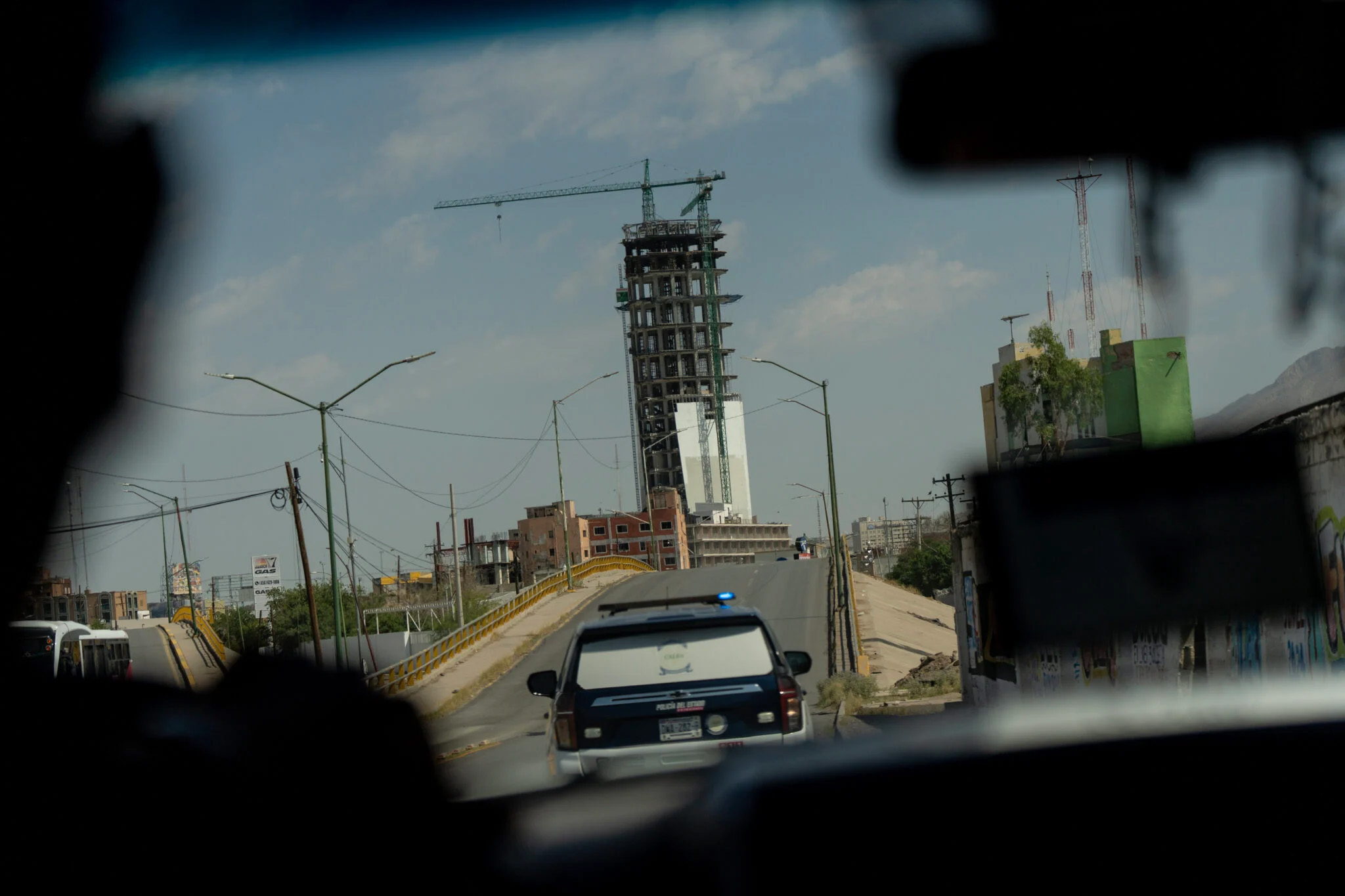
From the Texas Observer:
Editor’s Note: This story was produced in partnership with the Pulitzer Center’s AI Accountability Network and Under the Volcano, an annual binational writing residency in Tepoztlán, Morelos.
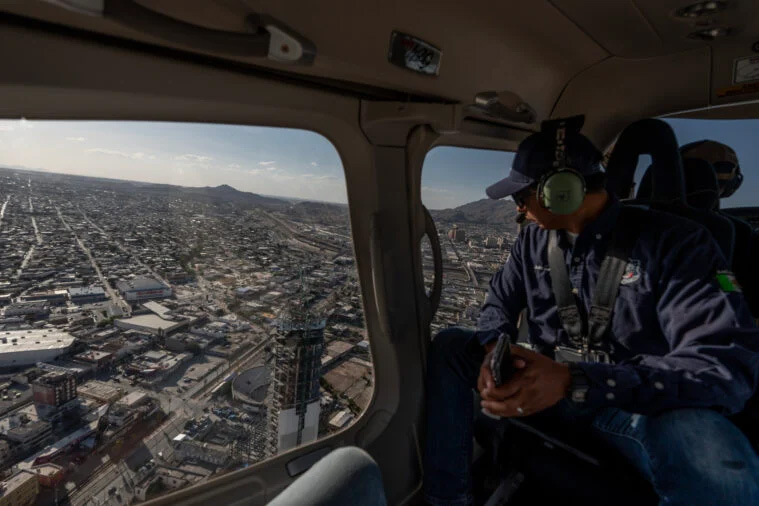
For three years, Luis Mendoza has periodically gone to the same construction site in downtown Ciudad Juárez to check on the progress of a 20-story tower that will serve as the home base of a vast state surveillance project.
On one visit in early May, Mendoza, a 37-year-old activist with the Juárez group El Frente Político Ciudadano para la Defensa de los Derechos Humanos (Citizens’ Political Front in Defense of Human Rights), was confronted by a company representative overseeing the project and a police officer and asked to leave.
But during our trip there on a blistering June afternoon, we encountered only a stray dog and a handful of construction workers, most of whom sat or leaned against a dusty chain-link fence. One greeted Mendoza warmly with a smile.
Mendoza and other activists in his group have been keeping watch over the watchtower. They’re motivated not only by concerns over privacy related to the expanding police program, but also by worries about a lack of transparency in government expenses and technical specifications for the state project. In terms of publicly available information, “You don’t have a lot to work with,” Mendoza said.
Once complete, this looming tower, known as Torre Centinela (the Sentinel Tower), will serve as the police command center for Chihuahua—Mexico’s most sprawling state and home to 3.8 million residents, including those of Ciudad Juárez, El Paso’s larger and more violent sister city. Construction is around 75 percent complete as of early July, according to Chihuahua’s Secretariat of Public Safety, the state police agency.