How a Corpus Christi aquarium runs one of the nation’s largest wildlife rescue operations

The Texas State Aquarium maintains a center to rehabilitate sea turtles, birds, fish and even coral.

By Rhonda FanningMarch 20, 2026 2:05 pm,

Most of us have an idea what an aquarium is, but in Corpus Christi, the Texas State Aquarium is something else altogether.

It’s more than just putting marine life on display. It’s running one of the largest coastal wildlife rescue operations in the country.

From rehabilitating injured dolphins and sea birds to responding to mass cold-stun events that can leave hundreds of sea turtles stranded, their team’s always on the front lines of Gulf Coast conservation.

CEO of the Texas State Aquarium, Jesse Gilbert, joined the Standard to share more. Listen to the interview in the player above or read the transcript below.

This transcript has been edited lightly for clarity:

Texas Standard: When people hear “aquarium,” I guess they do think of exhibits and you have those, but you also run this — I believe it’s described as the largest coastal wildlife rescue program in Texas, certainly, and certainly one of the largest in the country too.

What does that mean in practice on a given week?

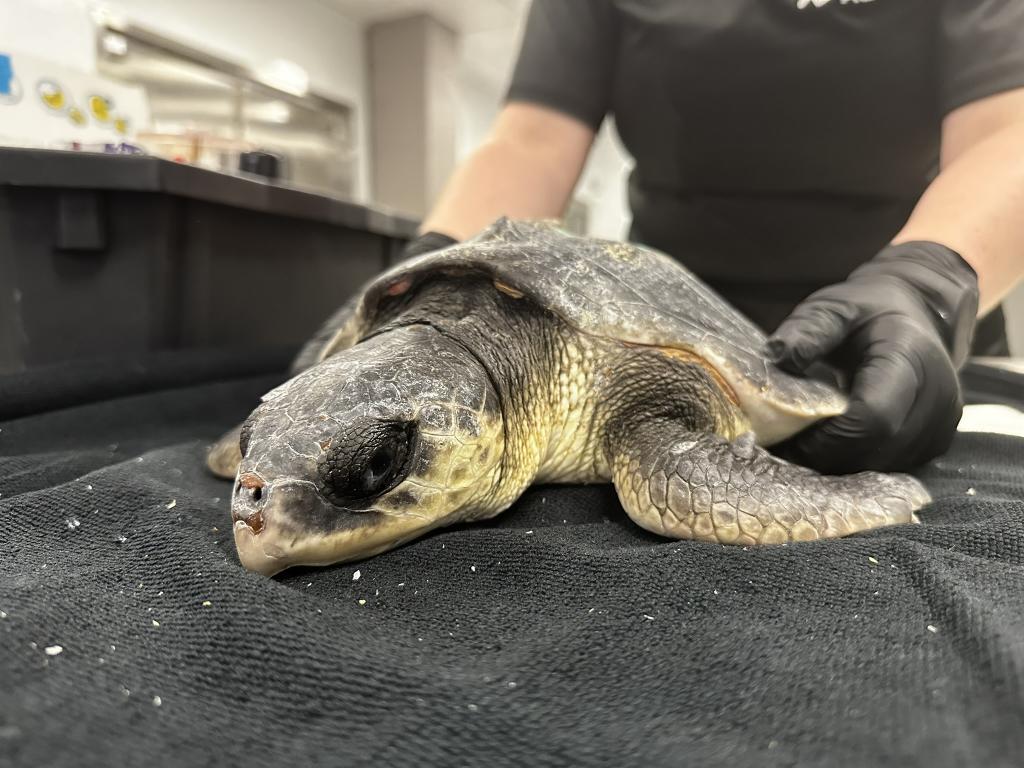
Jesse Gilbert: So we typically talk in terms of sea turtles so that people can visualize that. We can hold about 3,000 to 5,000 sea turtles at one time.

It’s a monster program and it’s been activated for large-scale events, particularly with cold-stun sea turtles in the last couple of years. You’ll have weeks where you don’t really see a lot of activity and then you’ll have something pop up and you’ve got to respond to all sorts of different weather events, different challenges that wildlife face in the Texas coast and parts of inside of Texas.

Sea turtle’s are obviously a big deal there, but I have a recollection of other large fish being carried over to where you folks are. Am I dreaming, or does that sort of thing happen?

It happens periodically, not as much. It’s mostly turtles, birds, the occasional dolphin. We’re actually now the only manatee rescue facility permitted on the Gulf Coast outside of Florida.

So it’s a broad range of different animals — fish certainly one of them. We’ve done some things where we’ve had to rescue coral out of Florida and bring coral into Corpus Christi. So, it’s a very, very broad program. And it’s one of the more exciting things that we do.
Courtesy of the Texas State Aquarium

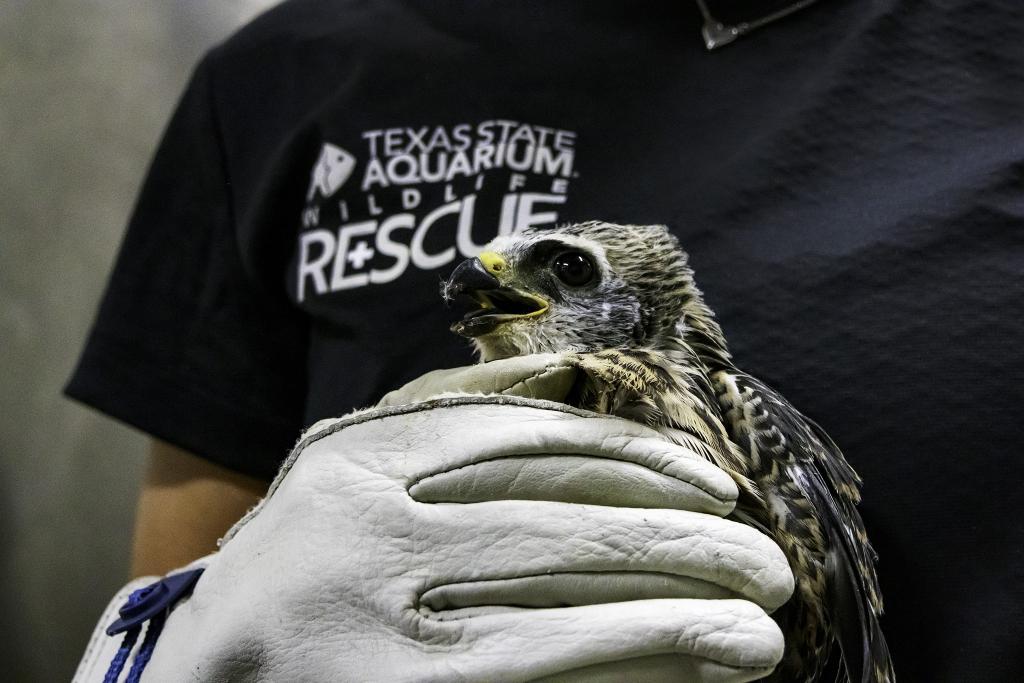
The aquarium rehabilitates coastal wildlife even beyond sea turtles, such as birds like this Mississippi kite.

Let’s go back to those turtles for just a moment. Typically, what happens to those animals once you get them? And how fast do you have to respond?

If it’s a cold-stunning, it’s actually a really intense about seven or 10 days.

So the cold weather comes through, it takes about 24 hours for the turtles to become basically hyperthermic and they’re unconscious. We’ll go out, rescue those animals — along with our partners from the Texas Parks & Wildlife Department, the general land office — bring those animals in.

We warm them up just like you would see a human during a cold front. We let them swim. And if we see that they’re swimming actively, once the water in the Gulf is back up to about 58, 59 degrees Fahrenheit, we release them.

So it typically is seven to 10 days they’re here and we then get them back out.

» GET MORE NEWS FROM AROUND THE STATE: Sign up for Texas Standard’s weekly newsletters

Gotta get them past that stress point. Speaking of stress points, what’s your stress point? Do you have space for staff, coordination with partners? What’s the pinch point for you?

It’s always staff. It’s always the human side of what we try to do.

So we’ve got a rather large facility. We actually can make the whole program mobile. So, we can actually put this program on the road. We could go recover thousands of animals anywhere we actually have a road.

So, it’s intense, but there’s a lot of really good partners that we work with at the state and federal level. It’s a lot fun.

For someone listening far from the coast, I think that some may be asking themselves, well, okay, what’s the real-world impact of this work for me if I’m in Amarillo or Austin or someplace else? Why should I care about what’s happening there in the bay?

It’s a great question. So we went down a study, we worked with a firm that does some very, very interesting economic impact studies. And we worked with some experts on sea turtles and coastal fisheries and some different things.

And we came to find that a turtle that’s released from our program has a pretty significant economic value to the state of Texas for fisheries. The green sea turtle population keeps the seagrass beds healthy, which is where all the fish that we all fish for grow up.

If you found the reporting above valuable, please consider making a donation to support it here. Your gift helps pay for everything you find on texasstandard.org and KUT.org. Thanks for donating today.