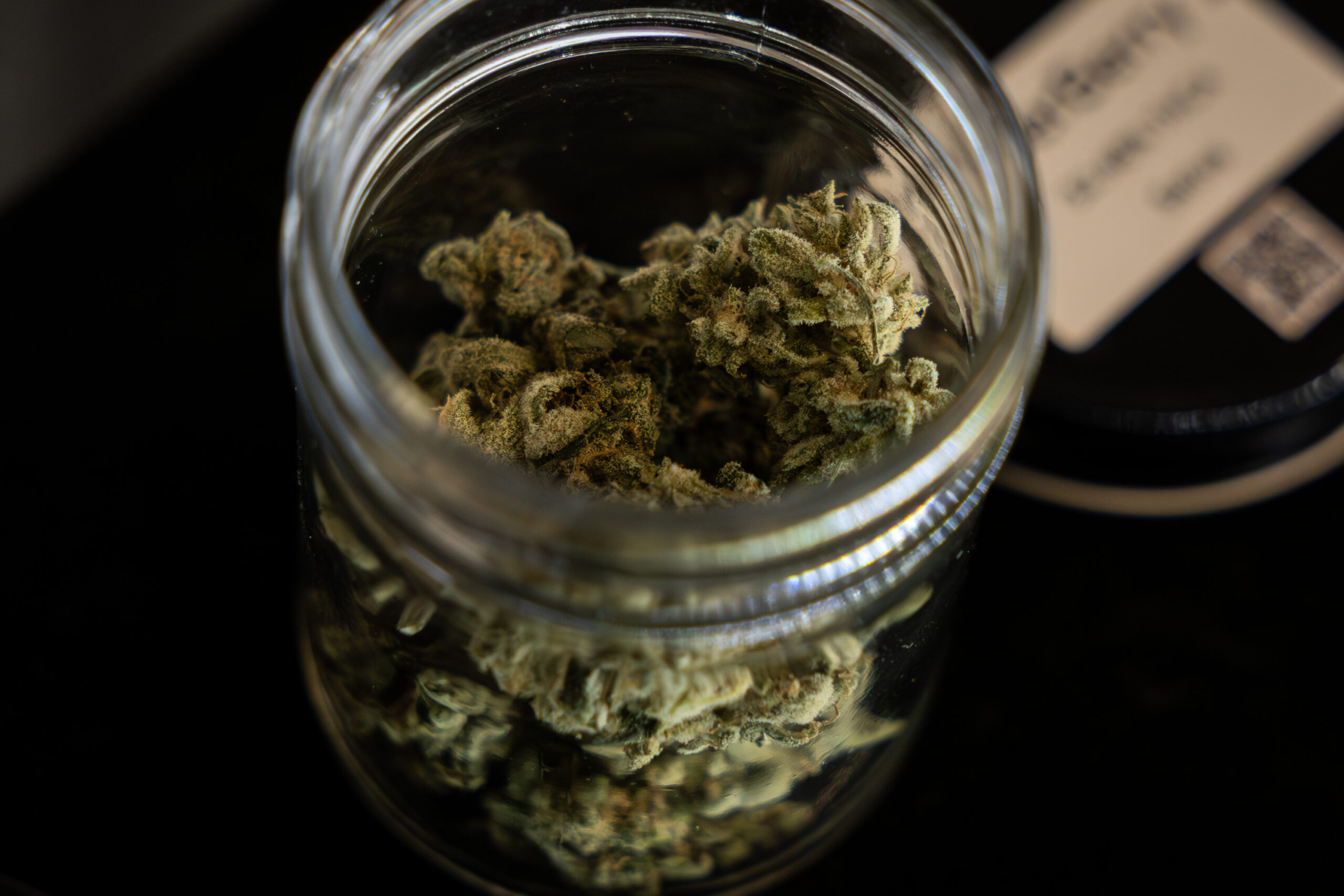
The deal to end the federal government shutdown began in the U.S. Senate and included something a bit unexpected: A ban on all consumable retail hemp products containing any synthetic form of THC.
This was the exact topic that divided the Texas GOP this summer. Gov. Greg Abbott vetoed an effort led by fellow Republican Lt. Gov. Dan Patrick to enact a similar ban here in Texas, instead calling legislators back for a special session to impose some restrictions on who can buy such hemp products.
So, what would this federal ban mean for the Texas deal on hemp sales?
Karen Brooks Harper has been reporting on this for the Dallas Morning News and joined Texas Standard to discuss. Listen to the interview above or read the transcript below.
This transcript has been edited lightly for clarity:
So, how did a ban on intoxicating hemp find its way into the Senate’s compromise deal to reopen the government?
Karen Brooks Harper: Well, the farm bill that kind of opened the hemp market in 2018 and in Texas in 2019 didn’t really address any of the intoxicating consumable hemp products that were kind of loophole-legalized by that.
So, Mitch McConnell and a bunch of his allies in D.C. have been pushing to get it removed, just like Lt. Gov. Dan Patrick’s been pushing to get it shut down here in Texas and there’s been a lot of back and forth on it in recent months, and even years.
But people were surprised when it kind of showed up in this shutdown package. The way it ended up working was they passed a package of things that Trump signed. The centerpiece was the continuing resolution, or what might be called the “CR,” that reopens all of government through the end of January.
They attached various other things, including several full-year spending bills, like one for the USDA, which is where this funding is inside. The USDA bill, for example, funds food benefits for the whole year. So, if we get another shutdown come January, that won’t be affected again, like the food stamps or SNAP.
Also, in that bill was the THC language, which basically recriminalizes most of the stuff that you’ve been seeing in Texas for the last several years. It’s basically a very sophisticated version, but similar outcome of the ban that Dan Patrick tried to pass here in Texas three times.
» RELATED: What kind of cannabis can you buy in Texas? How to understand what’s in the products for sale
So, would this completely override the deal that Texas lawmakers made in their recent special session if it goes through?
It would. It would also require some cleanup language if they wanted to back it up in state law, but once it’s federally defunded and federally written, then the state can’t relegalize something that the federal government doesn’t allow, kind of like marijuana laws.
But the thing about that is that it doesn’t go into effect for another year, which is noteworthy, right? Because there was a movement during the debate a couple nights ago by Rand Paul to remove that language from that USDA bill, just kind of as a last minute, “well, hey, what’s this doing in here? Nobody’s expecting this. Let’s take a vote on this.”
Everybody just voted to keep it in because it is hard for some politicians to vote for, without explaining to their constituents, that they’re not in favor of recreational drugs, even though it goes way beyond this… You know, it goes towards anything that markets itself as having similar effects to cannabinoids, which means CBD products can be a risk.
That remains to be seen, but they have a whole year to figure out how to kind of recalibrate what they’re doing about it, and I think probably the biggest effect of this is to come to a resolution one way or the other because it’s been hanging around for six years.
» GET MORE NEWS FROM AROUND THE STATE: Sign up for Texas Standard’s weekly newsletters
Well, we know that this issue split the Republican Party here in Texas, putting Gov. Greg Abbott and Lt. Gov. Dan Patrick on opposite sides. We saw this actually in the vote in the Senate, too, with the two Texas senators coming down on either side of Rand Paul’s motion to delay and take a closer look at this, right?
Yeah, absolutely. It’s a very interesting issue in terms of where the Republicans stand on it because the constituents are the same way. They’re split. They are not split along party lines on any stretch of the imagination on this one. You’ve got veterans and police officers on completely opposite sides that tend to vote similarly.
Cruz and Cornyn are on opposite sides of the issue. You know, Abbott and Patrick are on opposite sides of the issue. For some, it comes down to access and freedom of adults to make those kinds of choices for themselves, which is where Abbott came down.
For people like Patrick, it’s, “oh, it is a dangerous drug and we need to protect our kids from it.” And it’s kind of hard not to see both sides of it, even when you’re on one side or the other. It just depends on where your message is at and what you think is more critical.
Plus, Abbott also thought that the state law violated the federal law. So now, that may or may not be an issue that he can stand on anymore.
There’s a lot that’s gonna happen. I don’t think it’s gonna be an issue in the election or anything. It might. I mean, it got a lot of attention during the session.
So, what hurdles would this still have to clear before it would go into full effect next year?
Nothing. What it has to do is withstand any legislative attempts in Congress to legalize it, and override that part or remove that part on a separate vote or change that somehow. Because that’s what this gives them, is a year to come up with something else.
But if not, in a year, 365 days from the day it gets signed, what the legislation says, you know it’s all recriminalized, which is an interesting step backwards. It’s not usually the direction that drug policy generally, and cannabis policy specifically, tends to go.