This SXSW doc about the ‘war on woke’ at a Florida college may feel familiar to Texans

“What we saw was that the practice of using what are sometimes called DEI initiatives, we saw those being used as sort of a Trojan horse for these other policies to come into the university to bring censorship into the classroom,” producer Holly Herrick said.

By Laura RiceMarch 12, 2026 11:56 am, , ,

Texas Standard has reported a lot in recent months about changes at Texas colleges and universities. These institutions are adjusting to new state laws, including one that gives boards of regents more power in determining what can be taught in classrooms.

Texas A&M did a full review of courses, canceling some and eliminating its women and gender studies program. UT recently consolidated many majors. Students and professors have expressed big concerns over the impacts on education, let alone freedom of speech.

This feels all too familiar to those who saw what happened in Florida in 2023.

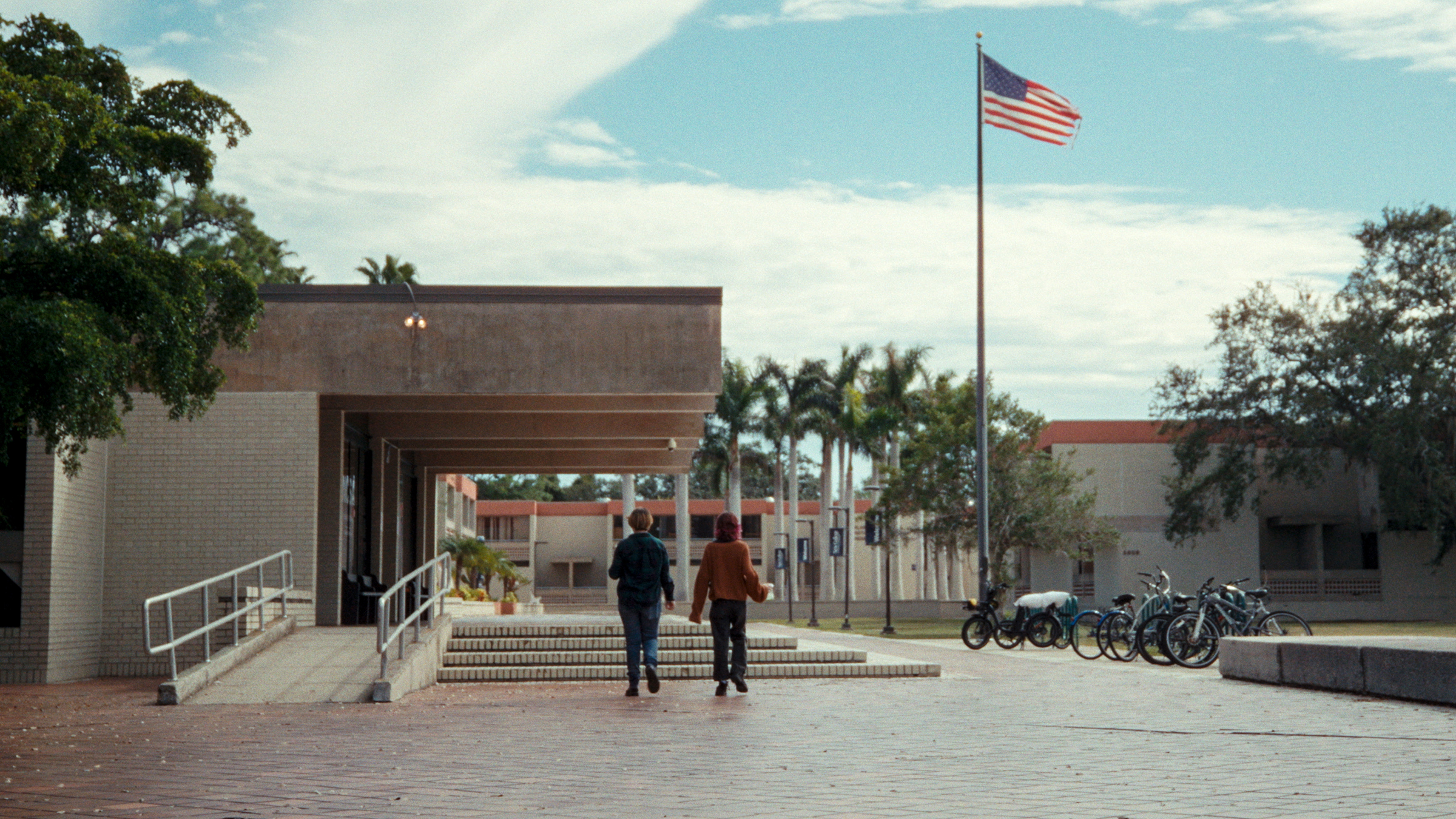
That story is explored in a new documentary making its Texas debut at SXSW 2026. It’s called “First They Came for My College.”

The film’s director, Patrick Bresnan, and one of the producers, Holly Herrick, talked with the Texas Standard about the film and its potential implications beyond Florida. Listen to the audio player above or read the transcript below.

This transcript has been edited lightly for clarity:

Texas Standard: Holly, you’re a Texan, but you’re actually a graduate of Florida’s New College. For those unfamiliar with New College, can you tell us what it was?

Holly Herrick: New College of Florida is the honors college for the state of Florida. And for years, it attracted students from Florida who wanted a very high-quality academic experience but maybe couldn’t afford to go to an East Coast private college.

And it was also an unusual school because it’s very small and it has a very high population of LGBTQ students and it has no grades. So students really guide their own course of study at the school.

So Patrick, why did New College, specifically, get the attention of Florida Gov. Ron DeSantis?
A photo of Patrick Bresnan

Filmmaker Patrick Bresnan. Credit: Erin Brethauer

Patrick Bresnan: Well, Ron DeSantis really wanted to use it as a foundational tool for his presidential campaign.

He had kind of failed going after Disney and he was looking for his next big headline. And he thought going after a college that was very friendly to LGBTQ students, professors and creating this kind of invented “war on woke” could be his platform.

And that was very much designed by Christopher Rufo and several other conservative think tanks.

Well, of course, this is what the whole movie is about, but Holly, could you briefly tell us about what happened next?

Holly Herrick: So the governor of Florida can elect members to the board of trustees of any Florida public school and that is what we saw happen at New College where the board was transformed by the governor replacing these positions. And who they put on the board, they weren’t necessarily people who were connected to Florida, even, or connected to New College at all.

So Christopher Rufo is known as a far right-wing activist. He is one of the main players in the anti-critical race theory movement, if you want to call it that, and he was elected to serve on the board. He has no connection to Florida or even really to academia, but has made this his cause.

And when they elected Christopher Rufo, he announced this as a “hostile takeover” of the New College of Florida. And those words were not retracted by other people on the board.

Well, Patrick, you were there throughout the process. Can you talk about tracking this as it was happening and the relationships that you built with students?

Patrick Bresnan: Sure. I really wanted to make a film that was cinematic and very much in the everyday lives of students and professors.

So kind of the first thing you do when you’re in a hostile environment is try to find safe spaces to get to know students and to eventually film in.

So our first safe space was the student newspaper class. The professor, Maria Vesperi, had been an ethnographic filmmaker. So she was very open to the style of filmmaking. And she was also kind of at the end of her career and not scared of being fired.

Many of the teachers were scared to death for us to film with them. They have families, they have houses, careers. It’s very difficult to find a job right now. So it was an extremely difficult environment to initiate a film.

Well, Patrick, you’re a UT grad. You earned your master’s at UT. Do you see similarities in the tactics that Ron DeSantis took in Florida and what the Republican Party has begun here in Texas?

Patrick Bresnan: Absolutely.

One of my closest friends at UT, PJ Raval, who I can very confidently say is one of the best educators I’ve ever experienced or been in a classroom with — people like PJ, and his partner has even left the state going to teach in Reno, who give students an incredible education that’s based in the real world because PJ is directing documentaries, narrative films, and he’s bringing all of that experience from his everyday practice to the classroom.

These incredible teachers that change students’ lives are at risk in having to leave the state of Texas. And it’s disgraceful, in my opinion.

Holly Herrick: I would add that New College really is seen as the playbook for how to take over public universities and transform the culture. And what we saw was that the practice of using what are sometimes called DEI initiatives, we saw those being used as sort of a Trojan horse for these other policies to come into the university to bring censorship into the classroom.

And that’s exactly, I think, what we’re seeing in Texas, is starting with this idea of there being something wrong with diversity initiatives and then that moving into the actual curriculum in the university.

And this is, after watching what happened at New College, deeply concerning, because you see how this is a direct affront on the freedom to learn and on academic freedom, which is really essential to our democracy: Being able to have professors who are not afraid of being persecuted for what they’re teaching.

If we are afraid of that, then we really have to be concerned about the First Amendment.

Some Texans will be able to see the film at SXSW this week. What do you think they’ll take away from it?

Holly Herrick: For me, this project is extremely personal. It’s about a college that was known for transforming the students. And I think in that way New College really represents the best of what can happen when you go to college and you can really learn more about the world by finding what you love to study.

And what I’m worried about now is places like New College not being available to hungry learners because some parts of our country are afraid of learning and afraid of what they will learn and what they will study.

My hope is that people walk away with a feeling of how important and how beautiful it is that we have the freedom to learn here and to be engaged in preserving that for students in the future.

Patrick Bresnan: Yeah, I think there’s so much to learn in this film.

So this is a film I couldn’t have made at UT because it’s just so big, you know, I would be running from one side of the campus to the other half the day. But because New College is so small, it’s really a microcosm where we get access to all of these moving parts. And we get to see it unfold in real time where that would be so difficult at UT.

And the film really is a blueprint of resistance as much as it is a document that we hopefully look back on in 20 years and we vow to never do this again to academia.

If you found the reporting above valuable, please consider making a donation to support it here. Your gift helps pay for everything you find on texasstandard.org and KUT.org. Thanks for donating today.