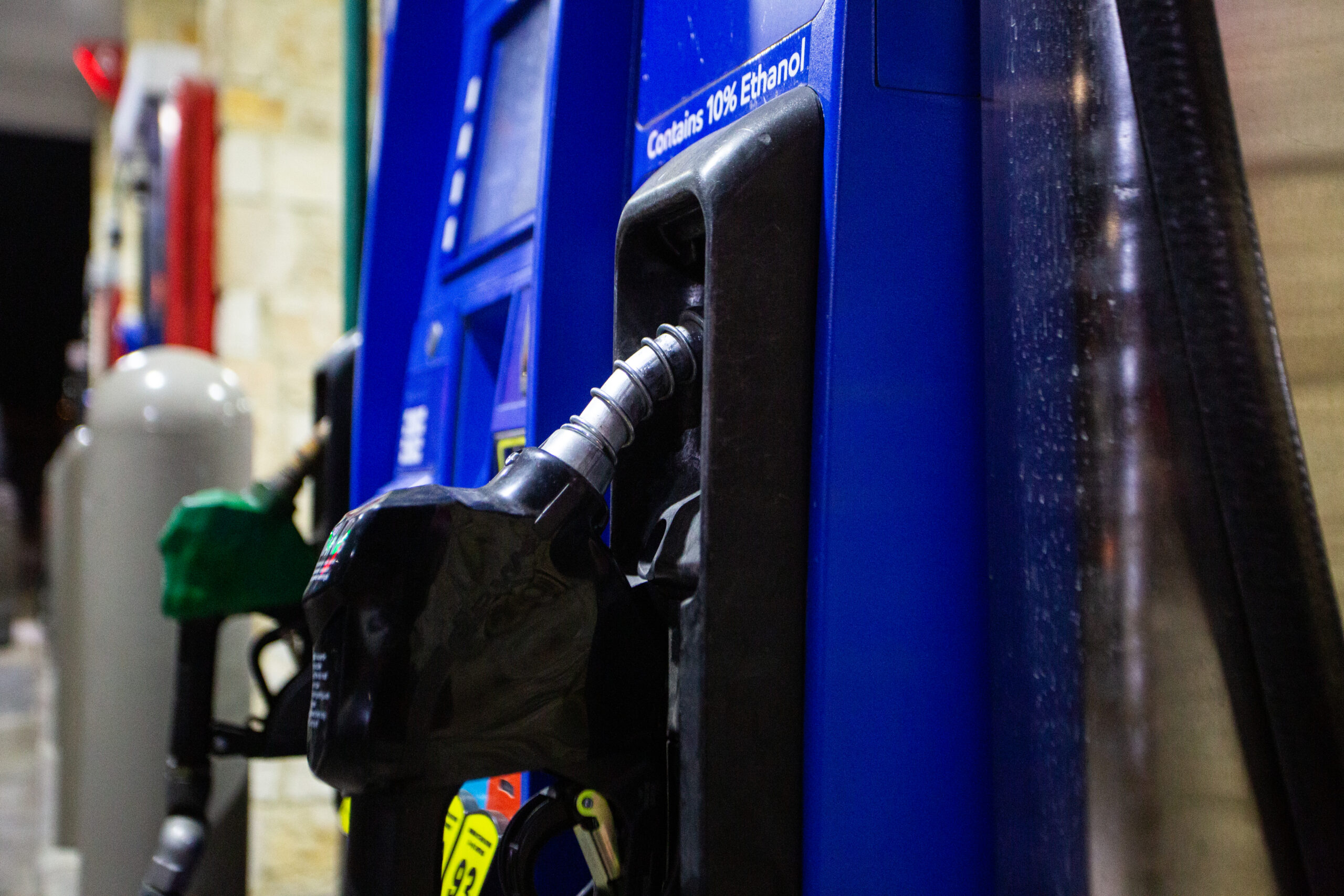
The Fourth of July is almost here, which means millions of Americans will be hitting the roads for the holiday weekend.
According to AAA, a record 72.2 million Americans are expected to make a trip for the Independence Day long weekend. That’s up 2.4 percent over last year, continuing an upward trend since the pandemic.
Matt Smith, energy analyst for Kpler, spoke with the Texas Standard about what travelers can expect and how world events are impacting gas prices ahead of the holiday weekend. Listen to the interview above or read the transcript below.
This transcript has been edited lightly for clarity:
Texas Standard: So we’re looking like we’re going to have another record travel this Fourth of July. Are we talking specifically about personal vehicle use here or all forms of transport?
Matt Smith: A little bit of everything. So, AAA is projecting a record 61.6 million people will travel by car this Independence Day holiday period. That’s an additional 1.3 million versus last year, so it’s up about 2%.
But that strength is not just for the pedal hitting the metal. The number of people traveling by air is also projected to hit a new record as well.
So AAA expects 5.84 million travelers will fly to their destinations this holiday. And so that’s 8% of all Independence Day travelers are going to be traveling via plane. So that’s at 1.4% versus last year, which was also a record.
So strength on the road, in the air, and AAA also projects 4.78 million people will travel by bus, train or be on a cruise. And that’s just shy of 2019’s record. So really, it’s all across the board.
So how long has this trend been on the increase? Has it been every year since the pandemic or have we seen kind of some up and down?
We have been seeing it picking up from the pandemic. It’s felt, over the last few years, we just continue to hit records and records.
And so, you know, [2019] was a record in the first place. And then obviously we had the dip over the pandemic, but now that upward trajectory just seems to be maintaining itself here.
So what are the most popular destinations, according to AAA, domestically, here in this country or internationally?
See what you think about these. So domestically, you’ve got Orlando, Seattle, and New York, and then fourth is actually Anchorage in Alaska, which surprised me.
Internationally, we’ve got Vancouver, which is a bit of a surprise, but then you’ve got Rome, Paris, and London – so these kind of capital cities. So pretty interesting mix there.
So I’m guessing that low gas prices are behind the expected record number of cars on the road this holiday. Has the recent Israel-Iran conflict done anything to derail that?
Well, you’re right. So the bigger picture, is that gas prices are considerably lower year on year.
So for example, right now in the national average, they’re $3.20ish a gallon, which is down about 35 cents year-on. For Texas, it’s closer to $2.75 a gallon. So those lower prices are definitely incentivizing people – perhaps if they’re considering whether to go on a trip or not, it encourages them to do.
That said, what we’ve seen with the Israel-Iran conflict, that did pop oil prices, and they kind of went from $65 up to $75, then they’ve come back down again to that $65 level. But what that means is that that’s kind of working its way into prices at the pump on a lagged basis, too.
So we are seeing a little bit of a bump, unfortunately.
» GET MORE NEWS FROM AROUND THE STATE: Sign up for Texas Standard’s weekly newsletters
So did that rally in oil prices have any ripple effects on U.S. oil production?
It did, yes, but not one that will show up immediately.
So the recent rise in oil prices has been seen along the forward curve for oil. So those prices to buy oil into the future also climbed.
So what that meant is it gave the opportunity for oil producers that otherwise may not be looking to produce as much in the future, the opportunity to sell that future production at a higher price. So essentially lock in price certainty into the future – so at a much higher price than they could have done maybe a month or so ago.
So that should mean higher production in the future here than otherwise expected.
So we’ve heard President Trump last week encourage China to buy more Iranian oil and also more U.S. oil. Is that statement significant?
Absolutely. Well, at least for Iran, because China is basically the only buyer of Iranian crude. So this endorsement is huge for them.
And so while the primary driver is likely Trump kind of shifting focus to try and talk down oil prices by encouraging more supply to the market from Iran, it could also be interpreted as President Trump doing China a favor because essentially giving them free reign to buy these discounted sanctioned barrels from Iran. So it’s a real positive for Iran.
For the U.S. side of things, you know, this is more likely to be wishful thinking than anything just because tariffs applied on U.S. crude by China have essentially killed this trade flow. So we’re just not seeing U.S. crude being delivered into China anymore. The last one was like in early May and we shouldn’t expect it going forward here because it’s just too expensive with that tariff on it.