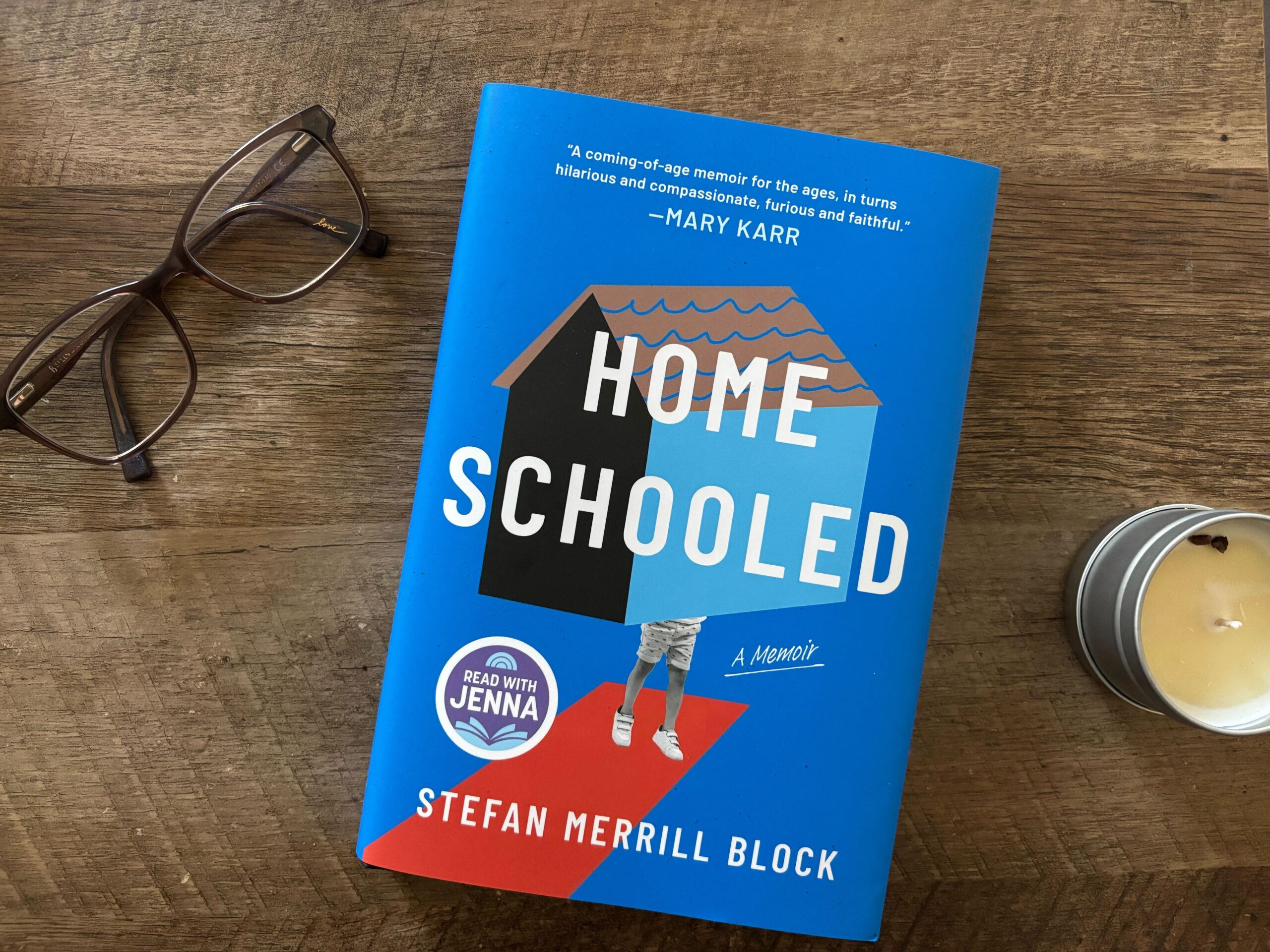
Stefan Merrill Block was nine when his mother pulled him out of public school in Plano. She worried his teachers were stifling her son’s creativity and decided to start homeschooling him.
But Merrill Block was largely left to his own devices and his mother’s erratic whims. He details this experience in his new book “Homeschooled: A Memoir,” and he joined Texas Standard to share more about his story. Listen to the interview above or read the transcript below.
This transcript has been edited lightly for clarity:
Texas Standard: Can you tell us a little bit about your experience of being homeschooled? Was this something that you and your mom had talked about for a while or did all of a sudden you get pulled out of school?
Stefan Merrill Block: It came as a great shock to me, I have to say. We had moved to Texas, to Plano, when I was eight, and we had been living there for a year and a half, not entirely happily.
We had moved from Indianapolis, where my mother had a career and close friends, and those things sort of evaporated for her when we moved to Texas. My school kind of became like the object of her antipathy at that moment.
I was happy to join in with her, to say “yeah, it is a bad school.” I wanted to always be on her side. So at some point where all this conversation led was she told me that she was gonna pull me out of school and that I was going to home school.
It’s worth noting what the background around homeschooling was at the time, because this was before there was a big national movement around the practice. It had just become legal in Texas.
How do you think that backdrop affected your experience as a student?
Homeschool law — then and now — varies state by state. Texas is one of the states where there’s almost no oversight, no assessments.
What I learned was that when my mother pulled me out of school, no one was ever gonna come check on me. It was kind of lawless territory.
It sounds like you got a pretty good bit of math in your homeschooling, but not a whole lot more. What was it like when you re-entered the public school setting?
It was the great trauma of my life. I had been in the sole company of a middle-aged woman for four and a half years and I quickly learned that what impresses a middle aged woman is not what impresses other 14 year olds.
I didn’t know how to take tests. I didn’t know how to socialize, that was the more critical element.
But what I did have was my mother really put an emphasis on encouraging me to pursue my interests. And that stayed with me and it has stayed with me for life, so it wasn’t all negative.
» GET MORE NEWS FROM AROUND THE STATE: Sign up for Texas Standard’s weekly newsletters
Your book contains a nuanced perspective on homeschooling, and centers more on your experiences as a child, your relationship with your mother. What made you want to tell this story?
I spent these four and a half years basically alone in my mother’s company. She passed away during the pandemic and after she died, I was just filled with this feeling that if I didn’t write down these memories, because the only other witness to those years had vanished, it was as if the memories were vanishing too.
My homeschool experience was very isolating and very eccentric, but it does in no way represent all homeschooling experiences.
And just because I believe that some reforms are necessary to check on kids and make sure they’re getting out of the house and socializing, things that would have been helpful for me, does not mean that I am anti-homeschooling at all.
This book includes some pretty difficult details about how your mother treated you — she made you crawl, she colored your hair. Did you pause when you were writing this along the way thinking about your own limits?
What happened as I was revising what I had written, not really even thinking of it as a book at that point, was that I discovered something.
When I read my own story as a character on the page, I started to care about that kid and root for that kid, and worry about that kid in a way that I never quite feel with my own unfiltered experience. I felt as I was reading these memories, which were my own, that I kind of owed it to this kid to tell this story that had been trapped in silence all these years.
Is it giving away too much to ask how things ended up evolving between you and your mother?
Somewhere in the book, I say something along the lines of “her love for me was both the lock and the key.” She loved me immensely, but in this way that ended up hobbling me and imprisoning me.
But the immensity of that love and her faith in me also gave me the confidence to ultimately leave and to turn my back and to deny her. Until the day she died she wanted me back and she wanted me as a little boy again in the house and I was perpetually breaking her heart by not giving that to her.
My greatest regret is that I’m capable of this honesty now and I wish that we had been somehow capable of having these more honest conversations when she was still alive.