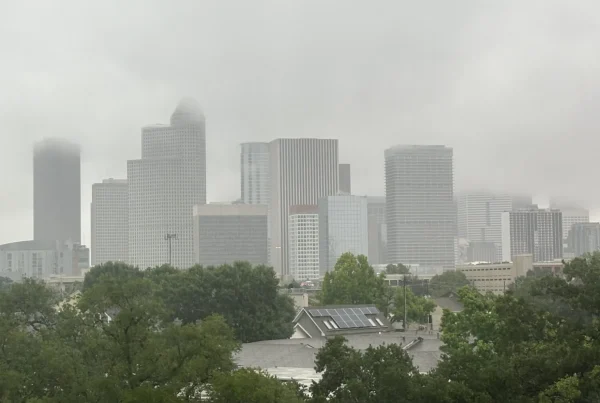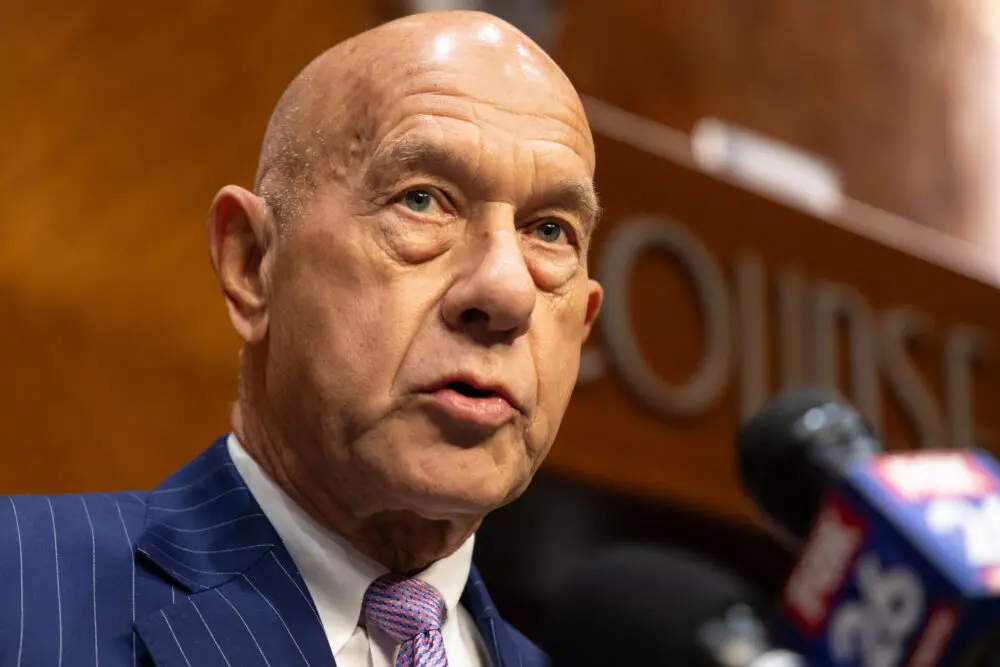
Houston Mayor John Whitmire took office in 2024 with big claims about improving public safety and infrastructure.
He came to the job with years of experience in the Texas Legislature. And even though he’s a Democrat, a lot of people were optimistic he’d be able to work well with statewide Republicans.
But a year and a half into the job, there’s a feeling that the odds are just stacked against Houston’s effort to thrive.
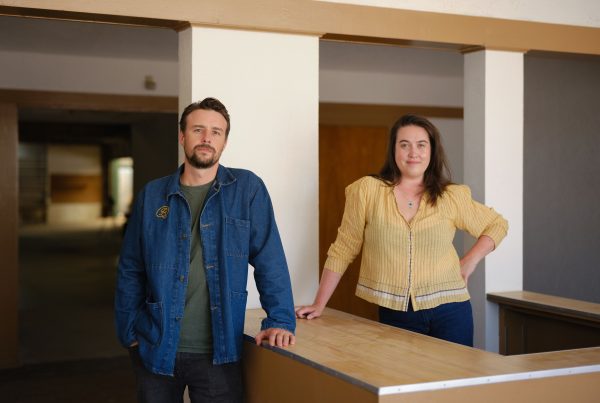
Sam Russek has been writing about this in the new cover story of the Texas Observer. He joined Texas Standard for a discussion.
This transcript has been edited lightly for clarity:
Texas Standard: Well, what are the big issues that Houston Mayor John Whitmire wanted to tackle when he ran for office?
Sam Russek: The biggest one, of course, is public safety. And to an extent nationally, things have looked good on that front. Crime has gone down nationally. Things have looked safer in Houston compared to where they were around the pandemic.
And I think you saw this large slot of kind of, I’d call them like pandemic-era mayors, who kind of came in with crime being their top issue. And then once that’s sort of dealt with, the challenge of governing a city for all those other kind of livability things proves to be pretty difficult to navigate one’s way through.
Well, talk to us about some of the challenges he’s faced in getting the work done. First of all, the city’s finances. What’s happening there?
There are a couple of things. At the state level, there’s a revenue cap on how much the city and municipalities across the state can increase their taxes before going to the voters.
But Houston actually has its own revenue cap that it passed locally in the early 2000s. And that has made it pretty difficult to increase revenues without going to the voters asking them for something that may or may not pan out.
And the biggest barrier now, I think, is the police.
The state sort of forced these anti-defund bills after 2020 through the Legislature, which creates a huge liability for all municipalities, the county and the city, where they’re sort of unable to adapt with the needs of the county based on what crime looks like and what an officer’s salary may actually entail.
It becomes a pretty big price tag for anybody who wants to run the city. You kind of have to navigate around the police and work on the edges to figure out like what changes you can actually make that benefit other people’s lives.
Well, another big one is trying to have what some call progressive policies in a Republican state like Texas. What has Whitmire come up against? And there were really high hopes that he could really work with statewide Republicans.
I call homelessness kind of like one of his big wins, but it’s an interesting kind of roundabout way of understanding how dealing with Republican state leadership works.
His administration went and lobbied at the state Legislature. They had this list of sort of common-sense reforms to help people experiencing homelessness, including expanding Medicaid, eliminating landlords’ ability to keep blacklists of tenants who have been to housing court. And then there’s one on the list that expanded the purview of the police to involuntarily detain people.
And what do you think the Lege did? It expanded the purview of the police to voluntary detain people and it didn’t do the rest.
So it becomes difficult for a mayor to get the budget to do those kind of progressive things, mostly because the police for decades now have been seen as kind of the one-stop shop for dealing with the city’s problems.
And on the flip side of that, when Whitmire, sort of facing pressure from below, moved to decrease HPD’s purview to coordinate with ICE, the state stepped in.
So all of these battles kind of deal with the police as this intermediary. In most cases, what the police want, they get, and what the mayor wants better be what the police want.
Well, let’s shift to the role of the mayor itself in Houston. You’re right, it used to be a so-called strong mayor position. What do you mean by that and how did it change?
I sort of argue in the piece that Houston is the strongest of such strong mayor systems in the country. There are cities like New York, Los Angeles, Atlanta, Jacksonville, where the mayor holds large executive authority powers — appoints, removes and oversees all administrative departments. But then unlike other strong mayors, Houston also controls the city council’s agenda and provides as a voting member.
So, on one hand, Houston’s mayor has this like near-autocratic power, the most autocratic you can get within the structure of municipal politics in the country. And at the same time, voters don’t seem all too interested in who is holding that extremely important position.
Houston’s mayoral turnout is higher than weak-mayor cities like Dallas and Fort Worth who have like a city manager other than the mayor. But then when compared to strong-mayor city peers, Houston’s overall voter turnout ranked dead last.
So there’s this kind of apathy where you would expect deeper interest. And that’s kind of where the story started for me, trying to figure out why Houston’s politics are often seen as kind of muted compared to its national peers.
Well, the title of your article is “The Last Mayor of Houston.” What are you trying to say about the future of the city’s leadership and maybe does it apply to other Texas cities?
Dallas is in a similar position, you know. They call it the “donut,” where the suburbs are becoming so much stronger and more kind of economically powerful. And it’s hollowing out, kind of, the center node that is Dallas.
And in Houston’s case, I think something similar is playing out. For decades, what Houston did to kind of expand and maintain its tax space was to annex all this land, but that ability was kind of curbed in the state Legislature in the ’90s and then again in the 2010s. At the same time, Sugar Land grew by like 1,100 percent.
So [Houston is] dealing with large cities in their own right. And in doing so, the statutory powers that kind of exclusively apply to what happens within Houston go out the window when you’re dealing with kind of coalitional and regional partners.
Whitmire still has time ahead of him in his first term. What does he say about what can be accomplished?
I think he is still optimistic. When I reached out for a statement from his office, he points out that Houston itself is still an economic engine for the whole region and that the relationship with the state is better than under Mayor Turner, the former mayor.
Overall, I think he has to kind of has to put on this chipper veneer to maybe distract from a lot of the things that Houstonians kind of feel implicitly. I think Kinder just did a poll recently that showed that within Houston, the year-to-year confidence in the economy has plummeted to a point similar to the 1980s oil crash. And the fact that people are feeling similar things now sort of shows you the odds are frankly against Whitmire.
I think his coalition is still pretty strong, but moving into next year when we begin thinking about re-election, I think there are going to be people who are interested.