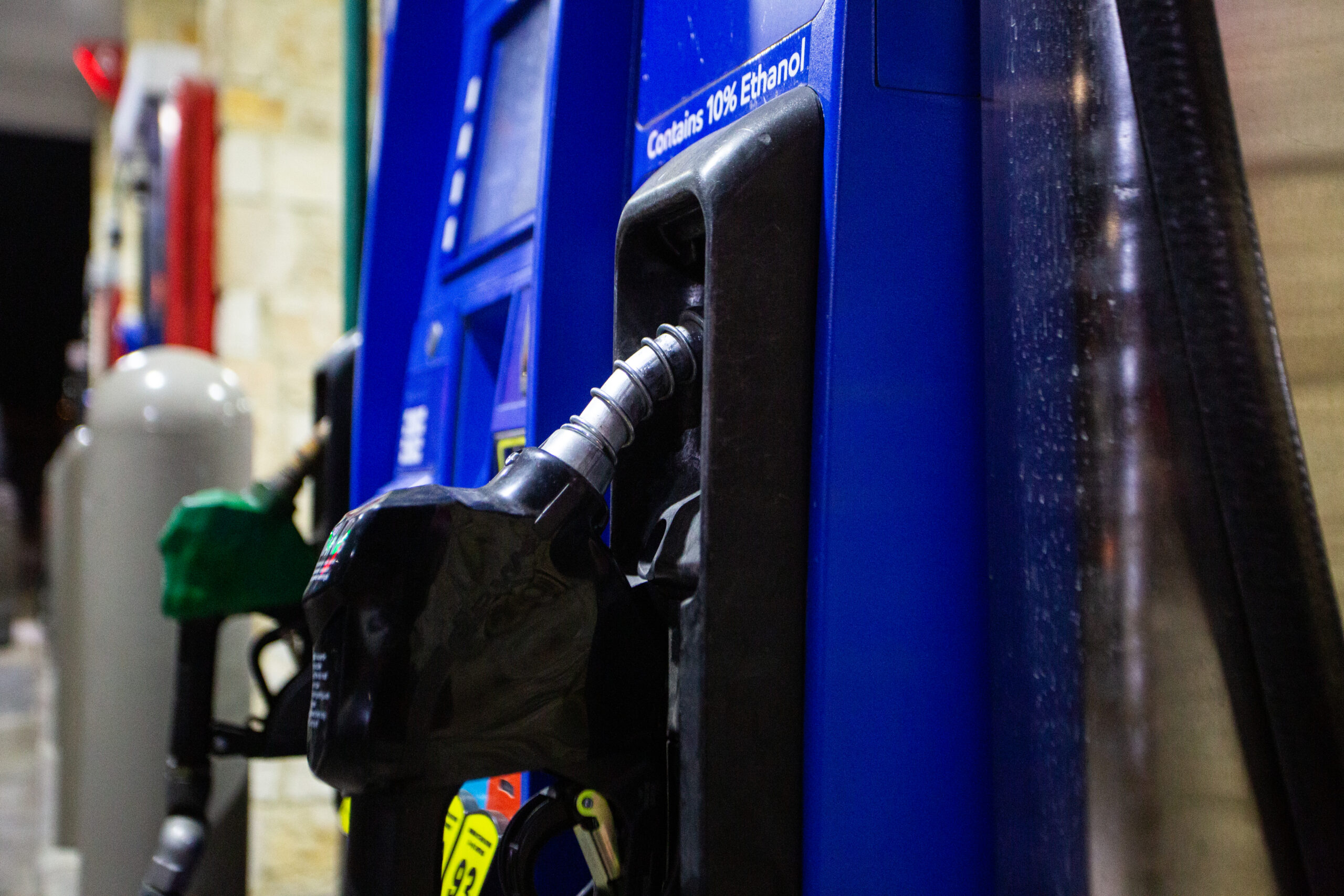
Since the start of the U.S. military action in Iran, average prices for a gallon of gas have risen from roughly $2.70 to over $3.50 a gallon in parts of Texas in just over a month. Out in El Paso, prices are currently above $3.80 a gallon, and things are worse in some other parts of the country.
But things could get much more serious things.
Matt Smith, head oil analyst at Kpler, joined Texas Standard to explain. Listen to the interview in the player above or read the transcript below.
This transcript has been edited lightly for clarity:
Texas Standard: I know much of your concern comes down to the Strait of Hormuz, which has been virtually shut down to traffic. As we enter the fifth week of this conflict, what do you see as the knock-on effect that you think many folks haven’t come to terms with?
Matt Smith: Yeah, sure. It’s just such big numbers, right? And the length of how long it has been closed and how much longer it can potentially still be closed for.
So we see a third of the world’s crude exports on a seaborne basis passing through there — 20% of the world liquefied natural gas exports, 15% of world’s clean product exports. And so that’s the immediate issue, is that that product and that crude is not flowing.
But what that means is there’s also been a delayed impact because we’re still seeing those products that loaded before the war started and they’re still heading to their destinations and so they’re still just finally discharging in Asia.
But what this means is then, right now, in the next few weeks, is when things really start to get a lot worse because these various refineries in Asia are not getting the oil they need to produce the jet fuel, the diesel, the gasoline. You have Africa, which is not getting the gasoline or the diesel that it needs.
And so the ramifications of this is really going to be kicking in over the next few weeks here.
» AFFORDABILITY IN TEXAS: We want to hear how gas and grocery prices are impacting your life
I’m hoping you can spell this out because we don’t rely much on oil from the Strait of Hormuz and I think a lot of Texans feel like we’re insulated from major price hikes — the sort of thing that people would be facing in Asia and in Africa and other parts of the world — because of local supply.
We are insulated from a supply perspective because the U.S. is producing its own gasoline. You know, our refineries run at 16 million barrels per day.
But we are not insulated from a price perspective because our prices at the pump at your local gas station are influenced by the price of oil, and oil is influenced by global factors. And that rise that we have seen is what is charging gasoline prices higher here.
How much is Texas oil going to supplement shortages globally?
That’s a great point. And so as we’ve seen the Trump administration essentially trying to keep oil prices down, that is keeping U.S. oil prices down relative to global benchmarks.
But what that does is make it that much more attractive to be exported out into the global market. So April crude exports from the U.S. are going to hit a record because they’re relatively more attractive than other country’s oil.
» GET MORE NEWS FROM AROUND THE STATE: Sign up for Texas Standard’s weekly newsletters
Earlier today on social media, President Trump warned Tehran to open the Strait of Hormuz or, quoting here, “we will conclude our lovely stay in Iran by blowing up and completely obliterating all of Iran’s electric generating plants, oil wells and Kharg Island.”
Now there are some independent reports that seem to confirm there’s some sort of talks happening, but you follow these oil markets extremely closely. What do you see happening next? What is your concern right now?
Our concern is that the Strait of Hormuz remains closed for the next three to four weeks here. And then even if it does start to open back up again, it’s going to take probably a couple of months to get back up to normal.
So it’s gonna be the summer by this time gets this gets fixed anyway, even if things are resolved relatively quickly here. So that is the concern, that this is going to get much worse before it gets any better.
You mentioned that you’re concerned people don’t really fully grasp how serious this is. And I’m curious because this has been in the news. Is it that people, I mean, don’t realize just how high our prices could become, could go or what?
Yeah, so you’re looking at that price of gasoline and seeing it move higher. But jet fuel is $200 a barrel now. Diesel is close to that as well. So even though gas prices have risen, diesel prices are up by 44%, something like that over the last month. And that is going to work its way into everything that is trucked around the US.
So we’re going to be paying more for our goods, starting with groceries, because the vast majority of them are moved around the country on diesel-powered trucks.