Artist James Magee didn’t begin his career in El Paso. The painter, sculptor, poet, video and filmmaker passed through far West Texas in the late ’70s and decided the Chihuahuan Desert was where he belonged.
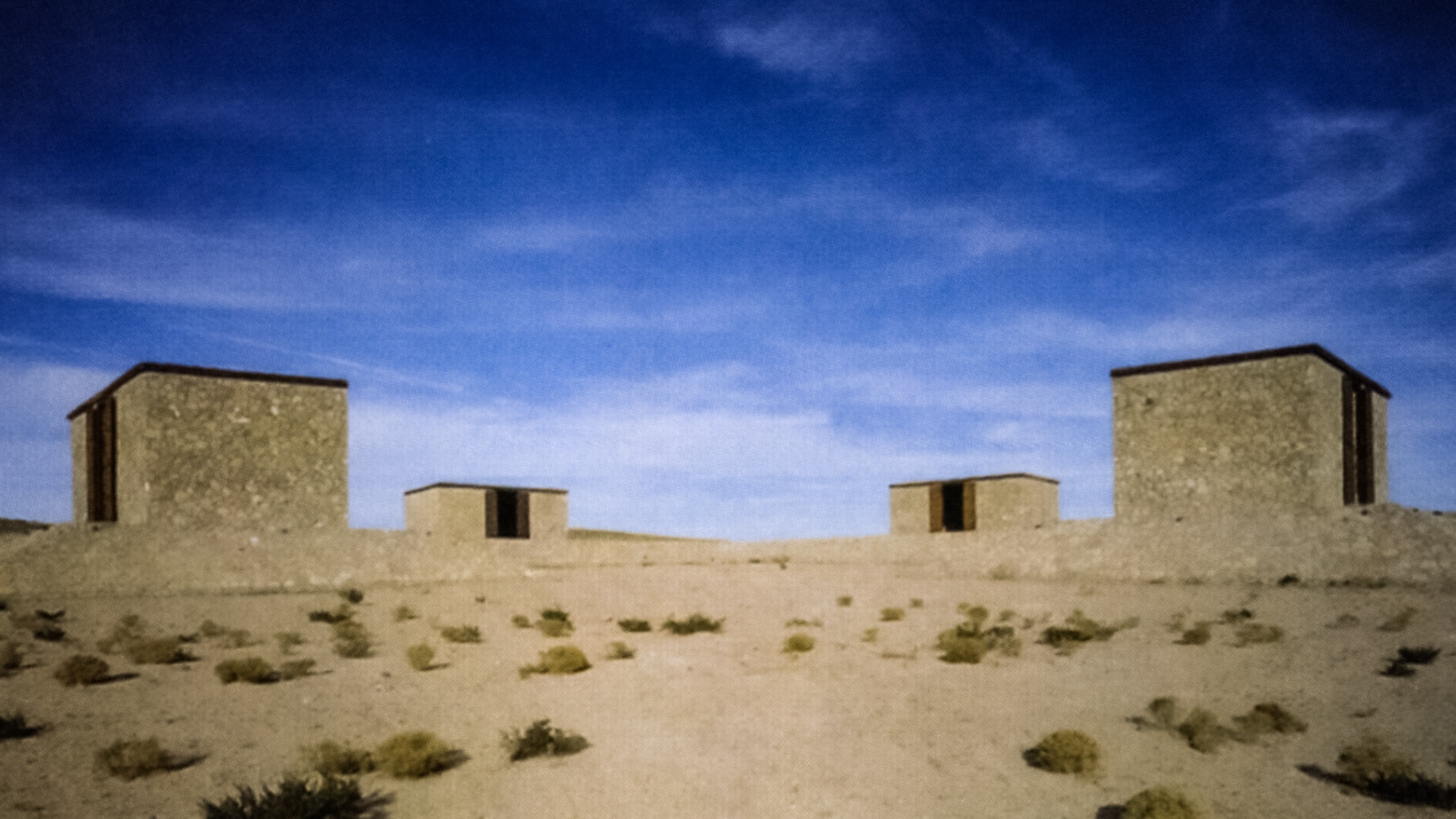
It’s where he decided to erect his life’s work: Four stone buildings in the shape of a cross, 70 miles east of El Paco. It’s called The Hill.
Magee worked on it for the last four decades of his life before his death in 2024 at 79 years old. By that time, only about 200 people had made the trip to see it.
But now, the Cornudas Mountain Foundation, a nonprofit that Magee and his family created to oversee the site, is trying to welcome more people.
Chi Pham wrote about this in Texas Highways Magazine. He joined the Standard to discuss. Listen to the interview in the player above or read the transcript below.
This transcript has been edited lightly for clarity:
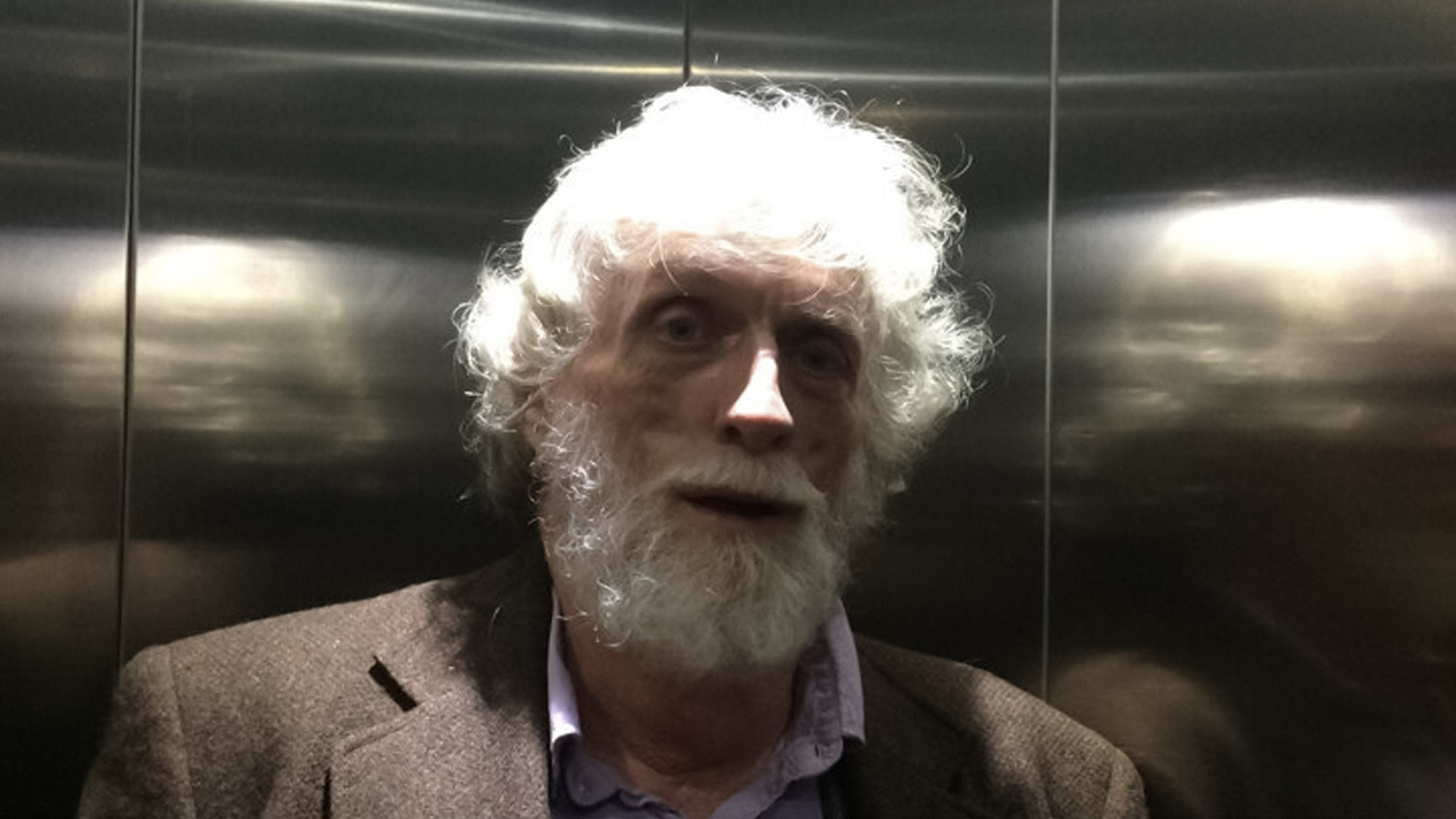
Magee earned his law degree from the University of Pennsylvania in 1971. Tom Jenkins, Courtesy Cornudas Mountain Foundation
Texas Standard: Tell us about the buildings that make up The Hill.
Chi Pham: The building itself was built entirely without a plan. Magee himself built it all, basically just measuring everything out ad hoc with a string.
It sits in this cruciform plan, four stone buildings around 17 feet tall, very large. And of these four buildings made of very rough-cut shale rock, they all — at least all three of them — have these very large, altarpiece-like installations made of wood and metal, organic material, very much of an industrial presence.
The fourth building, unfortunately, was not completed at the time of Magee’s death, and Magee did stipulate that all construction would cease upon his death.
So The Hill itself resembles part of the environment. A lot of critics compare it to Stonehenge in the sense that being of such classical proportion, as if it endured history all this time. So yeah, very just monumental sculpture.
Well, I understand this started as like a private enterprise. What was Magee’s intention in creating it?
Very often, The Hill is described in very solitary terms. And of course, it is one man’s labor. But at the same time, Magee has always been someone very deeply interested in the human being and forming intimate connections with an observer.
There’s so many installations in The Hill that require human effort to participate in. For one instance, there is this piece that he constructed from the floor in which a group of people are required to pull on these chains in order for the floor to raise and reveal the artwork beneath, which I think exemplifies Magee’s interest in the person while being, of course, someone who didn’t necessarily desire this traditional audience as a museum setting would necessitate whenever he would invite people to embark on this pilgrimage.
Groups were kept very small, around six individuals or so, but I do think these visits and their increasing frequency are all a part of his larger vision to engage the public. Still intimate, but still very deeply penetrating.
Well, I understand going out there isn’t so easy for everyone, depending on where you live in Texas, and it also costs $250 per person. What does the visit entail? You mentioned it’s interactive in some ways.
Each visit takes place starting in downtown El Paso. And what the fee covers is mostly the upkeep and the labor behind The Hill.
Magee constructed these very large portals and gates that must be open before any visit can take place, which does require a very sizeable, but not too-pronounced crew. And it’s about a hour and a half drive to Cornudas.
On the trip, visitors will see, of course, sights of the snow-capped mountains of the Chihuahuan Desert and of the Cordnudas Mountains. And through there, The Hill almost appears as a vision emerging naturally from the desert. It’s a bit almost indiscernible until you really approach it.
The foundation is actively seeking to make the cost less steep, but all of the $250 fee is directly contributing to The Hill’s maintenance and to The Hill’s upkeep.
So even though Magee is gone, I understand that visitors also get to hear his voice if they visit.
Yeah, so his titles that he composed for each installation on The Hill were essentially very long prose poems.
It sort of complicates being able to formally consider The Hill just a sculpture. It was a fundamental aspect of The Hill and something that I think exemplifies that The Hill was always supposed to be an intimate experience.
He believed in the fragility of each word and each utterance. And he saw The Hill as perhaps his most important utterance that he would make in his lifetime.