Longhorn Ballroom celebrates 75 years of music history with big plans for the future

The Dallas venue, now on the National Register of Historic Places, has hosted a diverse array of acts – from Bob Wills and Nat King Cole to the Sex Pistols and Selena.

By Leah ScarpelliDecember 19, 2025 11:57 am,

I’m at the Longhorn Ballroom on a stormy fall afternoon. Owner Edwin Cabaniss is showing me around.

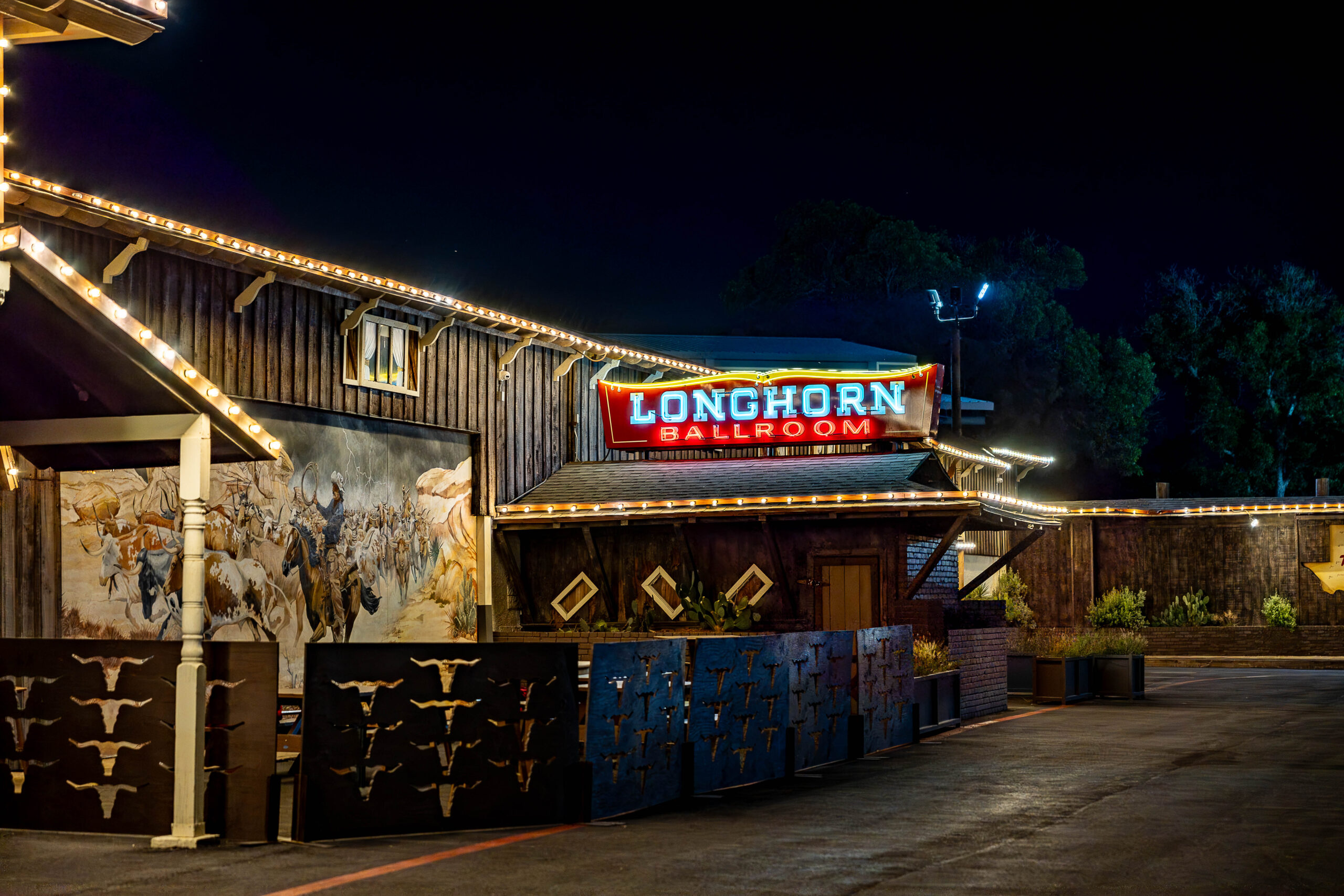
It’s a sprawling structure, sitting on six acres, with a capacity of over 2,000 people in the main venue. A two-story building sits across a parking lot from the entrance. That used to be a motel.

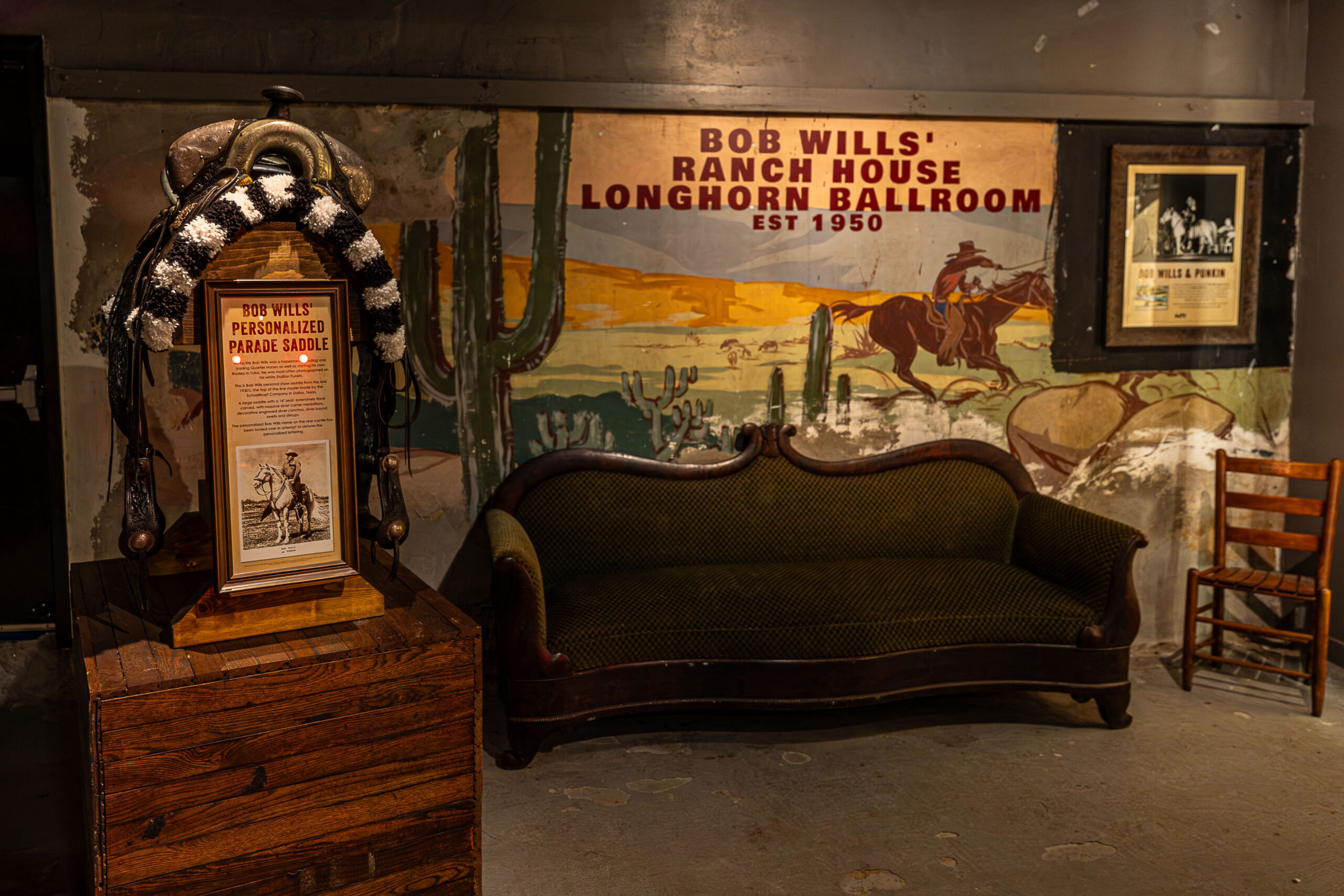
Part of Cabaniss’ renovations include an exhibit of the King of Western Swing, Bob Wills, just inside the front door. We look at a photo of Wills and his band, the Texas Playboys.

“They would come and they would really stay for about six weeks,” says Cabaniss. “And they’d play four shows a week. So the motel was built to host the band.” 
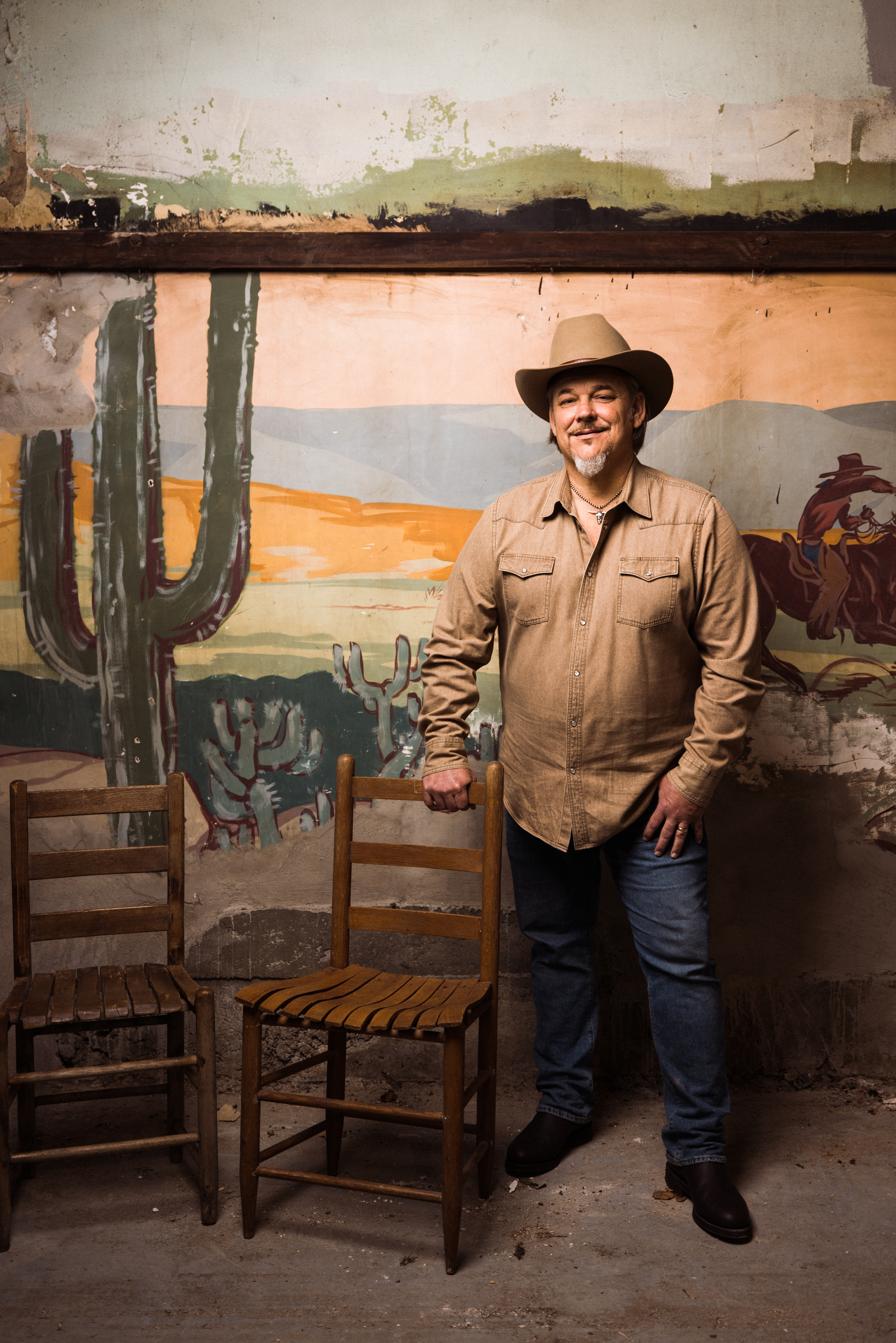
Longhorn Ballroom owner Edwin Cabaniss. Emma Delevante / Courtesy of the Longhorn Ballroom

There’s also an original barn where band members stabled their horses, taking them on rides along the Trinity River. Wills would even ride his horse Punkin’ across the dance floor with rubber shod shoes. 

Inside, near the Bob Wills exhibit, there are dozens of black-and-white photos of artists that have played the venue over its 75 years. They’re part of a magnetic framing system, allowing for the photos to be easily rearranged.

Cabaniss describes what he wants visitors to experience.

“So when you walk in here, I want to make sure that your sight lines are incredible, your sound is good, you can get to the bar quickly,” he said.

As we walk further into the venue, Cabaniss explains some of the other renovations done since he bought the property in 2022.

The bar tops have been redesigned with silver longhorn logos, and the floorboards replaced. The 75-foot stage can be seen from nearly everywhere, once Cabaniss removed a tent pole from the middle of the dance floor. There’s an upgraded sound system and private suites along the back wall.

Cabaniss says he was in charge of functionality and his wife, Lisa, aesthetics. The modernized venue is a far cry from what it looked like as Bob Wills Ranch House.

Bill Sanderson is a journalist who’s publishing a history of the Longhorn Ballroom next year. He’s also collected 65 oral histories about the venue.

“The footprint, the boot print, no pun intended here, was Texas western movie set decor,” says Sanderson. “The things that held up the roof were fashioned as swirl cactus, painted green. There [were] ten of ’em throughout or more. The lights were on wagon wheels throughout the building – big wagon wheels with lights.”

I ask Sanderson why an entire venue would be built and named for one performer.

“By the time he came to the Bob Wills Ranch House, he was, as the saying goes, he was nationally known as Coca-Cola,” Sanderson responds.
Andrew Sherman / Courtesy of the Longhorn Ballroom

Sanderson says when the venue opened in November of 1950, the city even hosted a parade.

“They cordoned off Main Street,” says Sanderson. “ ‘Welcome Bob Wills’ across the deal and they closed businesses for the great Bob Wills parade with the four governors. And they had Youngblood Fried Chicken for everybody who was in the parade.”

But by 1952, Bob Wills left the venture, financially ruined. A Dallas millionaire named O.L. Nelms had built the venue for Wills but the people who ran it weren’t the most trustworthy.

Sanderson says much of what he knows about this time comes from a biography written by Dr. Charles Townsend called “​​San Antonio Rose: The Life and Music of Bob Wills.”

“It was a debacle for him,” says Sanderson. “The man that managed it, he had fake accounts and he didn’t pay the taxes. And then had all these jobs that were done that weren’t even jobs, that were paying fake contractors. So he got just completely ripped off.”

After Wills’ exit, Nelms leased the property to Jack Ruby – a troubled man who suffered from depression. Ruby would end up murdering Lee Harvey Oswald in 1963 after Oswald was arrested for the assassination of John F. Kennedy. Owner Edwin Cabaniss calls Ruby one of the “nefarious characters” involved with the venue at the time.

“So Jack Ruby is originally Jack Rubenstein,” Cabaniss said. “He’s a Chicago man. He came down to Texas. A lot of people, if you look at your early 1950s, what was going on in Texas, there was a pretty big mob presence here.”

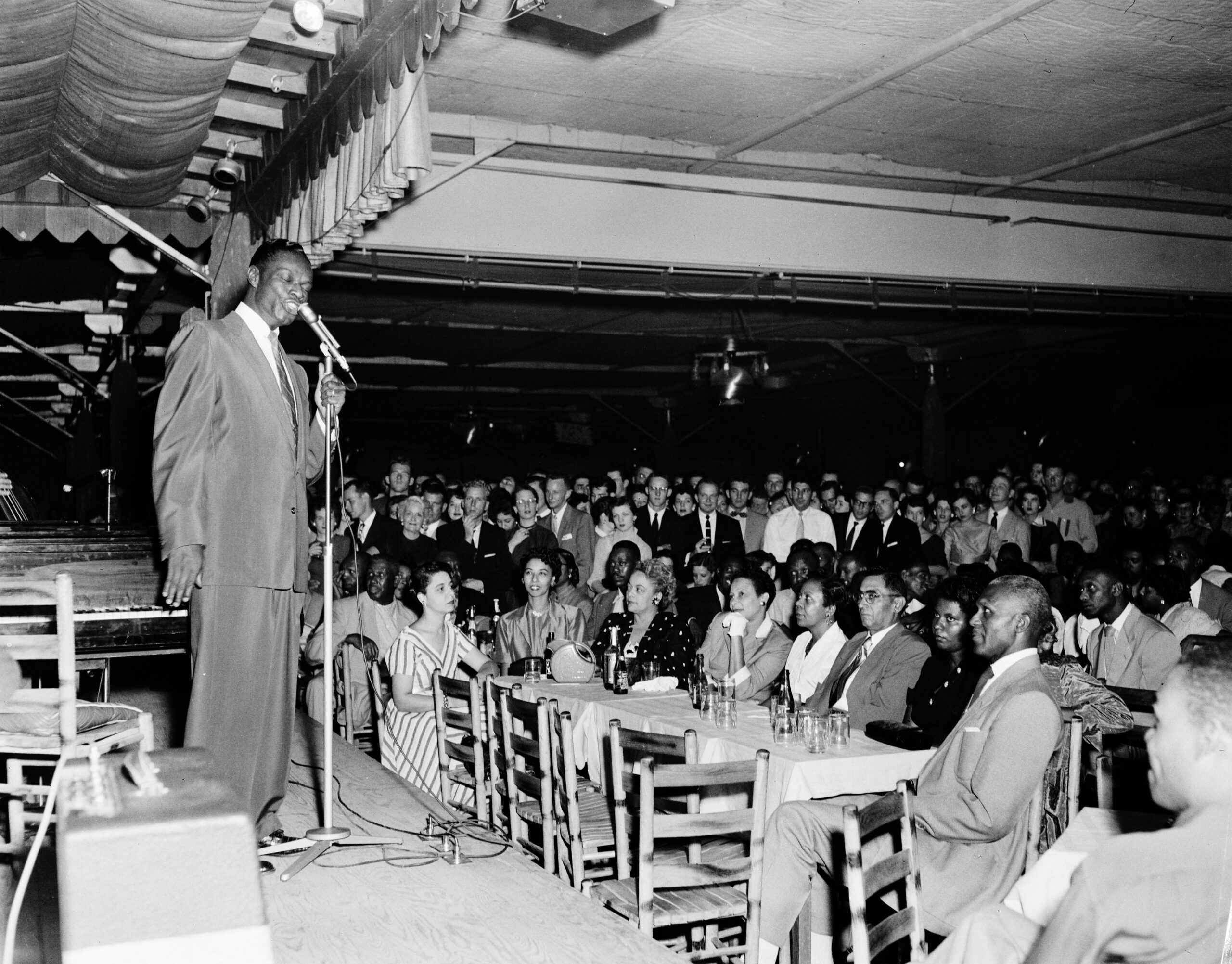
Ruby was a troubled man suffering from depression and delusions. But during his time there, he would lease the venue out to Black performers. A photo of Nat King Cole performing at the Longhorn hangs in a space beyond the main stage area dedicated to showcasing photographs of artists who’ve played the venue.

Cabaniss describes it: “If you look at this picture of Nat King Cole on the stage, what you see there is something very, very unique. I mean, this is an integrated crowd in 1954.”

R. C. Hickman Photographic Archive, The Dolph Briscoe Center for American History, The University of Texas at Austin / Courtesy of the Longhorn Ballroom

Nat King Cole performs at the Longhorn Ballroom.

Jack Ruby is sitting right in the middle of the mostly African-American fans.

“So we think that Jack probably paid the cameraman a little of the side money and said, ‘Okay, put me right in the middle of the picture and you know, and this will live in infamy.’ Jack probably didn’t realize he’s gonna be a lot more famous just a short nine years later.”

O.L. Nelms, the man who built the venue, would create a partition in the mid 1950s with one side known as the Guthrie Club where Black entertainers performed – mainly on Mondays when much of the African-American service industry crowd had nights off.

Around the time that Jack Ruby ran the venue, a performer and record label owner named Dewey Groom became involved playing in the house band. He was also a bandleader much like Wills and performed with his group, the Texas Longhorns.

» GET MORE NEWS FROM AROUND THE STATE: Sign up for Texas Standard’s weekly newsletters

After parting ways with Ruby, Groom opened a place called the Longhorn Club. When he returned in 1958, what was originally “Bob Wills’ Ranch House” became “Longhorn Ranch.” He would soon rename it the “Longhorn Ballroom.”

“It was Dewey [who] had a vision to make it a – he would not let you call it a honky tonk.”

Bill Sanderson shares the atmosphere Dewey Groom created when he began running the venue. He would officially buy it in 1968, and to this day, is the the longest-serving owner and operator.

The restrooms had attendants to them,” says Sanderson. “He had a shoe-shine guy, and they had hamburgers, the best hamburgers you could ever imagine. The brilliance of it was that it was all the ladies – they met you at the door in these flouncy short skirts, white boots, and a red neckerchief and fringe vest and and big hair and called you ‘Dorlin.’ You know, not ‘Darlin’ – ‘Dorlin.’ And they would lead you to the place to sit down.”

Groom also had air conditioning installed.

The house band at the Longhorn was arguably – it’s the best band in Dallas, certainly, if not in the state,” adds Sanderson. “And Dewey always played a set.”

Bill Sanderson actually grew up next door to the Groom family. He became good friends with Dewey’s son Doug and worked at the Longhorn Ballroom in his twenties. He once told Dewey Groom that he should write a history of the venue. 

“About six months later he just handed me this history that he wrote, handwritten,” says Sanderson. “And so I put it away in a place that I would never lose it.”

Bob Gruen / Courtesy of the Longhorn Ballroom

But it was also a place where Sanderson would never find it – until six years ago when he was looking for something else. 

Sanderson also worked as a bouncer at one of the venue’s most historic concerts. He’d write about it, too, in his student newspaper. It was 1978.

“People were calling up and saying, once it got out that the Sex Pistols… ‘You can’t have them here’,” says Sanderson. “’They bite heads off bats.’ You know, ‘they’ll spill blood there’ and there was an assassination attempt called in and they’re gonna shoot Johnny Rotten or Sid Vicious or something. People didn’t have enough to do but worry and worry about what they didn’t understand. It was a great night, though.”

Back at the venue, in the museum space, hangs a photo from that show. Owner Edwin Cabaniss describes it:

“We’ve got looking at us here is Sid Vicious, gazes right into our eyes. He is bloodied up, and you see, you know, Johnny Rotten just yelling and screaming. And you see the Sex Pistols on the stage.”

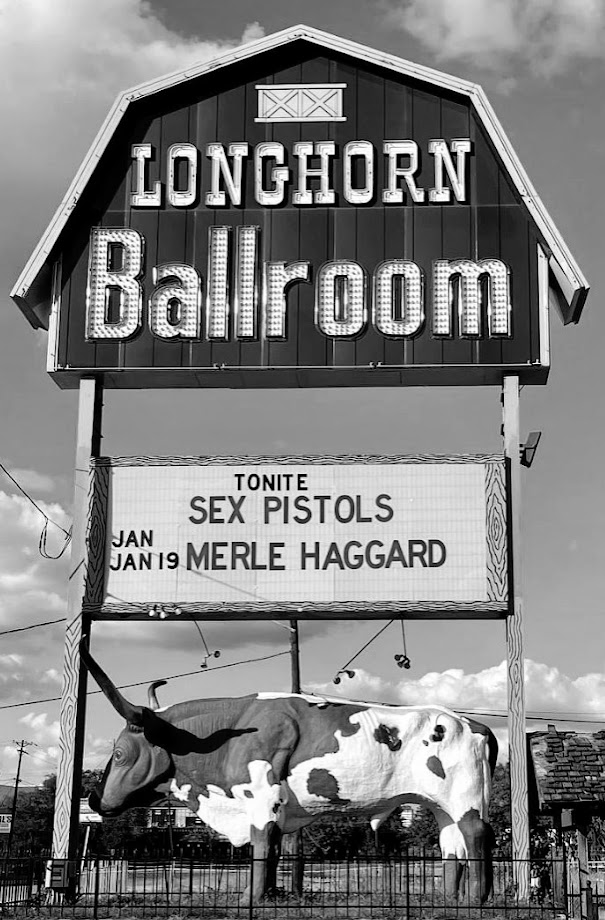
Merle Haggard played the Longhorn just nine days later and shared a marquee with them. The sign is now an iconic image, printed on t-shirts that the venue sells. 

Other punk acts like the Ramones would play at the Longhorn Ballroom, as well as some of the biggest names in country music – Loretta Lynn, George Jones – and Black artists like Otis Redding and Bobby “Blue” Bland, who Mick Jagger came to see. There were live broadcasts and recordings – like Ernest Tubb on New Year’s Eve in 1979.

“It was a ‘to-go’ place,” says Sanderson. “If you want to go a night out, and that’s not even touching the story of the rhythm and blues on Monday nights, because that was straight up Carnegie Hall. That’s a straight quote from Bobby Rush, two-time Grammy winner. He said it was just like ‘if you play in the Longhorn, it was like playing Carnegie Hall.’”

Dewey Groom would sell the Longhorn Ballroom in 1986. Sanderson says he always referred to the venue as a “pink elephant” – a play on “white elephant,” or something hard and costly to maintain.

What came after is what Bill Sanderson calls a “revolving door of owners.” In 1996, Raul and Rosalinda Ramirez bought the Ballroom and used it to host events, but also brought in bands like La Mafia, and a young singer named Selena.

Some of these artists are paid tribute in the modern-day venue. Among the photographs from live performances are 12 shadowboxes featuring memorabilia from musicians like Tammy Wynette, Ray Benson and Waylon Jennings.

Charley Crockett played Waylon’s guitar on the last two songs of his set at the Longhorn. Cabaniss says the shadow boxes will turn over to feature different artists about once or twice a year.

We walk to another room – the only one Cabaniss says his wife let him design. It’s called the proprietor’s lounge – paying tribute to those who kept the Longhorn going. There are photos of O.L. Helms, Dewey Groom, and Raul and Rosalinda Ramirez.

Cabaniss says he’s still not sure if his picture will make the wall.

“To be determined on me, right?,” he said. “To see if we ever get to make the wall, but there’ll be some time.”

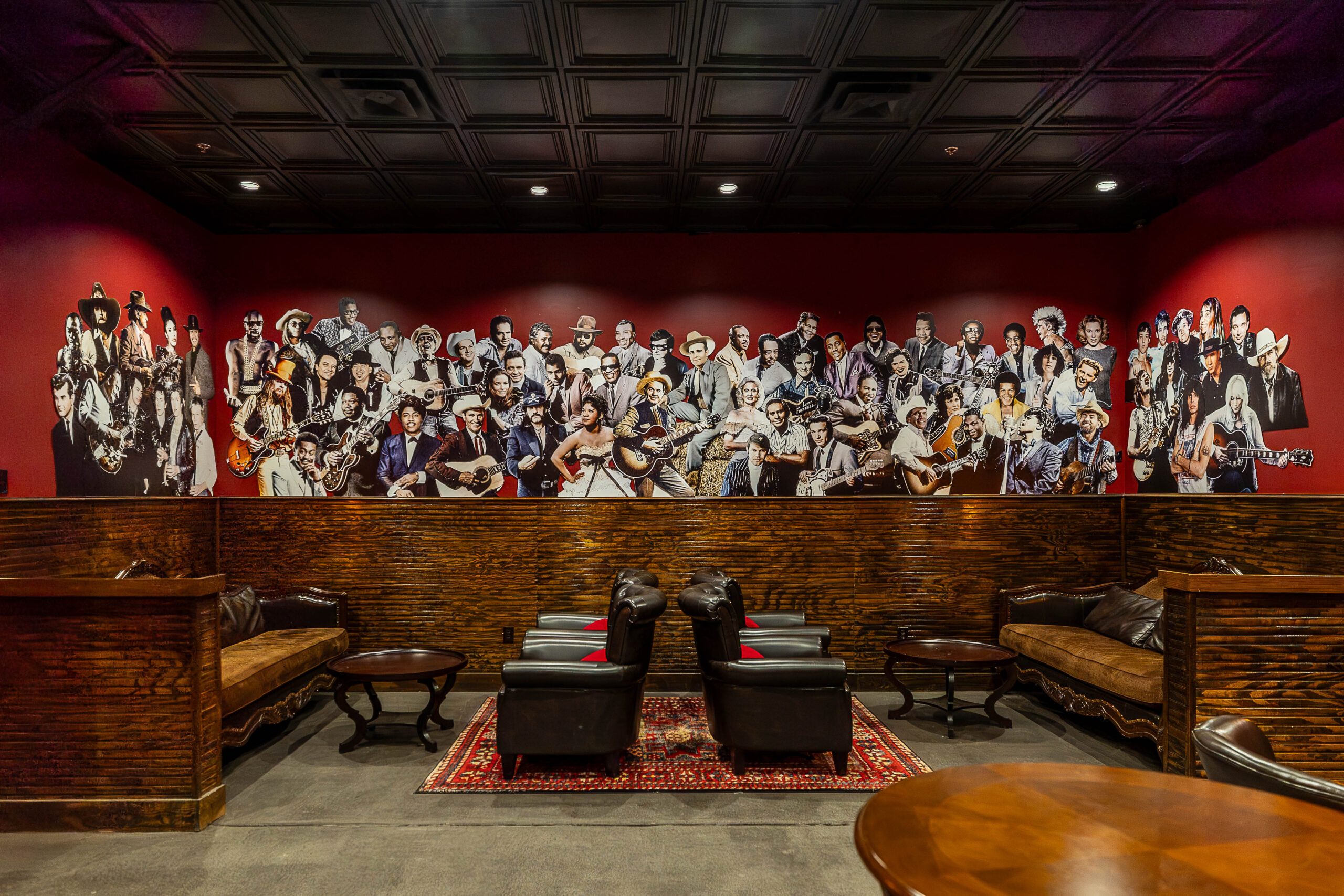
It’s a dark red space, with leather chairs, an original bar, and 62 pictures of artists Cabaniss calls the “Legends of the Longhorn.”

Andrew Sherman / Courtesy of the Longhorn Ballroom

“What I like over here is here’s two contemporary characters,” says Cabaniss. “This is Lemmy from Motorhead. And that’s Ruth Brown. Ruth Brown was kind of the original kind of queen of soul before Aretha took the title. But you know, she came through in the early ’50s and played here. Of course, Ray Charles, Charley Pride, Johnny Cash…”

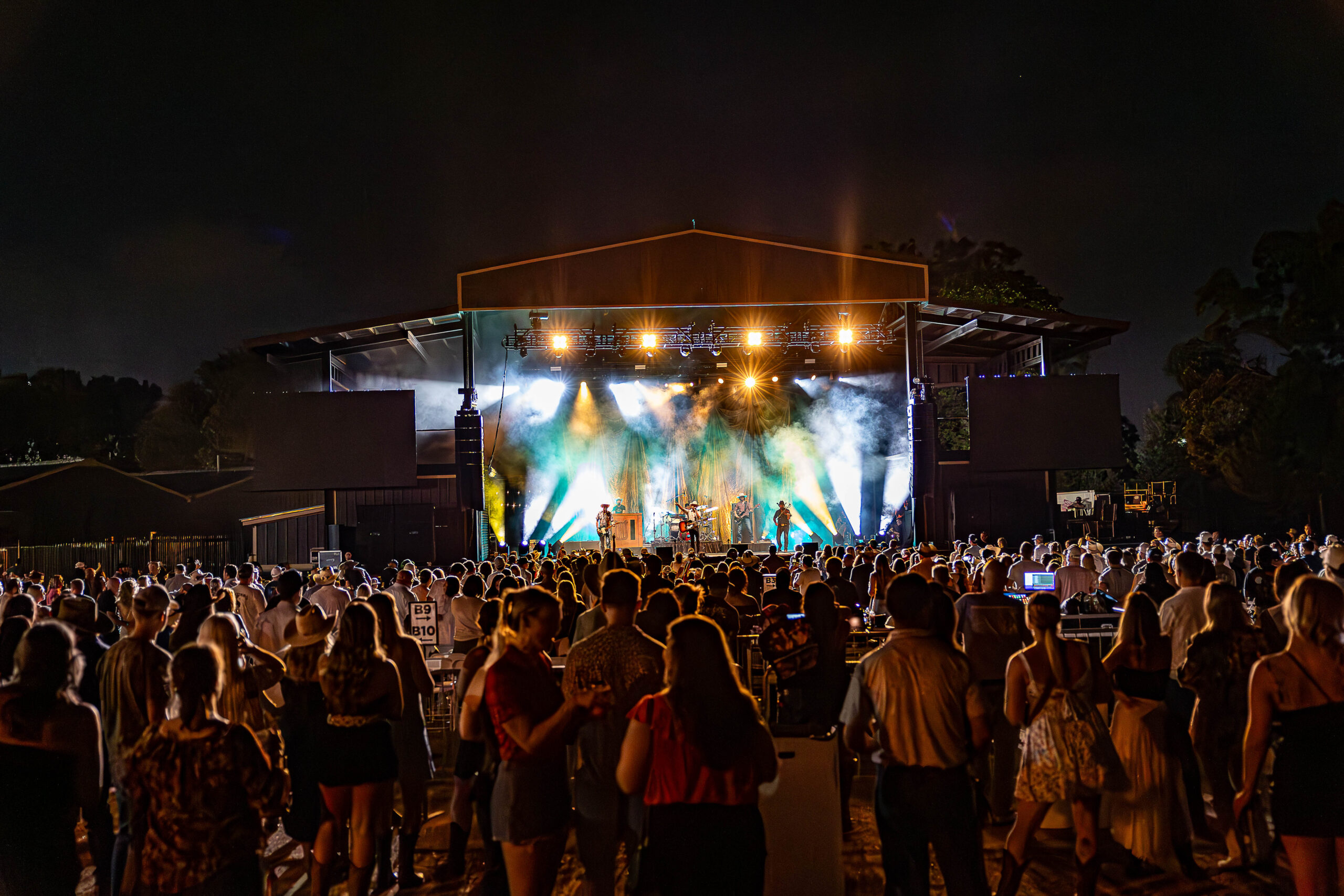
Our last stop is outside behind the venue to see a brand new amphitheater with a 72-foot wide stage and a capacity of 6,500 people. It’s called the Longhorn Backyard Amphitheater. When I visited, the venue had hosted two shows here – one with Randy Rogers.

It begins to rain as Cabaniss talks about his hopes for the Longhorn’s future.

“Our family has a chance to be a steward of this iconic place,'” he said. “And you know, we’re taking full advantage of it right now and doing that, but we realize if we’ve done it right, it’ll be around another 75 years and we’ll turn it over to someone else to do it. Maybe my kids will do it.”

Cabaniss has done this before – he and his wife revitalized Dallas’ Kessler Theater and the Heights Theater in Houston. Both are on the national register of historic places, and now, too, is the Longhorn Ballroom – securing its place in history and its future.

Andrew Sherman / Courtesy of the Longhorn Ballroom

Bill Sanderson likens Cabaniss to the U.S. Cavalry, coming to the Longhorn’s rescue.

“He’s very talented, very passionate and he’s a music lover and so he’s done some really smart things,” says Sanderson. “The Longhorn’s gonna be here when we’re dust.”

If you found the reporting above valuable, please consider making a donation to support it here. Your gift helps pay for everything you find on texasstandard.org and KUT.org. Thanks for donating today.