From the American Homefront Project:
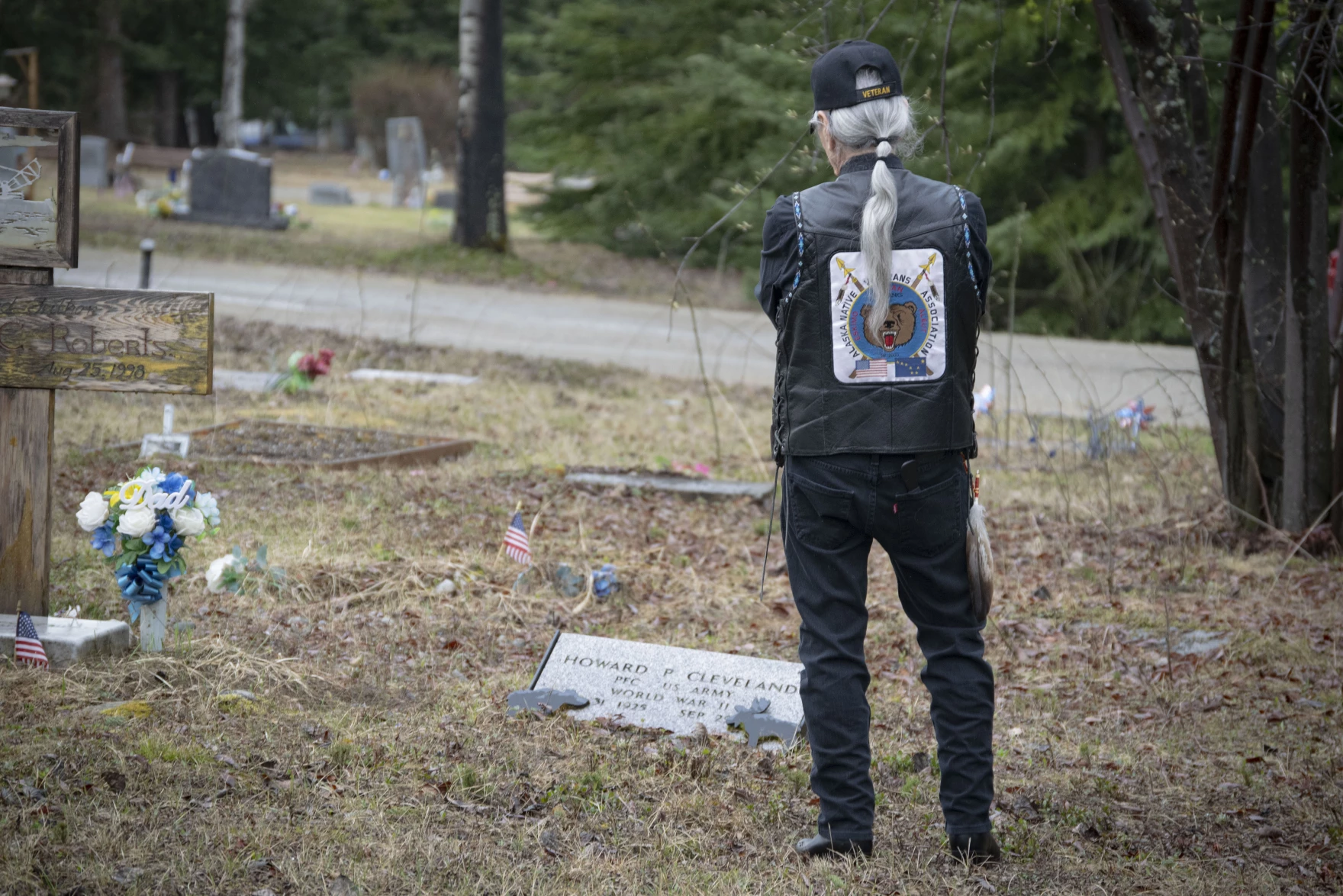
On a nippy spring morning at Birch Hill Cemetery in Fairbanks, Benno Cleveland looked down at the gravesite he’s picked out for himself.
He chose to be buried between his father, who served in World War II, and James Akhivana, a friend and fellow Vietnam veteran.
“This is hallowed ground. This is sacred ground,” Cleveland said. “Occasionally I’ll come out and visit, but not very often.”
Cleveland is Iñupiaq, one of the Indigenous peoples of the Arctic. Standing in the spot where he plans to spend eternity, he held onto an eagle feather for the strength and courage to speak, he said.
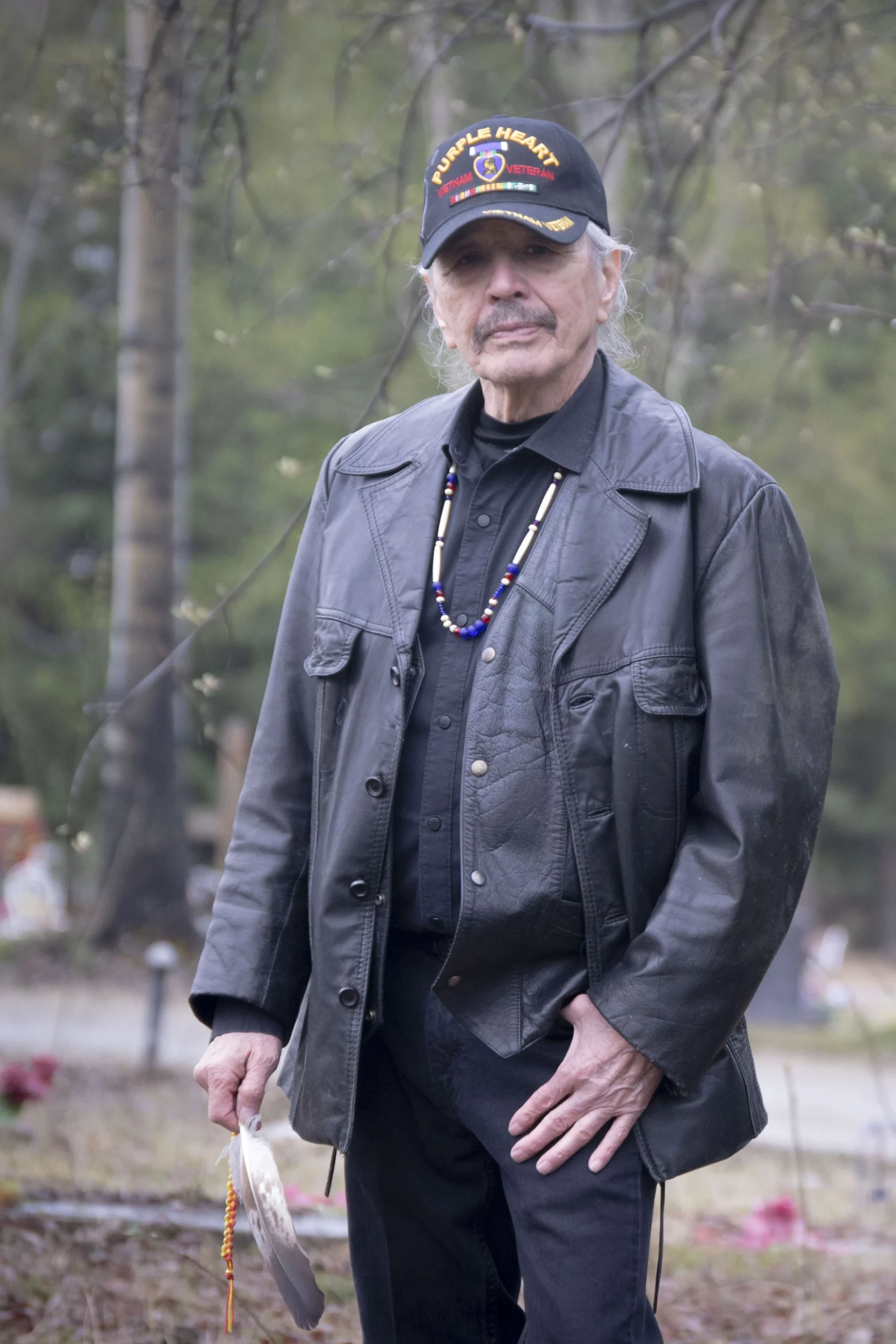
Vietnam veteran Benno Cleveland is Iñupiaq, one of the Indigenous peoples of the Arctic. He holds an eagle feather as he stands in the cemetery where he plans to be buried. Shelby Herbert / KUOC
He served in the Vietnam War, receiving two Purple Hearts. But during their service, both he and Akhivana were exposed to Agent Orange, an herbicide the U.S. government used to remove dense tree cover during the war.
The chemical’s effects on human health were not fully understood — or publicly acknowledged — for many years. Now, it’s associated with cancer, nerve damage, diabetes, and other long-term illnesses that affect hundreds of thousands of Vietnam veterans, including Cleveland.
“There is a saying that goes, ‘I was killed in Vietnam, just haven’t died yet,’” he said. “And that pertains to those that have been affected with Agent Orange.”
He manages his conditions, including heart disease, with dozens of prescribed medications every day. Altogether, the bottles barely fit into a gallon-sized ziplock bag.
Akhivana, Cleveland’s friend, died a few years ago — officially of chronic obstructive pulmonary disease — though friends and family said they believe Agent Orange played a role.
On this Memorial Day, Cleveland hopes Americans remember veterans like Akhivana.
“I’m one of the fortunate ones,” he said. “It’s about our soldiers that gave their lives, so that we as a people can live our lives freely the way we choose to and how we want to.”
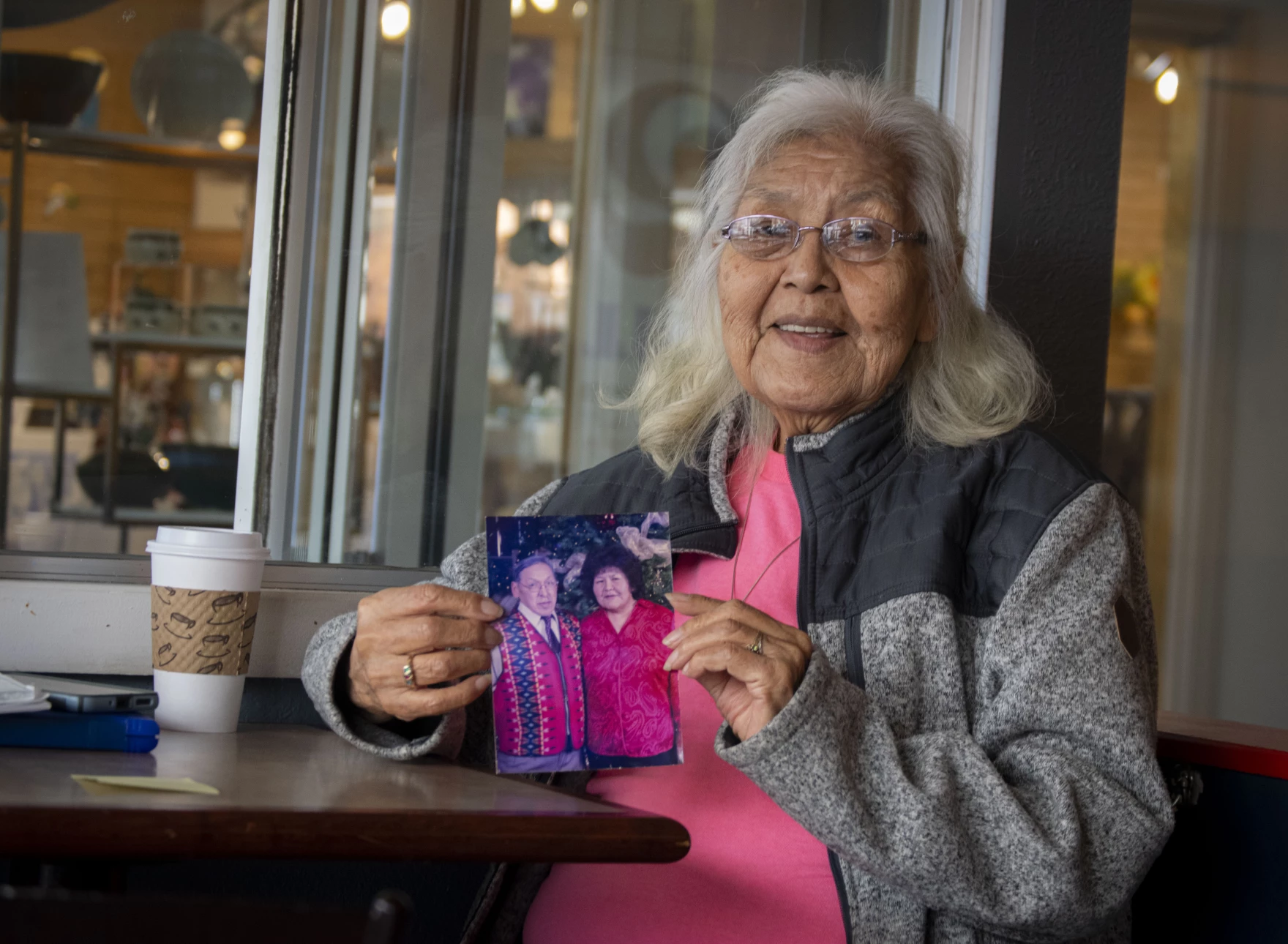
Akhivana’s widow, Garnett Akhivana, said she feels the pain of her husband’s death deeply on Memorial Day. She remembers her late husband as a kind man with a big, warm laugh. She said he deployed to Vietnam in his 30s and looked out for the younger men in his unit, who called him Grandpa.
Akhivana said it was hard for James to adjust to life back home. Things like war films and even the sound of jets overhead would take him straight back to Vietnam.
“He couldn’t watch ‘Pearl Harbor’ or anything like that, because he would end up on the floor,” she said. “He would say, ‘They’re coming, I heard those bombs.’”
Akhivana says life has been hard without him, between her grief, financial struggles, and trying to navigate the Veterans Affairs system.
Their story is hardly rare in Alaska, home to the nation’s highest population of veterans per capita.