From The Texas Tribune:
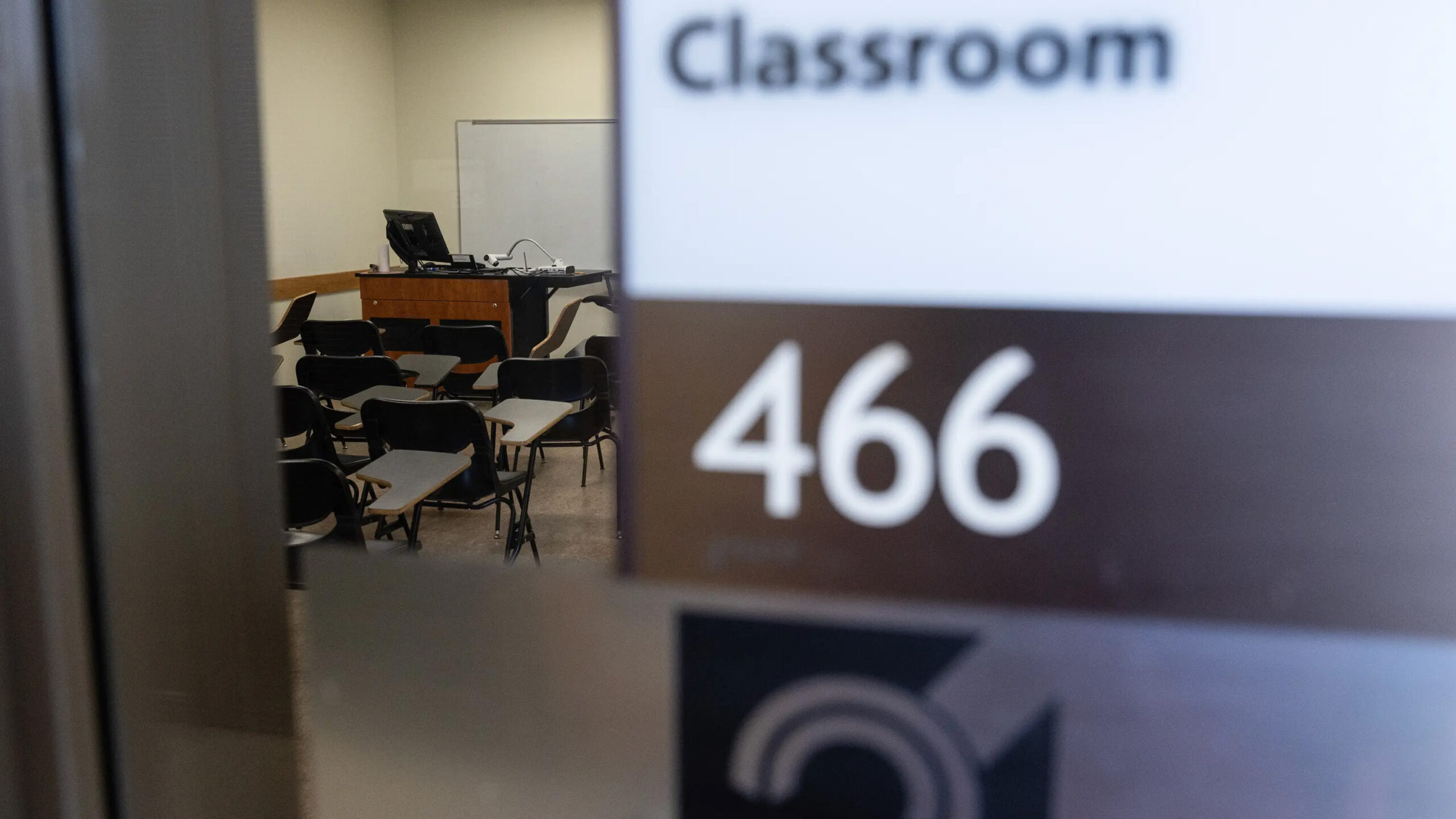
COLLEGE STATION — It was the third week of Texas A&M’s summer semester and students in the ENGL 360: Literature for Children class were reading “Jude Saves the World,” a novel that features a 12-year-old protagonist who navigates coming out as nonbinary.
On the projector screen, Professor Melissa McCoul shared a graphic of a purple “gender unicorn,” often used to teach the differences between gender identity, expression and sexuality.
As the discussion began, one student angled a phone in her lap, pressed record on a video and then raised her hand.
“I just have a question, because I’m not entirely sure this is legal to be teaching,” said the student, who went on to accuse the professor of violating President Donald Trump’s executive order, which recognizes only two biological sexes.
McCoul told the student she disagreed with her assessment, and after a short back-and-forth, captured on video, McCoul asked the student to leave.
A few days later, the class was canceled. McCoul was never officially reprimanded for the incident — there is after all, no state or federal law that prohibits instruction on race, gender or sexual orientation in Texas universities, nor is there a university policy. And by fall, McCoul had started teaching again.
But earlier this month, the recording of the confrontation — and a second one between the student and Texas A&M President Mark A. Welsh III, who first defended McCoul — was shared on social media by a GOP state representative, igniting a firestorm. Republicans quickly seized on the exchange to question the teaching of gender identity at a public university and demanded firings. Within days, Welsh terminated McCoul and demoted College of Arts and Sciences’ Dean Mark Zoran and the head of the English department, Emily Johansen — decisions that intensified scrutiny and ultimately culminated in his own resignation on Thursday afternoon.
Those administrative sanctions have raised questions about academic freedom and political influence on campus. GOP officials have heralded the moves as a win against diversity, equity and inclusion programming in public universities, while the university itself has carefully offered some distance between McCoul’s summer course material and her dismissal.
In a public statement, Welsh said McCoul was fired because, after the summer, she continued to “teach content that was inconsistent with the published course description for another course this fall,” an apparent nod to his concern that McCoul’s emphasis on LGBTQ+ viewpoints was not properly advertised in course materials.
“A student should know what they’re getting into,” Robert L. Albritton, Texas A&M Board of Regents chair, told reporters Thursday. “That’s the real issue here. You can’t bring a student into a class on one pretense and have another pretense talk, OK. That’s the rub in all of this.”

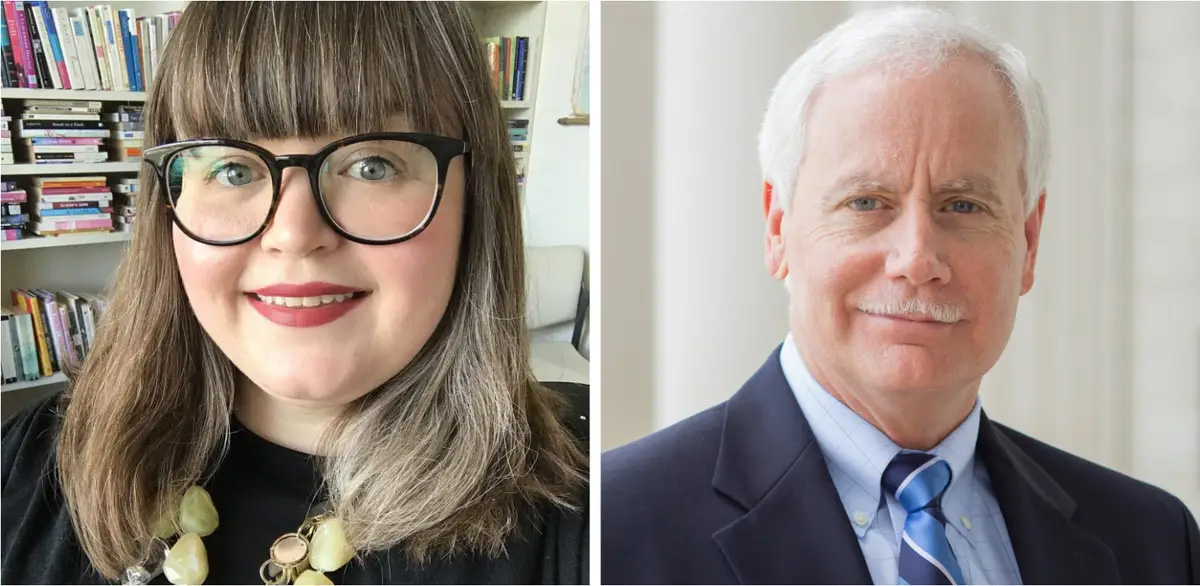
Melissa McCoul was a senior lecturer in the English Department at Texas A&M University. Texas A&M University website
McCoul has denied the allegations against her and is appealing her termination.
The exact reason for her firing has created confusion among the ranks. Two university officials say it stemmed from a technical dispute over her fall course number, which Welsh saw as a breach of an agreement they had previously made to make the class offering an upper-level elective. Faculty and higher education advocates, however, say the real issue was political pressure over her inclusion of LGBTQ+ themes.
The Texas Tribune spoke with more than a dozen students, faculty and university officials familiar with the events that led to McCoul’s firing. Many of the university employees asked not to be named because they were instructed not to speak to the media. Three out of four students who were in the classroom during the confrontation asked not to be named because of fear of retribution.
Academic freedom experts like Neal Hutchens, a professor in the College of Education at the University of Kentucky, said the rationale for McCoul’s dismissal looked more like a pretext to act on concerns about the LGBTQ+ content, describing it as an “HR extreme.”
“It got powerful lawmakers upset and the president was under pressure and so [they] took action against the instructor and also took action against the department head and dean,” Hutchens said. “I think it shows the new reality that is emerging in Texas about how certain topics or ideas are just off the table in the classroom, or professors can be sanctioned.”
Class curriculum
McCoul’s children’s literature syllabus came with a warning.
“Some of the material in this class might be controversial, and it is likely differing opinions will emerge. You are certainly not required to agree with me (or your peers), or to adhere to any particular viewpoints,” it reads, adding that McCoul insisted on respectful dialogue.
McCoul has taught the class at least 12 times since 2018. It’s a topic she’s refined over the course of her academic career. She earned her Ph.D. in English from the University of Notre Dame in 2017, specializing in children’s literature with a graduate minor in gender studies. Her resume highlights mentoring LGBTQ+ students and presenting research on diversity in children’s and young adult literature at national conferences.
In the catalog, McCoul’s course was described as a class about “Representative writers, genres, texts and movements” — a description Welsh apparently found “inconsistent” with the actual class content.
Four students who were enrolled in the course and separately described their experiences to the Tribune said they did not pay much attention to the course catalog description when signing up for the class, but were not expecting the emphasis on marginalized communities in the readings.