Mexican agriculture officials confirmed a second case of New World screwworm in Nuevo León earlier this week, as the parasitic pest continues to advance north through Mexico.
New World screwworms are actually flies whose larvae burrow into the open wounds of mammals, causing infection and even death. They used to be a big problem for Texas ranchers, until they were pushed out of the state in the 1960s.
The screwworms are on their way back though, and the U.S. Department of Agriculture is spending hundreds of millions of dollars to control them.
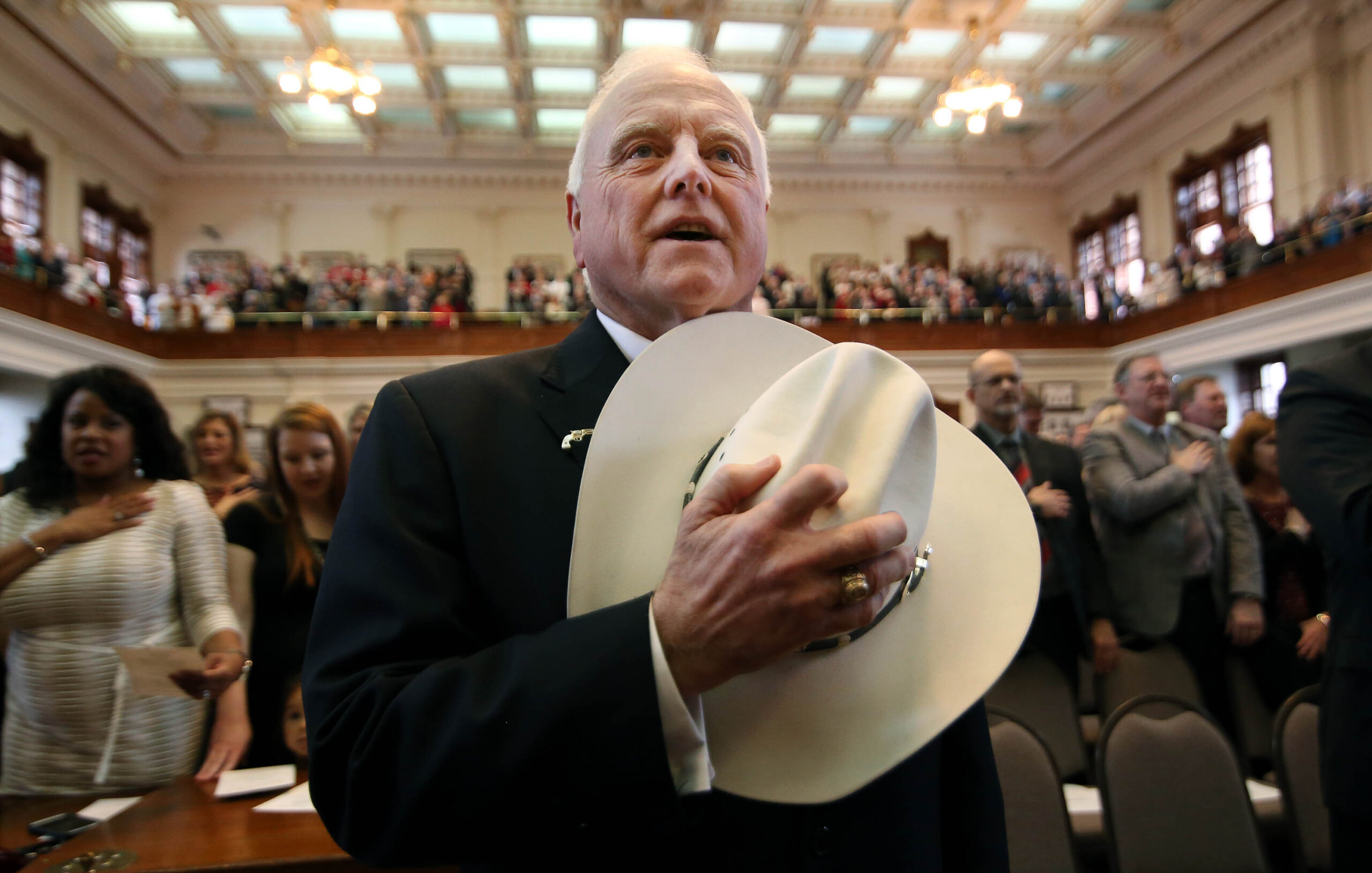
The state’s agriculture department has a role, too. The Texas Standard’s Michael Marks spoke to Agriculture Commissioner Sid Miller about what his department is doing to fight the flies. Listen to the interview above or read the transcript below.
This transcript has been edited lightly for clarity:
Texas Standard: Are you satisfied with how the USDA has responded so far?
Sid Miller: Well, for the most part, yes. I think they’re responding correctly.
I’m a little frustrated that I can’t get them to use the fly bait. The bait is… You don’t put it in a trap. You actually just put it out. It comes in a pellet. So you scatter the pellets out and the flies are drawn to it by an attractor. And then when they eat the pellet, of course it kills them.
They’ve used it before. I mean, it’s a USDA program that was used in 1976. We had 29,000 cases of screwworms in the fall of ’76. We put out the fly bait and we went from in the fall of ’76, 29,000 cases. In the spring of ’77, we had 39 cases. So it’s almost 100% effective.
They’re very reluctant, actually, to use the fly bait. They say it’s environmentally unsound. I keep asking why, and they say, ‘well, it would probably kill the good flies, too.’ My answer is good flies? I mean, what’s a good fly? That’s kind of like a good fire ant. I don’t care. I mean we’re going to kill some house flies, or you’re afraid we’re gonna kill some stable flies?
So I don’t know what a good fly is, but anyway, that’s the reason. I don’t think it’s a sound reason. I think it is a little ridiculous myself, but anyway, I’m going to keep working it.
Are you worried at all about how the government shutdown may impact mitigating screwworm efforts?
Well we’re taking up the slack. I’ve got my inspectors, my biosecurity team, we’ve deployed traps from Del Rio, Brownsville, we’re monitoring those.
USDA did not have any traps around the cruise ship terminals and that’s my greatest fear – is we’ll get some flies hitchhiking a ride home from Cancún or Cozumel or anywhere up and down the Caribbean or Central America. Those ships come in daily down there.
So we got surveillance traps up around those cruise ship terminals in Corpus Christi and Galveston. We’re monitoring those very closely.
These survey traps that you’ve put out… About how many are out there roughly?
I don’t know how many the USDA has put out. They put out probably more than we have, but I think we put out about 400.
What is your recommendation to ranchers, particularly in South Texas? Is there anything they should be doing right now to get ready for the potential arrival of this pest?
Well, one thing, we have some technology that we didn’t have 70 years ago, and we’ve got a couple of products, Ivermectin. It’s an anti-parasite drug. So you can give that to your cattle, and for about four weeks, they’ll be immune to those screwworm flies.
There’s another one called Dectomax. This actually works a little better, probably. FDA actually just approved Dectomax as a treatment for screwworms.
So we’ve gotten those two tools. So when they work their cattle, if they have open wounds from dehorning or castration or something like that, they can give them an injection of ivermectin or Dectomax and that’ll keep them immune from the screwworm for three to four weeks and hopefully those wounds will be about the end.
» GET MORE NEWS FROM AROUND THE STATE: Sign up for Texas Standard’s weekly newsletters
I read about the FDA approving Dectomax for cattle. Do you know if there are similar kinds of treatments in the pipeline for sheep, goats, horses, other livestock?
Well, they kind of gave me a blanket approval to use these drugs as a feed additive, which is absolutely wonderful because that means we can feed it to our wildlife.
There was no really good way to treat a deer. You know, you can’t just rope and doctor a deer. You know, not feasible. But we have about five million head of deer, a million of those are under high fence.
Now those high-fence deer and exotics, a lot of exotics under high fence. They get fed just about daily, so we could feed them ivermectin-treated feed and they would be protected. Texas is one of the states that allows feeding of wild deer, you know, low-fence deer. So ranchers could put that in their deer feeders, hunters could put it in their deer feed and protect their deer.
Of course it’s more than that. It’s the birds and turkey and pigs, raccoons and everything else that eats it would be protected, too.
Well, Texas is just such a different place than it was back when these screwworms were here in the ’60s and ’70s. You know, you’ve got more land fragmentation, you’ve more absentee landowners, folks who live in, or folks who have ranchettes and aren’t around so much.
Does that worry you about the, if they get here, the ability to treat and get to all the places on the landscape you need to? Do you have concerns from that angle?
Well, also besides the traps I have stockpiled, I have sample kits so ranchers, homeowners, even if they wanted to could take samples of the larva and send it off to the proper lab to have it tested.
So we’re hanging on to those. USDA does not want us to distribute those at this time. Their protocol is to call the state vet, call the ag department or the USDA, and we’re to send someone out and take the sample.
I think a lot of farmers, ranchers are going to be reluctant to let a government official come on their place. They just don’t like that.
It sounds to me, commissioner, that you would like to be a little bit more aggressive about putting some of these plans in action to contain the fly than maybe the USDA is. Is that a fair characterization?
Well, I think the U.S. is doing a good job. We’re probably moving a little… I think the way to describe that: We move faster than the federal government.
I was talking to ranchers about this and one thing that one of them brought up to me was that he was concerned about the lack of rural veterinarians in the state, that there are just fewer large animal vets in Texas per capita than there were when screwworms were first a problem.
How can we make it easier for more veterinarians to work outside the big cities?
Well, this is not a new problem. It’s been this way for 40 or 50 years. It’s just more lucrative and financially more lucrative for a veterinarian to put in a small-animal practice. He makes more money doctoring Felix and Fido than he, than he does a farmer’s cow. It’s a lot more glamorous.
You know, out there in the mud, the manure, trying to sew up a cow or deliver a calf isn’t very romantic compared to being in a nice, climate-controlled office with a surgery table and an assistant. It’s just, it’s hard to find people that want to do that.
Fortunately, we got some and we got good ones. We have put in programs, like we will forgive their student loan if they’ll commit to spending five years in the rural area, things like that. We have incentive programs.