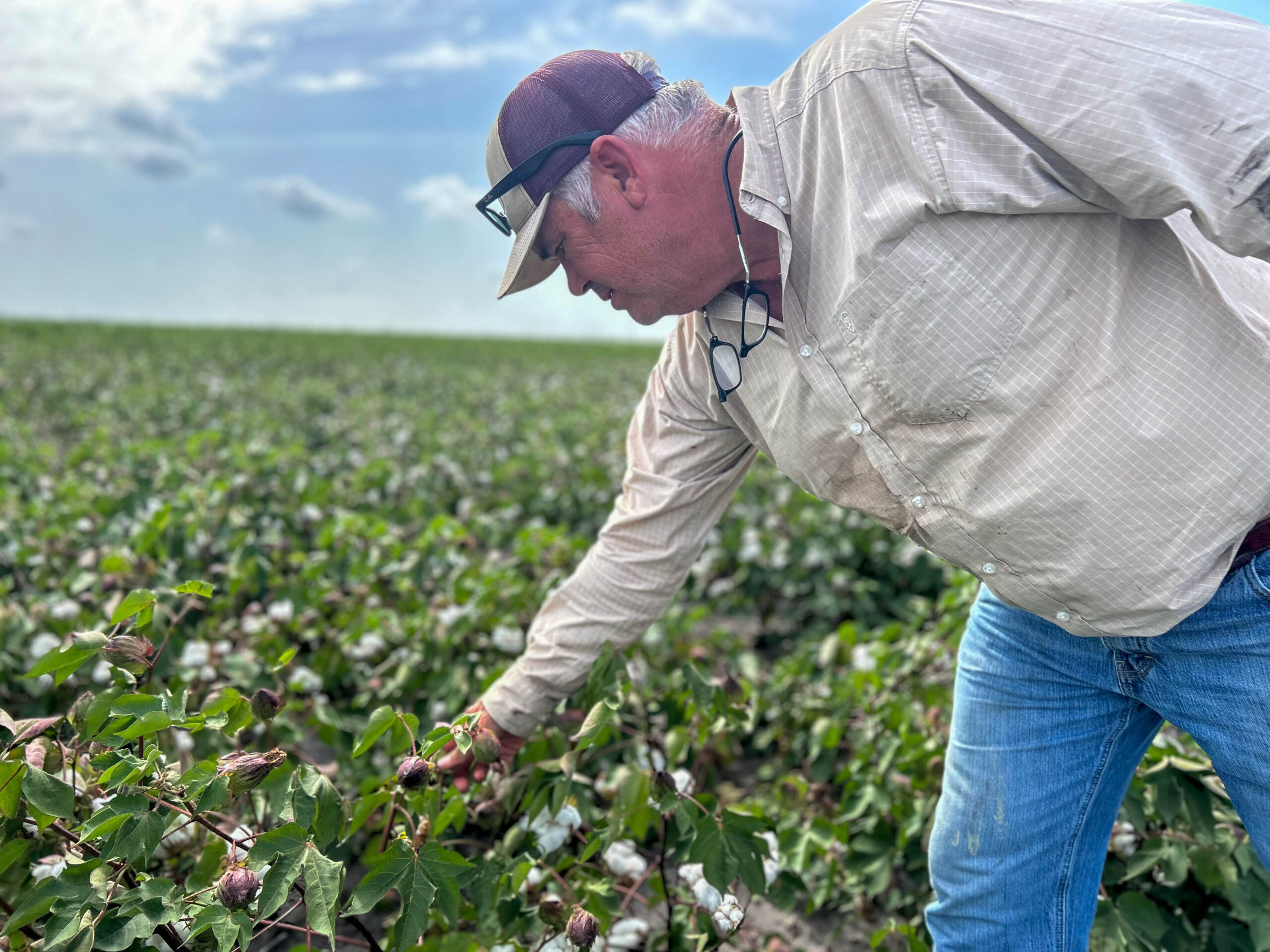
In Odem, Texas, outside Corpus Christi, Jon Whatley and his crew are gearing up to start harvesting corn. In a few weeks, it’ll be cotton.
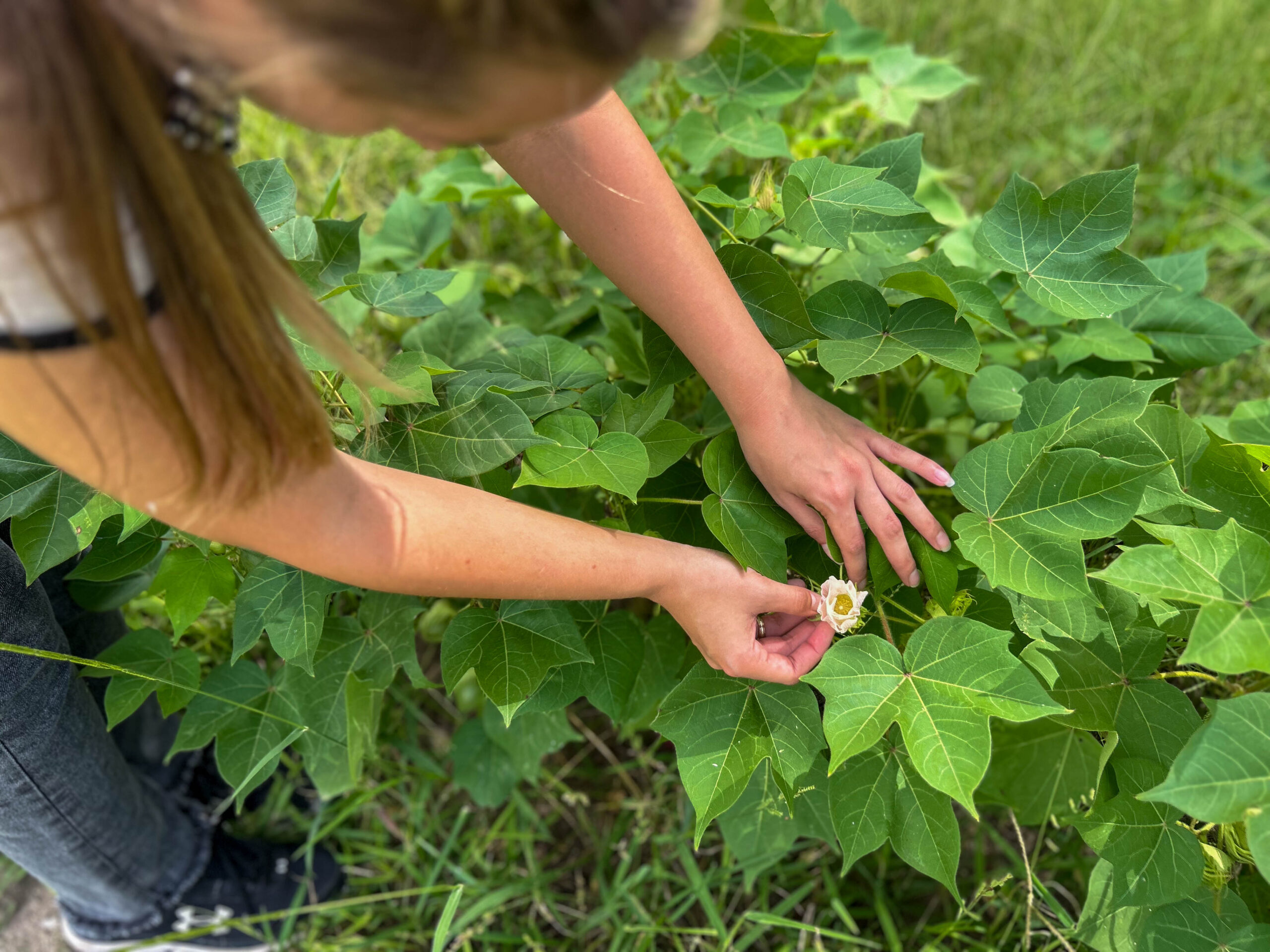
Whatley owns J&K Whatley Farms, and his cotton fields are about 80% done blooming. In the last stages of its life, a cotton flower turns shades of white, pink and red.
“So, one day white, three days red, and then dead. So it’s gettin’ close, gettin’ close,” Whatley said.
Whatley, who has been a farmer for 32 years, is worried about the future of agriculture. It’s been hard to turn a profit on cotton in the last few years.
“I mean, I’m scared, I really am,” Whatley said. “I have a young son that has graduated from college that’s on the farm, and I’m scared. He doesn’t have any equity to put into a farm. I’m scared how the next generation farmer survives this.”
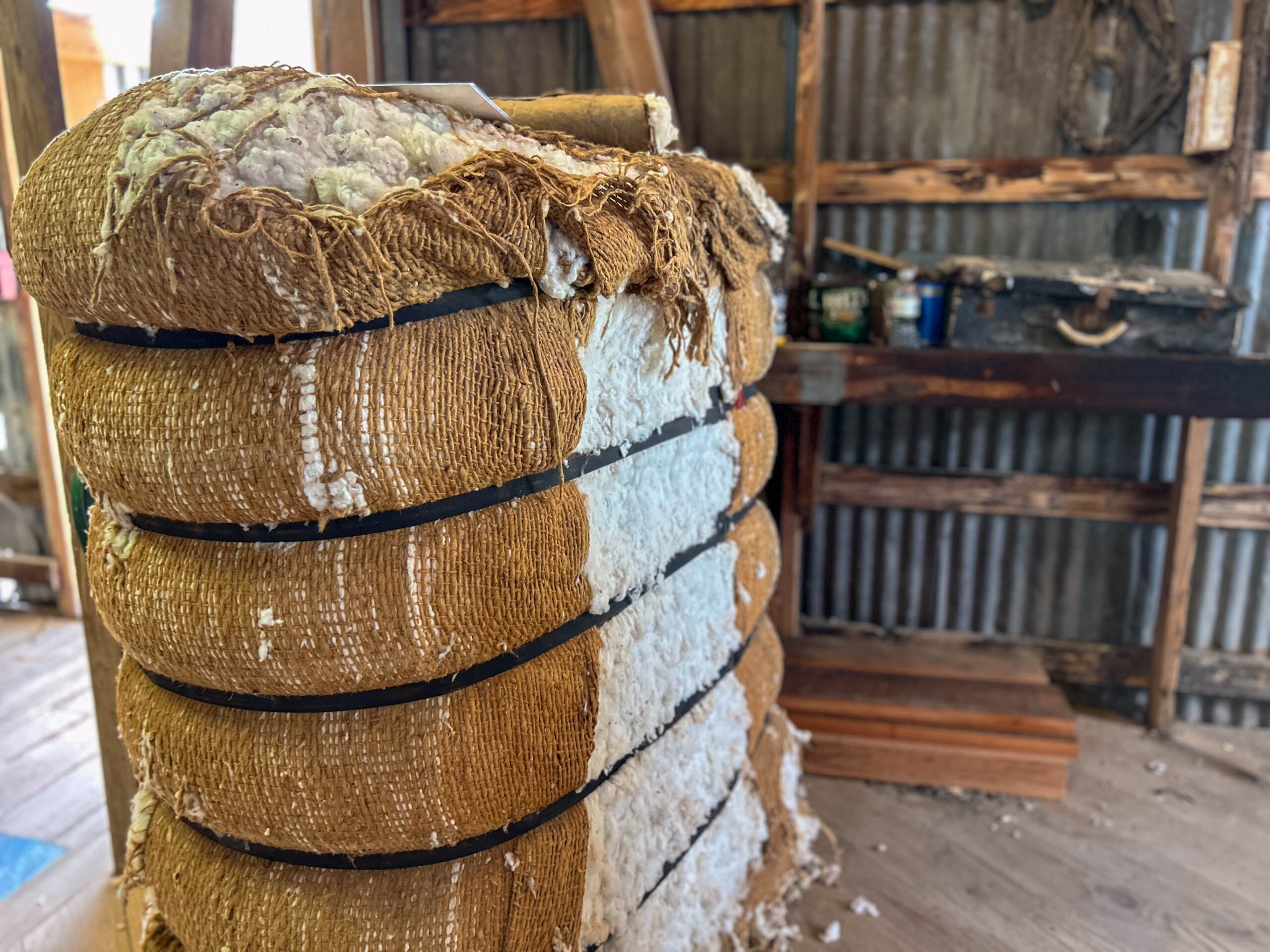
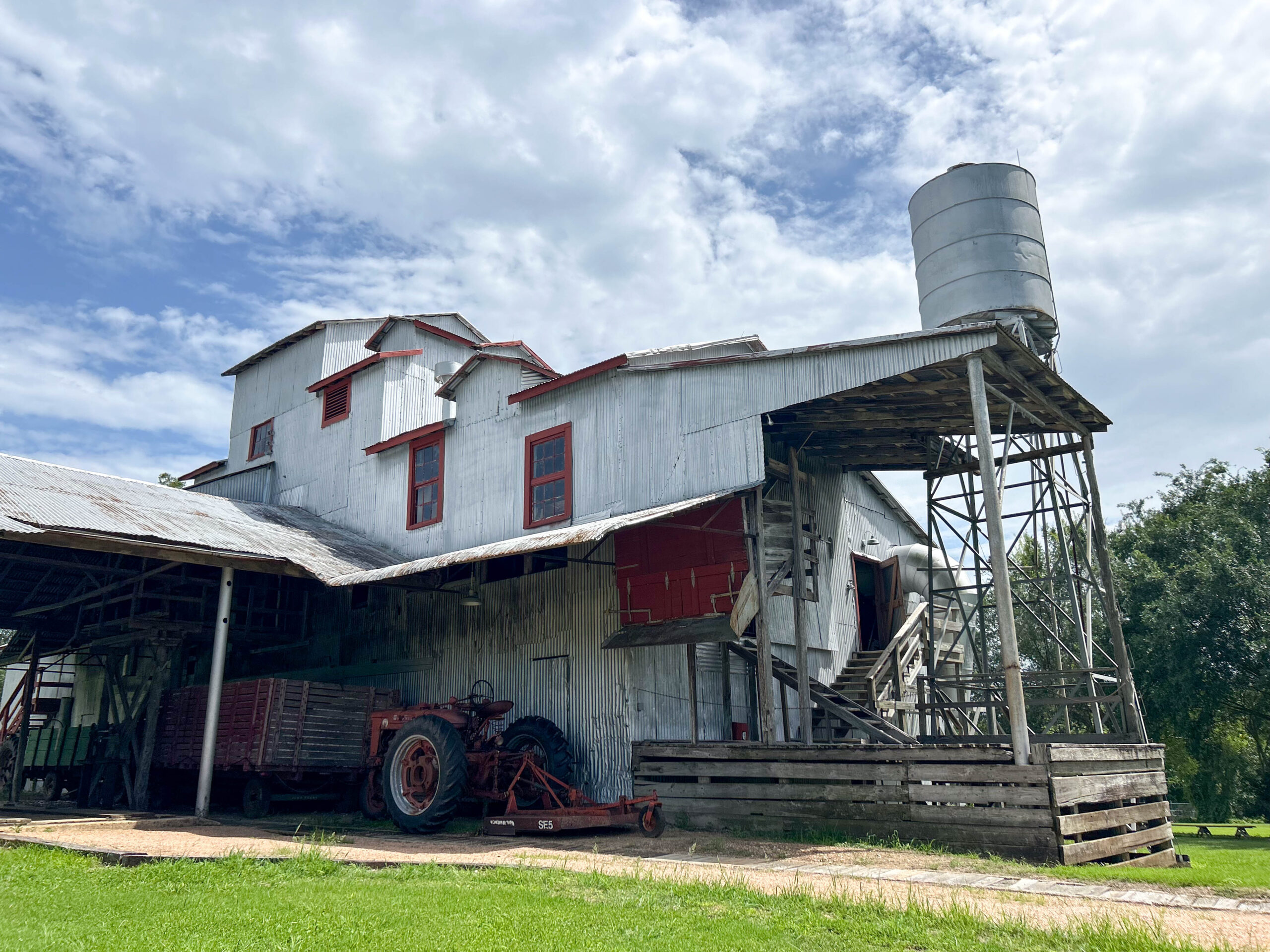
In Texas, cotton has always been king. The state produces the largest amount of cotton in the U.S., which is about 40% of the world’s cotton. But in recent years, drought conditions have gotten worse, and the cost for things like equipment and fertilizers has risen. That has cut into profitability.
At the same time, the cost per pound of cotton has dropped from between 80 and 85 cents, at its recent height, to below 70 cents.