With college tuition payment deadlines only days away for the fall semester, Texas students who rely on the state’s Dream Act remain in limbo.
On June 4, the United States sued the State of Texas, arguing the act – which for 24 years has allowed eligible Texas residents who do not have U.S. citizenship to access in-state tuition – provided unfair benefits to non-U.S. citizens.
Texas declined to fight the suit. Now, lawyers who seek to restore enforcement of the Dream Act are asking a district judge to let them contest the ruling that overturned the law.
Lily Kepner, who covers higher education for the Austin American-Statesman, said the law passed in 2001 with bipartisan support, and was signed into law by Republican Gov. Rick Perry.
“The Texas Dream Act has allowed Texas residents who have lived here for three years but don’t have U.S. citizenship – whether they’re undocumented, have legal presence but not legal status, DACA, what have you – to access in-state tuition if they sign an affidavit saying that they will pursue citizenship at the first available opportunity,” she said. “So since 2001, they’ve had a path to being productive U.S. citizens, helping the Texas workforce, and helping the Texas economy. And experts estimate that it’s generated millions of dollars in additional revenue.”
Texas was the first state to have a Dream Act to help young people access higher education, but many states followed suit, Kepner said.
“Twenty-four states eventually followed, seeing its benefit to the state’s economy, the state workforce, but also what Democrats say, from a moral aspect, of giving every kid who goes through publicly funded K-12 education an equal shot at public higher education,” she said. “But Florida, in its last legislative session, decided to pass a bill removing that law.
“So with the immigration climate becoming more fearful and the political appetite increasing to clamp down on immigration, we’ve seen these dream acts be a casualty of that.”
» GET MORE NEWS FROM AROUND THE STATE: Sign up for Texas Standard’s weekly newsletters
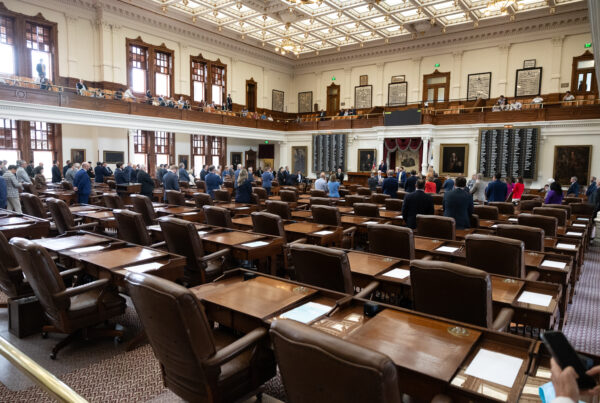
A law to remove the Texas Dream Act was introduced in the Texas Legislature this year, but it did not get out of committee.
It isn’t clear how many students are being affected by this policy change. Kepner said universities don’t keep data on the immigration status of their students.
“What we do know is there are 57,000 students that the Presidents’ Alliance on Higher Education and Immigration estimate in Texas are accessing higher education that do not have legal status,” she said. “But immigration, as we know, is very complicated.
“And under the judge’s ruling on the Dream Act, a student who has legal presence is actually allowed to get in-state tuition, even though they don’t have U.S. citizenship. But a student without legal presence and without legal status, those are the students who are affected.”
Kepner said the Texas Higher Education Coordinating Board told colleges and universities they had to develop a process to identify which students will be impacted.
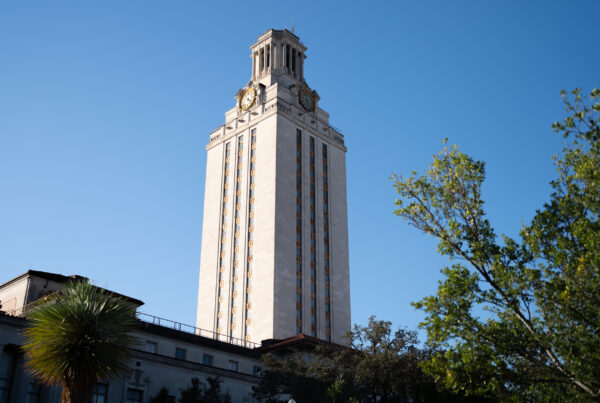
“Each school is responding differently. Austin Community College, where notably the board of trustees are trying to contest this suit, they are not doing anything until they gain clarity,” Kepner said. “But at the University of Texas, they’ve sent an email to a little over 900 students asking them to clarify their legal status.”
Kepner said it is also too early to say how this new policy might impact college enrollment.
“The argument against the Dream Act is that there’s enough students to fill the seats,” she said. “But even as a state that has a growing youth population, there are so many workforce needs that it’s an all-hands-on-deck situation.
“And for students who are going to be impacted, experts are saying that they are very likely to drop out or pause their education. Because it will just be so unattainable with the out-of-state rates.”
Students who benefit from the Dream Act are also ineligible for federal financial aid, which makes it that much harder to afford school, Kepner said.
“It’ll make higher education unattainable for thousands of students in the state who are undocumented,” she said. “And it also puts Texas in a tricky position because no matter which party you’re talking to, nobody wants students with some college, no degree to go without an education.”