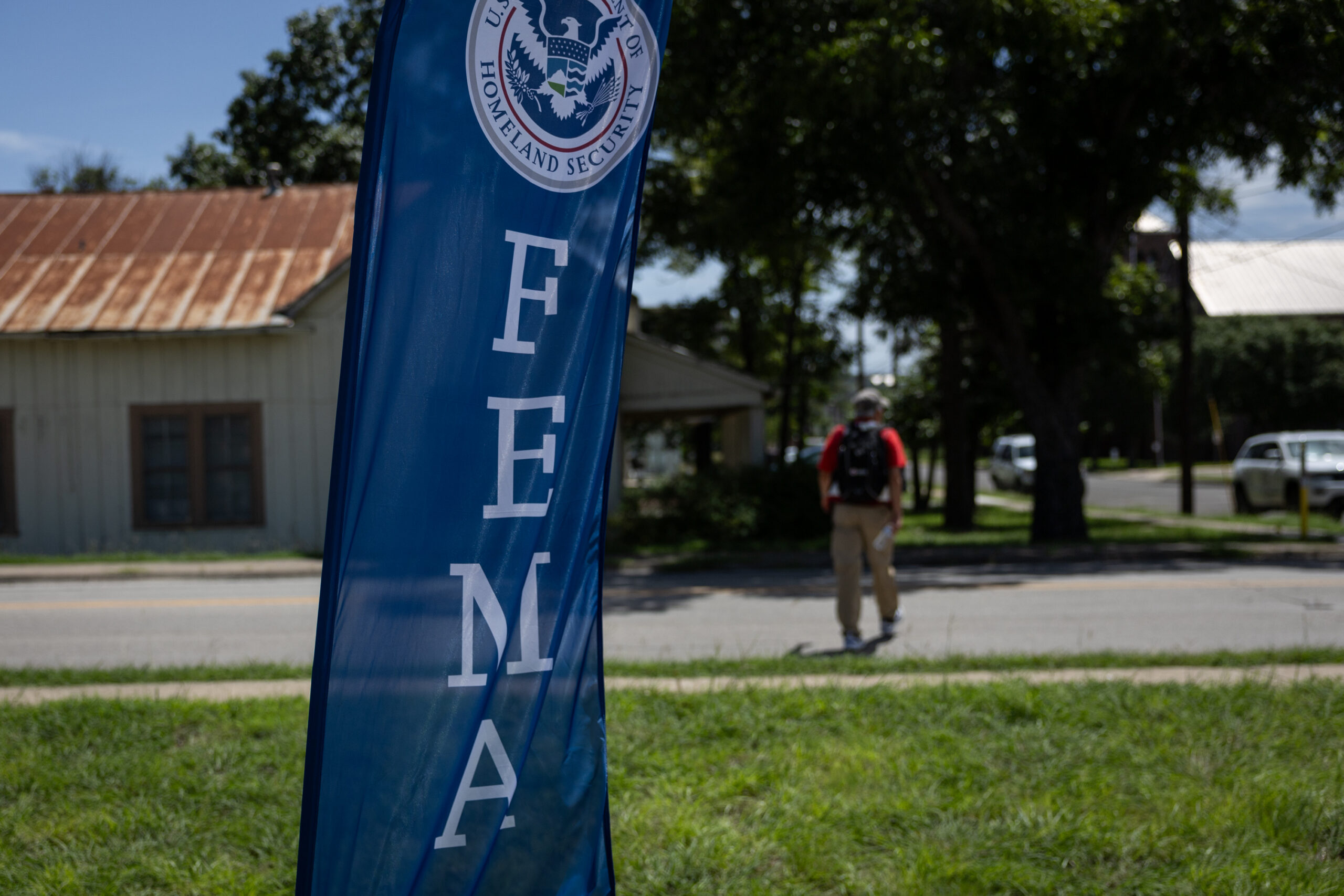
An investigative story by the Washington Post says key staff responding to the deadly July 4 floods in the Hill Country were unable to reach the head of FEMA, David Richardson, amid the operation.
The report adds more fuel to concerns that, as this event was unfolding, key officials were unreachable, and within FEMA, some at the agency say this is part of an ongoing issue with national dimensions.
Brianna Sacks wrote the exclusive story for the Washington Post, where she covers climate change and natural disasters. She joined Texas Standard to discuss her finding.
Listen to the interview above or read the transcript below:
Texas Standard: You write that in the wake of the Texas flooding in July, local teams on the ground could not reach FEMA’s acting director David Richardson. Why was that so important during those crazy hours?
Brianna Sacks: Yes, so it was actually the teams in D.C. headquarters – officials who were prepping to send resources to Texas. And the way FEMA works post-Hurricane Katrina is they just want to move as fast as they can and get resources to a state, even if the state is as well-equipped as Texas is to handle disasters, just in case they need anything or it’s worse than they had.
And usually FEMA is able to move very quickly, but this administration has put in new restrictive budget policies, as well as a lot of other changes that have made it much harder for them to do so. And FEMA’s acting administrator David Richardson is a key person to try and get those resources moving by getting in touch with the Secretary of Homeland Security, Kristi Noem, and he just was not around.
» RELATED: FEMA remains on the chopping block, even after the deadly Texas Hill Country floods
I want to loop back to David Richardson’s role here, but I want to be clear about what exactly the difference was in the response that Texas was able to mount to the flood, given the delay in contact with Richardson at FEMA. Is that clear?
Yeah, this is nuanced because Texas, a lot of sources told me, were trying to handle the response first on their own and using mutual aid resources from other states. And we know that the Coast Guard and Border Patrol hopped in for search and rescue immediately.
And FEMA has about 28 search and rescue teams, as well as imagery and data for damage assessments that they can supply states. And I got documents that show on behalf of Texas Department of Emergency Management, Texas or FEMA regional officials asked headquarters for some of those assets to help them survey the wide-scale impacts of the flooding.
So it would have helped, you know, just to have those type of high-level resources there as quickly as possible. And those didn’t get there for four days.
What about Richardson? What has Richardson or other top officials had to say about what you’ve discovered?
Well, they haven’t responded to any of my questions over the last few weeks. And FEMA’s administrator since Hurricane Katrina has a very important role in the U.S.
That person, he or she, is a principal advisor to the president and national security council, as well as the secretary of homeland security. So when there’s a massive disaster, this person is the go-to, know-all person for that incident and helps coordinate federal resources, state resources.
And FEMA gets a lot of slack for their disaster response and recovery operations. But most everyone I talked to said that the response aspect of FEMA is pretty well-oiled at this point. And they are actually pretty good at it.
» GET MORE NEWS FROM AROUND THE STATE: Sign up for Texas Standard’s weekly newsletters
If, of course, you can reach those who have the authority to give the green light to what folks are requesting from FEMA. But I understand the sources you spoke with said that a certain lack of urgency appears to be a pattern within FEMA at the moment.
Can you say more about how that’s being manifested?
Right. So I don’t know if listeners know this, but in January, President Trump made some comments about wanting to eliminate FEMA while visiting disaster sites in North Carolina and Los Angeles. And so since then, they’ve had this target to eliminate FEMA as it exists today.
And FEMA does need a lot of reforms, lot of people have told me, but there is concern that eliminating it as exists today is a bit of a stretch.
And so after the Biden administration left office, the administrator’s role has been vacant. And it’s been filled by some senior officials who are performing the duties of the administrator.
But they have, you know, Richardson, for example, doesn’t have the qualifications to be doing the job according to federal statutes, as well as the 30 people that we spoke to for this story.
So step back for just a moment from what you found. What do you see is the big picture here?
What if we’re in Texas? Of course, Texas gets hit by a lot of natural weather disasters, as you are well aware, covering this beat. What does this mean for Texas?
Well, I think Texas is really lucky in some ways that it is so prepared for disasters – they have a FEMA regional office there, they have a very well-resourced emergency management department.
But what everyone told me, and what I think after covering these things for so long, is that I think of the states that aren’t like Texas, that are at risk for getting flooding, hurricane, a fire, and they don’t have that lived experience. They don’t have those resources to enact a quick response.
And if FEMA is not able to do its job, then that could risk lives. That could just make the response slower. It could be a lot more chaotic. It could have a lot of ramifications.