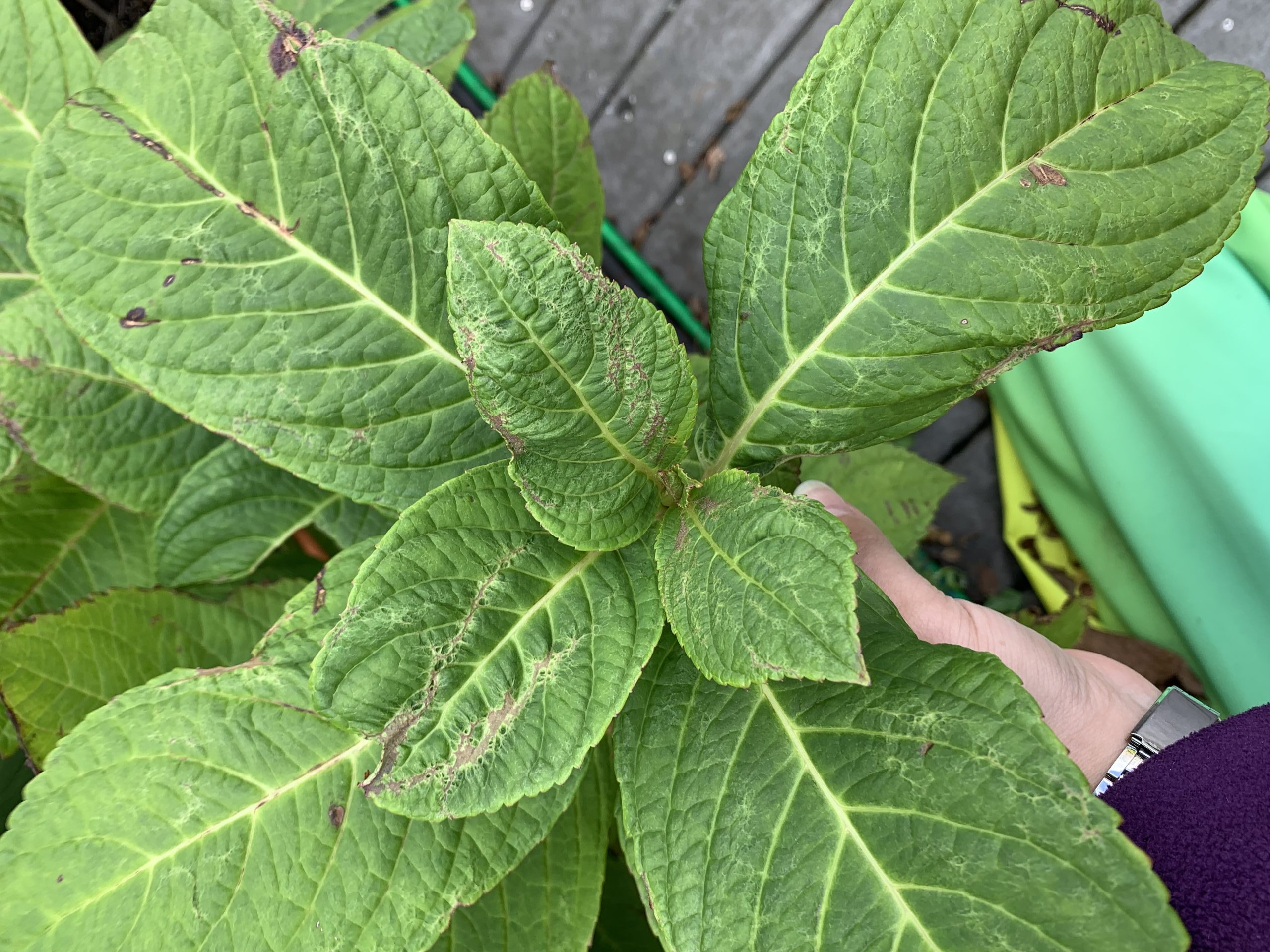
This nearly invisible insect will damage plants — and may bite you

What you need to know about identifying and managing thrips.

By Laura RiceJuly 21, 2026 11:03 am, , ,

Thrips are very, very small insects.

If you want to see if they are on your plants, Texas A&M AgriLife Extension Service program specialist and Texas Standard’s go-to insect expert Wizzie Brown suggests using a piece of white paper.

“Tap your plant over top of it and then look for little dashed lines running around on the paper. And if you see dashed lines, those are gonna be your thrips,” Brown said.

But you won’t be able to see the detail of the insect without a good hand lens or a microscope.

A closer look

If you did look at thrips under a microscope, you’d see a spindle-shaped insect. Some have fringed or feathery wings.

“It looks like somebody just took some feathers and stuck them in there for the wings,” Brown said.

Thrips are the only insect that has a particular type of mouth part: A rasping-sucking mouth part.

“They only have one mandible and that mandible is used like a file. So they’ll use it to scrape along the surface of whatever they’re feeding on and then they’ll slurp up the juices that actually collect,” Brown said.

Many thrips feed on plants and cause damage to them. But other thrips are predatory — eating other tiny insects that might be chewing on leaves.
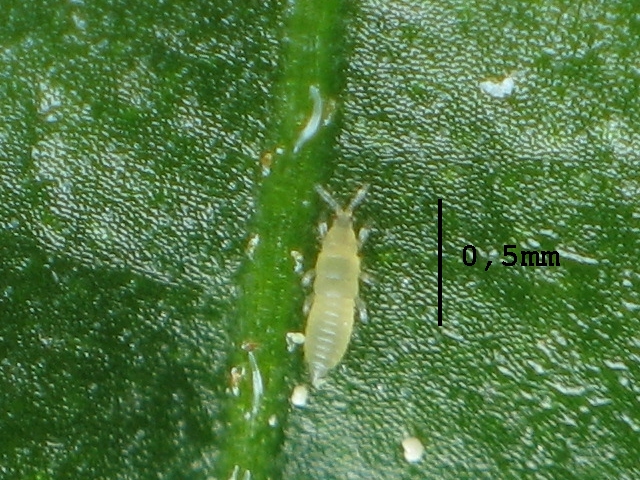
A very close up photo of a tiny thrips nymph on a green leaf. A scale marker shows it is just a bit longer than half a millimeter.

By The original uploader was M.J. at German Wikipedia.(Original text: selbst fotografiert) - Transferred from de.wikipedia to Commons., CC BY-SA 2.0 de, https://commons.wikimedia.org/w/index.php?curid=2398203

A thrips nymph.

A nearly invisible biter

Thrips are also capable of biting people. Because they have the one mandible piece, they can use that to stab with. Depending on your sensitivity, you may or may feel or react to a thrips bite, Brown said.

“So some people actually will react to that because they have super-sensitive skin. But for the most part, if you’re bitten by thrips, you’re probably not even going to know because they are very, very tiny,” Brown said.

Still, she recalled helping a frustrated Texan several years back identify the source of unexplained insect bites. It turned out the woman enjoyed sitting near her rose bushes in the evening — which were covered in thrips.

» RELATED: What is this bug? Tips for identifying insects

CC BY-SA 3.0, https://commons.wikimedia.org/w/index.php?curid=768148

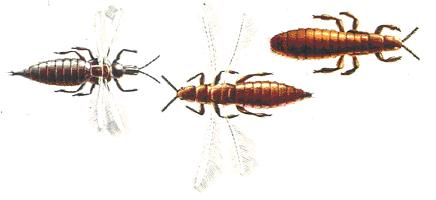
A technical illustration of thrips in different life stages.

Managing thrips

Thrips can be hard to manage because they like to get down into all the nooks and crannies of plants,  which is why Brown says they love roses so much.

“If you think about a rosebud, they’re like crammed down in there and so they’re just all protected,” Brown said.

That means, when you’re treating for Thrips, you need to make sure that you get really good coverage on that plant to reach the actual insect.

But, if you want to avoid chemical treatment, you can help prevent them by taking good care of outdoor plants. UMD extension suggests encouraging natural predators (ladybugs, lacewings, etc.), watering to prevent stress, removing weeds and avoiding over-fertilizing.

For indoor plants infested by thrips, you might need to discard them.

A couple of interesting technical notes

“The other thing about thrips is that it is ‘thrips’ whether you are talking about one or you’re talking about 9,562. It’s always going to be thrips with an ‘S’ on the end regardless,” Brown said.

And though they are tiny plant pests (often). Thrips are in a different order than the other plant pests such as aphids.

Do you have a bug question for Wizzie Brown? Drop us a line, and we’ll pass it along.

If you found the reporting above valuable, please consider making a donation to support it here. Your gift helps pay for everything you find on texasstandard.org and KUT.org. Thanks for donating today.