It’s no surprise to most that West Texas is a very conservative place.
Like many remote regions, the stark, challenging landscape that gave rise to booming energy and cattle empires has always been a region focused on growth, hard work and preservation of a culture its residents hold dear. And the politicians who represent West Texas almost universally espouse a deeply conservative world view to match.
But according to a new book, West Texas conservatism runs deeper and far wider than is generally recognized.
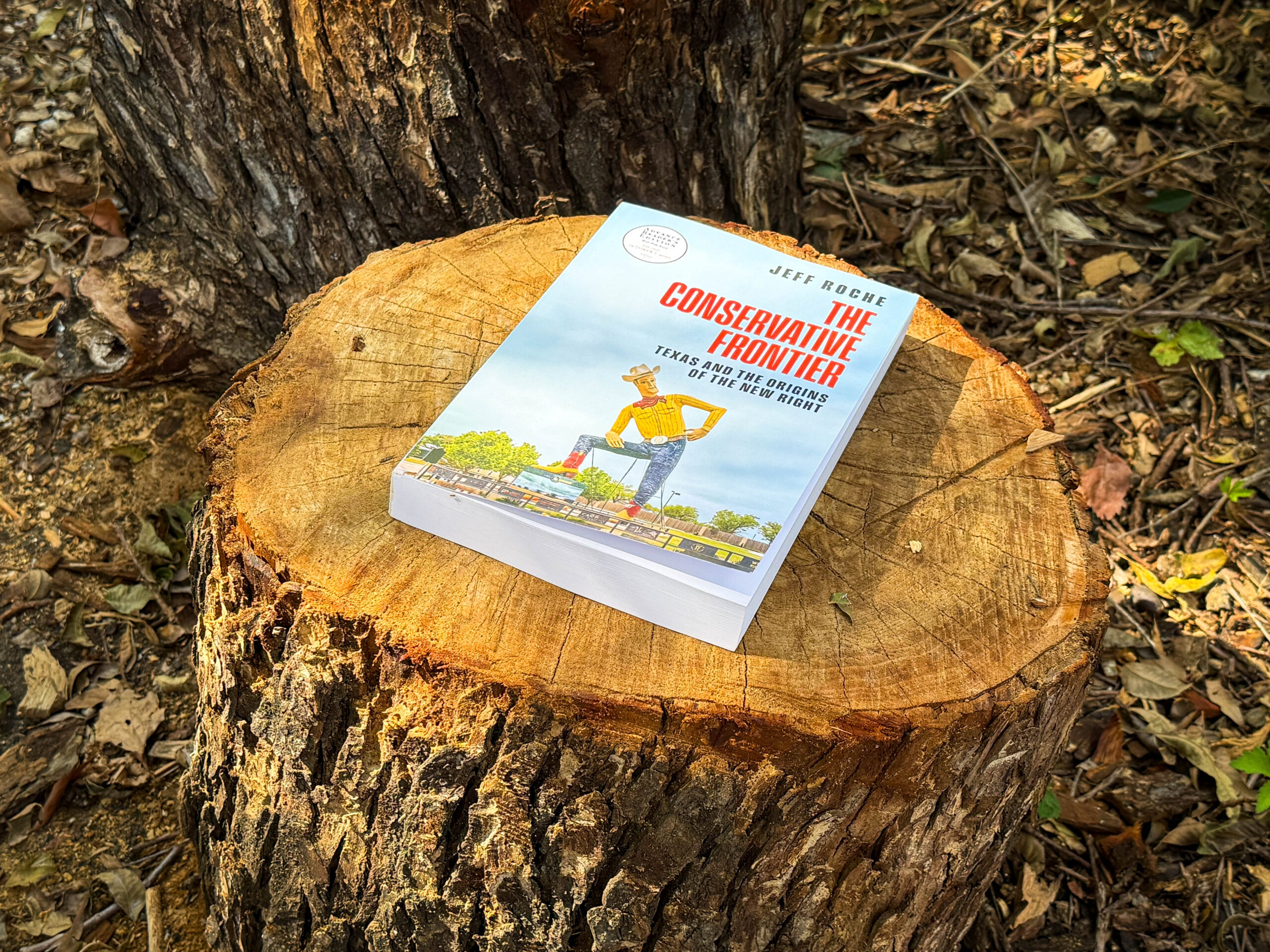
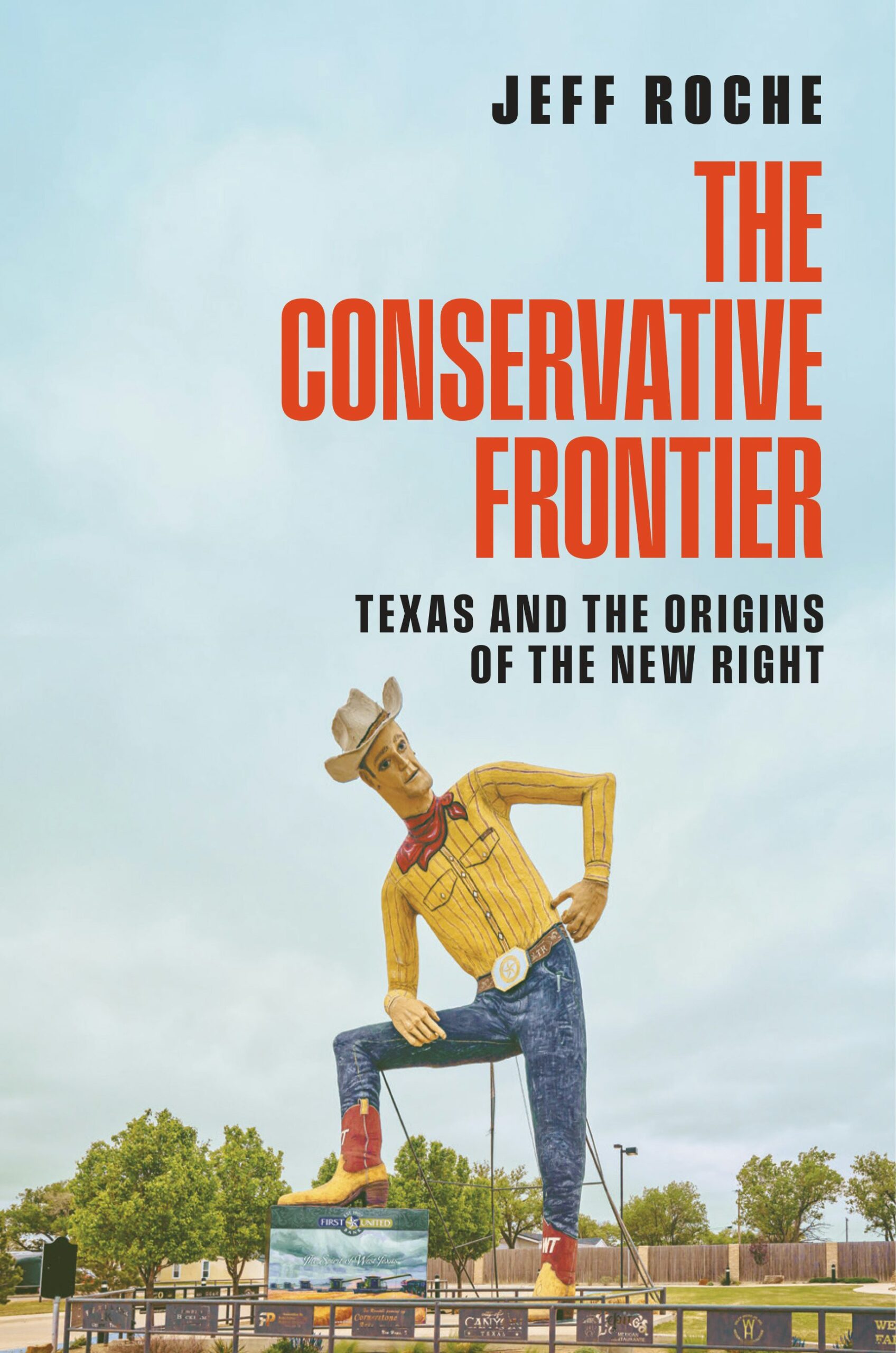
Jeff Roche is the author of “The Conservative Frontier: Texas and the Origins of the New Right.” He says that a sense of place is at the heart of what makes West Texas so conservative. Listen to the interview above or read the transcript below.
 This transcript has been edited lightly for clarity:
Texas Standard: I know it’s a stereotype to cast West Texas as uniformly conservative. I’m sure we both know plenty of West Texans who wouldn’t use that sort of label to define themselves.
So I want to ask, when you’re talking about West Texas as a kind of ground zero for the New Right, where do you locate the roots of West Texas conservatism?
Jeff Roche: I think the key to understanding that part of the world and the politics that it produces is in its long history.
It’s a part of a world that its entire identity for the folks that live there is tied into the history of the region – in particular, of course, the cattle business and oil business and other agricultural endeavors. And the politics that it created over the course of, really, the 20th century is a reflection of those industries and the values that govern them.
A bit of it seems to be tied to the geography too, right? Something about the attitude that that tends to engender when it comes to doing things on your own.
What’s fascinating about that particular part of the world, and I go into this quite a bit in the prologue of the book, is how no one wanted it for so long. The Spanish ignored it, and the first people to kind of discover how to build a civilization there were the Comanche, once they had discovered the horse that could traverse those long distances between water.
And that stark geography and the difficulty of carving out a living on it is very much a point of pride. And the industries that have thrived there have been the ones that have been able to take advantage of the limited resources on the one hand that the place offers, but also sort of the unlimited energy – being it sun, or soil, or, I guess now, wind.
Say a little bit more about a concept you touch on quite a bit in this book: Cowboy conservatism. What does that mean? Because it’s not something that I think we hear very much in today’s conversation about the political landscape.
Hopefully this book will change that. It’s a political philosophy. It’s a form of conservatism, and it’s founded on sort of the values that governed that old cattle frontier back in the last quarter of the 19th century.
At its heart, it is about the freedom of the individual. Like the role of the state for cowboy conservatives, the primary role of the state, is to protect that freedom.
Now, that said, tempering that individualism… Individuals also have a set of responsibilities that are also essential to this to cowboy conservatism. They are expected to be loyal and honest. They are expected to act with integrity.
Self-reliance is important. You should be modest and humble. Societies, and economies, and cultures should create equalities of opportunity, and an individual should have a commitment to their local community.
I think a lot of listeners might have picked up on your description there and thought we’ve come a long way from cowboy conservatism to, say, the Republican Party of today. But I want to talk about that because that’s central to this narrative that you’re describing – from cowboy conservative to this kind of the rise of the New Right.
I think the standard narrative seems to be, at least as I’ve heard it, sort of begins around ’64 with the rise of Barry Goldwater – southwestern senator from Arizona, runs to Reagan and his support and his eventual rise to be governor of California. Very sort of southwestern, but not really located in West Texas. Could you make that connection there?
Oh, absolutely. I think it’s really important to understand a couple of things about where Goldwater is coming from and also where Reagan is coming from. This kind of cowboy conservatism that I’m describing extends across the southwest, and I would say also across the western half of the Great Plains.
Although Barry Goldwater is from the Valley of the Sun, it’s important to recognize that when he was growing up, 25% of the people in that part of the world were from Texas. And it spread originally with the cattle business.
But it also has to do with these similar kinds of economies and similar kinds of landscapes and similar people produced. I think that kind of politics that you’re describing, that really flourishes in the mid-to-late 1960s…
I think I’m one of these historians who sees a distinction between what we would call the Old Right – and that would be a Barry Goldwater in the early years of Reagan’s career – and I think a New Right, which I think, from geographically speaking, we locate more in the South.
Yeah, I totally get what you’re saying. And, in a way, a sort of an evangelical tint to conservatism certainly absolutely in the eighties, right?
Absolutely.

George H. W. Bush, public domain photo
So let’s fast-forward then a bit, because I can remember when George Herbert Walker Bush was elected president, and he wasn’t really associated that much with Texas, but more with establishment Republicanism, and then his son came along, who very much identified with Texas.
How did those two larger-than-life figures in so many respects fit into this narrative?
To get to the elder Bush first, I think that by the time he does run for president against Reagan in ’80 and then he is named vice president, he had been in sort of the national establishment so long that we sometimes tend to forget his political roots in Texas. A big part of what I cover in the book in 1964 is his initial Senate run. By that point, he’s out of Houston.
But he cut his teeth politically within the Midland County GOP. And I think it’s important to recognize that he and Bar[bara Bush] operating there, they were Republican royalty. I mean, his dad by that point is a U.S. senator from Connecticut.
One of his gifts as a political figure was to navigate between sort of the right wing of the Texas GOP at that time, and, let’s say, more establishment-leaning figures. But when he ran against Yarborough in ’64, Yarborough accused him of being a Bircher…
John Birch Society, the arch right-wing conservatives, generally associated with California, too.
And it was absolutely huge in Texas, especially in West Texas. And in places like Midland and Odessa and Amarillo and Lubbock, the John Birch Society… Well, the joke in Amarillo went, you join the John Birch Society to get the middle-of -the-road vote.
That’s wild. Obviously it sounds like, in a sense, because some of these figures like Bush became part of the Republican mainstream by the ’80s and ’90s, that narrative thread that connected the rise of the right to West Texas had kind of fallen by the wayside. We’d sort of lost the plot in that narrative.
And this is one of the reasons I ended the book in 1976, which was the year the Texas Republican Party held its very first presidential primary. And that year, the contest was between the incumbent Gerald Ford and Ronald Reagan. And by this point, there are certain figures within the Texas GOP – John Tower and a guy named Peter O’Donnell, who’s sort of the godfather of the Texas GOP in the 1960s – back Ford.
Reagan recognizes really, really early on the people who are the strength of the Republican Party in Texas, and that’s the far right. He built his entire campaign and his campaign managers around appealing to that part of the party, and Reagan just destroys Ford. I think he wins every county except for maybe three.
And, of course, in 1980, four years later, he would go on to destroy Jimmy Carter in the national elections.
Yes. And sweep Texas.
» GET MORE NEWS FROM AROUND THE STATE: Sign up for Texas Standard’s weekly newsletters
Why did you feel this book was important right now? I mean, obviously, in Texas politics, we’re talking about Republican control of the three top seats of government, control of the Legislature…
If you’re looking at the national level, obviously, Donald Trump is phoning up Gov. Greg Abbott and asking him if they’ll do a redistricting to help him win the midterms.
Do you think that what happened in West Texas set the stage for the rise of the new right is still relevant today as we try to understand modern-day conservative politics?
Well, I’ll answer the first question that you had in terms of how I came to this. I think it’s important to state that I began this project long before the kind of recent events that we’ve seen in the recent turn in the conservative movement towards sort of MAGA and towards Trump. The first draft of it was actually written longer ago than I’d like to admit.
There’s every chance that this book, because it’s about West Texas and it finishes so long ago, that it might not really have much to say to what’s happening in 2025. As I explained in the book’s introduction, West Texas is a very different place from the rest of the nation. And it’s been so rock-ribbed Republican for so long… I mean, Donald Trump took four out of five votes in Roberts County in the last three elections – but, you, know, so did Mitt Romney and so did John McCain and so did George Bush.
So I don’t know what West Texas can teach us about what’s happening right now – again, just because it’s so Republican. I would advise folks who who are interested in that to find a place that has undergone the same kind of transformation as West Texas underwent years ago to maybe answer those kinds of questions.
On the other hand, in a way what you’re doing here is helping explain why West Texas was so meaningful to what we are now seeing within the majority party, the party that’s in control of national politics and certainly Texas politics, if we want to understand what was once upon a time and what is today.
Yeah, I think the book’s contribution towards this could be, it offers a model for a way to understand political change that’s anchored in place, how a place develops the politics that it does, how the politics of a place change over time. It’s important to recognize that West Texas voted for FDR in overwhelming numbers four times in a row.
And it’s that kind of change, and the story that anchors the last third of the book is how in West Texas, right-wing conservatives created the Republican Party in their image. And I think you’re seeing some of that right now, whereas people are involved in politics at a local level and they are transforming their local GOP into something that they I believe better reflects their sort of political understanding and their worldview.
“The Conservative Frontier: Texas and the Origins of the New Right” will be featured at the Texas Book Festival in Austin during the weekend of Nov. 8-9.