Texas has no shortage of iconic musicians, especially in the broad range of what you might call country or folk. We know some of them on a first-name basis: Willie, Waylon, Lyle, Townes.
But there’s someone else who is as big, who looms as large as any of them – at least for those in the know. Not a first name, but a last name: Fromholz.
If you just got goosebumps, you probably grew up in Texas or you’re a Texas musician yourself. You may have shed a tear listening to him sing his Texas trilogy, took a gasp of breath when he was done, and you probably wondered how anyone could capture so much of Texas in songs that could speak in a voice that was at the same time so astonishingly universal.
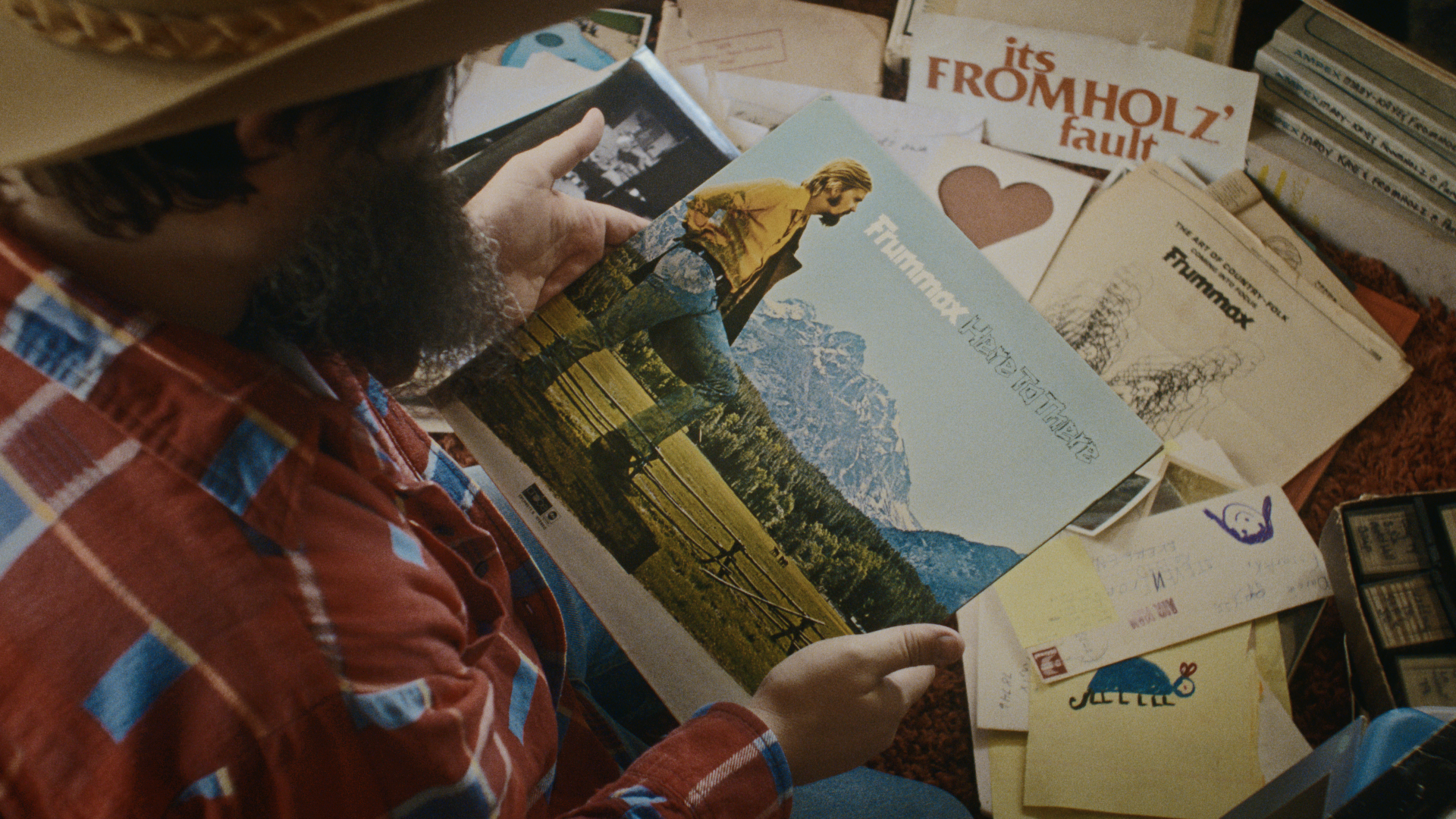
You probably have a copy of a Frummox album, “From Here to There,” his collaboration with Dan McCrimmon in your record collection – a prized possession.
Steven Fromholz may have left us in 2014, but in Texas, Fromholz lives on.
His latest incarnation: A documentary making its world premiere at SXSW. It’s called “The Man with the Big Hat” – about a musical pioneer that no music label has ever adequately captured.
It’s the first film by Austin-based director, Austin Sayre. Listen to the interview in the player above or read the transcript below.
This transcript has been edited lightly for clarity:
Texas Standard: Some directors avoid the camera, but you start this film by telling us how you first encountered Steven Fromholz. Why did you feel that was so important in terms of getting folks into the documentary?
Austin Sayre: You know, I didn’t want to be in front of the camera, but I felt it was necessary, especially with the olive branch that Lyle kind of gives me.
Lyle Lovett actually reached out to you about being in this film?
He did, he did.
I had started the project and was making several posts online and Lyle reached out to me saying, “you know, if it’s – I’d love to repay what Fromholz meant to me. If there’s any room for me left in the film, I’d love to be a part of the project. You know, if you see a place for me.”
And I was just, I was taking aghast, you know, it was like Lyle reached out to me and he’s asking to be in this film about Fromholz. Yes, of course we will make room for Lyle.
So like our film starts out with Lyle and I kind of having a conversation with both of our introductions to Steven, which was the Frummox album. So that’s kind of why I put myself in the beginning, because that was how I discovered Steven. And then it also happened to be the way that Lyle found out about Steven, was that Frummox album.
Could we talk a little bit about what it was about Steve Fromholz and his music that left such an indelible mark?
I found Steven’s Frummox album in an antique mall, and it was the record cover that drew me in. It was all the things that I love. Just the way that it was designed is just this lone mountain-looking man looking off into the distance, and I was drawn immediately to it. I had no idea what kind of album it was. Maybe it was a folk album.
But that was my initial introduction to Steven. If it weren’t for Willie covering “I’d Have to Be Crazy” and then Lyle covering “Bears,” like I don’t know if this movie would have been made.
» GET MORE NEWS FROM AROUND THE STATE: Sign up for Texas Standard’s weekly newsletters
And yet, Fromholz was appearing on “Austin City Limits” without having had a hit of his own, for example. And I’m wondering how it could be that someone who has had so much of an impact on music, how it can be that so few people beyond Texas really understand or know about him, because he was hard to fit into a category, wasn’t he?
I mean, he sort of seemed to be almost a transitional figure, musically speaking. Between folk and, what, the outlaw country movement, I guess?
Yeah, I don’t know, because he was the only artist in ACL’s history to perform on three of the first four seasons. I don’t know why he didn’t catch on. I don’t know how he seemed to fall through the cracks.
His first two records on Capitol, they’re not the best representation of Steven’s music because he is an artist that should be experienced in person. So I don’t think his records really translated, like fully represented his performing abilities.
So I really don’t know why he didn’t catch on.
Well, in a way, his music didn’t fit into a radio scene that was about two and a half, three minute long hit records. He told stories in a sort of a long form fashion, don’t you think?
Yeah, the “Texas Trilogy” is 13 minutes long, you know, then “The Man With the Big Hat” is nearly seven minutes.
So Steven didn’t write for radio. You know, Steven wrote what he knew, what he experienced and if it fit under three minutes, great. But if not, then, you know, oh well.
What was your mission with this film?
The way that he impacted me was so profound.
You know, I had never met Steve. I never saw him perform. He passed away as soon as I figured out who he was. And just the way I felt when I watched a couple of videos of him and the way he carried himself on stage and just out on the river and he impacted people’s lives and continues to do that. If this feeling can come across – the way the he makes me feel and that he changed my life without ever knowing this guy – I know it’s going to resonate in some way with everybody who sees it because this is much more than a movie about music. This is the way that he lived his life. It was just so positive and so full of life and joy.
I have to get this out there. It will translate. That was my goal, was just to get more inside of Steven’s head and share what brought me so much joy.
What was he chasing?
Just his freedom to do whatever he wanted.
He came close to having big record deals and being a more household name, but I think he just wanted to stay close to home. His family meant more to him. He loved Texas and he loved Austin more than anything. So he wanted to repay that. He really just wanted it to be a good dad.
You mentioned that he loved Austin. How meaningful is it to premiere this documentary at SXSW?
It’s pretty surreal.
I had never made a movie. I had no intentions of making a movie, and it just kind of happened.
It’s a perfect homecoming for Steven and for the movie. I hope people walk away seeing this film moved the way that I have been. The way that he lived his life is just so inspiring and is the main reason why I made this film.
And I asked his daughters during their interview, you know, what do you want people to take away, walk away feeling and knowing from this film? And his daughters both were just like, “that he loved his two daughters more than anything in the world.”
And so that was always kind of like the number one thing that I wanted to come across in this film. Not the music, not the could-have-been, should-have-beens, but just the way that he is so well loved by his daughters and his Austin and Texas community.
If you found the reporting above valuable, please consider making a donation to support it here. Your gift helps pay for everything you find on texasstandard.org and KUT.org. Thanks for donating today.