This week in Texas music history: Lavada Durst, ‘Dr. Hepcat,’ is born

The Austin DJ’s career spanned baseball, barrelhouse, and gospel.

By Jason Mellard, The Center for Texas Music History at Texas State UniversityJanuary 5, 2026 11:55 am, , ,

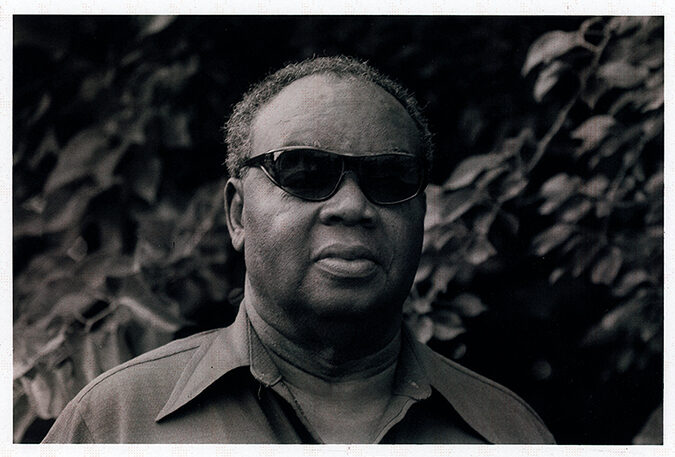
On Jan. 9, 1913, radio personality and musician Lavada Durst, also known as “Dr. Hepcat,” was born in Austin.

Durst played many roles in the community over the years, but it was gospel piano that he settled into first. By the 1930s, he’d mastered the secular style of barrelhouse piano, too, and would long be associated with local artists of the genre like Robert Shaw and the Grey Ghost.

In the 1940s, he became the announcer for Austin’s Black baseball team the Senators, calling games with a distinctive hip banter.

Future governor John Connally, then an up-and-comer in LBJ’s circle, attended one of those games and told his friend and co-owner of KVET radio, J. J. Pickle, about the talented announcer. They gave him an on-air job in 1948, one of the very first Black DJs in Texas.

A KVET program director also owned the record label Uptown, and Durst recorded his first singles “Hattie Green” and “Hepcat’s Boogie” in 1949.

Talented at cross-promotion, Durst published a vocabulary of his hip, on-air lingo, “The Jives of Dr. Hepcat,” to sell to fans.

In the 1950s, Durst also turned his attention to gospel songwriting and management, mentoring the group the Chariottes and writing the influential song “Let’s Talk About Jesus” for the Austin singers of Bells of Joy.

Lavada Durst was a baseball announcer, radio DJ, recording artist, songwriter, and gospel manager… but that’s not all. At the same time, he worked at the City of Austin as program director for the Doris Miller Auditorium, putting on concerts by Duke Ellington, Ella Fitzgerald, and Sam Cooke.

By the late ’60s and into the ’70s, though, Durst turned his attention increasingly to the Baptist church, giving gospel center stage while occasionally coming out of barrelhouse retirement to perform with the Texas Music Museum in Austin, where his piano and book of jives reside today.

Sources

James Head in Laurie E. Jasinski, Gary Hartman, Casey Monahan, and Ann T. Smith, eds. The Handbook of Texas Music. Second Edition. Denton, TX: Texas State Historical Association, 2012. Lavada Durst entry in the Texas Music Museum

If you found the reporting above valuable, please consider making a donation to support it here. Your gift helps pay for everything you find on texasstandard.org and KUTX.org. Thanks for donating today.