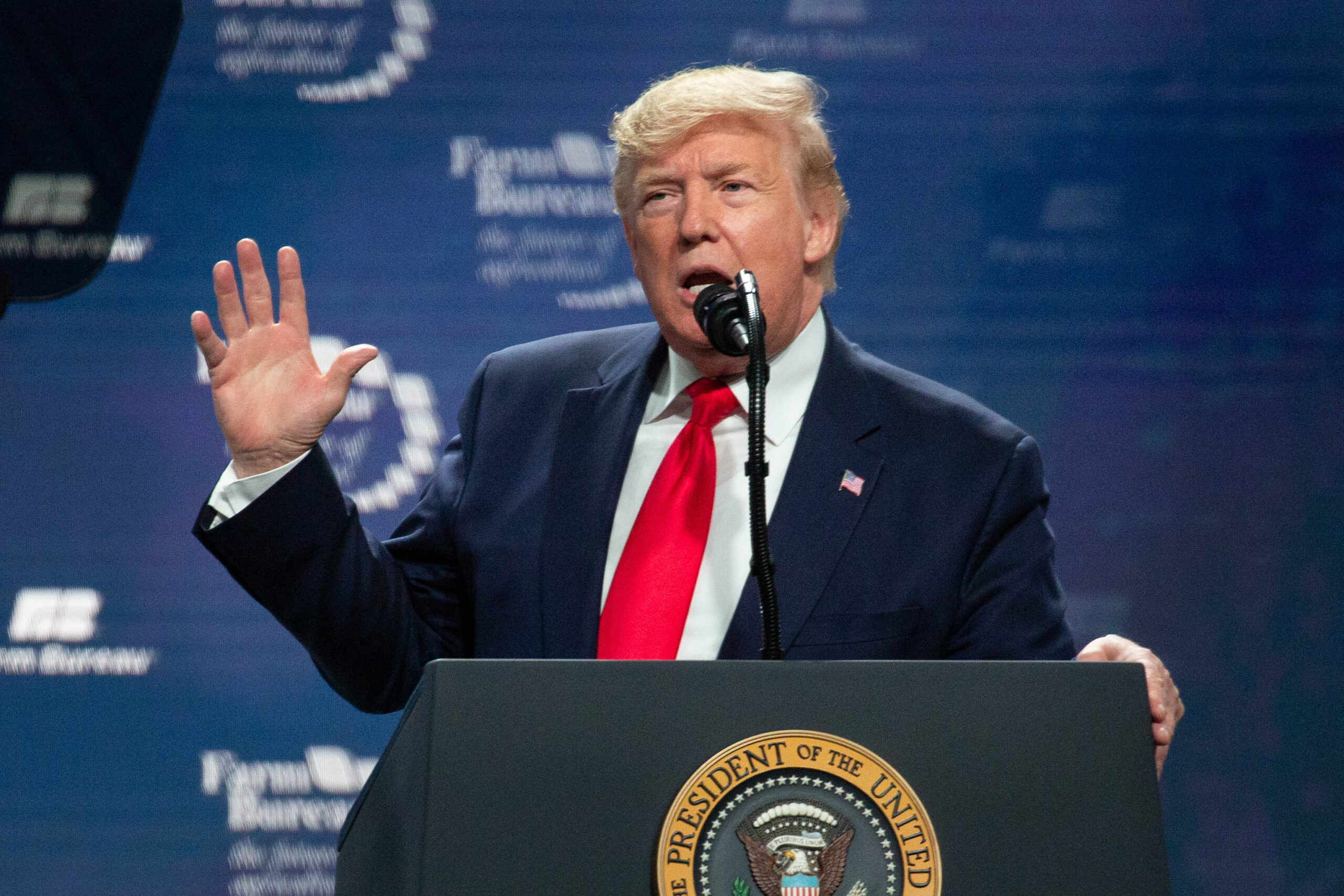
Last week, President Trump signed into law a sweeping tax cut and spending package that he and his fans call the “Big Beautiful Bill.”
Some of the law’s key pieces will take effect later this year, while others will not be implemented until well after the 2026 midterms.
Andrew Fieldhouse, a professor at the Texas A&M Mays Business School, said cuts from this bill will impact Medicaid, which provides health insurance for low-income folks and people with disabilities. The Supplemental Nutrition Assistance Program, or SNAP, will also see cuts.
“The bill cuts over $1 trillion, or 15%, from federal spending on Medicaid over the next decade. And the bill cuts about $186 billion, or 20%, over the decade from the Supplemental Nutrition Assistance Program, SNAP, formerly known as Food Stamps,” Fieldhouse said. “And because of all of this, the nonpartisan Congressional Budget Office estimates that over 11 million people will lose health insurance by 2034, and 3 million people will lose food assistance.”
Some members of Congress were skeptical of the Congressional Budget Office’s estimations, but Fieldhouse said he trusts their analysis.
“Projecting anything a decade out is quite difficult, but you can’t cut a trillion dollars from Medicaid without having people lose health insurance,” he said. “You can’t get 20% from food assistance without having the people lose the value of their food assistance benefits.”
This bill also extends expiring provisions from the 2017 Tax Cuts and Jobs Act, which was the big tax bill from the first Trump administration.
“A lot of these provisions were not made permanent in the original bill to hide their full cost,” Fieldhouse said. “Now, the extension of past tax cuts won’t feel like a new tax cut. It’s really just a continuation of current tax policy, but the bill does provide a handful of newer or additional tax cuts.”
This includes a tax deduction for tips and overtime pay, which is something President Trump ran on. There’s a larger standard deduction for lower- and middle-income people over the age of 65, and a $200 increase in the child tax credit.
» GET MORE NEWS FROM AROUND THE STATE: Sign up for Texas Standard’s weekly newsletters
This bill also cuts federal expenses in the realm of higher education and student loans.
“Students won’t be able to borrow as much. There are new caps on parental borrowing, and the bill makes changes to loan repayment, which is where a lot of the savings are,” Fieldhouse said. “Now student borrowers would have to make payments for 30 years before any eligibility for loan forgiveness. They can no longer defer payments to unemployment or economic hardship.
“Now, to be clear, the government saving money here really means that it’s passing higher costs on to borrowers, to students or their parents.”
Fieldhouse said many Texans will feel the bill’s cuts to SNAP and Medicaid.
“Last fiscal year, over 3 million Texans were receiving SNAP benefits, or Lone Star cards. So that’s about roughly 1 in 10 people in the state,” he said. “On Medicaid, the Kaiser Family Foundation estimates that Texas will lose about $39 billion, or 10%, in federal funding for Medicaid over the next decade. That’s actually lower than a lot of states.”
That’s because Texas opted out of Medicaid expansion, so the state has less to lose financially from Medicaid cuts.
“Texas has the highest rate of uninsured adults in the country with health insurance, which partly reflects that decision,” Fieldhouse said. “A big area of concern that’s really specific to Texas is renewable energy. Texas generates by far the most wind and solar electricity of any state in the country and was benefiting from the renewable energy tax credits in the Inflation Reduction Act, which was accelerating investment and energy development in the state.
“So we’ll probably see less investment in renewable energy and higher electricity prices in Texas because the bill cuts back nearly half a trillion dollars in renewable-energy incentives.”