Sixty-one women have earned their wings as NASA astronauts since the space agency first included women in its 1978 astronaut class. Women have flown spacecraft, conducted important scientific research, commanded missions and set records for time spent in space.
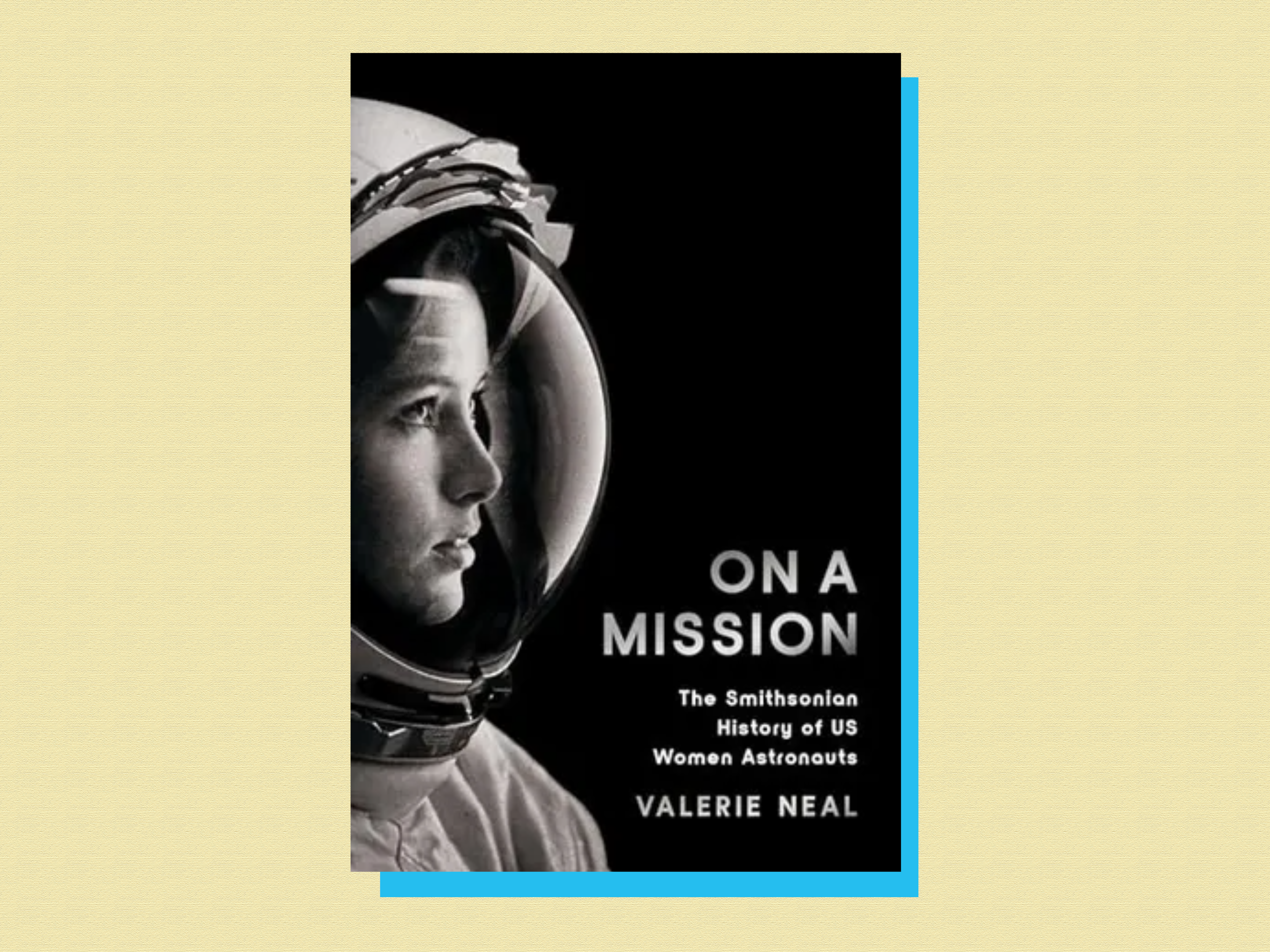
But their trajectory to the stars has been a complicated one beginning in a time when sexism and unfounded assumptions kept women who dreamed of spaceflight from achieving it. Valerie Neal tells their story in her new book, “On a Mission: The Smithsonian History of US Women Astronauts.”
This transcript has been edited lightly for clarity:
Texas Standard: Before women had the chance to become astronauts, I know there were studies and experiments aimed at judging how women might fare in space. Can you say more about those early efforts? What were they like, and were they really focused on including women or more focused on proving that women weren’t capable of being astronauts?
Valerie Neal: That’s a good question. And there were not many opportunities of that sort, but one that occurred in 1960 to 62 is the most famous one.
A researcher who was affiliated with NASA and had been involved in the selection of the Mercury astronauts was curious about whether women might have the same physical and psychological capabilities and be able to pass the same test that the male candidates had been subjected to.
So he tested a group of women who have since become known as the Mercury 13. And they passed the physical test very well, they passed the psychological test very well, but there was no real effort to present that evidence to NASA and make the case that women might be suitable for astronautic duty.
So it took another 20 years before women actually were seriously considered to become astronauts.
» MORE: Filmmaker celebrates bravery in documentary about Sally Ride, the first American woman in space
The Generation X cohort of astronauts had more opportunities than previous generations, including the chance to attend the U.S. military academies. You have Title IX, of course. That was something new.
And the example of the first women in space. These women flew on space shuttle missions and served on the International Space Station. Was being an astronaut or being a woman in space specifically different for these women?
I think it was in terms of their ability to see role models who had already become astronauts and to figure out how to prepare themselves to qualify. The first 20 women or so who were the baby boomers really had no role model. They couldn’t even imagine the reality or the possibility of becoming an astronaut except as they had read about it in science fiction.
The next wave of women to come through had seen the women astronauts of the 1980s; they knew it was possible, and they could figure out what kinds of qualifications they needed and prepare themselves.
And then the latest women who were selected after the year 2000 not only had role models, but they had had the opportunities to go to the military academies, to serve on active duty, to fly the right kinds of airplanes, to be on duty on submarines, to go on research expeditions for a long time in Antarctica, and simulate being on a space mission.
So they really knew what to do. And they came in with the most impressive resumes, because they had been working toward this for at least 10 years.
Could you tell us a little bit about Kalpana Chawla, who became a Texan when she came here in 1982 and became an astronaut in ’94, I believe?
Correct, yes. She was born and educated originally in India, and she had desired to be an astronaut since she was a small child. And she realized that she needed to get over to the United States for her graduate education and to be able to apply as a citizen to become a NASA astronaut.
So she was passionate about aviation from the time she was a child. She learned to fly. She came to the U.S. and she earned her engineering degrees, continued her flying, started working on the perimeter of the space program, and then was able to apply after she became a citizen.
She’s a huge national hero in India. Unfortunately for her and the rest of us, she perished in the Columbia tragedy in 2003, so she didn’t get to have her full career.
» GET MORE NEWS FROM AROUND THE STATE: Sign up for Texas Standard’s weekly newsletters
After the space shuttle program ended, how did the astronaut program’s goals change? Can you say something more about this next generation of astronauts?
Sure. NASA decided after the Columbia tragedy in 2003 to start winding down the space shuttle program and to end it as soon as the International Space Station construction was complete. So the women who were selected from 2000 on were selected to be post-shuttle astronauts.
In fact, all the astronauts selected after 2000, they were selected to be long-term residents of the International Space Station and to fly on whatever new vehicle the U.S. would develop. NASA had plans to develop the Orion spacecraft, and it’s still in its final testing, but it will be the one that goes to the moon, possibly as early as next year.
And then NASA had developed partnerships with commercial space flight providers, and SpaceX is the primary one. So these astronauts were trained to fly on SpaceX, to fly on the International Space Station and to fly on the Orion spacecraft to the moon.
So their training is much different; you know, they are training for long durations in space. They’re doing more expeditions on the ground to acclimate them to long-term isolation and living in an environment that’s essentially hostile like underground in caves or above ground in Antarctica. So it’s kind of more exotic training, I would say.
Yeah, it certainly sounds that way, and I know that for this latest program, NASA very specifically included goals for women astronauts and people of color. And you know, you think about those opportunities and those challenges that you are articulating there and how much they have changed when you look back over the course of the history of women in space flight.
Yes, and the women are coming in with very different qualifications now too. I mean, there are world-class athletes in the astronaut corps, women who are world class rugby players or world-class bicyclists.
And it’s just a much higher level of qualification now: women who have served in leadership roles in the military, who have flown the hottest jets and the hottest helicopters.
And they’ve proved their technical abilities and they’ve proved their leadership abilities in a way that wasn’t possible in advance for the women who were selected early on, many of whom came into the astronaut corps straight out of graduate school and being an astronaut was their first real job, or they came in after two or three, maybe five, years of experience working.
These women coming in today are amazing in their experience already.