The Texas Standard is excited to start sharing the Beachchombing Report from Jace Tunnell, Director of Community Engagement for the Harte Research Institute at Texas A&M University-Corpus Christi. The series can also be found on YouTube, Facebook and Instagram.
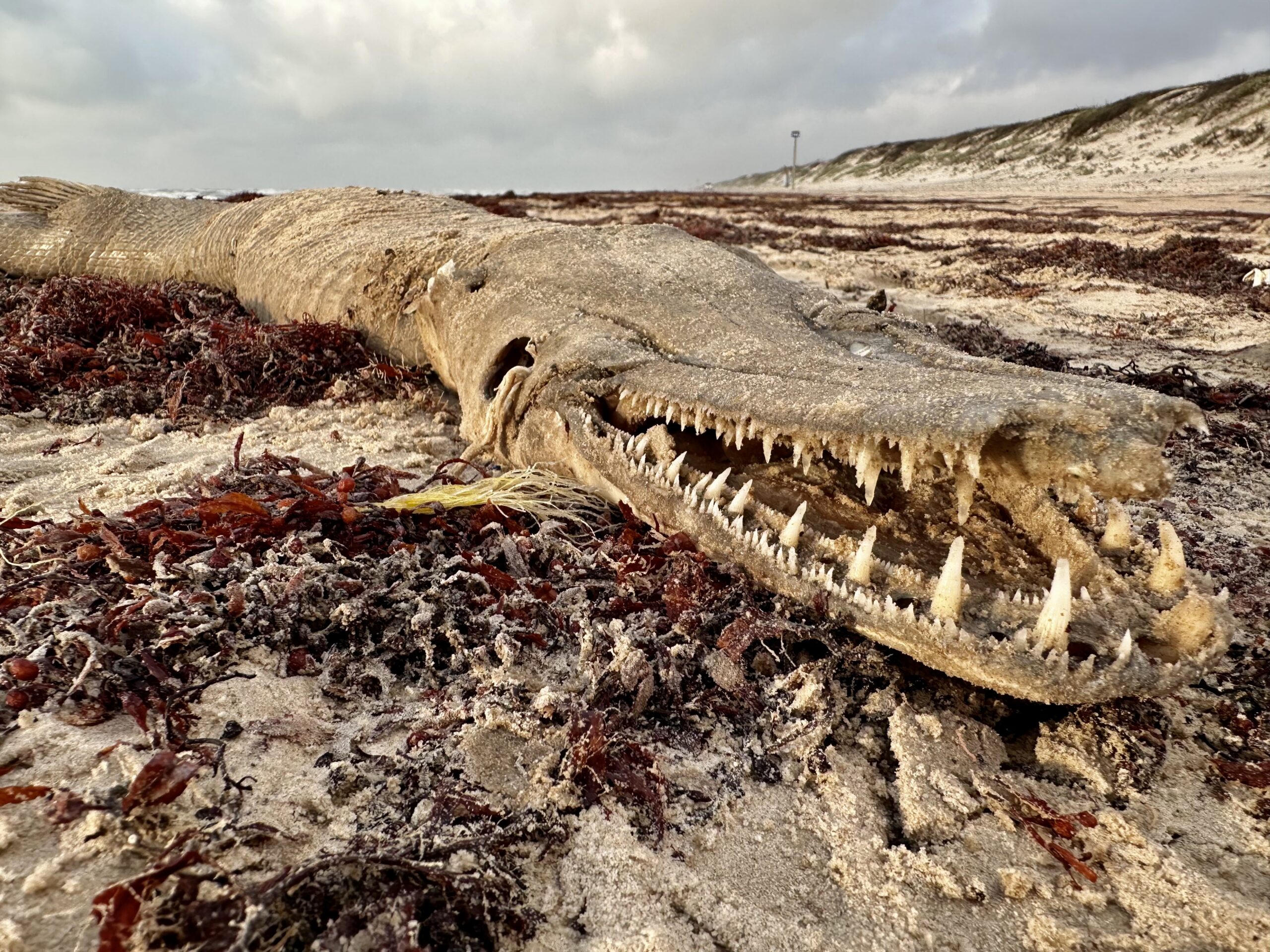
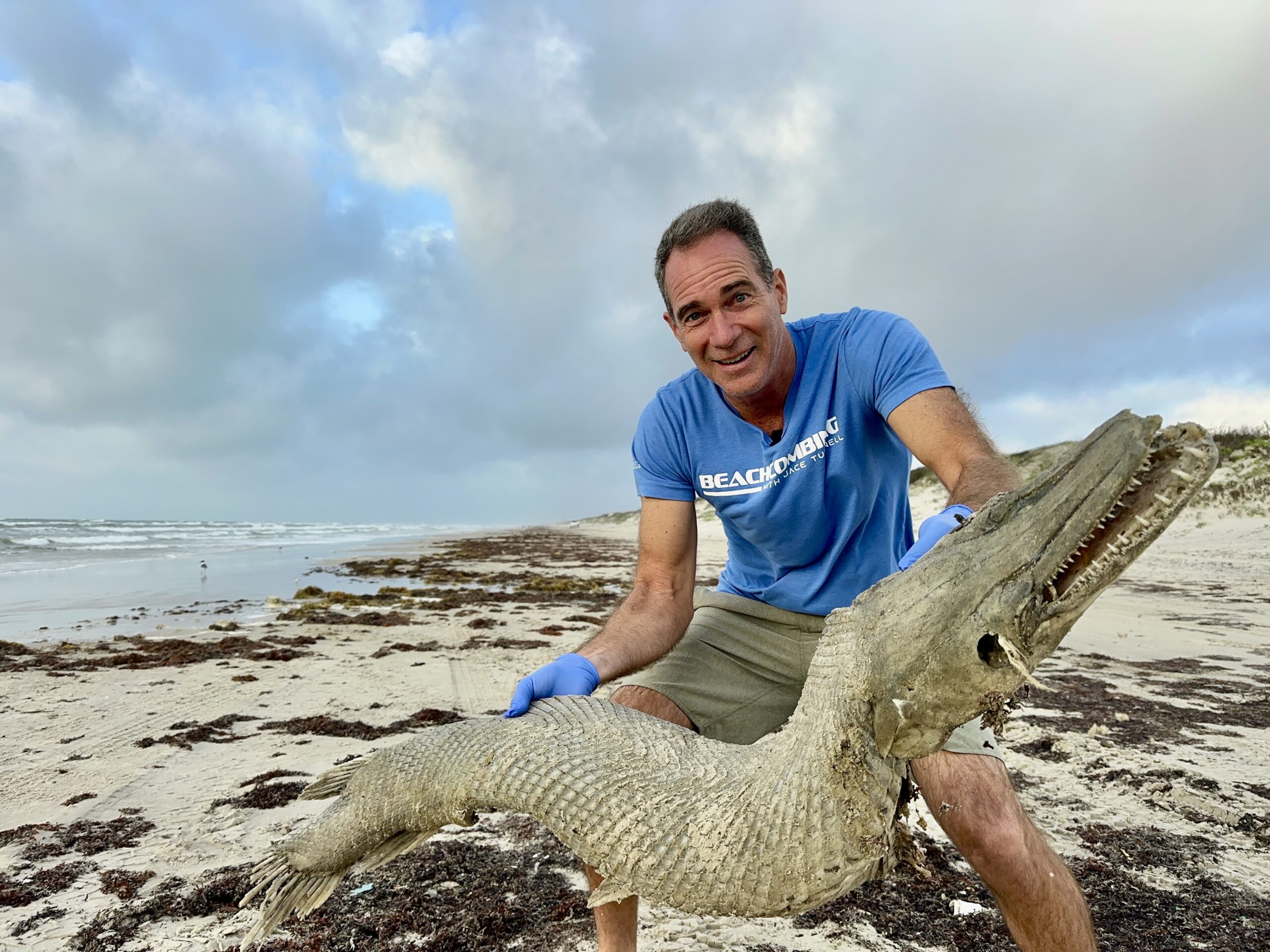
This week’s beachcombing turned up something unusual: A five-foot alligator gar lying along the wrack line.
It’s not the kind of fish you expect to see on the open beach, and its size and armor-plated body immediately stood out.
I tried to take a closer look, slipping on a pair of latex gloves before lifting the fish, but they didn’t stand a chance. The gar’s sharp, armor-like scales shredded them almost instantly.
And the smell? Powerful enough to knock you over. This one had clearly been dead for a while, likely drifting in the Gulf or sitting along the shoreline for a couple of days before I found it.
Alligator gar are often called “living fossils,” and for good reason. They’ve been around for more than 100 million years, sharing waters with dinosaurs long before our barrier islands took shape.