A recent finding from fish species in the Rio Grande and Central Mexico could have major implications for biologists’ understanding of evolution.
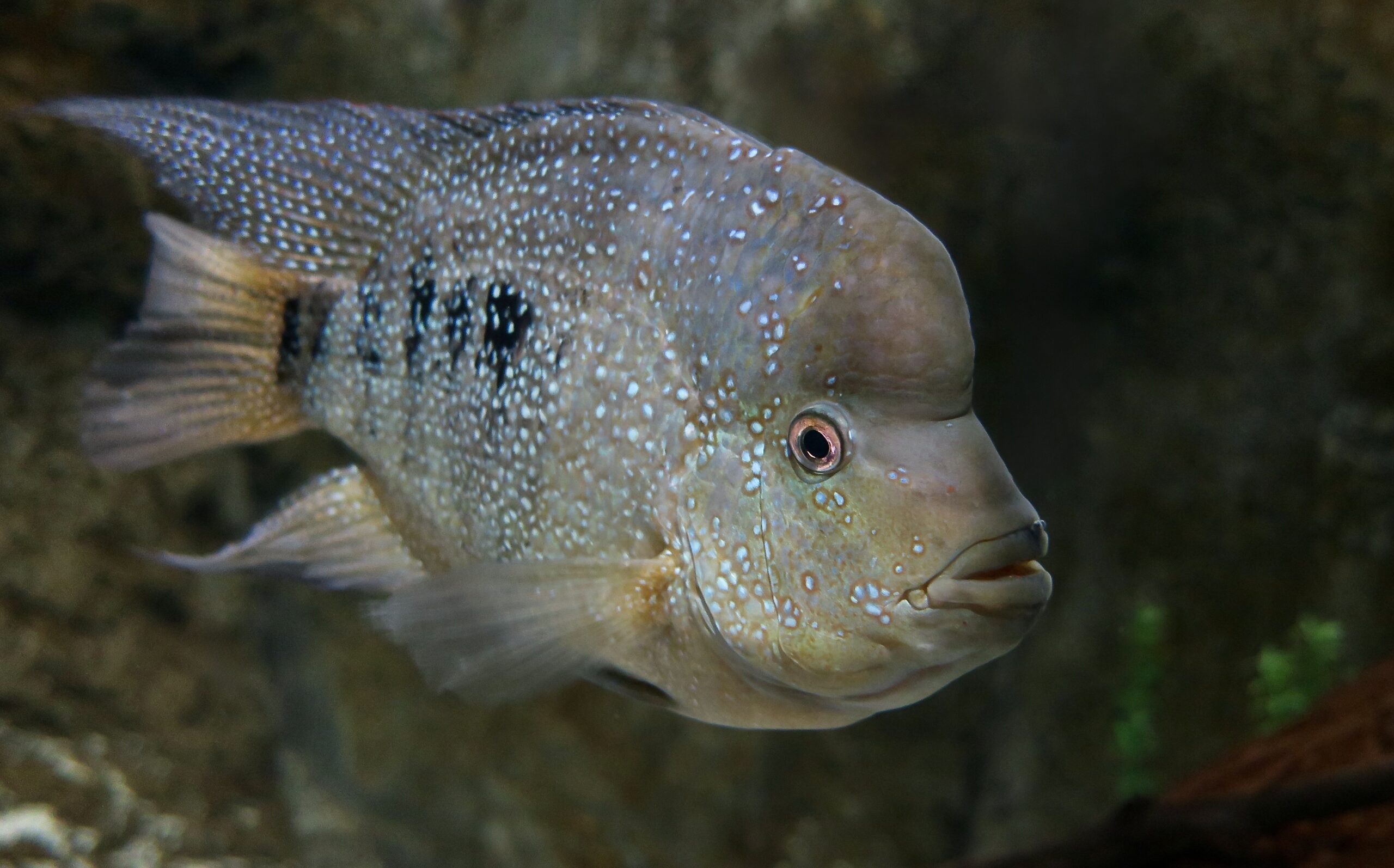
Darrin Hulsey, a University of Texas alumna and assistant professor at University College Dublin, worked with researchers from six countries to analyze the biological differences between two fish species: the Texas-native Rio Grande cichlid and the endangered Minckley’s cichlid, found only in a Chihuahuan desert oasis known as Cuatro Ciénega.
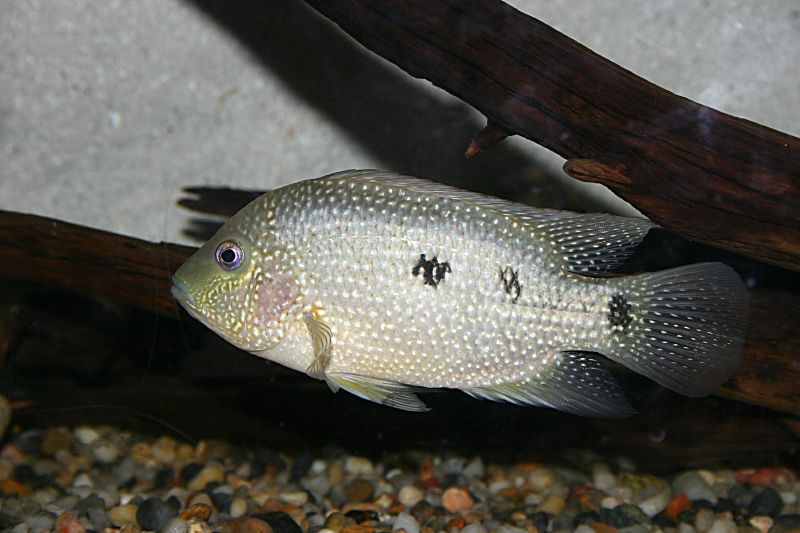
The Rio Grande chichlid. Charles & Clint, CC BY-SA 2.0, via Wikimedia Commons
The scientists studied the fish species’ jaws and compared their evolution, finding that the Minckley’s tooth development resembles human teeth, reiterating humans’ relation to fish.
The underlying message, however, is even more interesting: Evolution, once thought to happen over extremely long periods of time, doesn’t necessarily need it.
“It suggests that really extreme amounts of evolution can happen over incredibly rapid timeframes,” Hulsey told the Texas Standard. “So within our lifetime or timeframes very close to that, we can get incredible amounts of evolutionary divergence.”
Hulsey said that realization implies that environmental factors, including those that appear within a generation or less, like intensifying wildfire seasons or rapidly warming oceans, could impact a species’ evolutionary habits. In short, the decisions humans make today around the environment could impact animals’ development at the genetic level — once something thought less important because of the long timeframe needed for evolution to take effect.
“It’s a canary in the river, if you will,” Hulsey said. “When we lose diversity, we lose this understanding of not only whole fish populations and really distinct assemblages of organisms, but we lose our understanding of the genomics and the genomic pathways to give rise to diversity.”
» GET MORE NEWS FROM AROUND THE STATE: Sign up for Texas Standard’s weekly newsletters
Hulsey mentioned the artificial division of habitats as one example of environmental impacts that could have outsized implications for the animals that call impacted regions home. Borders, particularly those with physical barriers, like portions of the U.S.-Mexico divide, need also be considered for the impact they have on the ecosystems they disrupt.
One hotspot that’s drawn heavy criticism is the proposed erection of a border wall through public lands around Big Bend National Park in West Texas. One of the few remaining intact ecosystems along America’s southern border and a stronghold for wildlife in the Chihuahuan desert, which stretches across broad swaths of West Texas and north-central Mexico, the protected region’s proposed development could threaten ecosystem and economy alike.
According to Hulsey’s research, decisions like that could lead to evolutionary changes within decades for native species. The long-term ramifications of those changes, beyond disrupting a species’ way of life, could include jeopardizing an understanding of human evolution.
“The biology that we have at the border with things like fishes doesn’t really stop at the border,” Hulsey said. “We’re losing valuable understanding about the biological world (when habitats are divided). And because some of the same genes involved in forming structures in things like fish (are very similar to those) we see in us, we’re really losing information about us.”