Plenty of towns are said to model the politics and culture of the American heartland. “Will it play in Peoria?” they used to ask. Or there’s the fictional Hartsfield’s Landing from “The West Wing.”

Now, a new working paper suggests a new model city: Texarkana.
Zikai Li, a Ph.D. student in political science at the University of Chicago, authored the study, “Unrequited Love,” which was featured prominently in a New York Times op-ed this month.
Li examined the impact of Biden-era green investments on voting patterns in Texarkana, which was designated an “energy community” by the 2022 Inflation Reduction Act, creating millions in tax incentives for green projects in the region. What he found was surprising.
Li said he focused on Texarkana because it represented the “typical” characteristics of the “energy communities” designated by the 2022 legislation: Republican-leaning, traditionally dependent on the fossil fuel industry, and economically struggling.
The investments spurred by the “energy community” tax credit had a clear impact on the Texarkana economy.
“Green investments changed Texarkana in quite a few ways,” Li said. “The Texarkana metropolitan area saw a significant boom in green investments and accompanying services and training after the law came into effect.”
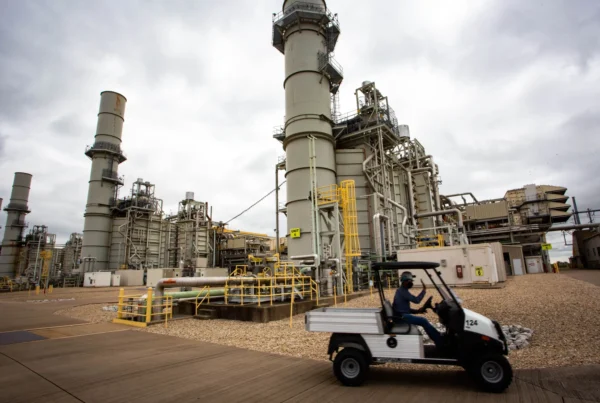
In March 2023, the TexAmericas Center industrial park announced plans to use 400 acres for green data centers. In September 2024, the Biden administration directed $225 million to lithium production in the Texarkana region.
Demand for solar energy was so high that the local community college began to offer courses in solar panel installation.
These investments led to a significant drop in unemployment in Texarkana. Unemployment went from 4.3% in 2022 to 3.99% in 2023, compared with a steady national unemployment rate of 3.6% in both years. In other words, the gap in unemployment between Texarkana and the national average shrunk significantly.
One would expect voters in Texarkana to reward Democratic politicians at the ballot box for these investments, but in 2024, the opposite occurred. In fact, these policies seem to have hurt Democrats at the ballot box.
“If anything, the Texarkana region actually shifted further away from the Democratic Party,” Li said. “And overall nationally, the estimates that I obtained for this policy overall was a slight negative change in the vote share for Kamala Harris compared to the vote that Biden got in 2020.”
Why was this? Li is not certain, but he believes part of the result comes down to Democrats’ failure to successfully link their policies to positive economic developments in places like Texarkana.
“You don’t just need good policies, but also good politicians and good campaigns that can sell those policies,” Li said.
In rural regions like East Texas, Li thinks, the Democratic brand has become too toxic to convince voters with policy.
He pointed to the 2024 senate election in Nebraska, where an independent running on economic policies aligned with the Democratic Party won more votes than any Democrat in years. This is especially true when Democratic positions on social and cultural issues are seen as extreme in rural areas.
“A politician that has the Democratic Party’s economic platform and does not run as a Democrat might be able to win over voters in red regions,” he said. “The Democratic Party’s policy positions on cultural and social issues are less popular, especially with voters outside of the large metropolitan areas.”
Politicians can draw two key lessons from this Texarkana story, Li thinks:
First, attempts to target green investments to communities like Texarkana do not bring electoral results. In fact, these policies seem to have depressed Democratic outcomes in the region.
Second, communication is key when it comes to the implementation of green energy policy. It’s not enough to show that new environmental policy can bring jobs to a community. Politicians also have to overcome cultural opposition to these policies.
“The policy advocates, they were trying to pair environmental policies with this sort of geographically redistributive gesture, right? And what we saw was that it might not have helped, but it might even have hurt their cause,” Li said. “Maybe they just need better communication with the voters. The voters in these regions might be opposed to green energy, not just because of economic concerns, but also because of cultural reasons.”