Texas is already one of the country’s leaders in data centers. And there are dozens more of the giant computing warehouses on the way, according to Aterio, which tracks data center development.
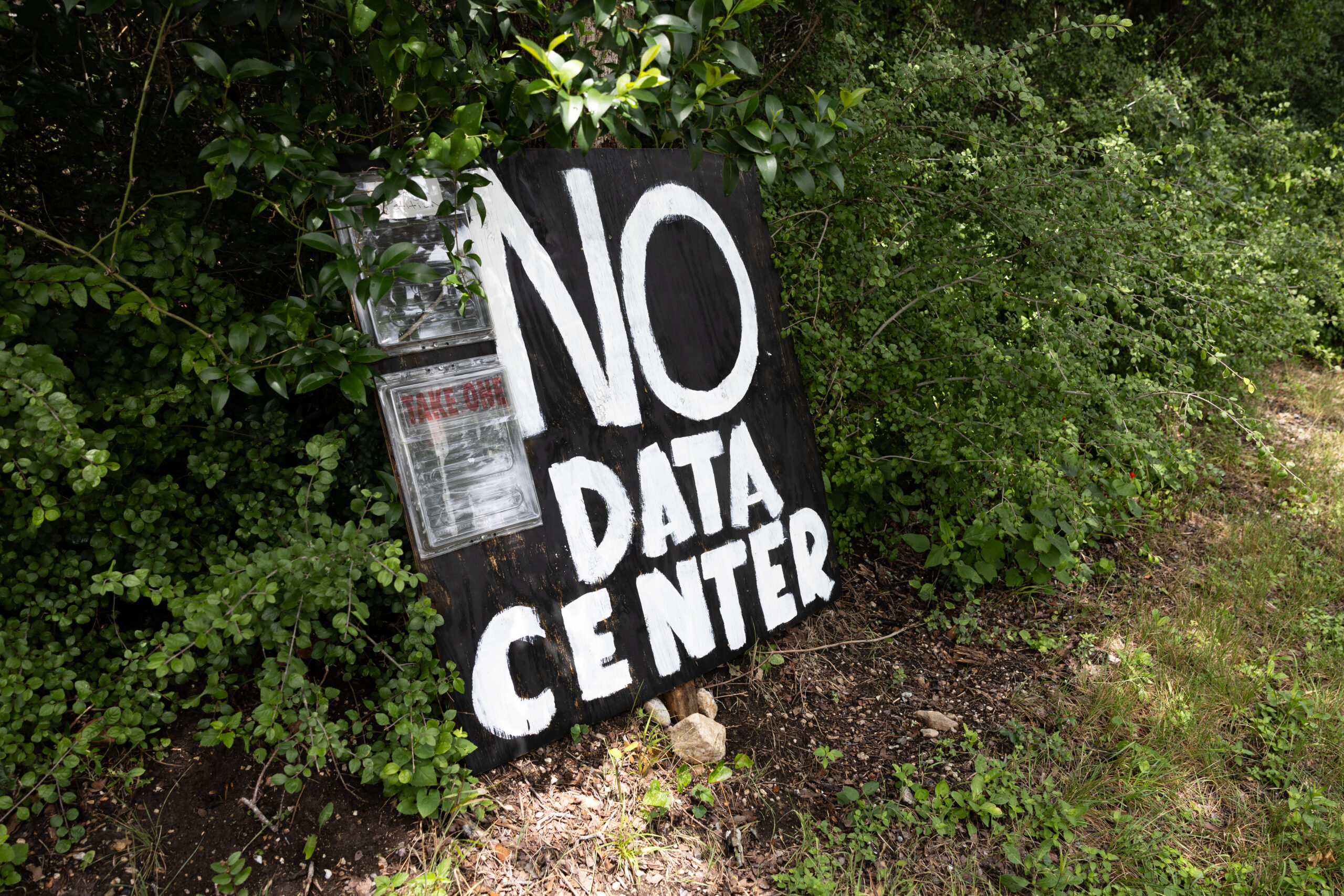
Rural Texas is a popular spot for data centers because of relatively cheap, available land. The state also offers a friendly regulatory environment. Many people who live nearby are concerned about the centers’ effects on energy costs and water availability.
Nicol Turner Lee, director of the Center for Technology Innovation at the Brookings Institution, spoke to the Texas Standard about how communities can prepare for potential impacts from data centers. Listen to the interview above or read the transcript below.
This transcript has been edited lightly for clarity:
Texas Standard: You recently co-authored a big report taking a look at data centers and their path forward in the United States. These facilities are being built at a pretty blistering pace. Is there any slowing them down?
Nicol Turner Lee: I don’t think so. I think that the cat is out the bag and we’re gonna continue to see more and more data centers just arise around the country.
I think Texas is probably the next big state that is gonna have data center density and a lot of that has to do with the fact that artificial intelligence and the driving demand for things like generative AI or using AI for healthcare or science discovery is just going to continue to grow.
Well, I mentioned concerns over electricity use. I’ve heard that defended in a way as when there’s a major need for electricity, such as an event where the power grid is at risk of failure, they’ll supply it back.
Have we seen that actually play out or are they just consuming at this point?
I think at this point, we’re seeing a lot more consumption. I think that there has been somewhat of both a community shock as well as sticker shock, right?
When it comes to the energy conversation, for the most part, many of the communities that are adjacent to data centers are finding that their electricity costs may go up a bit. And that has a lot to do with the fact that the data center itself is sort of putting more strain on the existing electrical grid.
We’re beginning to see some of the technology companies and the AI developers respond to this community resistance by having more conversations with electricity providers or energy providers, seeking out other sources of energy, like nuclear or renewable.
But definitely, energy is a critical component of data centers. Energy and water, if you don’t know that already, you’re going to learn that in this show.
» GET MORE NEWS FROM AROUND THE STATE: Sign up for Texas Standard’s weekly newsletters
When it comes to water, sometimes that gets people’s attention even more because Texas is so prone to drought. What do we need to know about the water consumption?
Yeah, water consumption is a huge need because it provides the appropriate cooling.
These data centers essentially run 24-7. A typical data center, just imagine this, uses about 300,000 gallons of water each day. That’s about equivalent to 1,000 households. This data comes from my colleague at Brookings, Joe Kane.
And large data centers can do an estimated five millions gallons of water each day, so we’re not talking about small-scale watering to your point.
Where there are communities where they’re more prone to drought, or there’s water sources that are being used for the data centers that are also consumed as drinking water, concerns do arise in communities.
And that is an area which we need much more conversation on. How are we going to use water more efficiently and effectively? How can AI even be used as a way to monitor and bring oversight for communities in terms of daily water consumption, and are there alternative sources of cooling – which is essentially what this is being used for – that we can actually explore.
Well, you brought up great questions there. And I wonder how might states or federal governments… Do they have regulatory options to help rein in some of those impacts?
You know, it’s so interesting. I think under the current administration, the reason why data centers are a big deal is because companies have been basically given permission to build them and to build them quickly.
In some instances, it is non-negotiable. There will be a data center somewhere in somebody’s community simply because the compute is the essential ingredient to make all of these applications work more efficiently.
With regards to state and local leaders, it’s essential that they begin to think about their role in these negotiations. And in particular, I’m of the opinion that state and global leaders should be devising what I consider to be community benefit agreements. And those community benefit agreements would include air and water quality reports before the data center comes in and throughout the life of the data center. They would be considering the amount of jobs that are created, the revenue that’s coming into the community.
And many state and local leaders right now are essentially giving so many tax incentives and abatements, but these revenues that they’re actually going to be getting aren’t gonna be available to them until the data center is actually open.
And so again, I think state and local leaders along with community residents need to have a plan in place as to how they’re going to identify and mitigate some of these real concerns before a shovel goes into the ground for a data center, because it may be too late afterwards.
Let me ask you about one thing our state agriculture commissioner here in Texas has put forth: This idea of creating tax incentives for data centers built on land communities identify as unfit for most other purposes.
How does that idea strike you, as a way to protect farmland and other valuable property?
You know, I think that’s actually a really great idea. I mean, some of the concerns that some communities across the country are having are whether or not, you know, if there were to be an AI bubble, that there would be idle data centers or deserted assets that taxpayers are contributing to that may never amount to a community center or a new fire station in a rural community, just simply because the building was not retrofitted for that purpose.
The idea that these should be built in areas that are unfit for any type of development, I think is spot on. I mean, we’re not necessarily thinking of data centers when it comes to rural communities as an agricultural outlet. If anything, it’s just gonna power our ability to have farmers be much more high tech in the work that they do, or it’s going to enable storage of really good scientific data that will help us to continue to re-engineer at the pace at which we do agriculture more broadly.
So I do think that is a great proposal and it’s one that should be considered. I always mention to people, you know, where we have seen a plethora of logistical manufacturing outlet – pretty much in industrial corridors and other areas – that’s a great place for a potential data center. It does not get too close to someone’s backyard, hypothetically, right? But it also allows for the entirety of the land’s use to be fruitful and viable for community.