The internet’s fastest-growing demographic is not young people, but those over the age of 60.
When you hear about older people online, the first thing you might think of are scams. But a new book argues many older adults are embracing and thriving in the online world and gives tips to those looking to do the same.
Eszter Hargittai is a professor at the University of Zurich and co-author, along with John Palfrey, of the book “Wired Wisdom: How to Age Better Online.” She joined Texas Standard in the studio for a conversations. Listen to the interview in the audio player above or read the transcript below.
This transcript has been edited lightly for clarity:
Texas Standard: Well, tell us a little about your work. You focus on internet use. What made you want to drill down on this group?
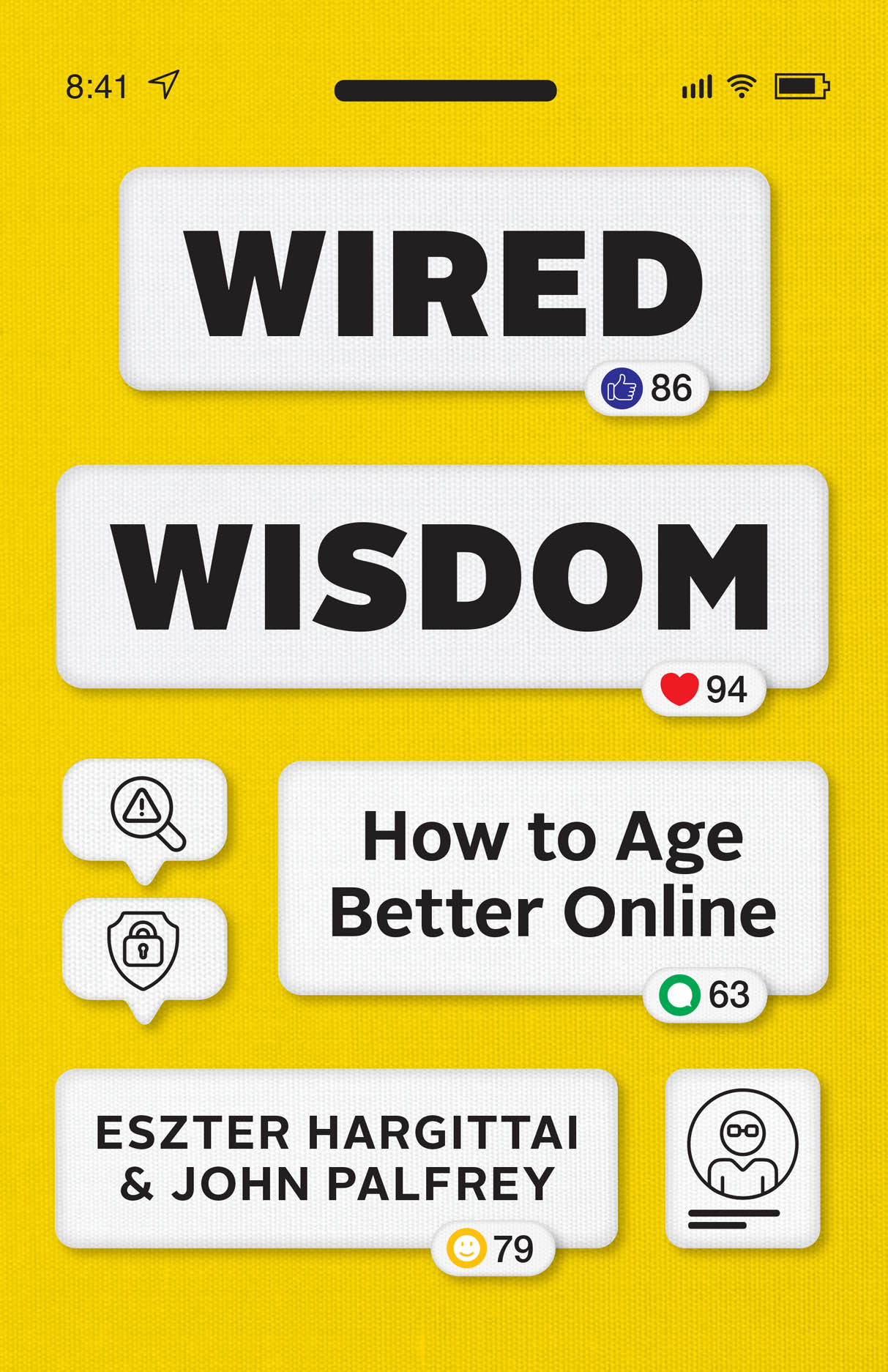
Courtesy of University of Chicago Press
Eszter Hargittai: Yes, so older adults generally in society tend to be forgotten and looked over. And that’s not a good thing because they make up an increasingly larger part of the population.
And so I was curious about a decade ago, what do we know about older adults and internet use? And so I did a review of the material at the time. And almost all of the research focused strictly on wether older adults were online or not, not what they were doing or how they were thriving or not.
And so I wanted to focus in on this population, given what a large portion of the population they are and how important they are. And frankly, also because we have lot of stereotypes about them, and I wanted to see if those are correct.
Yeah, so your book is based off of interviews, largely, and surveys. Could you tell us about your process and who you heard from?
So often when you first start studying something and you’re not yet sure what the situation is like, we like to start with interview so we can dig deeper, find out how things look. And then once we learn about some of that, we can administer surveys on larger, more generalizable populations samples.
And so I started with interviews, and for the interview studies, we actually did those in several countries. So we interviewed people 60 and over in the United States, but also in several European countries like Switzerland, Hungary, Germany, Serbia, even Turkey… Netherlands. So really, quite diverse set of people.
Yeah, I think that’s really interesting. I started actually writing the introduction to this story and I found myself referencing baby boomers. And then I realized, you know, this isn’t a population that just has an American context. Adults are aging and living longer all over the world and so that’s part of the reason why this group is so big these days.
Is there a significant difference in the experience of an American older adult versus those in one of the other areas that you interviewed?
There can be, sometimes. Our research study is not really set up in a way that we can do lots of comparisons.
One thing perhaps notable is that a lot of services initially tend to be in English. And so places where English is not the spoken language, which is much of the world, there is often a little bit of lag as to how services get comfortable with being used in other languages.
So whether AI recognizing things in other languages. I mean, now they do better. But initially, one of the things we talk to people about were voice assistants. And they’re not always as great in other languages.
But for the most part, many similar experiences across the countries we looked at.
Well, I was going to ask what surprised you, but I wonder if because there was so little information on this, you kind of came in with a pretty open mind or did you have assumptions going in that were challenged?
So I myself have been studying internet skills for 25 years at this point. So I don’t think things necessarily surprise me.
But I think what will be surprising to readers of the book is that many older adults are actually quite savvy, and we don’t give them credit for this. And there are actually implications of this.
One is that we overlook older adults as being a support source for their own peers. And we know from studies that older adults often like to get assistance from their peers because they’re more patient with them. They’re less critical.
And so we should recognize that some older adults are, in fact, not just savvy enough to be a source of support, but also very, very ready to help – happy to help. And if retired, they often have more time than others to offer support.
» GET MORE NEWS FROM AROUND THE STATE: Sign up for Texas Standard’s weekly newsletters
Yeah, that’s an interesting point.
We already mentioned to them the myth about older adults being susceptible to scams. I mean, that can and does happen to all of us, really. But what did you find out when it came to that, specifically for those over age 60?
Yes, so first of all, older adults are often skeptical about online information. And some of this may have to do with a longer history of using media, right? By definition, they’re older. They’ve used media for more decades and have just developed skepticism. So they don’t necessarily believe everything they see right off the bat.
Interestingly, an FBI study showed that older adults are actually less likely to fall for financial scams than younger adults. The reason we hear about a lot of older adults nonetheless falling for financial scans is that they get targeted way more. And that makes sense because they’re the ones with money. So why target an 18-year-old who has no money in their bank account? You’re going to target the people with larger retirement accounts.
But many older adults don’t necessarily fall for scams. So again, we should not have a stereotype of them just left and right falling for scams.
Now, not all older adults embrace technology or engage online in the same ways. Is there some risk for some being left behind? Are some so hesitant to get involved that they’re not engaging at all?
There’s certainly some risk. And as society moves increasingly online, we have to be very focused on making sure that some people don’t get completely left behind.
So as government services, for example, move increasingly online or certain services require an extra fee, if you’re not going to do it online, it’s really important that everyone have the opportunity to access things online.
So in that sense, it is really important to continue to support resources like public libraries that often offer workshops for older adults. It’s important for older adults to recognize that their public library often does have workshops or drop-in hours.
There are all sorts of ways that different institutions are supporting their constituents, and it’s just very important to continue to fund these resources.
Well, this book seems like it might be a great guide to older adults who maybe have been hesitant to engage online, but maybe also for their children or friends who might need some lessons for the best ways to engage with their family members or friends. Who do you envision this?
Yes, absolutely. So very much so. The book is targeted at both the older adults themselves, but also people and institutions who care for them, who care about them.
One of the important takeaways is that it’s important to offer support in the initial stages, right? So either when someone is first going online or when they’re first trying out a service, when you’ve encouraged them to download an app or try a new website, it’s to be there to support them in those early phases because if they do have an early bad experience, they’re pretty likely to walk away, which, by the way, is probably likely for anyone.
And the other thing is patience. It’s really important to be patient. What we heard in several interviews was that while children or grandchildren can be an easily accessible – at least in theory – source of support, they can often be very impatient or potentially derogatory towards the older adult, which of course no one wants to feel that way.
And so we wanna make sure that when we’re offering support, we’re doing so in a patient way.