Below West Texas, divers explore the deepest underwater cave in North America

Phantom Springs Cave draws elite divers and researchers observing marine life in Texas.

By Sean SaldanaFebruary 18, 2026 11:02 am, ,

West Texas is unforgiving. The region is vast and isolated. The elements are harsh. The terrain is dry and rough. 

But if you head out toward Balmorhea, you’ll find the deepest underwater cave in North America.

Morgan O’Hanlon is a senior staff writer for Texas Parks and Wildlife Magazine and she spent some time around the Phantom Springs Cave. 

She joined the Standard to talk about her recent cover story on the cave. Listen to the interview above or read the transcript below.

This transcript has been edited lightly for clarity:
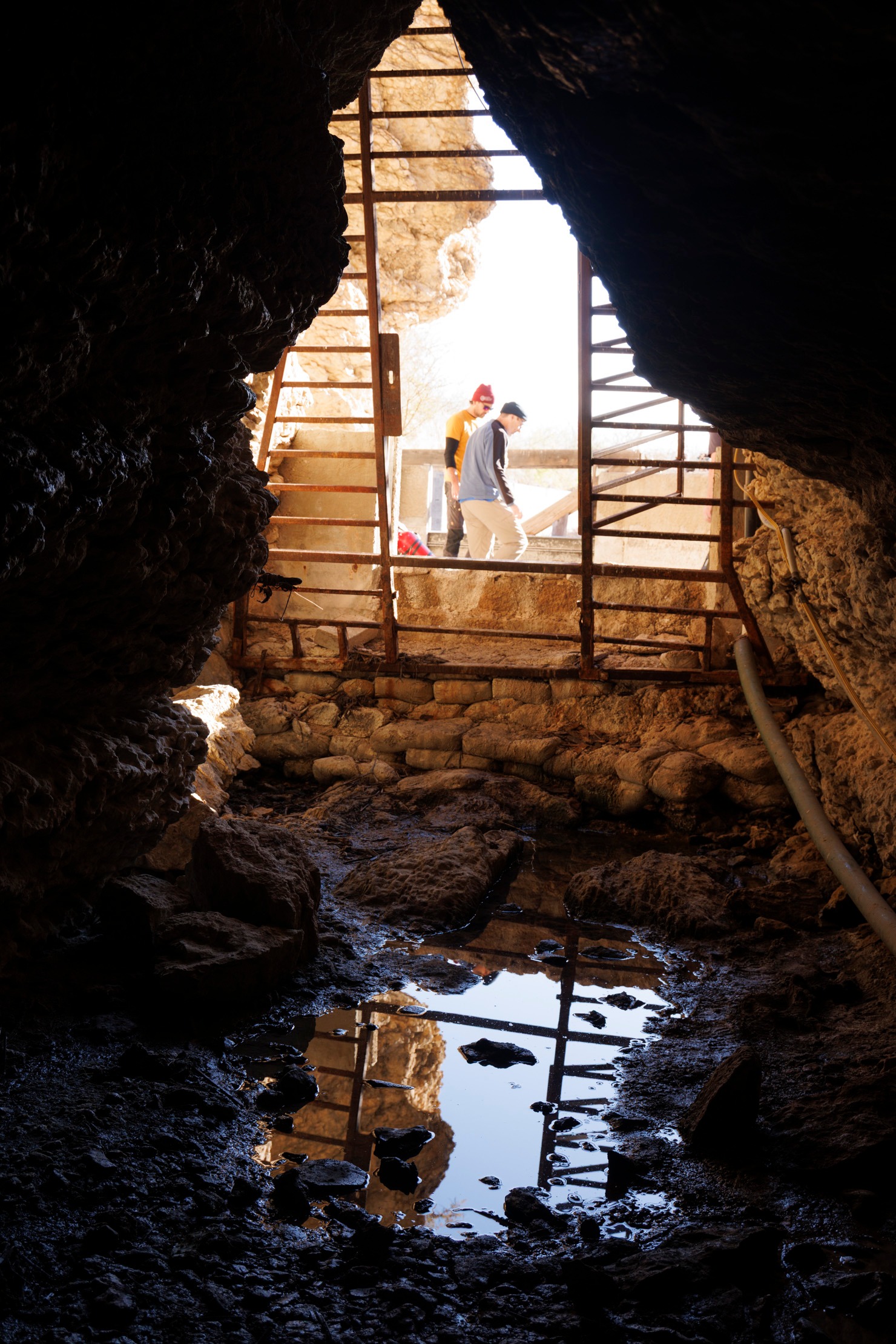
A view from the entrance of Phantom Springs Cave. Courtesy of Texas Parks and Wildlife

Texas Standard: So this massive underwater cave isn’t in the swimming hole at Balmorhea, but near, and it’s part of the same spring system. What does it actually look like?  

Morgan O’Hanlon: As you’re driving through West Texas and through Balmorhea, this kind of big open desert, you get to the Phantom Springs Cave and it’s this tiny little narrow crevice.

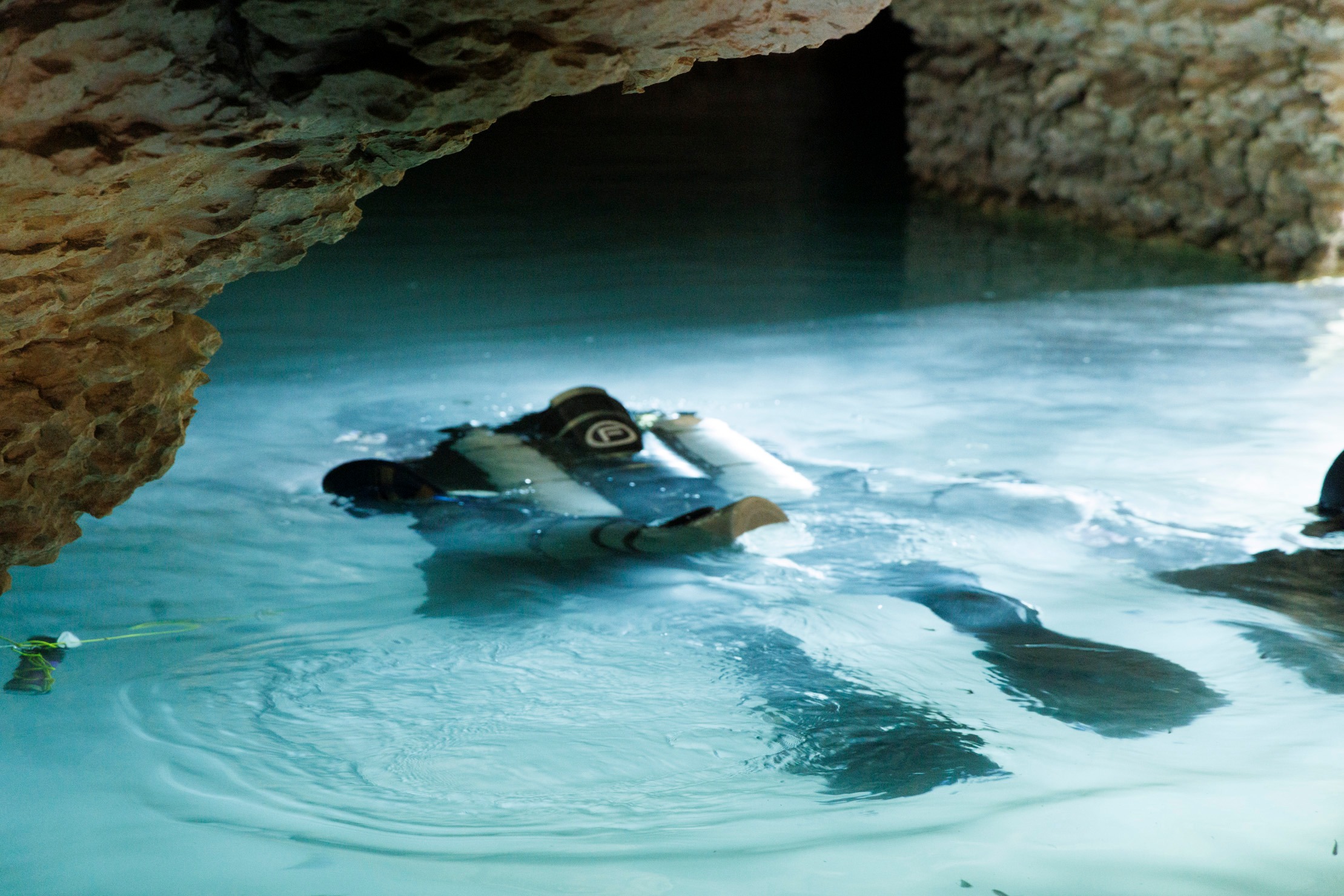
So when you go into there, it’s kind of the opposite of the rest of the desert. It’s humid, it’s cool, it’s a small space and then this bright clear pool opens up into this really deep underwater expanse.

I’m not sure most people know that this is there, and there’s kind of a reason for that. It’s not just anyone that is invited to come explore this underwater cave. 

That’s right. Phantom Springs Cave is located on private land, like a lot of Texas, and you have to get explicit landowner permission to go there.

And you spoke with a diver named Andrew Pitkin. Why were you interested in his story and what he’s up to? 

So about two years ago I saw a news story that a diver, Brett Hemphill, had died while exploring Phantom Springs Cave. So I was really curious about the place itself.

So I linked up with his diving partner and met up with them as they were returning to Phantom Springs for the first time since their colleague had passed. 

» GET MORE NEWS FROM AROUND THE STATE: Sign up for Texas Standard’s weekly newsletters

That’s rough. I mean, you’re right though, that Pitkin is planning to continue to explore this cave and actually attempt to set a new record, diving to 700 feet.

I guess how big is this cave and where do those plans stand right now? How much of it has been explored?

So Phantom Springs Cave opens into an underground river that connects to Balmorhea, the spring that we all know, several other springs in the region. And then some scientists I spoke to say the underground river could go all the way to Van Horn, which is 60 miles in the opposite direction. 

So it really could go on a very long time. We just don’t know. And the divers I spoke with very much intend to continue exploring to the absolute limit of their physical or technical capacity.
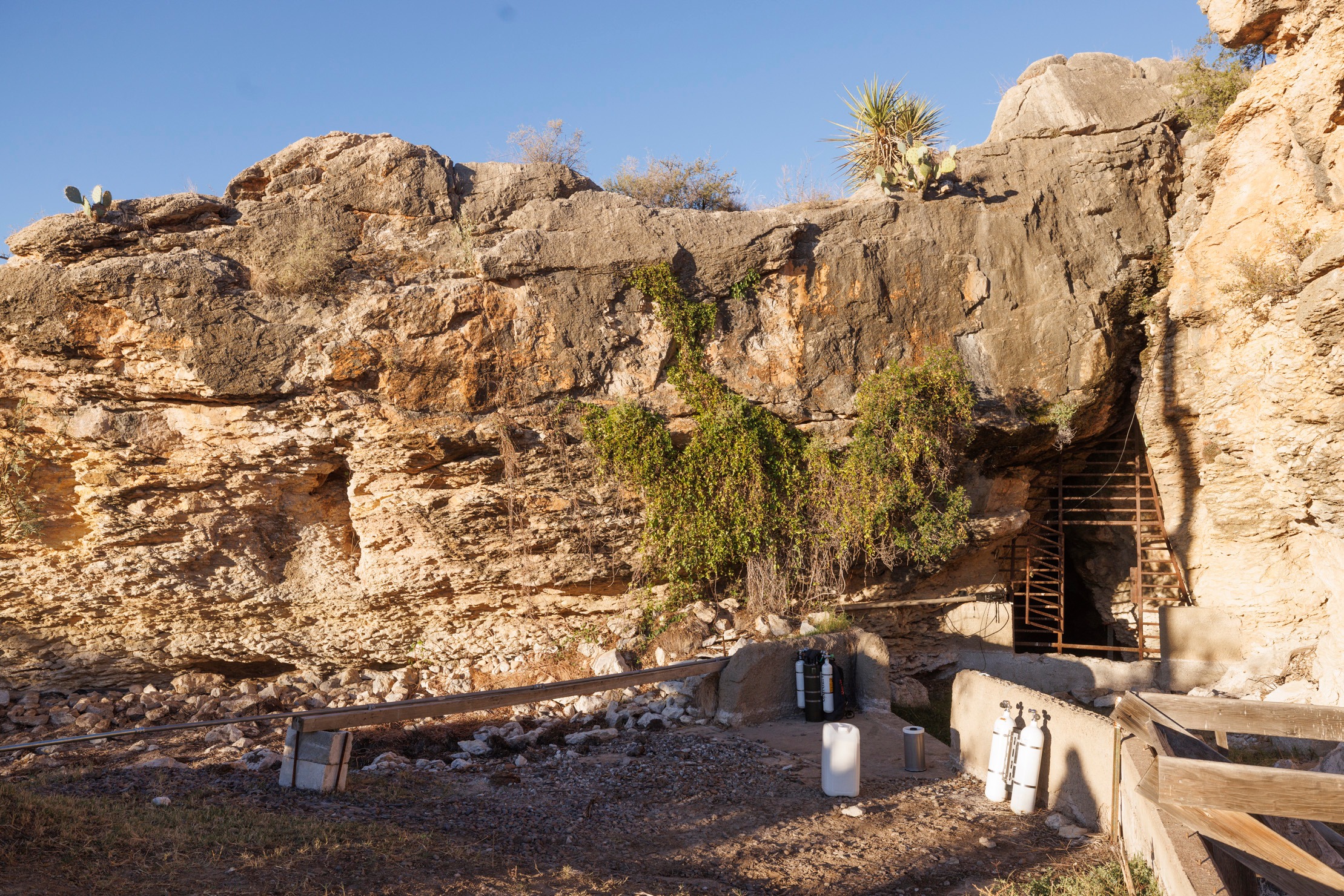

Courtesy of Texas Parks and Wildlife

The entrance of Phantom Springs Cave.

Let’s talk about challenges. It’s dark, is it fully enclosed? You can’t just stick your head up above the water and catch a breath. These guys are in full diving regalia, that sort of thing.  

Yeah, cave diving in particular, I think, is extremely intense because you’re so far away from safety. And I think that’s one of the main challenges of the sport. You’re away from air, you’re away light, you are away from any other outside help.

It is wide and open inside the cave. This is, they say, one of most beautiful caves that any of these divers have ever been into. But I think those wide-open passages kind of betray the actual danger that they are in when they go into these places.

I mean, even if with all their safety precautions, it is inherently a dangerous sport.  

But it’s also not just about setting records. It’s also about discovery, right? Can you talk about some of the interesting and unique things that divers have found, researchers have found exploring Phantom Springs? 

Yeah, the cave itself is a very interesting ecosystem. So there are a number of cave-adapted or other species that only live in Phantom Springs Cave.

So there’s a snail, there’s some endangered fish that live there, a unique species of spider that lives there as well that’s actually named after one of the explorers I talked to.

So, the cave itself is valuable – not only from an explorer’s standpoint, but also in terms of Texas ecosystems. It’s a unique place that harbors these species that can only live there.

You know, so much has been said about – and I don’t know if you looked into this exactly, Morgan, so if not, we can move on – but so much has been written about drought and the future of water in Texas.

Has this spring so far been resistant to that change, or has it been affected as well?

It has not. The water level at Phantom Springs has been dropping for many decades and explorers are really worried that it’s going to continue to drop.

And this is also kind of a bellwether for Balmorhea, the pool, because Phantom Springs is upstream from Balmorhea. And if the water is dropping there, it won’t be long until we see those water levels decrease at Balmorhea itself.

In fact, the superintendent, some other staff there, have told me that the flow rates have already been decreasing, so it is very possible that the water could decrease there as well.

If you found the reporting above valuable, please consider making a donation to support it here. Your gift helps pay for everything you find on texasstandard.org and KUT.org. Thanks for donating today.