It’s a very busy day at the Johnson Space Center in Houston.
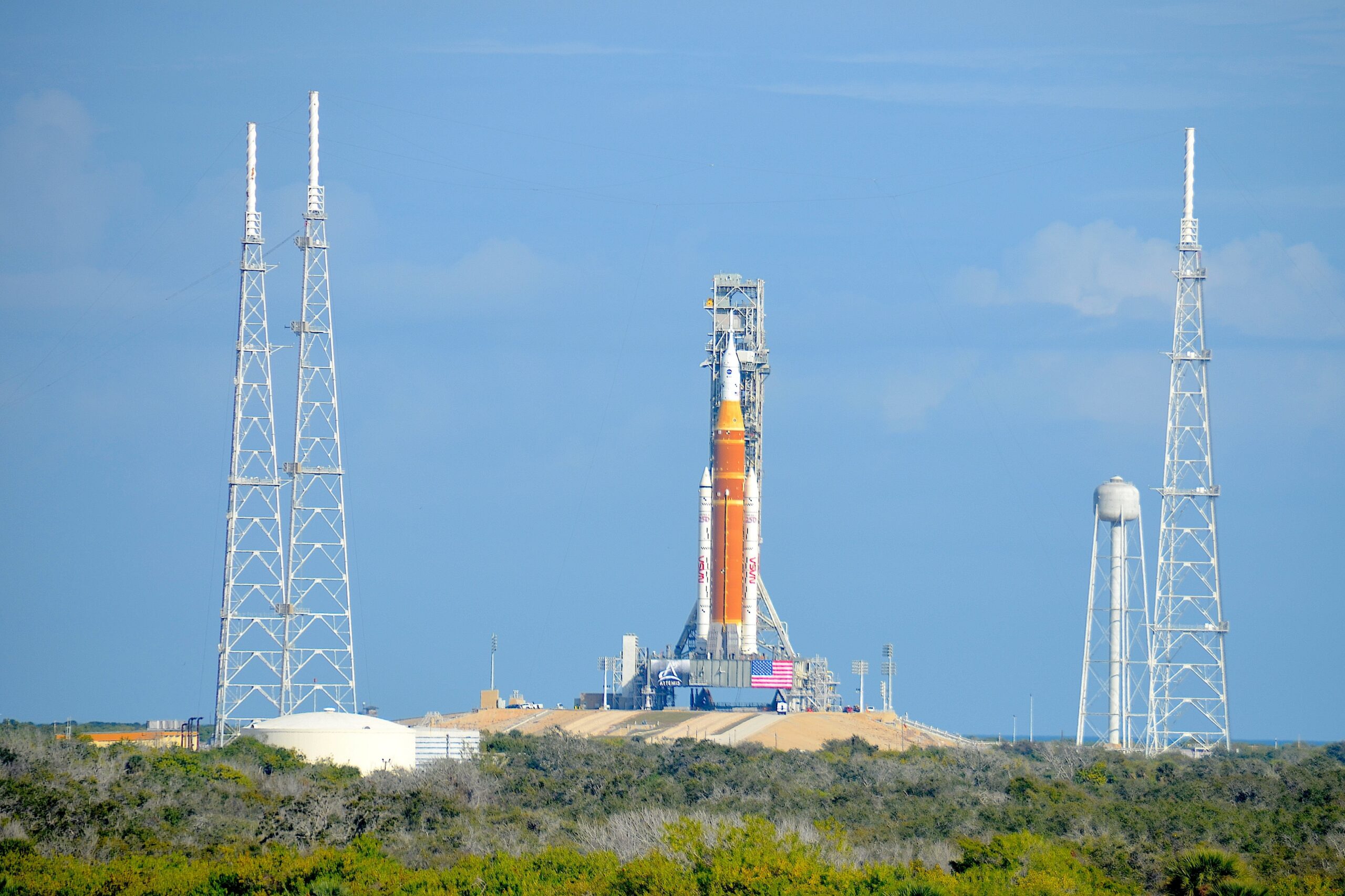
On a launch pad in Florida, four astronauts are strapped in and counting down right now for a trip no human has taken in more than 50 years.
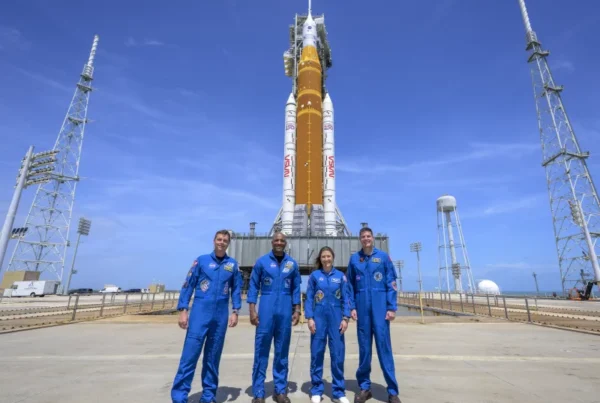
This afternoon, as part of the Artemis II mission, a 322-foot rocket is set to lift off, sending a crew of Americans and a Canadian on a 10-day journey around the moon and back. No landing this time, but they’ll push farther from Earth than any humans ever have.
It’s a high-stakes test flight of NASA’s next-generation spacecraft and the first real step toward putting boots back on the lunar surface for the first time since 1972.
A lot has to go right over the next 10 days. What happens if it doesn’t?
Eric Berger, senior space editor for Ars Technica, joined the Standard to discuss the mission. Listen to the interview in the player above or read the transcript below.
This transcript has been edited lightly for clarity:
Texas Standard: Artemis is often described as going back to the moon, but I think that undersells it just a bit. What specifically is different this time in terms of technology, mission goals, what NASA is hoping to prove here?
Eric Berger: Yeah, so the Apollo program in the 1960s, early ’70s was awesome. But at the end of the day, it was six lunar landings. And then we haven’t been back in 50 years. And all of those were kind of near the equator of the moon.
And so the goal this time is to go and actually build up a lunar base over time and have increasingly long stays on the lunar surface.
And so permanence is one area that’s talked about. The other is sustainability. By that we mean, you know, trying to make systems to get to the moon and back, rocket spacecraft landers more affordable and reusable.
» RELATED: Before Artemis II, a look back to Apollo 8, when astronauts first went around the moon and back
You seem to be suggesting this is about more than just flags and footprints. This is about something that would be sustainable — a permanent base, permanent human presence on the moon. That still sounds really, well… It really pushes the limits of my imagination for sure.
What are the biggest obstacles to making that a reality?
I mean, the biggest obstacles — there’s many. As you say, I think the two are, first of all, is transportation.
This first mission that’s launching out to the moon is enormously expensive. The vehicles are not reusable, and so over time, we’ve got to figure out better ways to do this, and those efforts are underway.
The second part is we really don’t know how difficult it will be to stay on the moon. And the lunar dust that the Apollo astronauts encountered was really very corrosive.
And so, you know, we’ve got to find ways to sort of live in harmony with the lunar surface and I think that’ll be a big challenge as well.

Official crew portrait for Artemis II, clockwise from left: NASA Astronauts Christina Koch, Victor Glover, Canadian Space Agency Astronaut Jeremy Hansen, NASA Astronaut Reid Wiseman.
Yeah, well, I noticed that the timeline has slipped multiple times, so already it sounds like we’re encountering obstacles. What have been the obstacles so far, from what you can tell?
Well, there have been many. We’ve got just a few minutes here, but I would say that NASA has become a big bureaucracy and so getting the agency moving more quickly and more nimbly has been a real challenge.
Starting to see signs that that is finally changing and success today, this evening, would go a long way toward that, but it’s taking a pretty bureaucratic agency and trying to get it on a faster track.
» WATCH THE LIVESTREAM: NASA’s Artemis II astronauts launch to the moon today.
Well, let me ask you about this, because previous Moon missions have involved private industry very much in a support role, but in recent launches, private companies seem to have been taking a much more mission-forward position, SpaceX most notably.
I don’t think SpaceX is involved with Artemis II — directly involved at least, in this particular mission — but I’m wondering to what extent this is speeding up the pace of space exploration and if we’re talking about maybe a shift in risk, the innovation cycle, that sort of thing.
So, this is an all-NASA mission today. This will likely be the last all-NASA mission, potentially ever, in terms of human spaceflight into deep space, because the next one will involve either SpaceX or Blue Origin.
You know, this rocket that’s launching tonight, the space-launch system is only ever going to launch probably five times. And so we are going to encounter a transition to the private sector. And as a part of that, as you said, NASA is going to have to weigh all sorts of considerations about allowing these private companies to control costs, but also flying these missions in a safe manner.
This is a transition that really has to happen, I think, for NASA to be successful, but it will not be easy.
You talk about how this particular launcher has only been used five times previously. I’m wondering at what point in this mission is there the greatest risk to astronauts. Is there a point where you’ll be holding your breath?
Yes, lots of points. To say, this is only the second flight of this space-launch system rocket. It will likely only ever fly five times, what I was trying to say.
So the launch, of course, will be a pucker moment and then the first 24 hours actually are pretty dynamic because the crew is really gonna be putting this spacecraft, the Orion spacecraft, through its paces performing all sorts of maneuvers with its thrusters and also just testing out all of the light support functions — everything from the ability to heat up food to the toilet.
And then if all that works in 24 hours, they’re going to burn the spacecraft’s engines and go out to the moon and come back. And so I think the first 24 hours are pretty dynamic.
And then, for me, it’s kind of the last few minutes of the mission are probably the most sobering and worth watching because they’re going to be testing Orion’s heat shield, this ability to withstand the very high energies and temperatures of coming back from a lunar velocity.
And so actually the last minutes when the heat shield and the parachutes deploy, that’s probably the most kind of nerve-racking moment for a lot of people, including myself.
Well, there’s been a lot of talk about the moon as a stepping stone to Mars, and I’m wondering what does Artemis teach us that we can’t learn any other way before attempting an actual Mars mission?
So I think Artemis and the moon has become more than a stepping stone over the last year. I think it’s now the focus of NASA’s exploration program, but the reality is it teaches us a lot.
You know, the International Space Station is pretty amazing, and it’s been up there for 30 years. But at the end of the day, it’s only a couple hundred miles from Earth, and you can come back in a matter of hours. So if there’s an emergency, as we saw a health emergency recently, where a crew member came back early…. It’s far, but it’s still pretty close.
The moon is much further, and operating in deep space without the protection of the Van Allen belts from radiation and things like that, there’s a ton of stuff we don’t know yet about long-term habitation and deep space, and so the moon is a pretty ideal place to learn that.
» RELATED: Astronaut Christina Koch is ‘answering humanity’s call to explore’
I mentioned that things are pretty busy over at the Johnson Center just south of Houston. Texas has long been central to human spaceflight. You think of the Johnson Space Center, of course, but of course there’s been a commercial space sector that’s grown up around NASA and moon missions in particular.
Do you see Artemis reinforcing or reshaping Texas’ role in space, or how do you see that unfold?
You know, for a long time… I live in Houston, I had big concerns about sort of the future of the Johnson Space Center. I think they’re on a much better path now.
This mission is super important because then it will be controlled from Johnson Space Center. There will be daily briefings here, all of the important people from NASA will be down here sort of during the entirety of the mission. And if all of this works, we’re talking about lots of lunar missions in the coming years.
And so Johnson Space Center has the potential to sort of be the nerve center for all of our operations in deep space and on the lunar surface. And so I’m hopeful that that we have success over the next 10 days and then this is just the beginning of a pretty exciting time for humans finally to go off into deep space and to stay.