The war with Iran is hitting Texas from two different directions at once.
On one side, it’s boosting business in South Texas, the U.S. oil export hub. At the port of Corpus Christi, shipments surged to record levels last month.
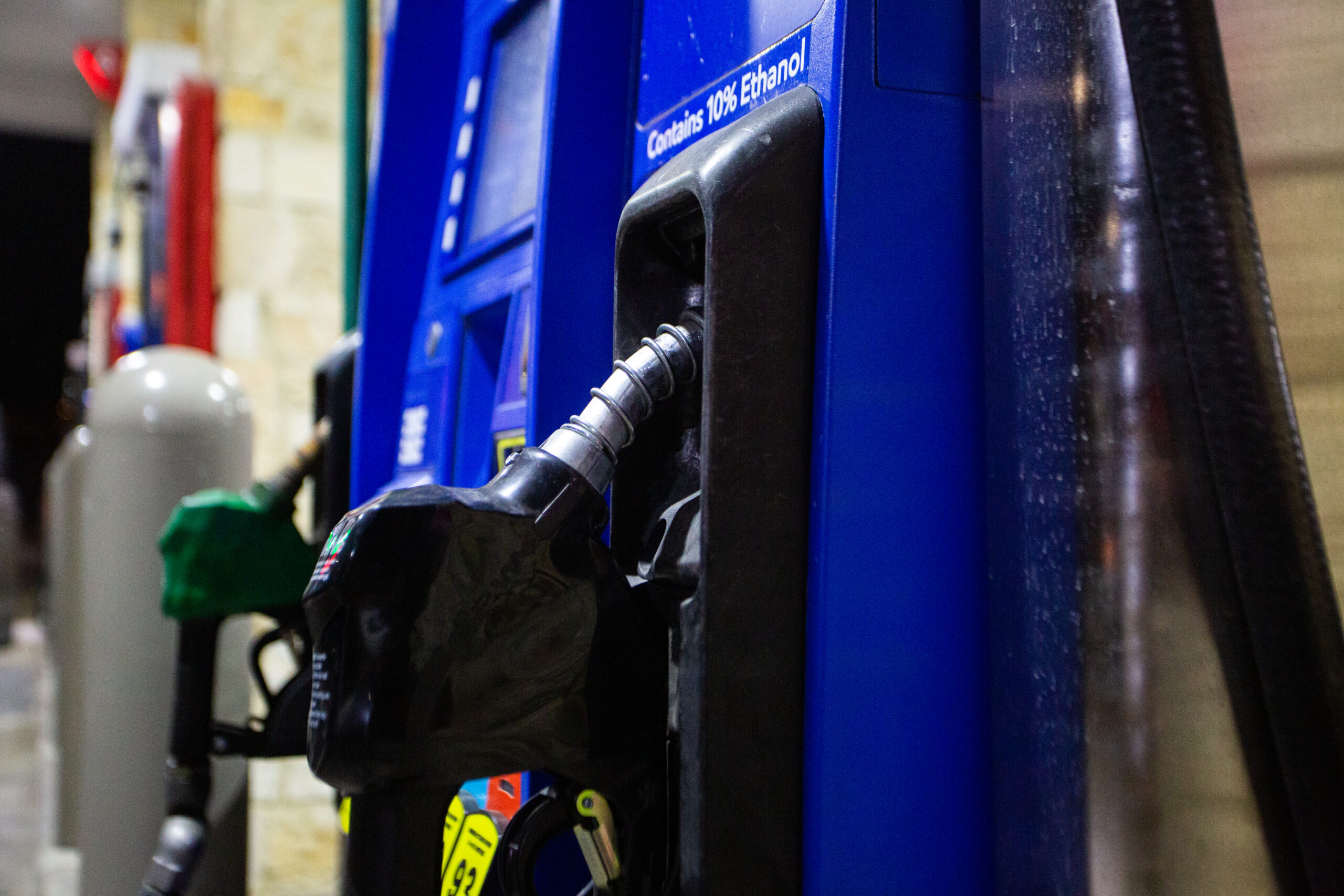
On the other side, the renewed disruption in the Strait of Hormuz is again rattling global markets, feeding higher prices for drivers, trucking companies and other businesses across Texas.
Matt Smith, lead oil analyst with Kepler, joined the Standard to help make sense of something that a lot of listeners have chimed in on: How these two realities can exist at the same time and what all this means if the conflict drags on.
Listen to the interview in the player above or read the transcript below.
This transcript has been edited lightly for clarity:
Texas Standard: From where you sit monitoring all this, what’s the single biggest shift that you’re seeing right now? Is this mostly about supply disruption or price reaction or trade flows reshuffling?
Matt Smith: Well, how long have you got? There’s a few kind of key things to hit on here.
So I think the main one to consider is you’ve got the Strait of Hormuz. We are now into the eighth week of it being closed. And 90% of the oil that would leave through the Straight of Hormuz goes into Asia. And so now Asia is not receiving any more barrels because all those barrels that were loaded pre-war have discharged.
For the most part, Asia is ending up being starved of oil. This is so important because it sets off a series of dominoes. Because now these Asian countries, they have to dial back on their refinery runs, which means that they can’t produce the jet, the gasoline, the diesel that they need domestically.
But Asia is also a refining hub. And so they export a lot of these products. And so the countries that receive these products, whether it is Australia that gets its jet fuel from Singapore, or even if it’s the U.S West Coast that gets its jet fuel from South Korea, you’re starting to see these next dominoes falling in terms of those flows not happening, which ultimately means we’re going to be seeing product shortages coming through in the coming weeks.
And that will start off in Asia, but then it will have ripple effects to elsewhere in the world.
See, I was wondering if China or Asia would be looking to Texas — if this has rerouted their sources for energy so severely they’re having to come all the way over here to meet demand.
You ain’t seen nothing yet. For April, we’re going to be seeing record crude exports out of the U.S. We’re already seeing them at a record pace and we’ve still got a third of the months to go where we will see that pace pick up even stronger.
Typically you see about 27 VLCCs, which are very large crude carriers, heading to the U.S. at any one time. That was the average for last year. And they carry two million barrels each.
We have got over 70 that are heading to U.S. right now because they can’t get into the Mideast Gulf, because the Strait of Hormuz is closed and so they’re just redirecting them to come and pick up U.S. crude.
Okay, well, on the one hand, record volumes out of the Port of Corpus Christi — that sounds like a win. But at some point, don’t we get near capacity? Are there any signs that the system is under stress?
Yeah, we’ve hit it basically. So we’re going to be hitting it in the coming weeks here.
So those VLCCs are going to stagger in terms of their arrival. If you go and have a look at the map, you can just see them in a row just heading to the U.S. And so we are going to reach a point where that dock capacity gets maxed out.
But given how much of a better situation the U.S. is in from a supply perspective, we simply have to test those levels.
» HOW DO YOU AFFORD TO LIVE IN YOUR CITY?: From groceries to gas, we want to know how you make it work.
All right, let’s talk about that side of the equation because there are a lot of Texans who feel like, well, don’t we get any insulation from this? We produce energy here, but when those global price swings hit the marketplace, we are feeling those swings almost immediately.
Well, the U.S. is insulated from a supply perspective to a large extent, but not from a price perspective.
So your price at your local gas station is driven by the input price of oil. And we have seen all prices — not just in the U.S, but globally — rising or those U.S. ones have increased or been dragged higher in the slipstream of those global prices.
And so that’s why on the national average, we’re seeing prices over $4. In Texas, you know, we’re seeing them about $3.65, which is nearly a dollar higher than it was last year.
Well, bottom line as you see it, and I think this is what a lot of Texans are asking, does a crisis like this ultimately benefit the Texas energy sector more than it hurts Texas consumers, or is that just too simple a way to look at it?
Yeah, and I think that’s fair because it’s not just prices at the pump — diesel prices are actually at $5.50, and that is up $2 versus what they were this time last year.
And so what that means is all of our groceries get moved around the country by diesel trucks. So that’s going to work its way into inflation, regardless of whether it’s something you’re buying on Amazon or it’s your gallon of milk from the grocery store. And so everybody is going to feel that pain.
The flip side of that, yes, is that producers are getting higher prices for their oil. But they are not ramping up production like crazy by any means here. They are just locking in those higher prices for that certainty.
And so probably net-net, it really hurts the consumer in Texas. But there’s obviously always that silver lining.