New box set celebrates 50 years of the blues

Antone’s in Austin has nurtured blues music since it opened in 1975. The new album combines historic tracks, along with some new ones.

By Shelly BrisbinSeptember 5, 2025 3:04 pm, ,

In 1975, Austin was already at the center of one musical scene – a heady stew of progressive country and rock styles you’d often find at Armadillo World Headquarters, a beloved and world-renowned music venue back in the day.

But that year also marked the rise of a vibrant blues scene in the capitol city, bringing together eager young players like Stevie Ray Vaughan, Kim Wilson of the Fabulous Thunderbirds and Angela Strehli, as well as blues legends like Muddy Waters, Otis Rush and Albert Collins.

But unlike the Armadillo, which barely survived the ’70s, Antone’s remains, still billing itself as “Austin’s home of the blues.” To celebrate, there’s a new box set titled “Antone’s: 50 Years of the Blues” which features impossibly rare live cuts, long-lost tracks, and even a few new recordings.

Zach Ernst, the longtime music booker for Antone’s, and Jacob Sciba, a sound engineer at Arlyn Studios produced the set. They say the five discs and 41 tracks cover several phases of Antone’s history. Listen to the interview above or read the transcript below.

This transcript has been edited lightly for clarity:

Texas Standard: I want to turn to you Zach. I want to talk about the new box set in just a second, but I think we need to set the scene just a bit because music fans a world over know about this place, Antone’s, but maybe less well-known – outside of Austin, anyway – is the club’s founder who died almost 20 years ago.

What should folks know about Clifford Antone? Who was he and where did his love of the blues come from? 

Zach Ernst: He was an amazing guy. I think last time I talked to you, I mentioned that when I went to UT down the street, I got to know him kind of for the last couple of years of his life. And my impression of him was he was the biggest music-lover that I’ve ever met and cared so deeply about the individuals who played on all these records, not just the big names. 

And he was always eager to turn people on to his favorite stuff. He loved the blues. Loved it. And he would say, “I didn’t choose the blues, the blues chose me.” And he was full of these aphorisms like that.

But he first heard that music growing up in the Golden Triangle in Port Arthur, where he was born, and going across the Louisiana border to hear Zydeco or swamp pop and things like that. I think like a lot of people, he learned about the blues also through like Peter Green and Cream and Led Zeppelin and things like that.

So combine that with growing up around Clifton Chenier and seeing James Brown as a teenager and Ray Charles on the radio and things like that. 

It was almost like he wanted to amplify them at a time when they’d sort of taken a backseat to a lot of the rock and roll. 

Ernst: Absolutely. He paired up with people like Bill Campbell, who was a white guitar player, but who had been playing in bands on the East Side of Austin. He was kind of the first white guitarist to make a name for himself in Austin, playing with everybody at Victory Grill and Charlie’s Playhouse and things like that. And also Angela Strehli, who was a real blues aficionado who became Clifford’s friend in the early ’70s. 

So they kind of started this crusade. And his obsession was building a club where he could bring all these people to play. And what was unique and special that was happening was, you know, blues was out of fashion. It was the era of disco and of rock and, around here, progressive country. 

But he treated the artists like royalty. He’d bring them down for a week. They’d get out of Chicago in the bitter winter. He would take Big Walter or Eddie Taylor to doctor’s appointments, set them up with a house band. They didn’t have to pay their own band. They would have Jimmy Vaughn and the Fabulous Thunderbirds be their backing band or things like that. 

It was a real community. 

Ernst: Absolutely, and it was a degree of respect and reverence, particularly for people whose names weren’t on the records. Eddie Taylor played on all the Jimmy Reid records, but his name wasn’t very known. Or Hubert Sumlin who played all the lead guitar for Howlin’ Wolf.

They were finally given a place where they were treated the way that they should have been and in part because of the club and increased interest in Austin and it was the first club on 6th Street as an entertainment district. But also through the profound talents of Stevie Ray Vaughan and Fabulous Thunderbirds and the success of those and Lou Ann Barton. 

National and international.

Ernst: Exactly, and it kind of all spiraled from there.
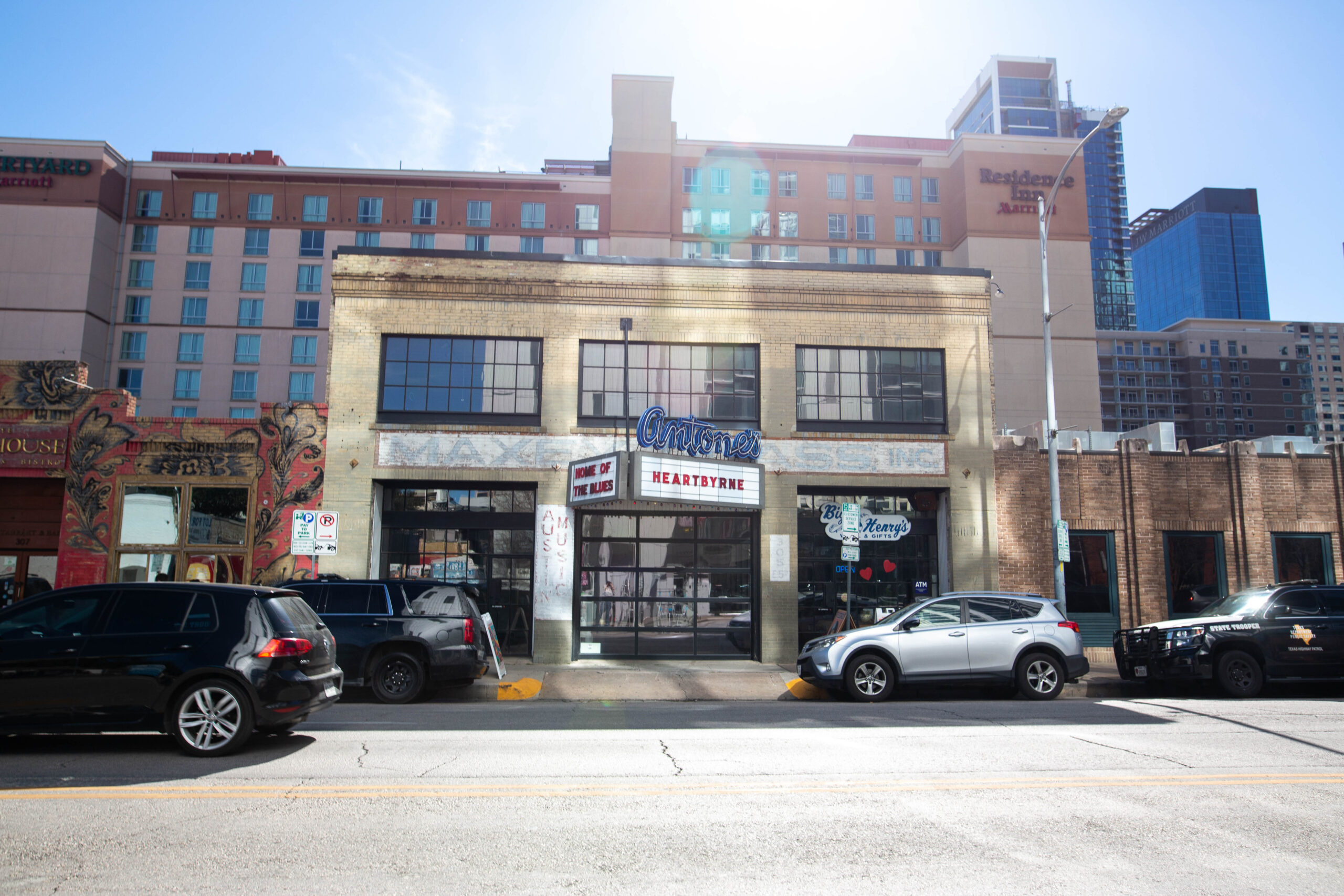
Jessie Curneal / KUT News

Antone's Nightclub on East Fifth Street on Feb. 14.

Yeah, Jacob, how did you come to be involved in this project? 

Jacob Sciba: I’ve been at Arlyn Studios off South Congress since 2012.

So all this stuff really predates your association with Austin music.

Sciba: As far as the club. Ultimately another partner at Antone’s, a couple partners, Will Bridges and Gary Clark…

Gary Clark Jr., the guitar player? 

Sciba: …Are also, you know, big friends of Arlyn. And Zach and I have been making records at Arlyn since 2012. Will is a partner at Arlyn and at Antone’s and Gary is family of Arlyn and partner of Antone’s. 

Everyone’s all tied together. 

Sciba: Yeah, when it came time for the 50th and Zach and I started talking about like, let’s go back in and make a blues record that we’re really proud of … Do it the way we want to do.

You weren’t talking about a box set back then?

Sciba: We weren’t talking about a box set. Originally Zach and I’s first conversations were exactly making a modern-day blues record that didn’t necessarily feel like a modern record, but was kind of an ode to the classic records that we love.

Did you have to go through some of these old recordings that were made at Antone’s and that kind of thing?

Sciba: Yeah. So the box set is made up of multiple generations of Antone’s.

There’s live recordings that were recorded from the different locations at the club. There was a whole LP that was studio recordings, the majority of them recorded at Arlyn in the ’90s, that were part of Antone’s Records. And then there’s two LPs in the box Zach and I have recorded since between October of last year and January of this year.

I can’t imagine going through some of these archive tapes and coming across… Was there any at that moment where like, “holy cow, I can believe we’ve got this, we gotta get this on.”

Sciba: 100%. Zach can speak better of where the actual source came from, but when I got the audio, for example, on the live stuff, it was two-track recordings – soundboard recordings.

So you gotta make the best with what you got.

Sciba: Make the best of what you got, but undeniably the performances and, I mean, believe it or not, they were actually in really good shape and the performances were mind-blowing.

Where were these recordings all these years? They tucked away under someone’s bed or in a closet somewhere? What was that about?

Ernst: You know, people still reach out all the time saying, “I have all these recordings. I have board tapes.”

Bootlegs and stuff?

Ernst: We have bootlegs, we have tapes that we would have to bake to hear what’s on them.

You have to bake them so they wouldn’t fall apart when you put them on the machine. 

Ernst: So we still have way too much stuff to even listen to.

So how’d you go about selecting the tracks that appear in the box set?

Ernst: Well, a lot of it was name recognition and wanting to give a good overall view – Buddy Guy, Albert Collins, Otis Rush. And some of that stuff had been commercially released like on Antone’s 10th anniversary anthology, for instance. So that made it a little bit easier. 

But one of the coolest things on the live box is a recording of Gary Clark Jr. When he was 20. We heard from a sound guy who now lives on the East Coast or in the Southeast, and he says, “I have all these CD-Rs, I’ve all these cassettes, and I’m tired of looking at them. Will y’all come get them?”

And so we have a partnership with the Briscoe Center here at UT and got a big moving truck and dropped everything off there. And then myself and one of our other employees, Sam Boland, started going through and looking at and seeing what they had.

And one of the really neat things, it was from 2004 and it said, “Tribute to James Cotton,” or maybe it was a “Benefit for Hubert Sumlin.” And kind of clicking through and it’s like, oh, there’s Double Trouble, there is Charlie Sexton, that’s cool. And then it’s this amazing intro from Clifford to like, you know, “let’s hear it for Gary Clark and his fine band.”

William Whitworth / KUTX

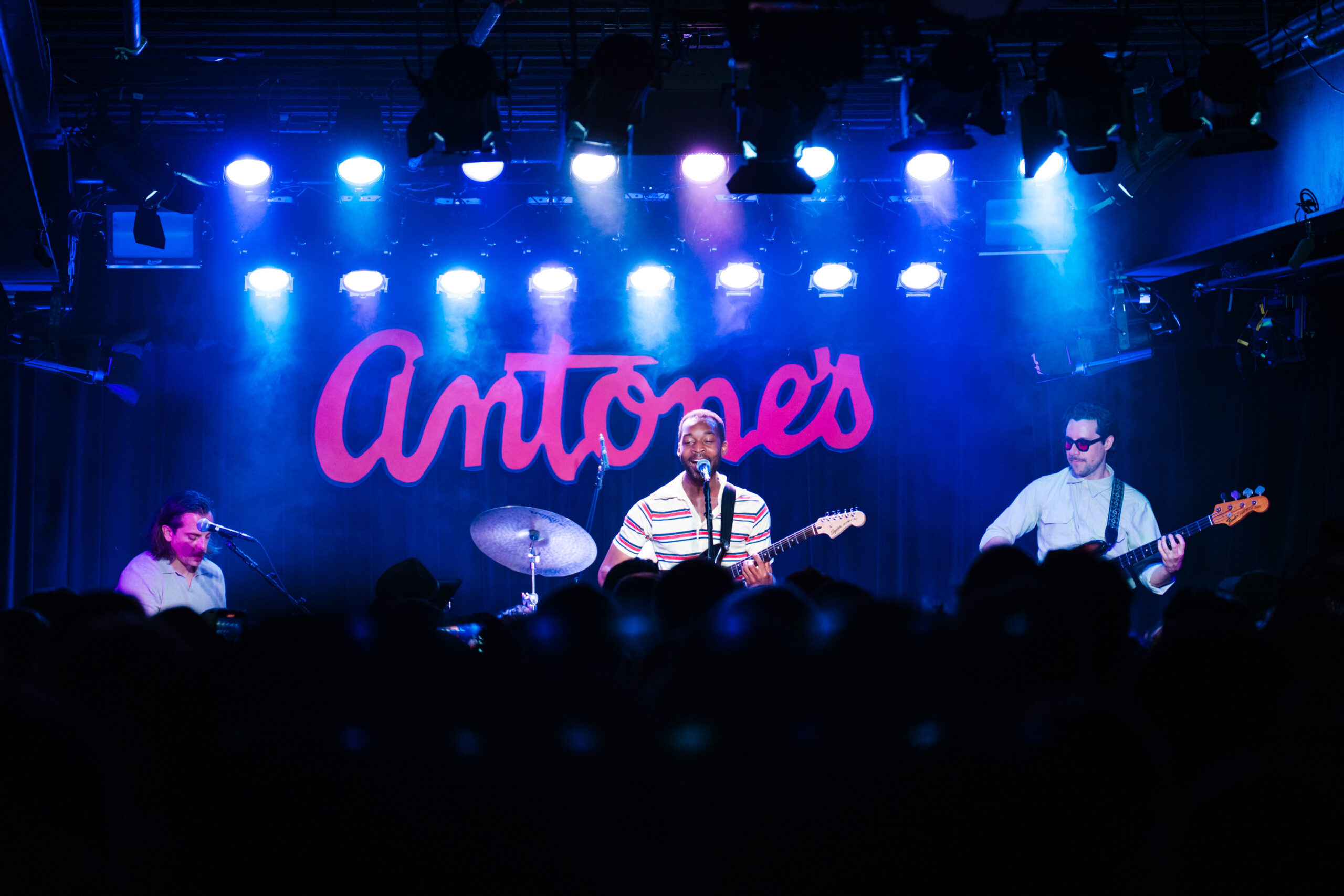
Antone's Nightclub is celebrating 50 years this year with a slew of special celebrations.

This is the thing that makes this so special because the seed of Antone’s was not just love for the blues but wanting to keep it alive. 

And as the legend goes, Gary Clark Jr. was a kid living here in Austin. He came down to Antone’s back in the day when he was just a kid and he wanted to learn how to play the guitar and he did. And they drag him up on stage, you know.

And in a way, Gary Clark Jr.’s involvement here and the fact that he’s featured here… That’s a big part of kind of telling the story that to a certain degree, to a rather large degree when you think about it, Clifford Antone was able to achieve through people like Gary Clark Jr. keeping the blues alive, basically.

Zach: Absolutely. And that’s a big reason why Jacob’s co-produced a lot of Gary’s stuff. And I knew when faced with the challenge of, “hey, I want to make the best blues record of the last 50 years. How are we going to do it?” I took that idea to Jacob over coffee at Jo’s Coffee. 

And then he thought about it a little bit. Then we went in there and he had crafted this whole sort of a spaceship of “this is where the amps are going to go. This is how we’re going to get all the bleed in the room,” which is what makes all that stuff sound so good. He’s the specialist on that.  

I know a lot of musicians who are still kicking and people and good songs to do, but unless you have someone like Jacob behind the board or a place like Arlyn, it’s easier said than done.

That’s a tall order though, man. “The best blues record of the last 50 years.” Do you feel that way?

Sciba: Yeah, I think it is a tall order. I think from a record-maker’s standpoint, we don’t just listen to every blues record or any given record. There’s eras to records, and to me, those eras are defined by technology of recording studios and approach of recording studio.

And, you know, for most of my favorite records, a lot of them were recorded live in the same room and the amps bleeding into the drum mics and the vocal is getting saturated.

So it’s not clinical. You got to feel it through the way that some of the tracks bleed together in some of the sounds?

Sciba: 100%. It’s how everything energetically is happening in a room and exciting a room. You know, the majority of the drum sounds coming out of the vocal mic. And you’re married to it.

Five discs, vinyl discs, 41 tracks, a lot of history. How did you go about… You know, I was thinking about, you must have hit some legal walls here, I mean, because a lot of these performers, some of them at least, are still around, right? You have to go and ask for permission to get them on this thing, or what?

Ernst: Well, we talked to Gary, of course. That was an easy thing. For one, that was recorded seven, eight years before he was signed to a label, so that makes it a little easier.

And some of the artists had signed to Antone’s Records back then, and then it was sort of an ongoing thing. But for folks who are still alive and for folks who have been a part of this story, we certainly didn’t want to take anyone by surprise.

But I would imagine a lot of them would want to be a part of it.

Ernst: Absolutely and, you know, I called Kim Wilson to come do something. And he does a great song on the record, but I’m like, “hey, we’re also gonna include you on the vintage one.” And he’s like, “what are you gonna use?” And I was like, well, “Don’t Touch Me” from “Tiger Man.” He’s like “that’s a pretty good one.”

So there were, as opposed to legal conversations, a lot of it was like a vibe check of like, “hey, just want you to know that going way deep in the past and we want to make sure you’re cool with it” and everyone… It’s such a big family that it’s pretty easy.

I can understand that a blues fan would love to spend hours in this collection. Do you do anything with his box set that kind of communicates these kinds of stories? I mean, is there any reading material and bonus stuff that comes up? You’re nodding your head there.

Ernst: Yeah, uh, Joe Nick Patoski…

Oh, man, terrific music journalist.

Ernst: He wrote about 17,000 words.

So, yeah, he’s passionate about it.

Ernst: For the better part of a year, I would send him the mixes as Jacob would get them done and say, “hey, this is where we’re going.”

And you know, the name of the record is “The Last Real Texas Blues Album,” which is within the box, but also available on its own. That’s all the new recordings that we did. And I thought Joe Nick would be a great cosign in that he’s one of the great experts on Doug Sahm, and that’s an homage to “The Last Real Texas Blues Band,” which is a Doug thing that he did back in the early ’90s.

And so he helped us kind of make our case and as we went along the way of “this is what this means” and “this is why we selected this artist to sing that,” you know, he was a really great partner to help us explain it better than I could.

» GET MORE NEWS FROM AROUND THE STATE: Sign up for Texas Standard’s weekly newsletters

You must feel great having reached this point in the project. What would you like to see this record do? I’m thinking in terms of success, because releases, especially very ambitious ones, can be judged on the basis of sales, or maybe just, if they wind up in the hands of the right people, maybe a Grammy Award, something like that.

Were you thinking about, like, what is the legacy of this? Of this box set, in a sense. 

Sciba: I think ultimately for me as a record-maker and I think for Antone’s and for the idea of our love for these different musicians, it’s for the world to hear it. Whether it translates to sales or whether it translates to a Grammy, I think all that’s kind of secondary. 

I think the real main goal is I want peers to hear it and I want people outside of the Texas blues culture to hear it and I want to submit what I think is the legendary Texas blues back into a modern conversation.

I also think it’s important, for me, from record-making standpoint, to realize that just because there’s modern technology doesn’t mean I don’t want my blues shiny. Sonically, I don’t.

I think some of the great blues records of the ’60s… The blues is an amazing thing because it’s an emotional value, not a technical thing. And from a recording standpoint, mainly, I speak and so it’s an approach and it’s a ethos of how the music should sound and I think, at the end of the day, I really just want it to reach as many people as it can so it can be a conversation.

I think, especially in modern times, that there’s more of an openness to hearing new sounds, but at the same time, something that strikes me about the blues sort of touches on what you’re talking about here, the grittiness of the sound and everything.

You don’t hear the blues on the radio, and yet, blues remains this vital part of American music, as much as jazz or any other American innovation in music. And I’m curious why you both think that is. What is it about the blues that kind of keeps it part of the music conversation? 

Sciba: I think it’s pure guttural emotion, and I think in a world of AI and everything that’s happening in modern music, the one thing that’s irreplaceable is emotion and soul. And the blues and jazz and many of the great musical art forms of the past lived and died on emotion and soul. 

Man, I think that you have touched on something big because I’m sure you both have heard about like these bands that are appearing on Spotify that are complete AI inventions, right? And people, you know, bellyaching about authenticity. It didn’t get much more authentic than this kind of music.

Ernst: Yes. And, uh, you know, going back to what you were saying earlier, it reminded me something Joe Nick says in the liner notes is, well, everyone said the blues was dead in 1975. That’s what they said when Clifford, you know, “why would you start a blues club? No one’s going to come. Who are these artists? No one has heard of these people.”

And here we are 50 years later, presenting a piece of work that says “well, the blues wasn’t dead then and it’s not dead now.” Look at who all is out here and look at how good they’re playing and they play so good, we can set them all up in the same room and not worry about anyone screwing up.

This isn’t just a documentary. This is like a love letter, almost.

Sciba: 100%, yeah. 100%. On many levels in recording studios in 2025, it’s a very manufactured world of perfection and algorithms and at the end of the day being able to set up a band and just let people – no click tracks, no metronomes. Drummer holds time, guitars are swirling around the room. It’s all one giant amoeba of sound.

This may be unfair, and I’m sure it is, but I have to ask, is there a track on the album that you think captures the heart and soul of what we’ve been talking about here? Is there one that’s maybe your favorite on the album? I know it’s hard to do, it’s another good question, but the one you’re gonna put on in the car. 

Sciba: Yeah well, Jivin’ Gene [“Flip, Flop and Fly”] is really great. It depends on what I’m looking for. I think the Bobby Rush and Jimmy Vaughn is pretty, you know, insane. 

Ernst: We do “Going Down,” the Freddie King, Don Nix song. And the second track, one of my memories from the studio, we brought in Benny Turner, who is Freddie King’s brother, but also his bassist on stage for many years. There’s a ton of YouTube footage of Freddie with Benny. He’s from Gilmer, Texas. Which I think is the yam capital of Texas. 

We got him to play bass on “Going Down,” of course, with his friends Bobby Rush and Jimmy. And he’s an incredible singer, too. So track two on the record is “Reconsider Baby,” which is a blues standard by Lowell Fulsom. And he sang so well. And Derek O’Brien played guitar so good that after take one or two, Jacob said, “that’s the new bar.”

The new standard. 

Ernst: That’s the standard-bearer for the rest of this thing. And he’s a great example.

A lot of people still don’t know Benny Turner’s name. Maybe they’ve heard him on a record before, but it’s really a pleasure to still be doing what Clifford did, which was, “hey, check out this artist. This is the most soulful, amazing thing.” And he dresses great, and he sings great, and just… Can you imagine we’re walking on earth at the same time as someone like this? 

And if we can turn a few people on to some of these names and artists who helped create the sound of modern music and they’re still out there gigging and performing and recording, that was always Clifford’s mission and it’s just… We’re standing on the shoulders of giants trying to keep that going. 

If you found the reporting above valuable, please consider making a donation to support it here. Your gift helps pay for everything you find on texasstandard.org and KUT.org. Thanks for donating today.