Just one day into the Artemis II mission, NASA’s Lori Glaze, who helms the space exploration program, had her eyes on the future.
“I really feel like the exploration we do is inspirational for everyone here on Earth, hopefully inspiring our young people around the world, the Artemis Generation, that’s growing up now to want to grow and achieve and to learn,” she said.
The entirety of the mission maintained an air of fleeting successes, in the name of future pioneers. Speaking in February on 60 Minutes, mission specialist Christina Koch said she hopes the history books “forget all about Artemis II.” Minutes after breaking the record for farthest distance ever traveled from Earth, mission specialist Jeremy Hansen said the crew “most importantly choose this moment to challenge this generation and the next to make sure this record is not long lived.”
Now, days after completing the mission, the Artemis II crew and its administrators are placing their bets on the Artemis Generation.
From Apollo to Artemis
In the earliest days of American spaceflight and NASA, space exploration provoked a childlike sense of wonder about the universe. The Apollo program began an “Apollo Generation” of students and children who came of age in the first space age.
It also sparked a cottage industry of space coming-of-age entertainment. Homer Hickam Jr.’s memoir “Rocket Boys” (later adapted as the 1999 film “October Sky”) encapsulated the spirit of the era. Houston-raised Richard Linklater’s “Apollo 10 ½: A Space Age Childhood” fantasizes about the Apollo Generation. Even Stinky Pete the Prospector, the antagonist of “Toy Story 2,” makes a jab at the industry: “Once the astronauts went up,” he says, “children only wanted to play with space toys.”
Nearly 60 years on, the Artemis II mission became as much about the future generation of space explorers as it did the historic lunar mission itself.
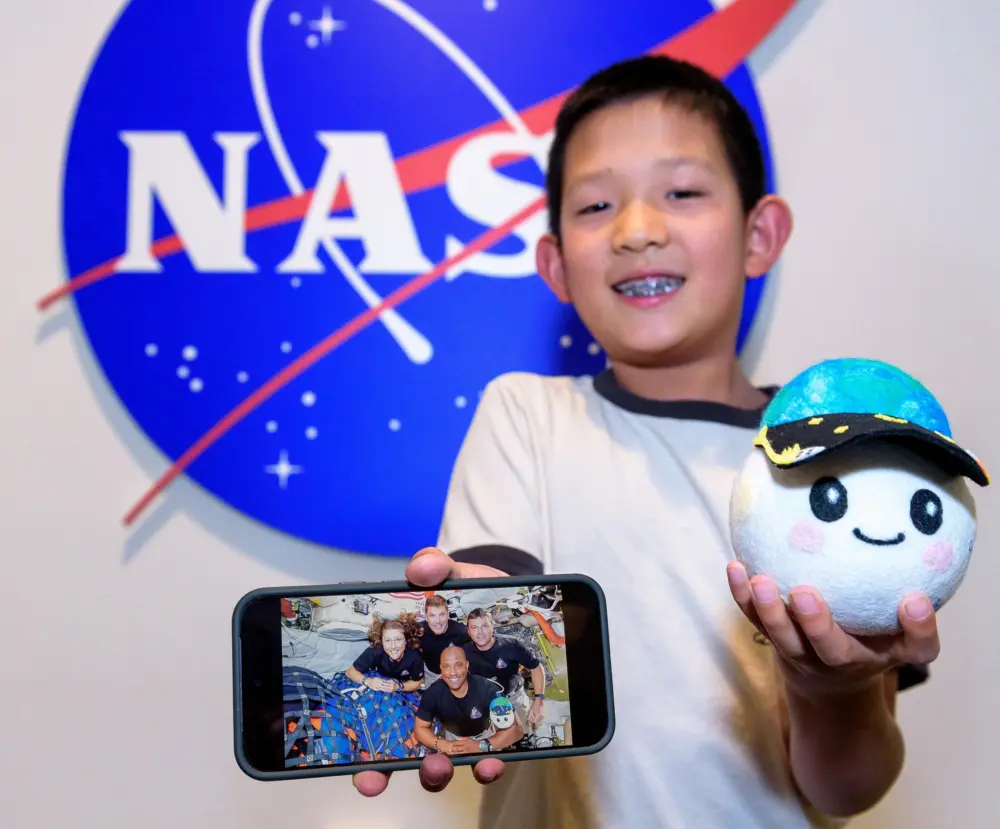
Throughout the mission, the astronauts carried a stuffed plushie named “Rise,” a zero gravity indicator for the crew designed by California third grader Lucas Ye. NASA said that it’s in the process of developing Rise plushies for vendors to sell, given public demand for the toy.