On display for the first time, collection peels back mystique surrounding musician Daniel Johnston

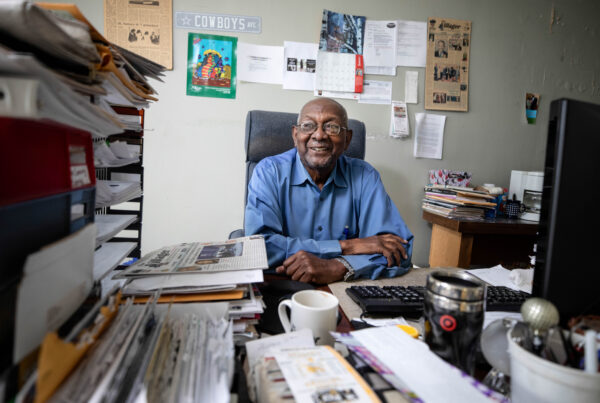
“True Love Will Find You in the End” consists of original drawings, audio, photographs, correspondence and more that had been collected over the years by the late Austin artist’s friend and former manager, Jeff Tartakov.

By Raul AlonzoFebruary 13, 2026 10:30 am, ,

There were many touchstones that raised the profile of Austin as a hub for the counterculture in the eighties and nineties – but certainly one of the most enduring is the art and music of Daniel Johnston.

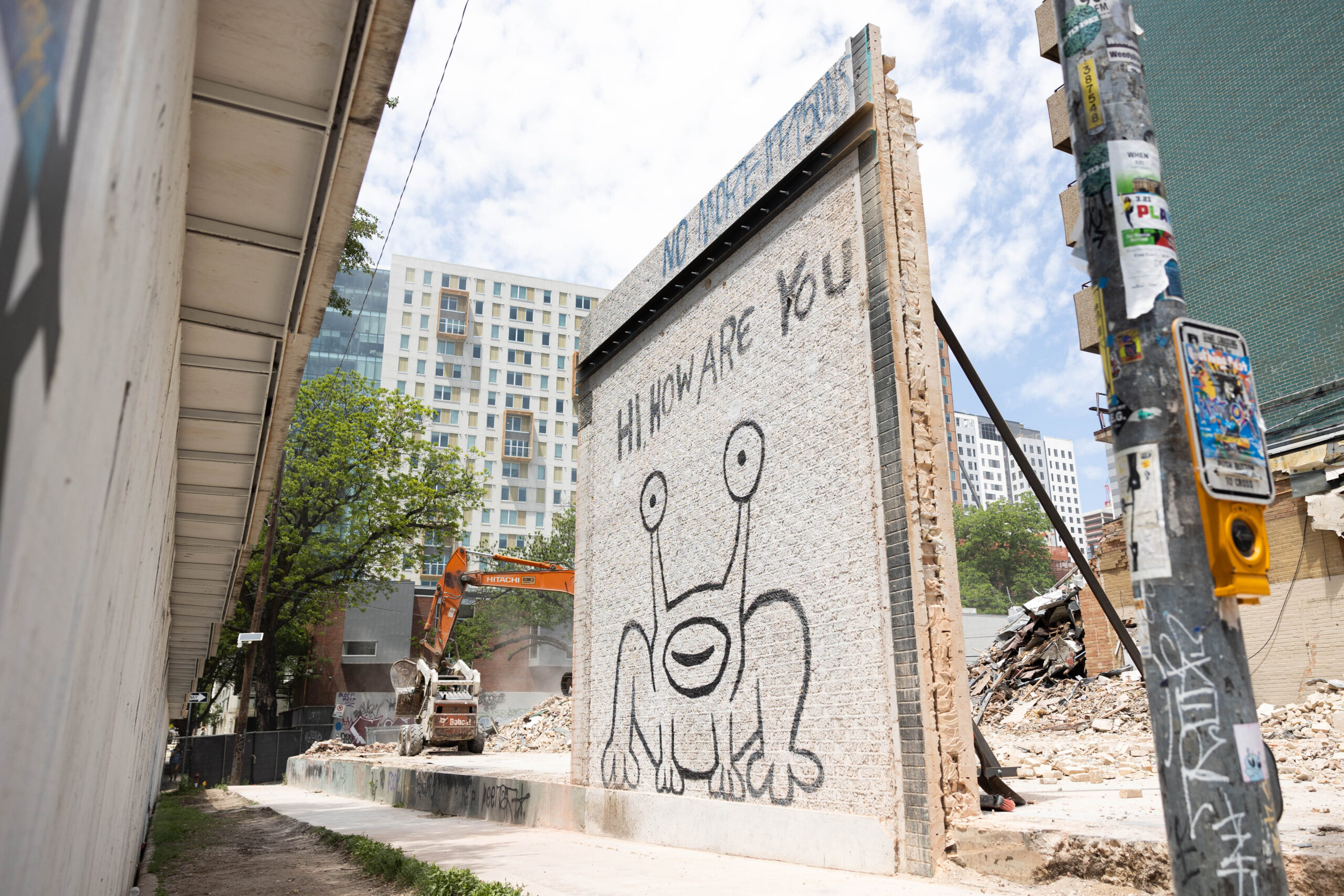
The musician was known for his barebones, lo-fi recordings and his visual art – his famous “Hi, How Are You” frog seemingly inextricable from the idea of  “Austin Weird.”

But when he died in 2019, Johnston left behind many more recordings, drawings and other ephemera – much of which had been collected by his close friend and manager, Jeff Tartakov.

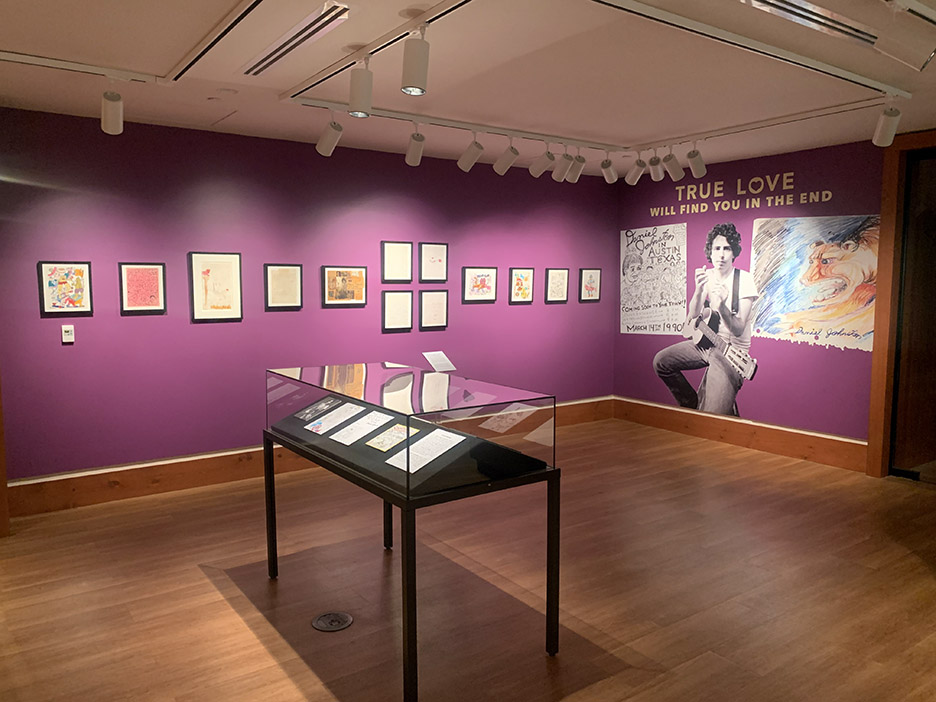
And now, for the first time, some of that collection is now on display for the public as part of the new exhibit, “True Love Will Find You in the End: The Revealing Art of Daniel Johnston,” at the Wittliff Collections at Texas State University in San Marcos.

Tartakov and Hector Saldaña, music curator at the Wittliff Collection, joined the Standard to talk about the new exhibit and the enduring legacy of Daniel Johnston. Listen to the interview in the player above or read the transcript below.

This transcript has been edited lightly for clarity:

Texas Standard: Let’s begin with you, Hector. The name of this exhibit, “True Love Will Find You in the End,” which is obviously a reference to a wonderful song that Daniel Johnston wrote, but it goes on, the title of the exhibition, “The Revealing Art of Daniel Johnston.”

And I understand the idea for this has been in the works for, what, a couple of years?

Hector Saldaña: Yes, ever since we acquired the Jeff Tartakov Collection, which was amazing from the get-go. I mean, meeting Jeff, who’s an expert and was a friend of Daniel’s, but also because the materials allow a peek inside the mind of this artist that we love but don’t always understand.

I mean, he was a complicated person. There’s letters in there that he wrote while he was institutionalized. There’s a lot of mystique around him. And I think these materials let us understand more about the person, the human being, as well as the artist, which fascinated me.

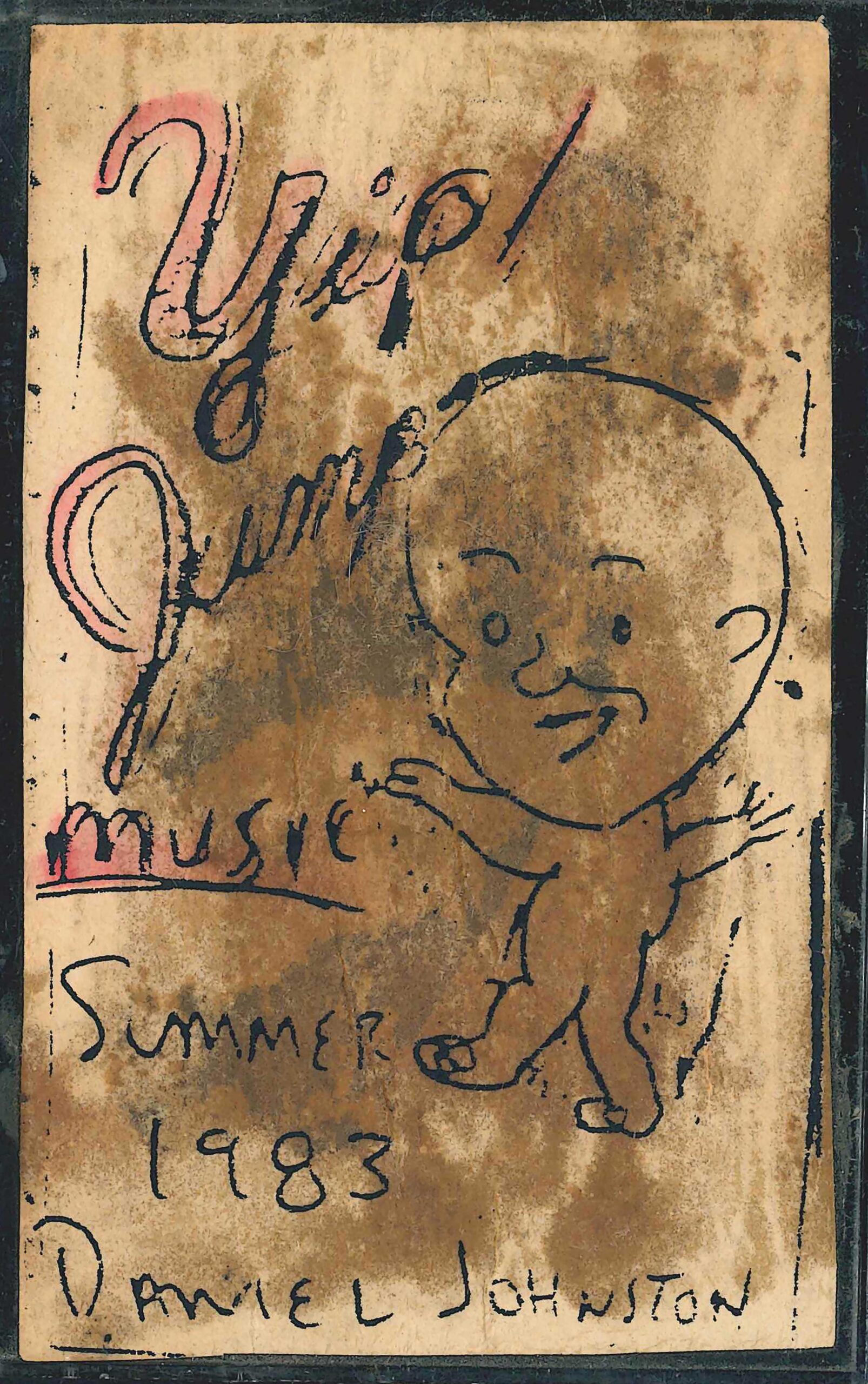
And so to put this exhibit together, Jeff and I had talked about curating it, but then came the opportunity for myself to work with a young student, a photographer named Lucas Kraft, who was a fan. And I wanted to help guide him, but also learn from him as we curated these original drawings, writings, and photographs.

Isn’t it interesting how Daniel Johnston still speaks to younger people who weren’t around, of course, when he was such a big deal here in Austin.

Hector Saldaña: Well, for some, he’s just the person, and they may not even know he’s associated with that iconic frog that all the students and so many people in Austin love.

But there’s something about that DIY sort of esthetic that I think speaks to young people.

It’s sort of modern folk art in a way, or?

Hector Saldaña: I think so. And then also, when you hear the music, I mean, it is obvious you are hearing the artist, but someone that’s so childlike and innocent and I think that is something that really endures.

» GET MORE NEWS FROM AROUND THE STATE: Sign up for Texas Standard’s weekly newsletters

Jeff, you knew Daniel Johnston and certainly given how much of these materials you’ve preserved over the years, y’all must have been pretty close. Can you tell us more about how you came to know and work with Daniel?

Jeff Tartakov: Sure. I first met Daniel in 1985, a month or two after his appearance on MTV’s “Cutting Edge” program.

That was a big deal for Austin back then.

Jeff Tartakov: Yeah, I mean, I watched it, but I had never met him before.

I was living with a musician named Bill Anderson who played in the band Poison 13. And Daniel was a big fan of theirs and he became good friends with Bill and he began coming over to the house that fall.

So I got to know him that way. He’d come over and start flipping through my album collection. He would see my Beatles records and that was where we kind of first bonded.

Let’s talk a little bit about that because he had artistic aspirations. Was he a visual artist first, or was he more of a poet or a songwriter?

When you encountered him, who was Daniel Johnston?

Jeff Tartakov: Well, he was already a visual artist, but I did not know that. He was a songwriter when I met him. He had been playing out for a few months, making quite a few waves in the Austin music scene.

Courtesy of Hector Saldaña / Wittliff Collections at Texas State University

We should talk a little bit about something. A lot of people know these stories that are associated with Daniel Johnston but for the benefit of people who don’t, there are these stories that go around – maybe some of them apocryphal, maybe you know if they’re true.

One of the stories was he was working at a nearby McDonald’s not too far from where we are right now and he would tuck away cassette tapes of some of his recordings that he had made and people would find these albums, effectively, in their Happy Meals.

Jeff Tartakov: He did a little bit of that, mainly if it was an attractive young lady or anybody who looked like a musician because he wanted people to cover his songs.

He wanted musicians, he wanted to be discovered. I think he he said it at least more than once, he wanted to be as big as the Beatles.

Jeff Tartakov: Oh, yeah, and he used to actually bug the other musicians in town to get them to cover his songs.

And there was a lot of affection that they had for Daniel Johnston, too. What accounts for that, do you think?

Jeff Tartakov: I think everybody related to this nerdy guy without very good social skills.

That childlike thing you were talking about.

Hector Saldaña: Yeah, he was definitely awkward and definitely lovable. I mean, the photographer Niles Fuller, who took, I think, two of the most iconic images of Daniel Johnston that we use in the exhibit, the first time they met, he brought him a hamburger and a cassette tape.

So he was a self-promoter, but he was also very friendly and disarming.

Courtesy of Hector Saldaña / Wittliff Collections at Texas State University

It’s worth noting that a lot of people way beyond Austin were inspired by Daniel Johnston as word sort of started leaking out – not just the MTV thing, but other musicians would talk about Daniel Johnston.

There were artists like Sonic Youth, of course Nirvana very much inspired. I believe I’ve seen it a picture of Kurt Cobain with the “Hi, how are you?” shirt.

Jeff Tartakov: Oh yeah, he wore it at the MTV Music Awards show in 1992.

It’s amazing how much specificity you know about Daniel Johnston.

What do you think people misunderstand about Daniel Johnson? Is there something about him or his character? He’s become almost larger than life in a sense.

Jeff Tartakov: It might disappoint some people to hear this, but I think his childlike innocence is somewhat misunderstood because he was a lot more self-aware than people give him credit for.

And after a certain point, when he saw that people were talking about and writing about his childlike innocence, he would play it up.

Very interesting. Hector, you were telling me something about how important it was that you didn’t want in this exhibit for this to be a kind of psychoanalysis of Daniel Johnston. You wanted this to sort of reflect the integrity of the person.

I think you said something to me that was really striking, that you hoped this would be the kind of exhibit that if Daniel Johnston were around today, he’d be proud.

Hector Saldaña: Well, yes, because I didn’t want to play psychoanalyst. And I think the materials, like a good quote, speak for themselves.

And so I thought if you come at it from loving the music, misunderstanding the mystique, maybe feeling a certain thing about him because of his mental health issues, I thought the materials could help give you some insight if you walked into that space.

And so when I was working with Lucas Kraft, the student, we kind of went through each piece and when he would pick something, we kind would talk about, “well, why is this speaking to you? What are we gonna say?” And we came up with a good selection.

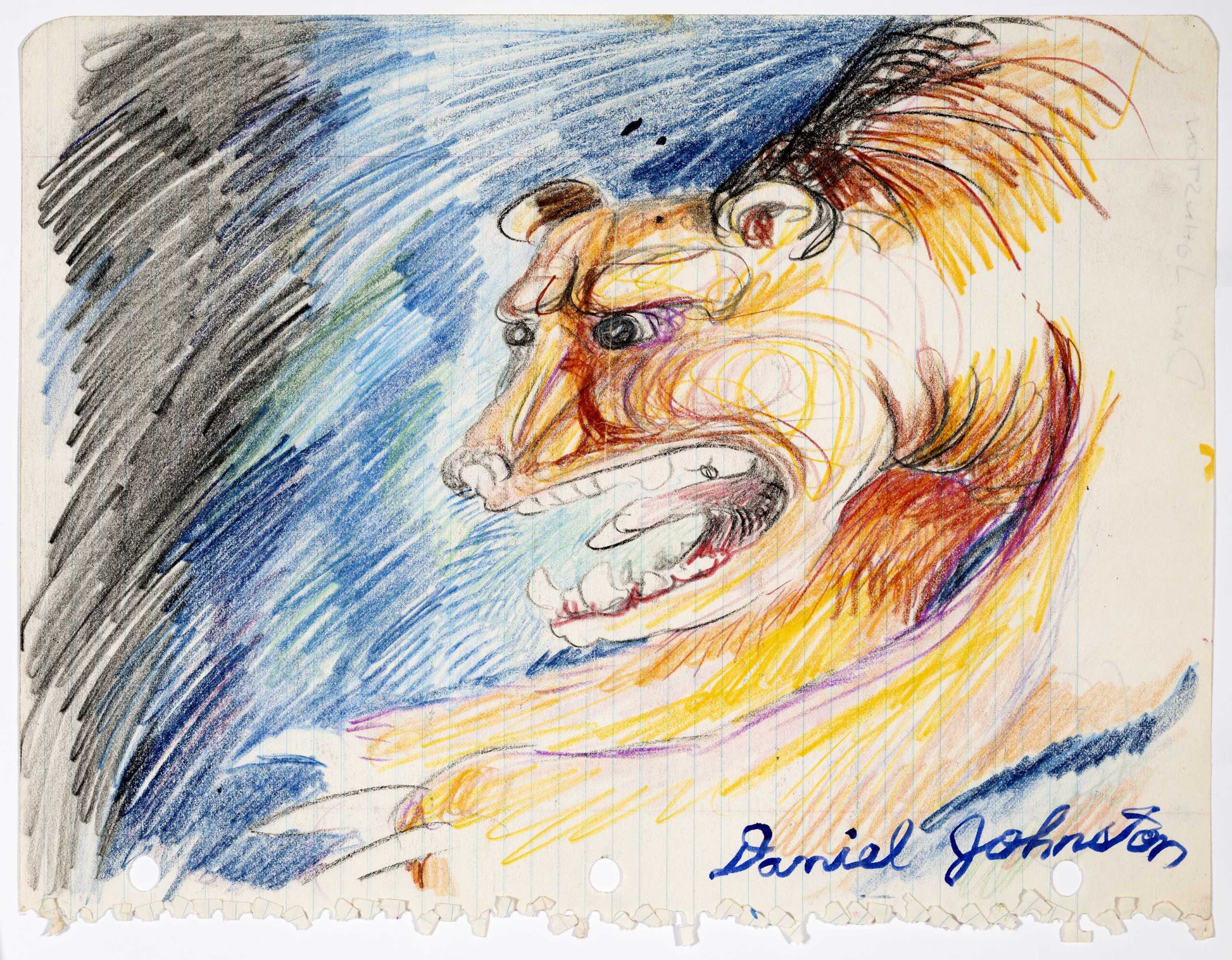
He kind of would draw in a line art sort of style. It seemed like he couldn’t help even writing correspondence, when he was in a mental hospital, without doodling on it. I don’t want to belittle it by calling it doodles, but, you know, it’s what I think a person would say, just illustrating them.

But some of the art is very colorful and a lot of it is very insightful where it does show this sort of, I do not want to say “split personality,” but some turmoil going on. So I was intrigued by the beauty of the songs coming through a person that is struggling it.

Daniel Johnston in 1984. Photo by Jeffrey “Niles” Fuller / Courtesy of Hector Saldaña, Wittliff Collections at Texas State University

When someone goes to see this exhibit, how do you lay it out? What do they see? What do they experience?

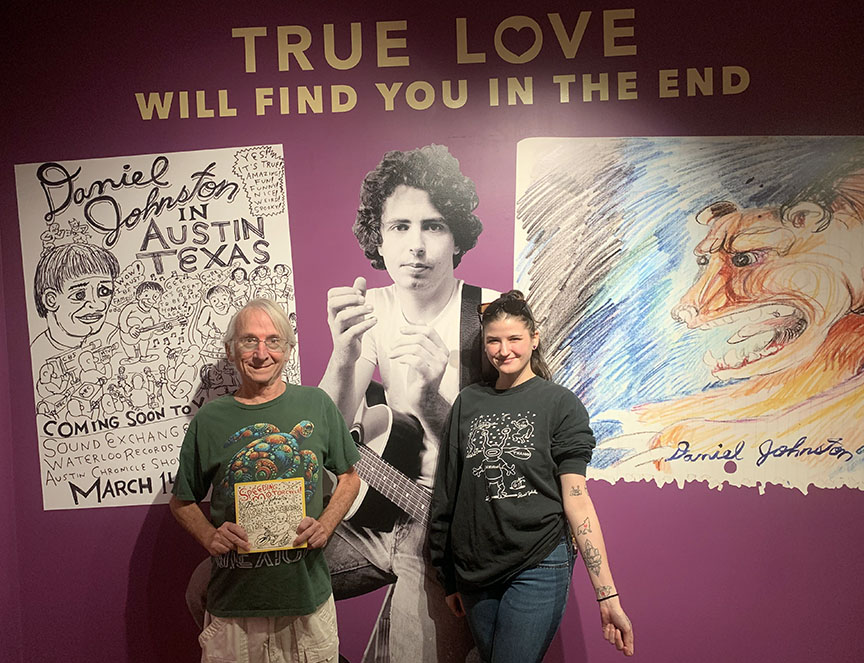
Hector Saldaña: You’re gonna see, first of all, a very bold – for a museum setting, at least for the Wittliff Collection – we use this passionate purple for the walls where the framed items are on display.

We have a beautiful Niles Fuller image, larger than life, huge. To that thing about “would Daniel like it,” I wanted to present it the way we would do almost anybody and also try to show this artist, in a sense, at his peak, but maybe at his most vulnerable.

And so you’ll see a case of things that he wrote that you may… It’ll give you understanding, but it’ll leave you with some questions, too. Like what exactly was going on with Daniel?

Jeff, I’m always struck by this, that people who are exposed to his music, they never stop there. They always want to dig more into it. And I’m curious what do you think that’s about?

Jeff Tartakov: Well, first of all, there’s just so much of it to be discovered. He was very, very active as far as his songwriting goes. He never stopped writing.

And it’s actually kind of unfortunate that in his last few years, the recording didn’t keep pace with the songwriting because there are notebooks full of songs that never got recorded.

He did enjoy a lot of popularity after the release of a documentary. What was it, around 2005 or so?

Jeff Tartakov: It premiered at Sundance in 2005, “The Devil and Daniel Johnston,” where it actually won an award for best director.

Courtesy of Hector Saldaña / Wittliff Collections at Texas State University

Undated artwork drawn by Daniel Johnston.

In 2019, you were telling me he was found dead at his home. I believe he was assisted living at the time, is that right?

Jeff Tartakov: Yes. Yeah.

At that time, what do you think he made of his place in pop culture? Did he have a strong sense of that and how did he feel about it?

Jeff Tartakov: I think he did. I think he was aware that he had reached most of his goals, probably all of his goals except for ending up with the woman who married the Undertaker.

But professionally, he probably felt like he reached the top. I think that he, had given up on being as big as the Beatles and was happy just to be as big as the Butthole Surfers.

Hector Saldaña: I see it slightly differently. I think the materials… And Jeff is right, there’s so much of it. And the Wittliff Collections, I mean, we’re privileged to preserve it and to learn from it.

But I think, you know again, going to whether he felt… I mean, obviously he felt he’d made it, but I think there was a cost to it. And some of the drawings even show that, you, know, where this happy frog that we love so much…

Sort of captured by the media?

Hector Saldaña: Yeah, yeah, but you know, one of them shows it all shackled. So you wonder, did it become an albatross around him? I mean, this is the stuff, I guess, for researchers. Did it become something that he wanted to escape or embrace?

I mean, I think I think the material showed that at times he was embracing that sort of image. And there were other times when there is a question of how much it might have caused him some pain.

Patricia Lim / KUT News

Austin's famous, "Hi How aer you" mural by Daniel Johnston is left standing following the demolition of the American Campus building on April 17, 2023.

Jeff Tartakov: There’s some lingering sadness, because we don’t really know if true love found him in the end. It did not in a conventional sense, but I think he felt the love from his fans.

Hector Saldaña: And I think he would love that the young man, Lucas Kraft, who curated this, he told me a story that he sings Daniel Johnston at karaoke. I mean, that blew me away when we were doing the labeling, I said, “you got to put that story at the top.”

I mean my God, that’s just, I’ve never personally witnessed it. I said “I didn’t know that you could sing Daniel Johnston in karaoke.” So I think it’s great.

So, I mean, it does show that he’s enduring. There might be different entry points, you know, but Jeff’s collection allows us that option to pick how we want to learn about him.

Jeff Tartakov, left, and friend Lizzy McAllister at the new Daniel Johnston exhibit at The Wittliff Collections.

You know, as you say that karaoke thing, it makes me think, is there more perfect music than Daniel Johnston? I mean, my goodness gracious.

Listen, I can’t let you guys go without talking a little bit more about the music. I know that when I hear the name “Daniel Johnston,” or that vision of the frog pops into mind, I always think of this song that he did called “Story of an Artist,” which is heartbreaking and there is a certain self-knowledge to it I believe, as you were talking about there Jeff, but it is a truly beautiful song and I’ve wanted to turn other people on to Daniel Johnston.

And in that spirit, I wonder if I can ask you both: Give me a Daniel Johnston song if we’re trying to turn others on to his power as a musician.

Jeff Tartakov: My current favorite is from the cassette “The What of Whom,” and it’s called “Peek-A-Boo.” The only person that’s covered it, to my knowledge, is Phoebe Bridgers, who did a really great version.

It’s autobiographical and tells the story of what it was like to be Daniel Johnston.

Hector, do you have one?

Hector Saldaña: I’ve been listening to a lot lately. I go back to a song called “Go,” which is kind of gentle. He’s talking to someone, but then there’s sort of this global message in there that “life’s a bowl of cherries / You can have as many as you can carry.” And I love that.

That’s a great couplet there, I love that. And I’ll just throw out one more. If you’re looking to ease your way into Daniel Johnston, “Speeding Motorcycle.” If you’re not familiar with “Speeding Motorcycle,” that’s a terrific entry point, too.

If you found the reporting above valuable, please consider making a donation to support it here. Your gift helps pay for everything you find on texasstandard.org and KUT.org. Thanks for donating today.