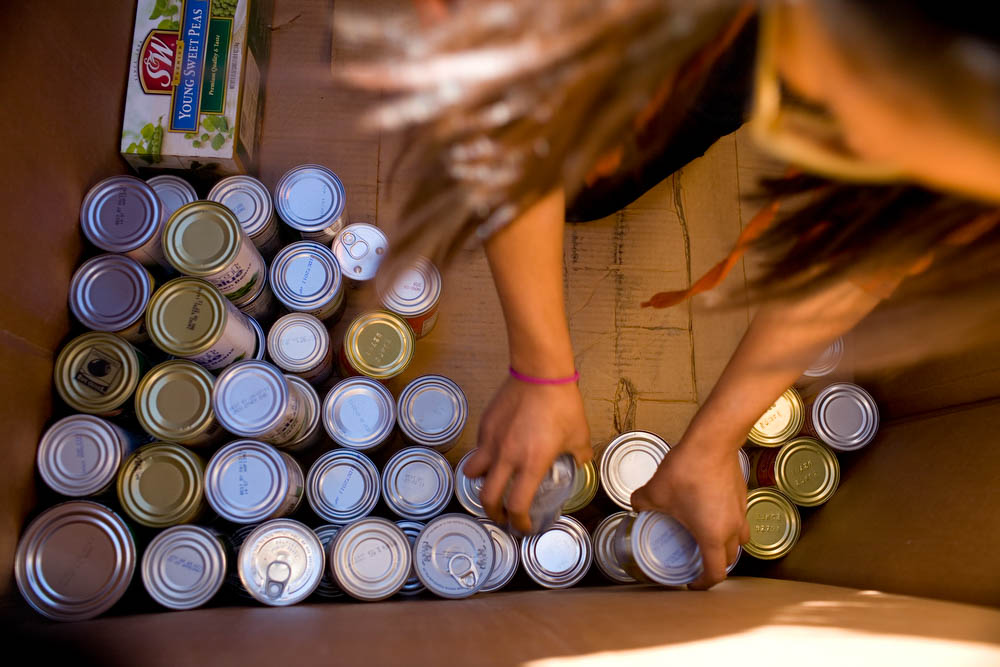
Texas food banks are having trouble keeping their shelves full after recent cuts to federal nutrition programs.
The Victoria Advocate reports that the Food Bank of the Golden Crescent has received about 40 percent less food so far this year than in 2024. And demand for free groceries could grow even larger soon, thanks to forthcoming changes to the Supplemental Nutrition Assistance Program (SNAP).
Celia Cole, CEO of the food bank network Feeding Texas, spoke to Texas Standard about the current demand at banks around the state. Listen to the interview above or read the transcript below.
This transcript has been edited lightly for clarity:
Texas Standard: Last Friday the Victoria Advocate published a story about how the local food bank there is low on supplies and the report said it was largely due to the suspension of some federal funding. Could you say more about these changes and how they’ve affected the food banks in your network?
Celia Cole: Sure. So, the Food Bank of the Golden Crescent in Victoria is one of 20 food banks in the Feeding Texas network. And this year, food banks have lost over $80 million in federal food funding as a result of shifting priorities at the federal level. That has really put a strain on our ability to keep up with demand.
So you mentioned the parking lots filled with cars during the pandemic. The big difference now is we’re seeing the same level of need, but we don’t have the resources that we had during the pandemic to meet that need.
Did demand ever go back down to pre-pandemic levels, or what were you looking on the demand side?
It did go down. It didn’t go back to pre-pandemic levels, but we did see it go down and start to level off. And then it’s really started to creep back up in the last year and a half.
I think a lot of that is due to persistently high inflation. So what we’re really seeing is just families just really stressed to put food on the table and make ends meet month to month.
So we’re seeing levels kind of approaching what we saw during the pandemic, but we’re not getting the federal support that we got back then.
Are all food banks in Texas facing similar problems?
Yeah, I think they’re already experiencing it and having to make tough choices.
I mean, all food banks are cutting their budgets, which means laying off staff, reducing operations and services. I think some have greater stores than others, but across the board, we’re hearing a lot of concern that they won’t be able to keep up in the coming year.
» GET MORE NEWS FROM AROUND THE STATE: Sign up for Texas Standard’s weekly newsletters
Of course, a lot of people have been watching what might be happening with SNAP benefits or food stamp benefits in the near future, thanks to changes in the eligibility requirements. This is a program that helps needy people pay for groceries.
A lot of folks predicting that you will see more people lining up for the services of food banks across Texas, and I’m curious as to what you are expecting.
Yeah, we’re very concerned and we were really vocal during that debate that SNAP not be cut at a time when hunger is so high. So we’re concerned that the cuts are going to lead to millions of Americans and potentially hundreds of thousands of Texans losing access to that critical nutrition assistance.
There’s increased work requirements and time limits placed on certain populations that can’t work. And then there’s some additional restrictions on immigrants receiving benefits.
Legal immigrants are currently eligible. You know, undocumented people have never been. But refugees and asylees will lose their eligibility – really will feel the impact of those cuts in the coming year. And we know we’re going to see more people in our lines.
The bigger cut, which takes place a couple of years right from now, is the cost shift to states, and that’s really the one we’re mostly worried about. These benefits have always been 100 percent federally funded. And with this change, states now may have to pay up to 15 percent of the cost. And we’re concerned the Texas Legislature won’t appropriate the funds and then they’ll have to cut benefits or cut eligibility.
Well, so far, has there been any talk in the Texas Legislature about doing something to offset the loss of federal funds?
Not yet. I think part of the reason is it’s two years off. We’ll have a legislative session in time to appropriate those funds.
But I, you know, again, it either means diverting funds from other critical state services or raising revenue, which means higher taxes, which is unlikely, or, like I said, reducing the number of people who are eligible or cutting benefits, and that’s very concerning to us.
Well, now, let me ask you, because a lot of listeners may be wondering, “okay, well, what if that’s not forthcoming?” And, you know, we’re only talking about 15%, if I understood what you were saying there, from states. How can everyday folks support their local food bank if they wanted to?
Well, let me be really clear that if this cost shift took place tomorrow, Texas would be on the hook for close to $900 million a year to keep the program whole. So we’re talking about a big, big cut that no amount of philanthropy or charitable food assistance is going to be able to make up for. So I just want to be really clear about that.
We’re hoping that the state will do things to mitigate the impact of that cost share, that if they end up having to pay something they’ll appropriate the funds.
But in the meantime, like we started out with, food bank shelves are scarily bare as we head into disaster season particularly, which is a time when we often have to bring in more resources. And as you saw with the recent flooding in Central Texas, two of our food banks have had to dig into their stores to be able to meet the increased need in those communities.
So really, I think we’re looking for financial support right now from our communities. Every dollar donated, we can stretch to put four meals on the table, and that will help us get through this particular disaster season. So we encourage people who can to donate generously.