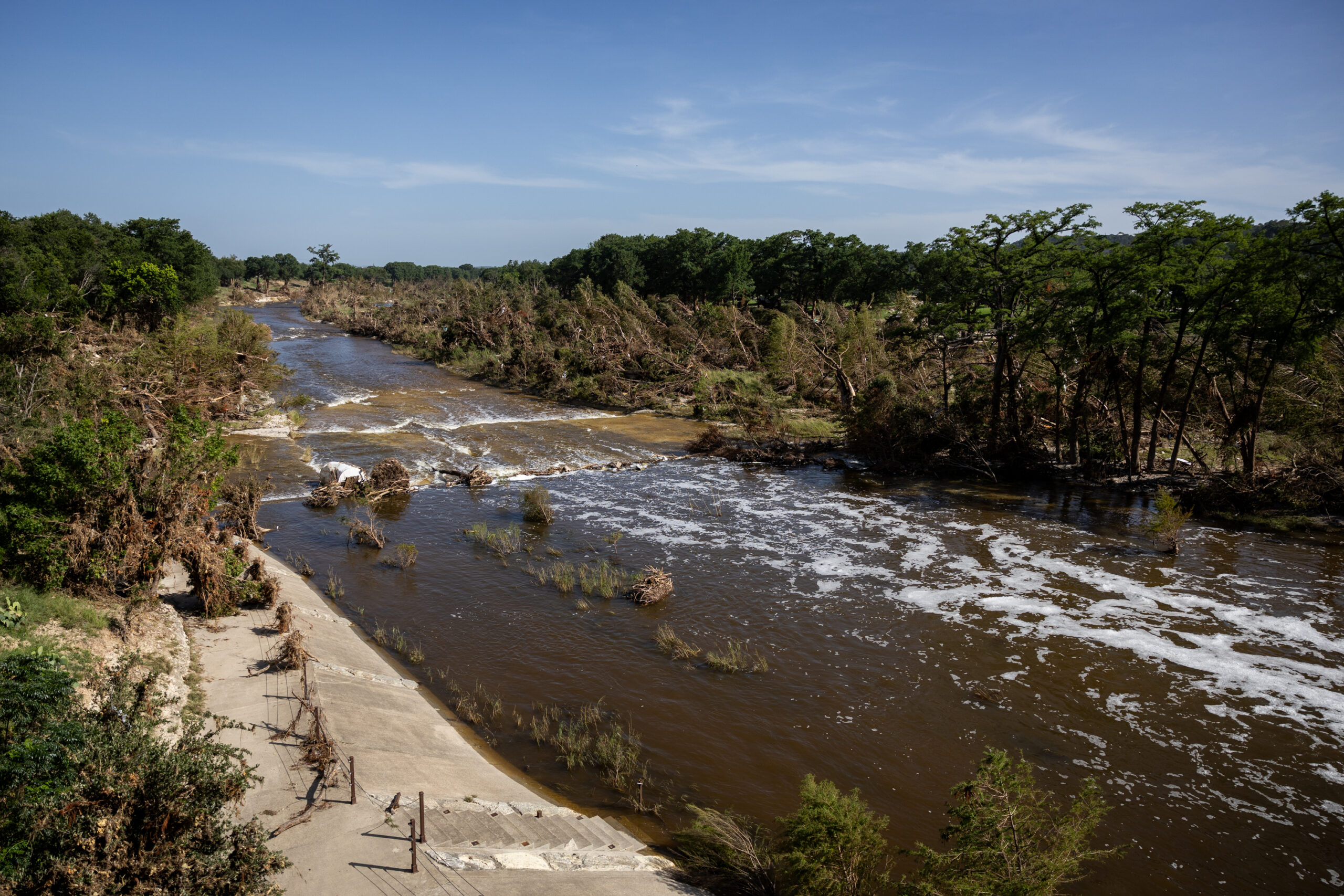
The historic flooding that struck over Fourth of July weekend drenched Texas’ Hill Country, but water levels in area lakes and aquifers have already started to go down again.
The Edwards Aquifer Authority recently tightened pumping restrictions due to dropping groundwater levels. The aquifer, which provides water for more than two million people, is currently at 29 feet below average for this time of year.
Liz Teitz, who covers the environment for the San Antonio Express-News, said part of the reason for this is because the rainfall that caused the flooding was concentrated to a very small area.
“So we actually saw very little impact to our groundwater levels here in Central Texas based on that flooding,” she said. “The rain was so heavily concentrated over the headwaters of the Guadalupe, which is part of what made the flooding so devastating. And it also meant that all of that water flowed downstream towards Canyon Lake and almost none of it seeped into the Edwards Aquifer, which does have a recharge zone near that area but there’s not any interaction between the two.”
The Edwards Aquifer Authority manages the groundwater system and they set restrictions based on those water levels. Those users are currently in stage four, which means they are limited to 60% of their permitted amounts.
“So it’s a 40% cutback, which is pretty substantial,” Teitz said. “For an average person watering their lawn, turning on the sink, they won’t notice an immediate impact. But water utilities, like the San Antonio Water System or New Braunfels Utilities that get water from the Edwards Aquifer, they’ll have to make changes in their sourcing to make sure they’re complying and reducing their use from the aquifer.”
The water level at Canyon Lake is also going down again after it surged during and after the storm.
“Canyon Lake had been rising consistently since the storm. It’s a major reservoir in Comal County that the Guadalupe flows into,” Teitz said. “It rose pretty substantially for several weeks, but has since started to drop back down again — very slightly, but we are seeing that trend.
So some of the boat ramps that had been long closed due to the drought had reopened on Canyon Lake and now they have already started to close one. If the water levels continue dropping, they’ll have to close more of those just depending on where the lake goes.”
» GET MORE NEWS FROM AROUND THE STATE: Sign up for Texas Standard’s weekly newsletters
Part of the issue, Teitz said, is the area was in a drought before the flooding happened.
“I think it’s challenging, especially because the rainfall has done a lot for us here. Everything looks really green,” she said. “It’s easy to think that the drought has ended. But I do think folks here in San Antonio are pretty used to hearing about and understanding of the drought situation and the aquifer. We’ve been in drought conditions for a long time. We never fully came out of them. So I don’t think it was a complete shock to see them ramping back up again.”
The latest U.S. Drought Monitor that came out this week shows that Bexar County is entirely in either severe or extreme drought.
“Just to our west, exceptional drought is still in place,” Teitz said. “So despite all that rainfall, we are definitely still in drop conditions here.”