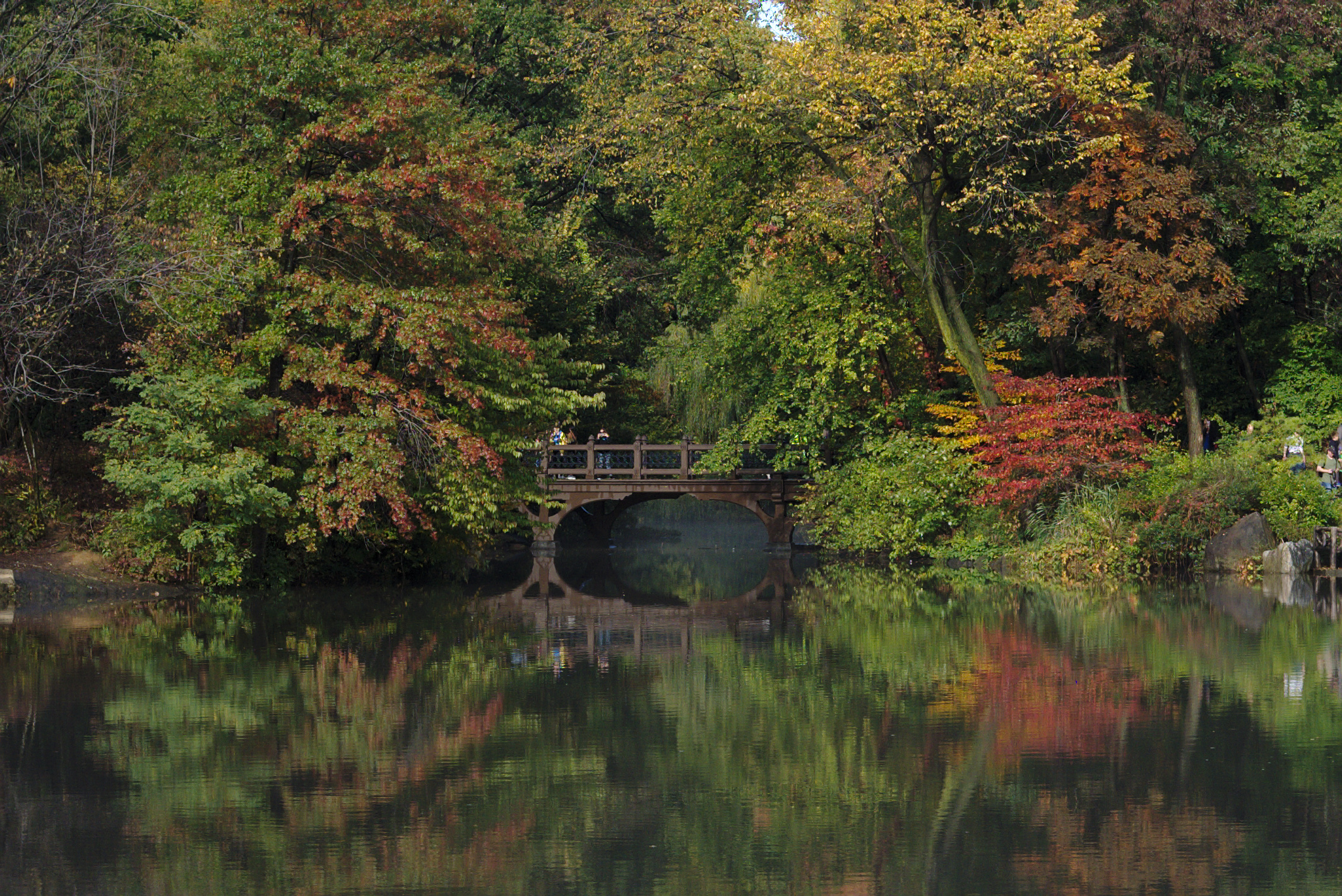
I’ve long believed that Texas is only six degrees of separation from many important places and events in the world. One example that may truly surprise you is the fact that the design of New York City’s Central Park was greatly influenced by the Texas Hill Country.
We often think that North is North and South is South and never the twain shall meet, but that doesn’t hold in this case.
Before I get to just how this was so, let me first tell you why Central Park was created. It was first conceived by name as the “People’s Park.” 750 acres was set aside not for running and jogging or dog-walking or pushing babies in strollers. No. The primary idea was to provide “lungs for the city,” a giant ventilator that could create healthy air flow for the growing metropolis.
In those days, many serious ailments were blamed quite simply on “bad air.” Consumption (tuberculosis), yellow fever and malaria were all blamed on miasma: stagnant, musty, moldy, bad air.
Malaria originates in Italian by the way, Mal-Aria, literally, bad air.
The set aside of this massive park was seen as a free-flowing repository of good, healthy air that would become the lungs of New York City. It would circulate through the densely packed neighborhoods and could be directly enjoyed by New Yorkers who could stroll through nature and take in a good dose of fine air.
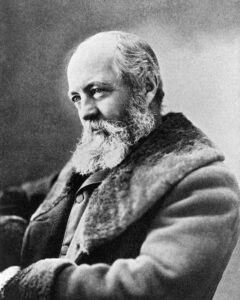
Frederick Law Olmsted.
So how is Texas involved in this? Shortly after the land was set aside for development, landscape architects were invited to send in their designs that would make the “People’s Park” – soon to be renamed Central Park – the envy of the world. Out of the 32 designs submitted, Frederick Law Olmsted and his co-designer Calvert Vaux won.
Here is where the Texas connection begins.
Five years before Olmsted won this competition, he had spent a good four months touring Texas on horseback as a travel writer for the New York Daily Times. He visited all parts of the new state, but he was most impressed with the Texas Hill Country. He wrote in great detail about his love for the wide-open spaces, vaulted skies, clear rivers, rich soils and wildflowers.
For instance, Olmsted wrote that the Blanco River was a “bright, clear rapid stream. In its bottom, and between the San Marcos River nearby are said to lie the best lands of Texas. . . . I have never seen a district whose soil seemed to me so rich. It was like a fine garden compost, in which black vegetable mould, clay, and lime had been equally mixed.”
He wrote elsewhere: “The live oaks standing alone or in picturesque groups (along the river)… The bright light or half shadows of the afternoon sun contributed mainly to an effect that was new and striking.”
You see, he was observing with the eye of a landscaper more than a travel writer.
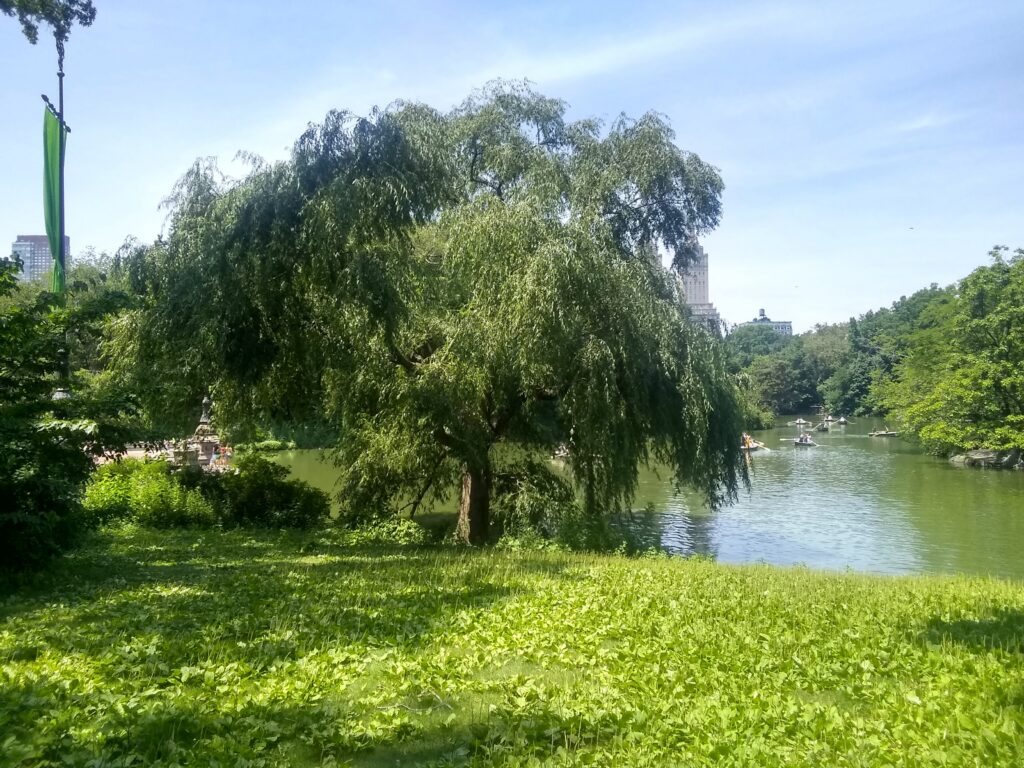
Epicgenius, CC BY-SA 4.0, via Wikimedia Commons
All this shows admiration and influence but doesn’t give us the proof we need to nail down the Texas connection. That silver bullet was discovered by Clayton Maxwell.
Writing for Texas Monthly, Maxwell noted that Olmsted directly admitted to the Texas influence of his park design. In a speech to the Prospect Park Scientific Association in 1868, he said that it was his camping days in the Texas Hill Country that provided him with his ideas for the landscapes of Central Park.
Clayton Maxwell summarized the speech as follows:
His criteria for selecting a good campsite, he told the crowd, are the same “governing circumstances” that make a beautiful, functional park, including water close by, pastures for his horse and woodlands to provide firewood and privacy. And last but certainly not least, he always pitched his tent in a scenic spot: “We made it a point to secure as much beauty as possible in the view from our tent door,” he wrote.
The Texas connection to Central Park is fascinating, but to be fair, it has come full circle. It has been said that the 10,000 Acre Trinity River Project in Dallas has been deeply influenced by the urban green spaces, water features, spacious lawns and trails of Central Park.
W.F. Strong is a professor of Culture & Communication at the University of Texas Rio Grande Valley. You can find more of his “Stories from Texas” here or wherever you get podcasts.
If you found the reporting above valuable, please consider making a donation to support it here. Your gift helps pay for everything you find on texasstandard.org and KUT.org. Thanks for donating today.