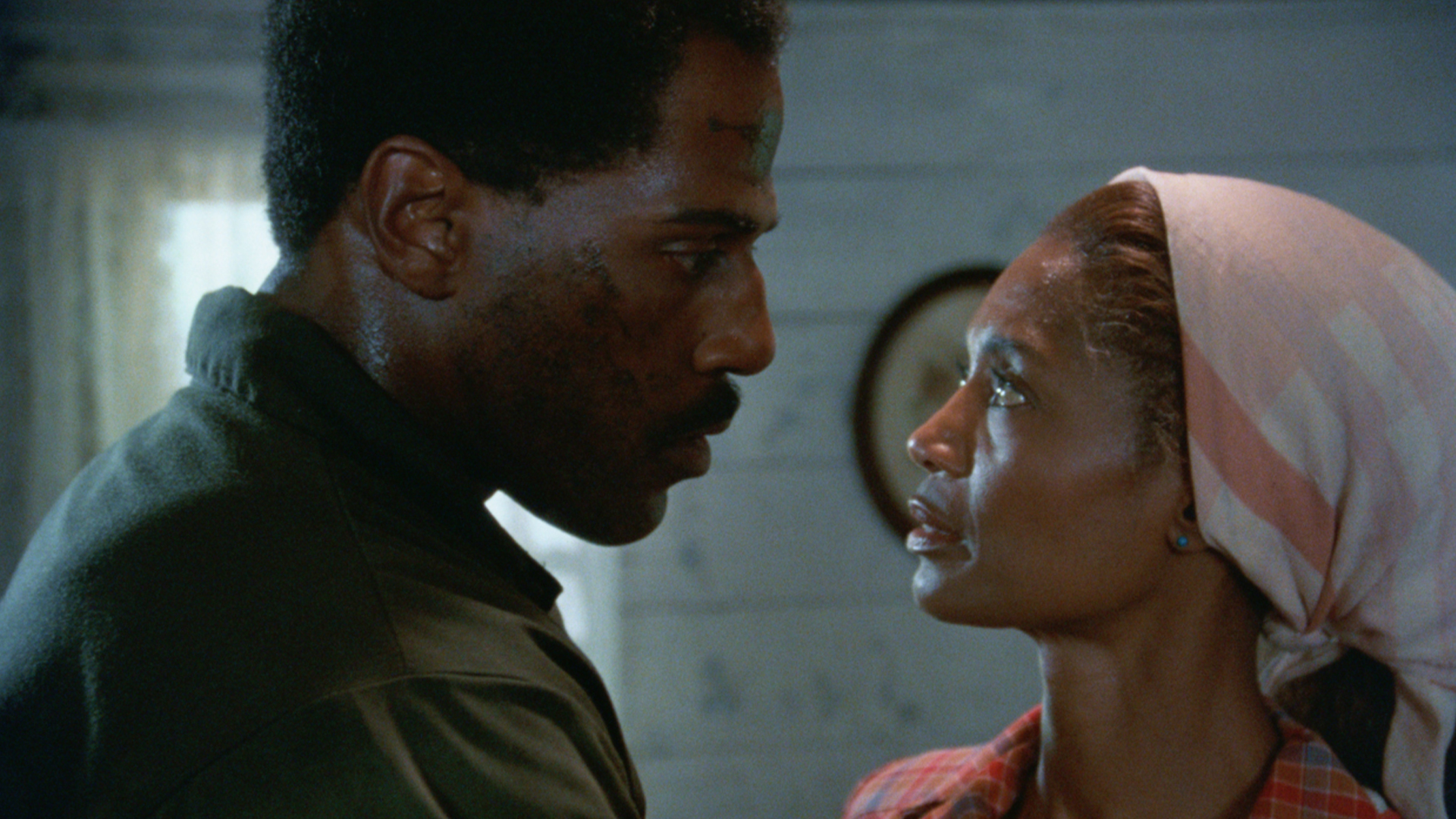
“Sinners” is nominated for a record 16 Academy Awards. But long before Michael B. Jordan took on the dual role fighting racist vampires in the South, there was another story of Black resistance filmed right here in Texas.
“Riverbend” was produced in 1989, and though the story is set in Georgia, it was shot in East Texas around Waxahachie. Despite starring Academy Award nominee Margaret Avery and action hero Steve James, the film was largely lost to history — until it caught the attention of a man committed to restoring films featuring Black stories.
Now, “Riverbend” is again available to audiences, this time in 6K. It’s getting new screenings across the country, including a sold-out show at the Austin Film Society Cinema.
Listen to the Texas Standard conversation with director Sam Firstenberg and Reelblack Renaissance founder Michael J. Dennis in the audio player above or read the transcript below.
This transcript has been edited lightly for clarity:
Texas Standard: Michael, how did “Riverbend” first catch your attention?
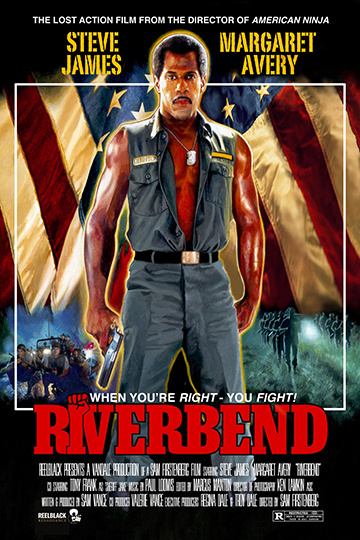 Michael J. Dennis: Well, it goes all the way back to my days of Video Library. I was a buyer at a video store back in the ’80s, and I never watched it then.
But then there’s a gentleman named Charles Woods, who’s a mentor of mine, my podcast co-host, and he had five copies in his collection of “Riverbend” on VHS. And I asked him, “why do you have so many?” He said, “you have to watch this movie. It’s unlike any other film that you’ll see.”
You know, long story short, I ended up putting it on my YouTube channel right before the pandemic. And that was in 2019.
Fast forward to 2021, Sam Firstenberg sends me an email. And I’m saying, “oh, this is gonna be a cease and desist.” He says, no. He said, “no, thank you for putting this up, sharing this movie with the public because it was independently produced and it’s considered an orphan film.”
So we started talking and all these magical things started to happen. Right, Sam?
Sam Firstenberg: No, correct, absolutely. “Magical” is the right word.
Sam, tell me a little bit about the synopsis. Michael said this was a special film. What makes it special?
Firstenberg: This is a story about racial injustice in the segregated South in the 1960s during the height of the Civil Rights movement.
But the different, the unique thing about this movie that in this movie, it’s not about movie like all the other, the rest of Hollywood movies where the white hero comes to save the Black problem or to resolve the Black problems. But rather, the Black population of a small town, which is called Riverbend in the South, they are resolving and solving the problem, the racial problem that they are facing by themselves.
This movie and “The Spook Who Sat by the Door,” are the only two movies in film history that show this, this sort of agency among Black characters.
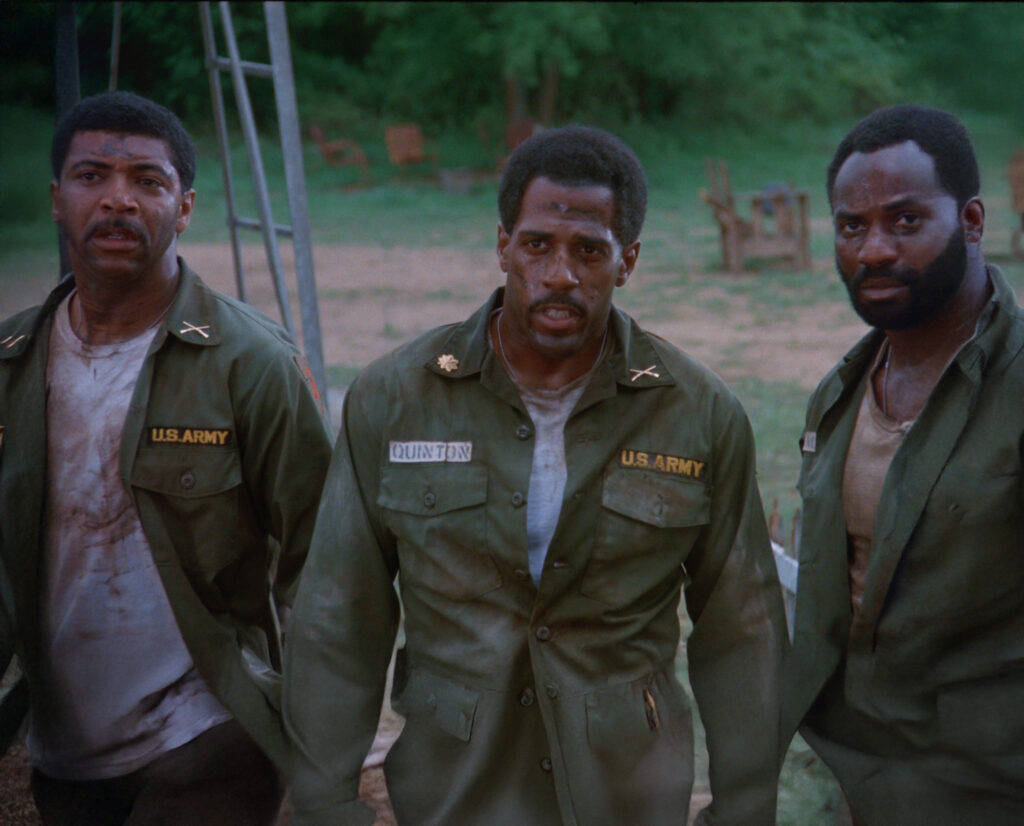
Actors Alex Morris, left, Steve James and Julius Tennon in a screenshot from the film “Riverbend.”
Tell me about the initial reception. This is sort of after the “Blaxploitation” movement, right? How was it received in the late ’80s, early ’90s?
Firstenberg: When the movie was finished, when we finished the filming, when we finished the editing, the producers, the local producers sold it to a company in Hollywood. It was a small independent distribution company which somehow managed to give it to a bigger company, Paramount Video.
And Paramount Video came out with the movie, from my understanding, with very few copies of the movie for a rental shop — at the time in the 1990s, whoever remembers, there was a rental shop in every corner of every block.
I understand that there were [a] few screening[s] in the East Coast. There was none in the West Coast, I never heard about any.
So we really don’t know. We don’t know how it was accepted.
The movie came on the heels of “Mississippi Burning” if I’m not wrong. Right, Michael?
Dennis: Yeah it was released in 1989, home video in 1990. So you have to realize that “Mississippi Burning” is 1988. So this was sold by Samuel and Valerie Vance as the answer to “Mississippi Burning.”
And it should have really been part of the conversation of 1989, which is “Do the Right Thing,” “Driving Miss Daisy.” That’s what was happening in the zeitgeist.
And this is a movie that was set in 1966, made in 1989. And it’s still relevant today because it’s dealing with issues that we’re still confronted with in America.
I want talk for a minute just about how challenging it was to find a version that you could restore. I mean, this was on VHS tapes everywhere, but is the Wikipedia page true? A 35mm found in South Africa?
Dennis: Yeah, Sam and I, we started talking, like I said, I thought it was going to be cease and desist. We started talking and this magical thing happened: A print, a 35mm print, shows up on eBay while we’re having conversations.
So I said well, let me bid on it and see, you know, because it seemed like it would be incredibly rare. Like it might be the only print that exists outside the Library of Congress. So I won the print, we went about restoring that print and then we found out it was missing seven minutes.
So that’s when Valerie Vance comes into our life.
The producer.
Dennis: The producer, widow of Samuel Vance, the writer and co-producer of the film along with Troy and Regina Dale. We have to give everybody their fair share of credit.
And she said, “I have a print.”
Wow.
Dennis: No, she didn’t have a print. She had a mold issue. So we’re back to square one, but what she was able to do — and we ran into Dennis Doros at Missing Movies, he was able locate the negative of the film. And that’s where we are able to do a 6K restoration of the film with the help of Reel Revival, Austin Squitieri, who’s based out of Pennsylvania.
So it looks better than ever, right?
Firstenberg: Yeah.
» GET MORE NEWS FROM AROUND THE STATE: Sign up for Texas Standard’s weekly newsletters
Sam, I want to take you back to 1988 Texas. What was it like being in that [East Texas] community trying to tell this story?
Firstenberg: Well I’m telling it again and again to everybody. We were in the Waxahachie area. We stayed in DeSoto, Texas. That was our base. The shooting, most of the movie is in Venus, Texas, which is in this area.
And I must stress the point that I have a little bit advantage here by being a foreigner, somebody who didn’t go to elementary American school or the high school. So I was able to kind of watch it.
And there was no racial tension. I must say so. Maybe some underneath current that I didn’t feel, but not at all. The little town was so helpful to us.
As you know, most of the cast of the movie is Black. There are very few white actors. And the crew was like 90%, 95% white persons and very few Black people in the technical crew. But I never felt any tension whatsoever here in Texas.
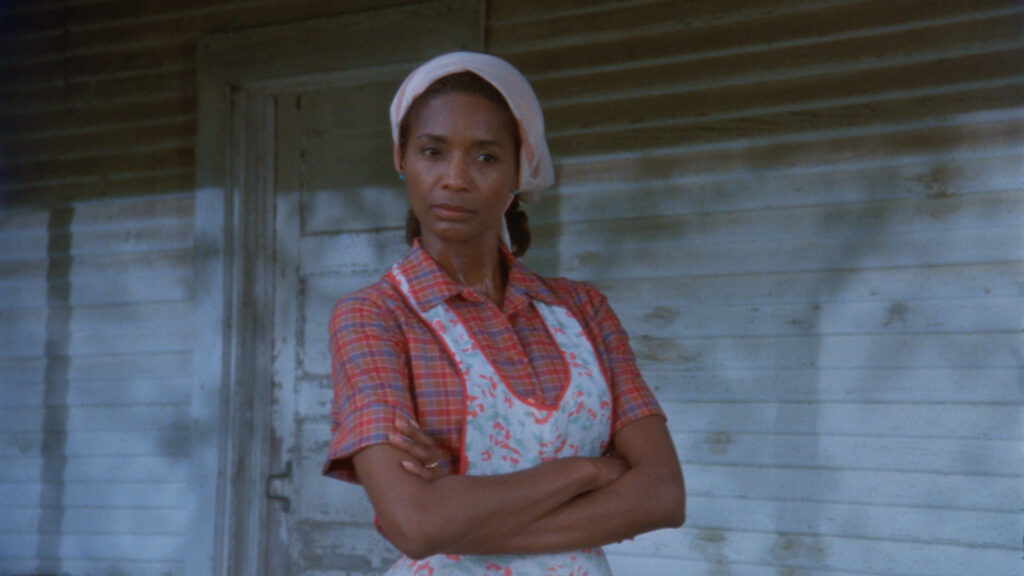
Margaret Avery in “Riverbend.”
I’m so glad to hear that. I want you to brag just a little bit about your cast. We’ve mentioned Steve James, who tragically died not too long after this film, and Margaret Avery, who was just off of her Academy Award-nominated performance in “The Color Purple.” Julius Tennon, who’s actually a Texan himself.
Firstenberg: So, we brought only two people from outside, Steve James and Margaret Avery. All the rest, everybody, all the rest of the cast is locally here from Texas. And by the way, this was the request of the financier.
Dennis: Yeah, Texas was a big market for independent filmmaking at that time. “Best Little Whorehouse in Texas,” “Lone Star”…
But when you talk to Alex Morris, he said that this was the biggest production for Black actors to ever come to the town. And it was a privilege to be a part of that cast.
But there’s literally dozens — wouldn’t you say, Sam? — of Black independent films that are just in danger of being lost to time. So our mission statement is to reclaim and restore those films. And you can find out more about that at reelblack.com or riverbendrestored.com.
If you found the reporting above valuable, please consider making a donation to support it here. Your gift helps pay for everything you find on texasstandard.org and KUT.org. Thanks for donating today.