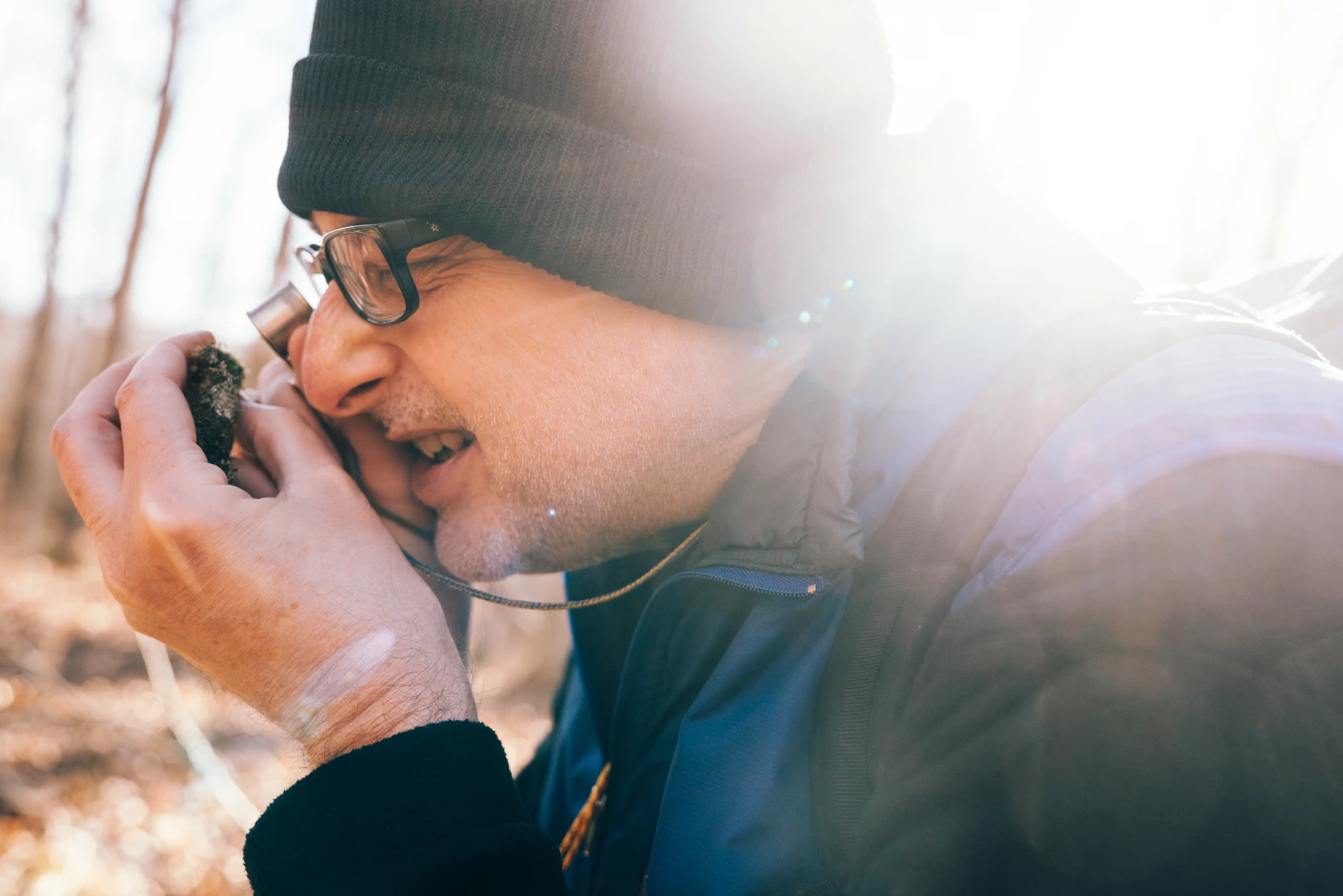
The forest at Shaw Nature Reserve outside St. Louis is a mosaic of dry browns on a cold January morning.
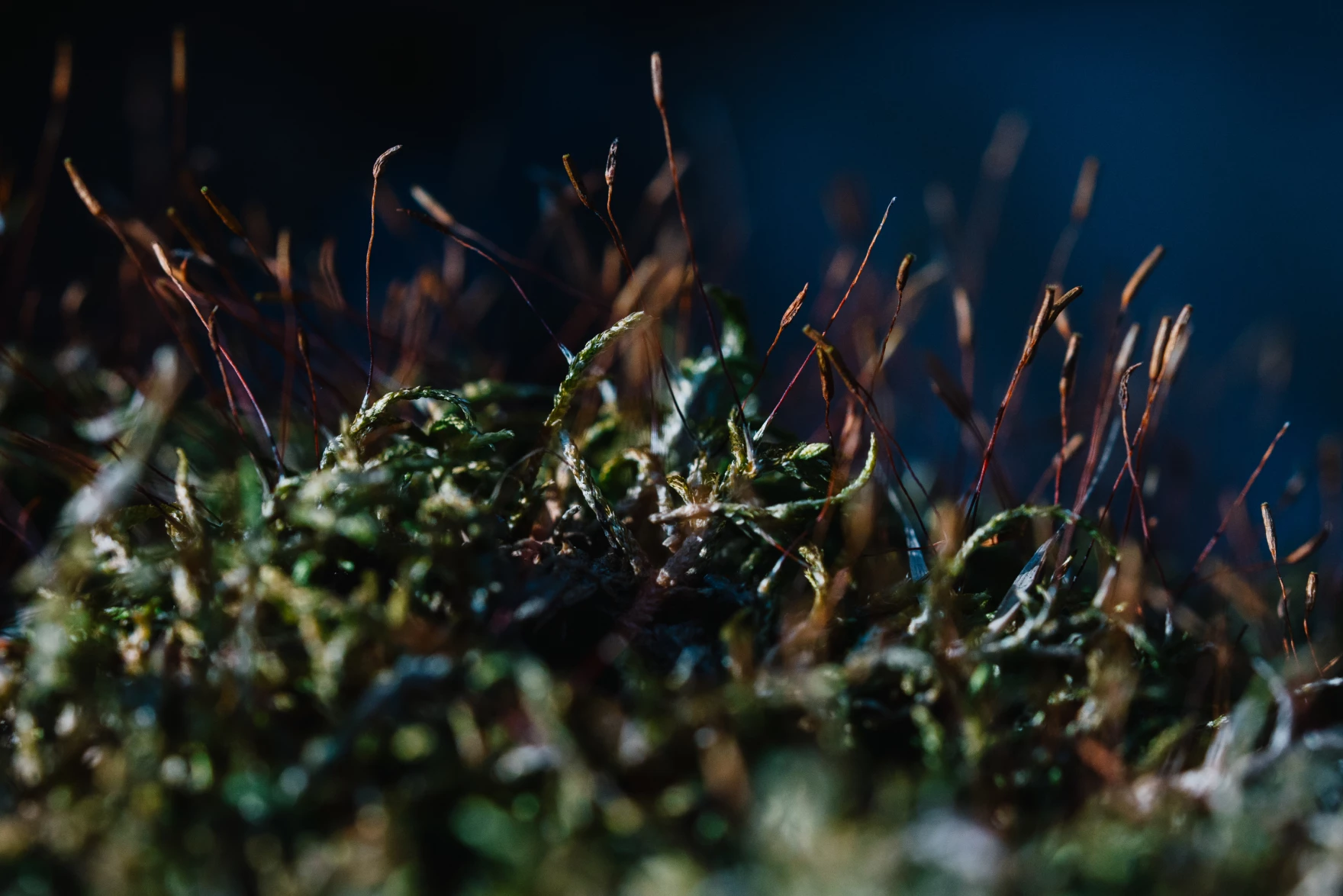
But John Brinda quickly homes in on a little patch of green and crunches through fallen leaves to get a closer look.
“I leave the trail as soon as I can,” Brinda said. “Trails are to get me near the bryophytes, and then I just run around in the woods.”
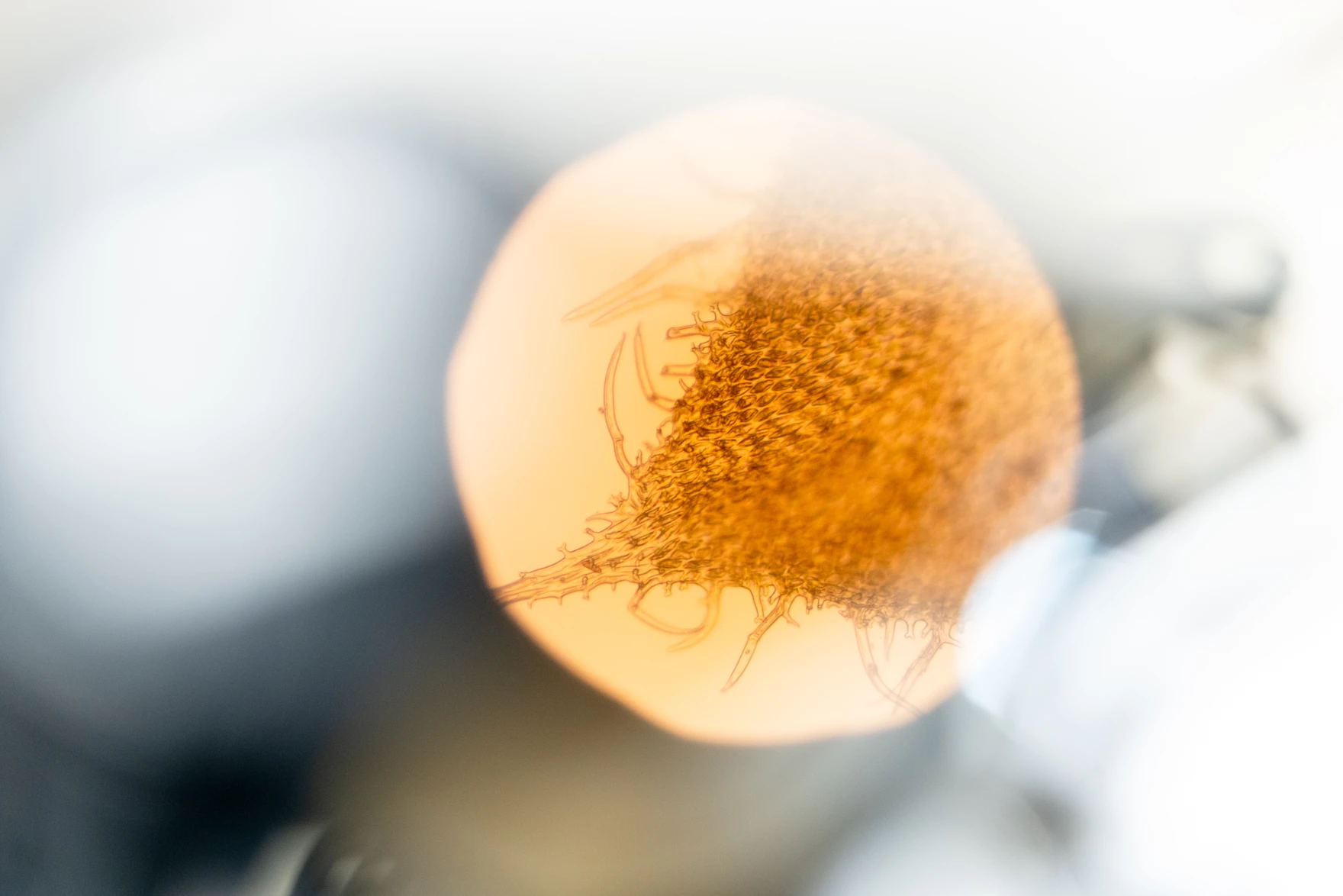
Brinda is an assistant scientist at the Missouri Botanical Garden who studies bryophytes — a group of plants that includes mosses, liverworts and hornworts. When he’s in the field, Brinda spends a lot of time on his knees, squinting at moss through a small magnifying hand lens he wears around his neck.
What Brinda and many bryologists have in common is an appreciation for the little guy. Mosses, they say, are underdogs.
“They’re overlooked,” Brinda said. “Not just in the conservation world; they’re overlooked generally.”
But that can be a problem. Mosses and other bryophytes don’t get much attention, even among scientists, so there are a lot of gaps in our understanding of them. It’s a conservation challenge — you can’t protect a species that you don’t know is struggling.
That’s why Brinda and a group of scientists from across Canada and the United States are launching a new group called the Bryophyte Conservation Alliance to better understand and protect these plants.