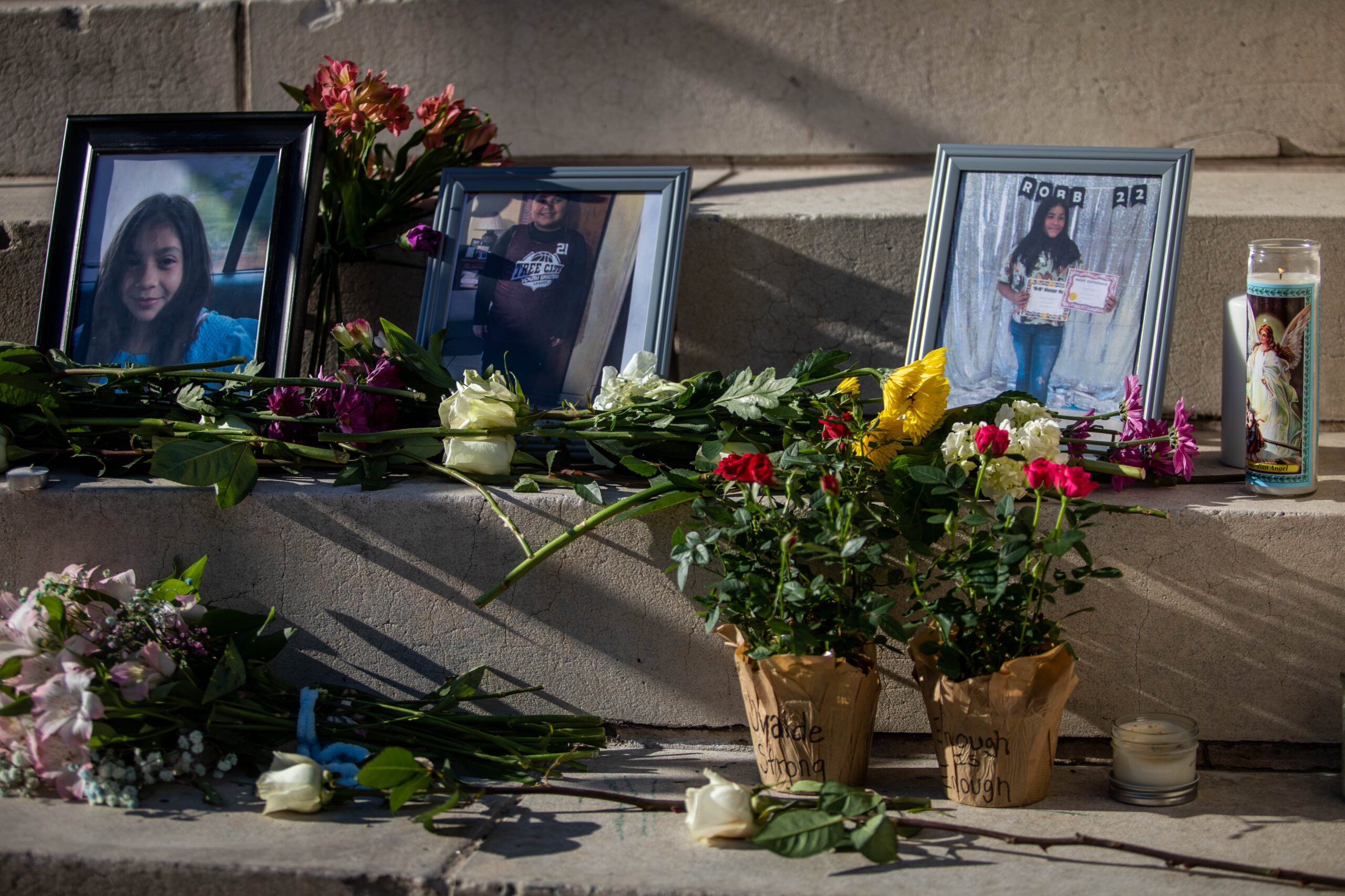
Based on the 2022 school shooting in Uvalde, where a gunman killed 19 children and two teachers at Robb Elementary School, “The Mural” is a novel that explores themes of violent radicalism, generational trauma, cancel culture, and the healing power of the protagonist and his lover.
Sidney Balman Jr. is the author of “The Mural” and joined Texas Standard to share more about the book. Listen to the interview above or read the transcript below.
This transcript has been edited lightly for clarity:
Texas Standard: This is a big heavy topic to cover. Why did you want to explore it?
Sidney Balman Jr.: Well, what I wanted to explore, and what I’ve explored in all four of my novels, is generational trauma and healing, because I feel that it’s an appropriate bookmark for where we are as a country.
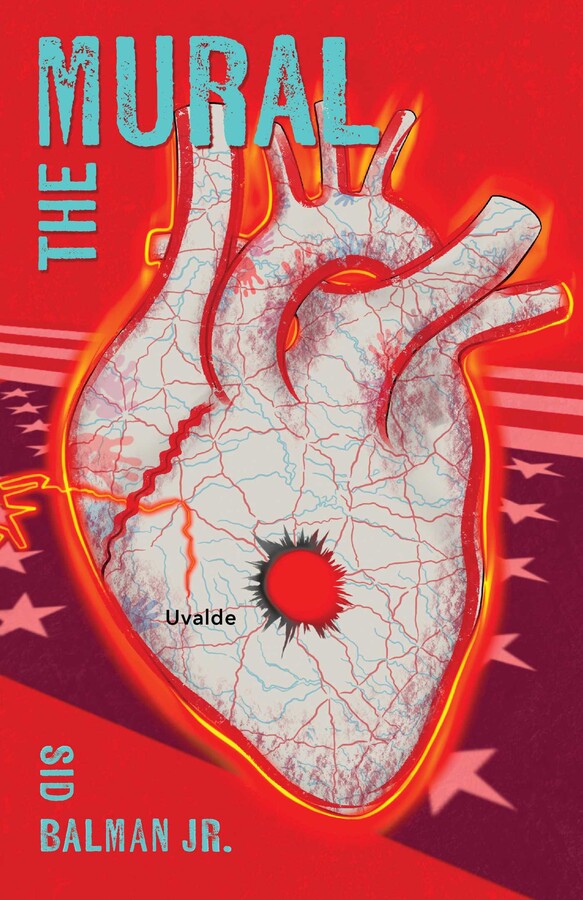
Courtesy of Simon & Schuster
You spend a lot of time with the families of victims and survivors of the Uvalde shooting during your two years of research for the mural. Can you talk about how that experience influenced the way you approached writing the book?
Well, I’m a father. I have two children, two relatively grown children. And I could imagine nothing worse than what happened to those families.
And I mean, I think about the times, really, every time my kids would go out of the front door in Washington, D.C., where I was based, I would worry. That’s just me.
You know, to have your children wake up in the morning, have their breakfast, walk out the front door, and you get a call a couple of hours later that they’re dead. That is horrific and that’s what these people have lived with and will continue to live with.
I have great, great empathy and great admiration for them, not only because of their resilience, but their courage in speaking with me. It was not easy. The book took a lot out of me — nothing compared to them, but it gave a lot back, too.
I think of one particular family and none of them wanted to be on the record, which I honored since it’s fiction. The father, who was a veteran, told me that they don’t sleep anymore. They sit outside of their daughter’s room, and she just cries all night long. And they take naps during the day.
We have grown perhaps desensitized to these types of events. But for the victims and survivors, there is no desensitization.
There’s something that we’ve witnessed that happens after these tragedies. And we certainly have seen in Uvalde, which is the community came together in their grief, but then the responses afterwards, the ideas of “what does accountability look like and what does honoring memory look like” can create some divisiveness.
Is that something that you encountered as well?
Very much. So a few weeks ago, there was the trial of the school security guy. Of all the 400 law enforcement people who were involved, they picked the lowest-level person on the totem pole to prosecute, which doesn’t look like justice to me.
I’m not saying that that person was responsible. Clearly the system was responsible, and the failure in training and in response.
So yes, the town remains completely traumatized and I just hope they find some way to live with it over time.
Cancel culture is one of the book’s themes. Why was that something you wanted to explore in this case?
Well, to me, in writing it, the book exists on two planes. There’s the story itself. And wrapped around that story, what I hope that I did and that readers seem to get is the broader, the macro perspective on society. How did we get to where we are? How do people like this emerge, the shooter Ramos?
So, on the one level, it’s a story. On the other, it’s sort of a microscope of our country and others as well.
So the first part focuses a lot more on the story itself, the fictional story of Uvalde. But then it goes into this idea of cancel culture and judicial misbehavior. And it’s just so typical to me in observing the country that the powers that be — and I have to say particularly in Texas, I’m a fifth generation Texan and I live in Texas — would seek to divert attention by just canceling it.
It just seemed so obvious that the state would want to tear down the mural that Jasper Losoya, the artist, did. And I would say the cover, not to give any spoilers, which was designed by a very talented Mexican artist, Miguel Valverde and good friend, is the mural that Lasoya painted in the town square of Grape Valley, which is the fictional town I created, which by the way, the translation from Spanish of “Uvalde” is “Grape Valley.”
The book includes this course through healing, through what you refer to as “the labyrinth.” Could you talk about what the labyrinth represents?
It’s important to note that a labyrinth is distinct from a maze. A labyrinth goes two directions, from dark to light. A maze goes many different directions.
So it’s in this labyrinth that I wanted to portray the crawling, scratching effort of these people to get towards healing, towards light. And at its root, this is a story of, as I said earlier, trauma and healing.
After someone has finished reading the book, what do you hope they take away from it?
That we’re in a chaotic time. People suffer trauma, people can endure trauma, and that without pain, there is no enlightenment. There is no progress.
So to realize that it’s a difficult time now, but there is light at the end of the labyrinth. Just keep going.