Remember earlier this decade, when there wasn’t much traffic on the road? Oil prices plummeted as demand dropped off the map.
Fast forward to the present. Right now, oil prices have fallen to levels not seen since those COVID days.
Why? And what does that mean for Texas’s critical oil industry to say nothing of prices at the pump?
Matt Smith, lead energy analyst at Kpler, joined Texas Standard to explain. Listen to the interview above or read the transcript below.
This transcript has been edited lightly for clarity:
Texas Standard: You know, these oil prices, they’ve dropped to their lowest since, what are they saying now, 2021, 2020?
Matt Smith: Early 2021, yeah.
That’s wild. What seems to be driving this? Are we talking about strong supply or weak demand?
Well, it’s more of a supply-driven thing.
So you have OPEC+, which is those Middle East countries predominantly – so Saudi Arabia, UAE, Kuwait – they are unwinding production cuts while we have a lot of supply coming to market from non-OPEC countries such as Brazil, Guyana, Canada, Norway.
But there’s also seasonality at play here. So these countries are increasing production at a time when their domestic demand is much weaker. They’ve got through summer driving season, etc.
So global crude exports are really strong. So we’re seeing this higher production hitting the global market. So just for last month, we saw record crude exports being exported on tankers.
I want to go back just a bit because when I think about what the optimum price is, I’m not sure there is such a thing, but once you get below about $60, it’s my understanding that a lot of folks in the oil services industry, which we have a lot here in Texas – the drillers, you’re talking about – they start to feel a lot pain, just the economics don’t work out.
And last I saw, we were at well below $60, close to about $57 a barrel in that area.
That’s right. The sweet spot is probably around that mid-$60s, right, where you have prices at the pump staying in check, yet it’s high enough so that producers are making money as well. So when you start to be dropping below $60 a barrel, that’s when you’re likely seeing lower activity.
And we’ve been seeing that, right? So we’ve talked previously about the rig counts and you’ve seen that rig count continuing to drop lower.
That said, U.S. production has been very resilient. In the latest official monthly data for July, we saw production at a record, just this low activity and these lower prices are ultimately going to weigh on that activity and push U.S. production gradually moving lower, but it might not be until next year.
» GET MORE NEWS FROM AROUND THE STATE: Sign up for Texas Standard’s weekly newsletters
You know, you think about, though, the economic impact. On the one hand, and we’re going to have to talk about this, what this means for consumers’ gasoline prices. On the other hand, just one of these rigs employs dozens of people. These service sector jobs are really important.
If you’ve got now some of these supply companies, some of the drillers saying we need to slow things down, are we talking about a lot of folks losing their jobs?
So it’s not just that, but it’s just the lower oil price environment as well.
We’ve seen consolidation in the market. So as you’ve seen companies making acquisitions, they’re essentially creating efficiencies and trimming the workforce in the same way as you have a lower rig count that’s looking to focus on efficiencies on that side of things too.
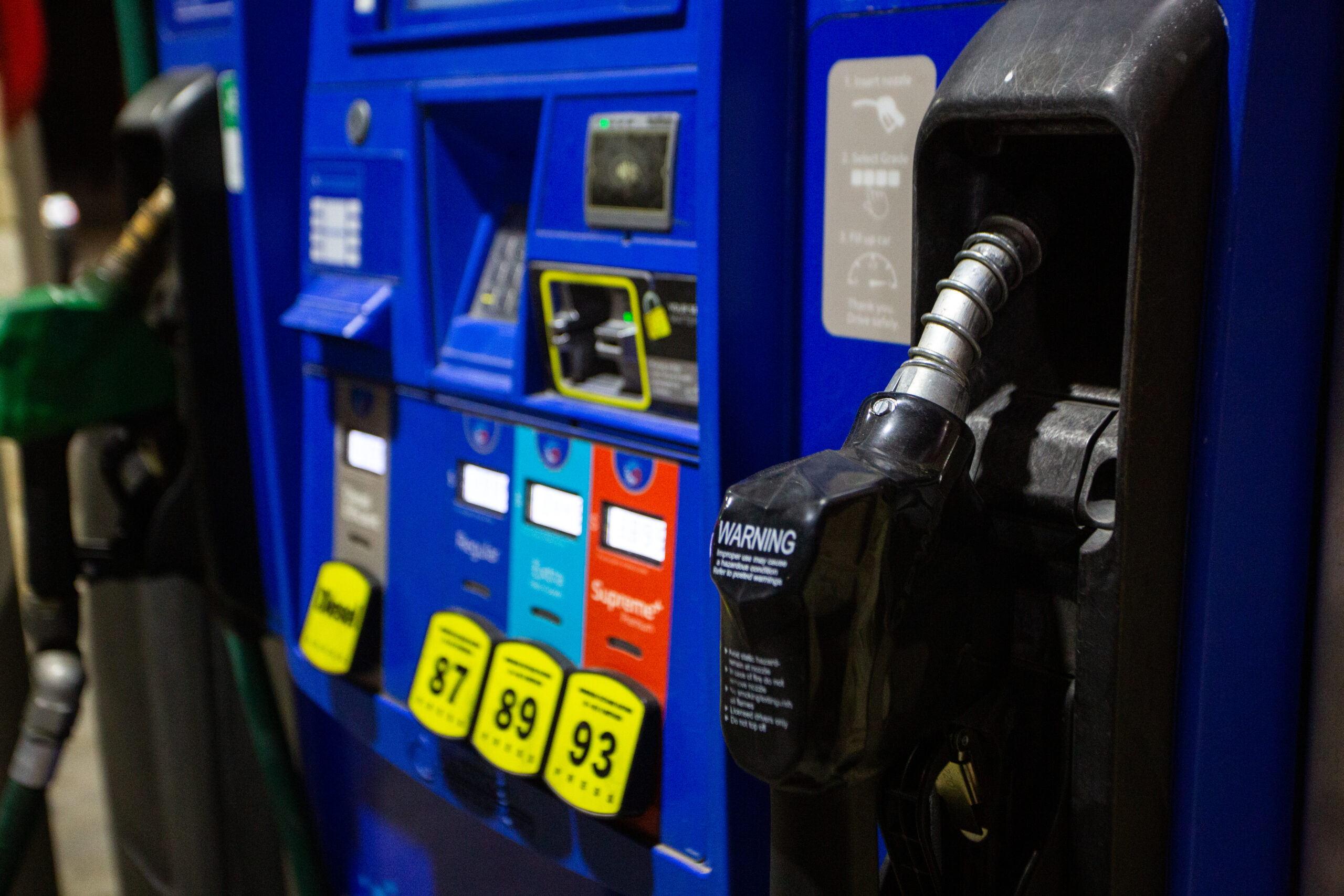
So yes, it’s definitely detrimental for the U.S. oil industry and for Texas specifically. But as you mentioned there, there’s always that kind of seesaw or that silver lining And prices at the pump on the national average here are testing $3 a gallon for Texas there at $2.60 a gallon. And so that’s kind of the upside.
The downside is definitely there’s going to be jobs being lost here.
Yeah, we’re just seeing Forbes talking about “$2.99 gas is here: Here’s why the average price could drop even more.” You see it dropping more before it bounces back.
Yeah, for sure there is a seasonality as you tend to see prices lowest at the end of the year. So we’re definitely going to see further downside here, which is a positive thing.
But if we do see oil prices kicking around $60 for next year, that means that we should see prices at the pump stay around that $3 level as well. So low prices at the pump may be here to stay simply because low oil prices are as well.
Here to stay? Really? I mean, how long?
At least for the short to medium term, so through the first half of next year. There’s that old adage, “the thing that fixes low oil prices is low oil prices.”
Ultimately, as you see this production coming off the market – not just in the U.S., but potentially elsewhere as well – then you see higher prices, but we may not see them materially higher until later next year or even 2027.