Six deaths in six weeks: What to know about ICE detentions in Texas

Last year was the deadliest year in ICE detention in two decades. Nearly a quarter of those deaths occurred in Texas.

By Lomi Kriel & Colleen DeGuzman, graphic by Apurva Mahajan, The Texas TribuneFebruary 20, 2026 12:49 pm,

From The Texas Tribune:

The 911 call reported an apparent suicide.

A 55-year-old Cuban “tried to hang himself,” a federal contractor alerted emergency responders last month from a sprawling El Paso immigrant detention center.

By the next day, records show that Geraldo Lunas Campos had died at the facility, marking the second fatality in weeks at the hastily constructed Fort Bliss Army tent structure known as Camp East Montana. Immigration and Customs Enforcement officials attributed his death to “medical distress.”

But the medical examiner ruled his death a homicide — he was suffocated. The autopsy found that Lunas Campos became “unresponsive while being physically restrained by law enforcement.”

His death, which has so far prompted no criminal investigation or charges, has renewed scrutiny not only on that camp, but on conditions at the nearly two dozen ICE detention sites in Texas.

In the span of just six weeks between December and January, six people died while detained by ICE in Texas — three of them at Camp East Montana. The deadly period began with a 48-year-old Guatemalan, Francisco Gaspar-Andres, who ICE said died on Dec. 3 of liver and kidney failure after being hospitalized for more than two weeks following detention.

Detention facilities are seeing more overcrowding and understaffing as the Trump administration ramps up enforcement in the interior of the country, experts said. Unlawful border crossings have plummeted due to the administration’s restrictions. Federal data shows that most current ICE detainees are not accused of crimes beyond civil immigration offenses.

The expansion of ICE detention is “coupled with a dissolution of oversight, a reduction in detention standards, and draconian restrictions on releases,” said Claire Trickler-McNulty, a former senior ICE official during the last three administrations. “That appears destined to lead to more deaths, medical issues and trauma for detainees.”

Thirty-two people died in ICE custody nationwide last year, surpassing the previous high of 20 in 2005, according to federal data. Nearly a quarter of last year’s deaths occurred in Texas.

Scott Shuchart, a former head of policy at ICE under Biden and senior adviser under Trump’s first term to DHS’ Office of Civil Rights and Civil Liberties, said the agency “struggled to ensure adequate medical care” when its detainee population was 35,000. Now it is more than doubling that number.

The government last October also temporarily stopped paying many medical providers due to bureaucratic changes under the administration. As a result, ICE for months has been unable to reimburse health care officials, including for prescription medication, dialysis and chemotherapy, according to redacted ICE documents first reported by Popular Information.

Spokespeople for the Department of Homeland Security and ICE did not respond to detailed questions.

Texas is the last stop for most immigrants caught in the administration’s dragnet, with more than 18,700 people detained in the state’s ICE facilities as of February the nation’s highest share, according to federal data analyzed by the Transactional Records Access Clearinghouse, a nonprofit that analyzes government data obtained via public records requests. Over the past six months, an average of four deportation flights have departed the state daily, the most in the country, according to ICE Flight Monitor, a nonprofit that tracks them. And a significant percentage of growing unlawful detention cases filed in federal courts stem from Texas.

The state is the “blueprint and the epicenter of the country’s immigration enforcement system, acting as the deportation funnel,” said Kristin Etter, director of policy and legal services at the statewide advocacy group Texas Immigration Law Council, “Texas is where immigration enforcement begins, where it ends, and sometimes, where it does both.”


What’s happening at Camp East Montana?

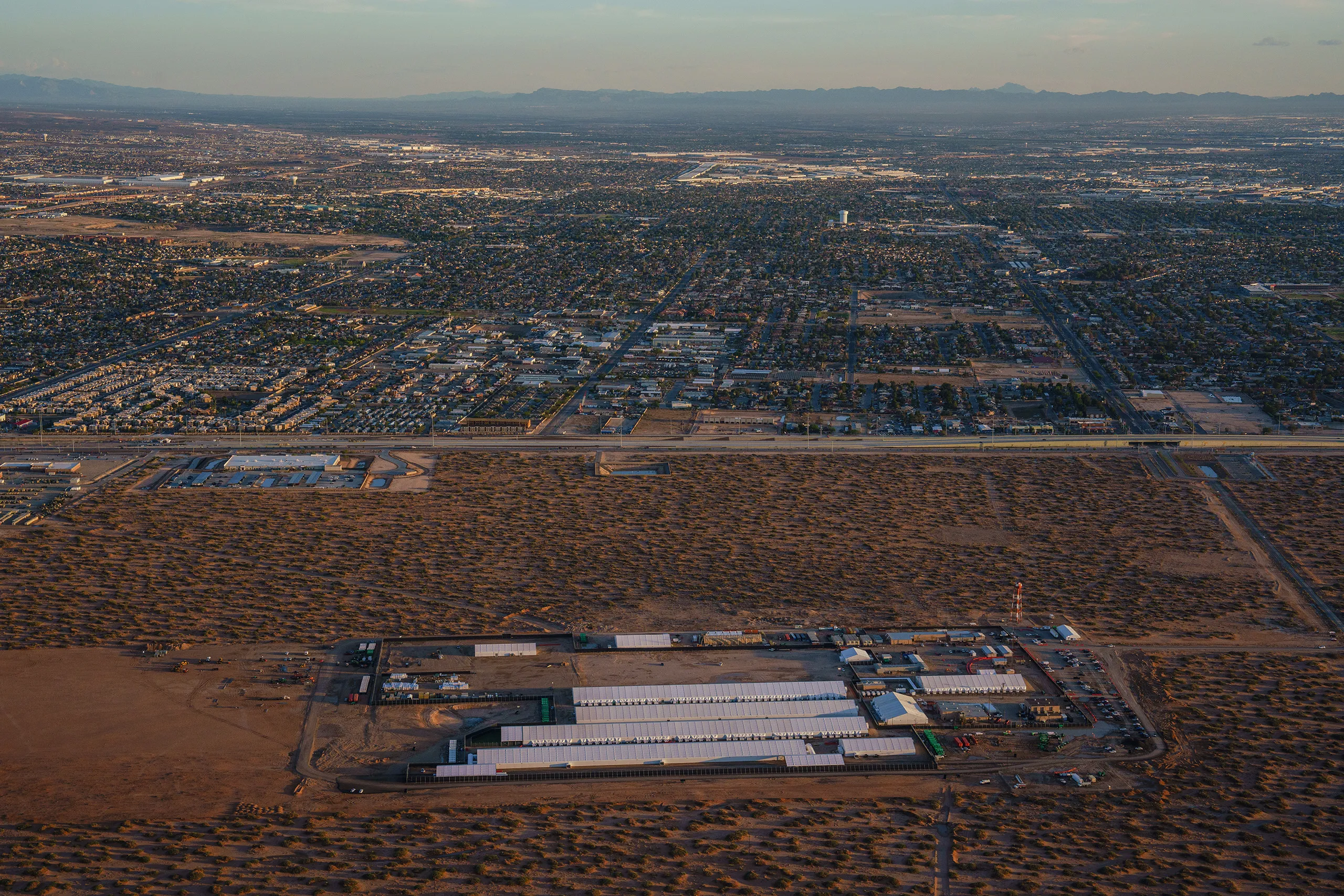
The massive East Montana tent camp is currently the country’s largest ICE detention center, holding more than 3,000 men and women on a military base that’s seen as a model for what the administration plans to build.

Constructed in a record two months last summer after the government granted a $1.2 billion contract to Acquisition Logistics, a small Virginia corporation with no listed experience running detention facilities, the camp has been plagued with problems since it opened. Claims of medical neglect, spoiled, insufficient food and unsanitary conditions are rife and advocates call it an “unfolding humanitarian crisis.”

More than 45 people detained there alleged abuse and serious injuries to attorneys, according to a letter advocacy groups sent to DHS and ICE supervisors in December. Those allegations included a teen hospitalized after he accused staff of slamming him to the ground and beating him. The detention staffers blocked the security cameras, he said, and “grabbed my testicles and firmly crushed them.”

ICE’s own inspectors found at least 60 violations at the facility shortly after it opened, the Washington Post first reported in September, including that the contractors had employed little more than a half of the security personnel it had promised. DHS spokesperson Tricia McLaughlin, who did not respond to repeated requests from The Texas Tribune, said in a statement that “any claim that there are ‘inhumane’ conditions at ICE detention centers are categorically false.” She said detainees are provided “proper meals,” medical treatment and clean clothing.

Two officials who viewed that ICE investigative report or were briefed by the agency additionally told the Tribune that the facility had no policy detailing when or how contractors can use force. It lacked a compliance manager designated to oversee sexual assault allegations, required under federal regulations. Contractors were also provided only 40 hours of training, a fraction of at least 42 days typically required of regular ICE agents, according to those officials who were not authorized to speak publicly.

Acquisition Logistics and two of its contractors in charge of detention and medical care did not respond to questions so it is unclear if those conditions have since improved and if new policies were instituted.

U.S. Rep. Veronica Escobar, an El Paso Democrat who has visited the site at least a half dozen times, said the conditions at East Montana are rapidly “deteriorating.”

After tuberculosis and COVID-19 cases, both highly infectious contagions, were confirmed there, Escobar said that employees told her not to enter a certain area because detainees had yet to be tested. Few people wore masks.

“All it takes is one major public health issue where there’s not been enough oversight, where human life and safety and welfare is not prioritized, for there to be a massive health impact on the community,” Escobar said in an interview. “Americans should care when these massive tent cities or massive warehouses are very quickly put up and filled with thousands of human beings and are run by corporations that are prioritizing profits, not people.”

What happened to Lunas Campos?

Despite the crescendo of complaints at East Montana, none have resonated publicly as much as the death of Lunas Campos.

Six El Paso detainees described in federal court statements that the father of three, who lived in Rochester, N.Y., for nearly 20 years before ICE detained him in July, begged for days to receive his asthma medication. Detention staff refused and threatened him with solitary confinement, inmates said.

After Lunas Campos was dragged in shackles to an isolation unit, detainees recalled “what sounded like the slamming of a person’s body against the floor or a wall.” They said they heard him gasp that he could no longer breathe. Then, “silence.”

Chris Benoit, a lawyer for his children suing the government, said they “want to establish the truth about what the guards did to their father and demand accountability for his death.”