During the Cold War, a dozen missile silos around Abilene were loaded with enough nuclear explosives to end the world.
These days, they’re a fun place to scuba dive.
As the silos fell into new hands, they took a sharp divergence from their role in nuclear deterrence; some of them became museums to educate others about a tense moment in time, others became homes for a few people looking to own a piece of history.
Samantha Bryant wrote about the silos for Texas Co-Op Power Magazine. She spoke to Texas Standard about her article, and the trip through history she took to write it. Listen to the interview above or read the transcript below.
This transcript has been edited lightly for clarity:
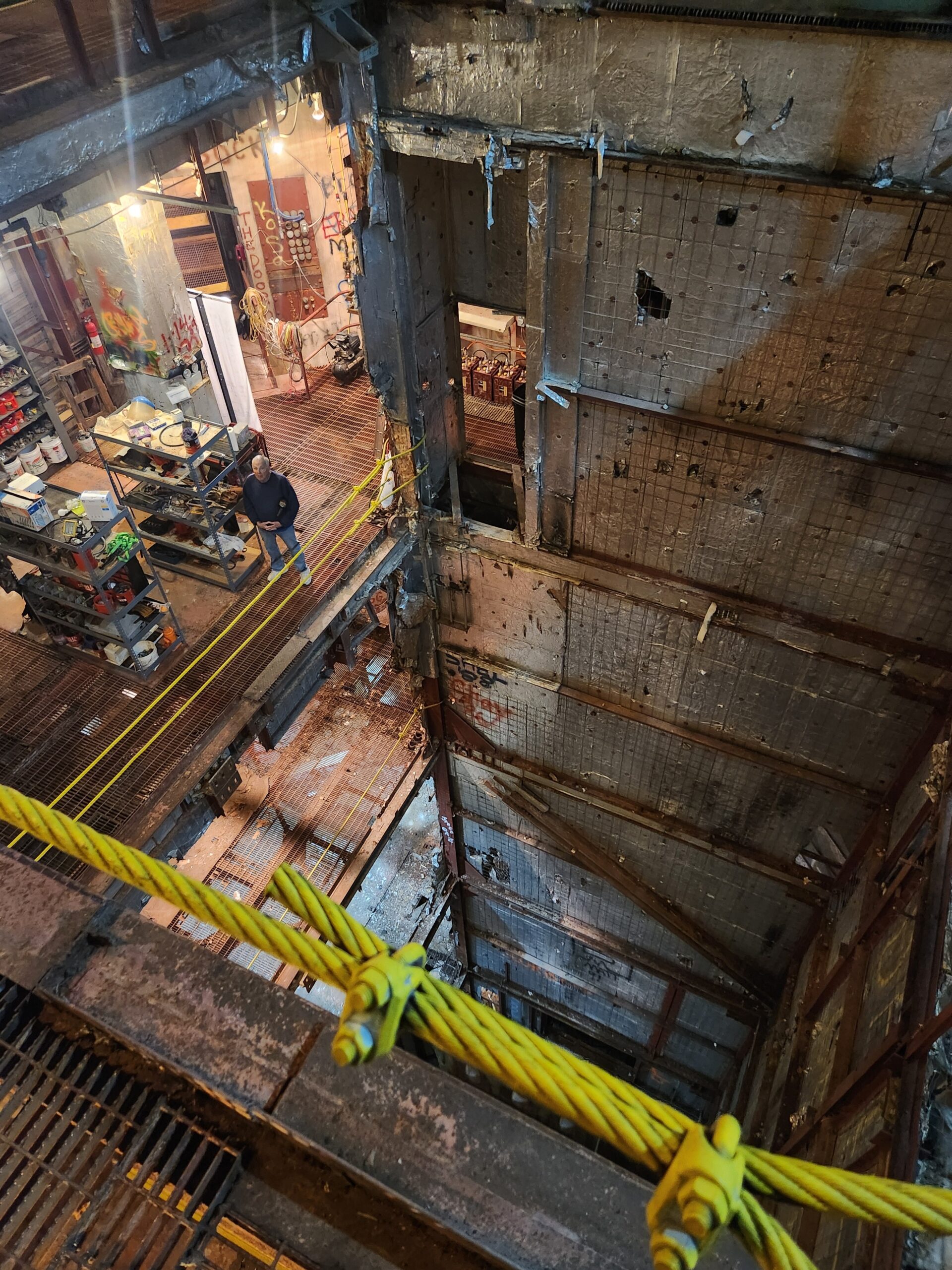
Looking into one of the missile silos. Courtesy of Samantha Bryant / Texas Co-op Power Magazine
Texas Standard: How did you come across this story?
Samantha Bryant: Well, Bruce Townsley, one of the missile silo owners, emailed us to tell us about how he was creating a museum and a nonprofit organization, and he thought we might be interested in writing about it.
It would seem there’s not much you could do with an old nuclear missile silo – no windows, huge metal doors. You would think without constant maintenance they’d be subject to flooding. Who’d buy an old missile silo?
Well, Bruce bought his because he loved renovations. He liked the creative challenge of it. So that was his initial motivation.
Larry Sanders, down the road, bought his because he was really interested in preserving the history of it. So different motivations, but they both got really involved with the history of it as they continued to work on it.
How do you renovate an old missile silo? What do you do?
Well, they talked a lot about how they really had to clean up the area. There was trash, there was debris; it took a lot of muscle power just to initially clean everything out.
And then, just installing things like plumbing and all the infrastructure, which Bruce did in his, took a lot of work.
Does anyone live in one of these old silos? Are people actually using them as kind of like getaways, or something?
Bruce lives in his. He’s lived in his for more than 25 years now. He says he loves the quiet. He’s really protected from the environment there.
» GET MORE NEWS FROM AROUND THE STATE: Sign up for Texas Standard’s weekly newsletters
How much space do you have under there? What else can you do with a decommissioned silo?
I’m not sure of the square footage or anything. He’s living in the launch control center, which is next to the silo. It’s two stories. It’s where the crew lived and operated.
The silo is down a 40 foot tunnel, and that one is what he wants to restore and make into a museum, so people can look at it and appreciate that time period.
In your story, you talk with some of the people who used to actually staff these silos during the Cold War. What do they make of these renovations?
I talked to Roger Jensen, he was a missileer during that time period in his early 20s. He still remembers everything. Like, he can talk to you like he just got off his shift. He remembered the serial number of one of the generators that he worked on.
So, yeah, I think for him it’s just reliving that, and getting to tell his story to other people; younger generations who didn’t live through the Cold War.
For you as a reporter, what was it like getting to meet some of these people who own these places? Do they seem to share an interest in history, or do they sort of come from a variety of different perspectives on this?
They come from a variety of different perspectives, but they’re all concerned about preserving history and making sure that it doesn’t get lost to time.
They all seem very creative and specialized in their knowledge. Some know more about the mechanics of the navigation system and how the silo worked, others know more about the history. They’ve talked to missileers, and are trying to preserve different artifacts from that time.
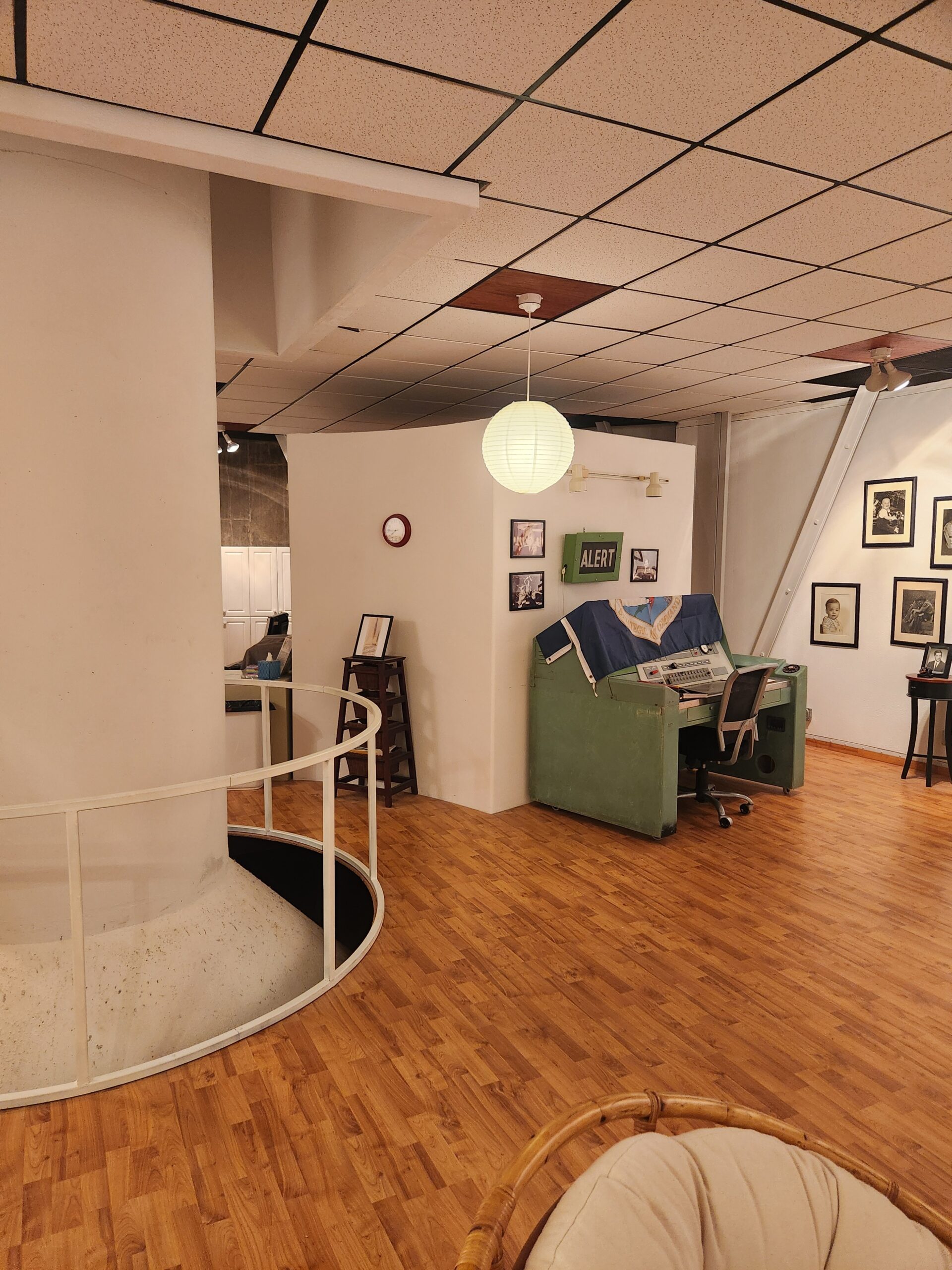
The repurposed interior of a decommissioned missile silo. Courtesy of Samantha Bryant / Texas Co-op Power Magazine
Do any of them open the silos up to the public so that they can actually see how these facilities were once built out?
Yes, the ones in Oplin and Lawn are open to the public. You have to contact them beforehand, but they’ll tell you more about the history.
There was one I didn’t get to go to, Mark Hannifin’s in Shep – it’s a scuba diving facility. And so he opens it up.
Wait a minute, a scuba diving facility? How’s that?
Yeah. His doesn’t have any of the metal structure left in it anymore, the government took it out. It’s a 185-foot cylinder. He cleaned out all the debris that was left behind and lets teams scuba dive in it.
That is so cool. That’s really pretty creative. It seems like a lot of these folks do have something else in common, and that is a sort of creative streak.
Yeah, I would say so. Like, they’re not conventional, for sure. They can think outside the box.
Do you think that by letting other people see these facilities, they’re sharing a bit of history, and maybe a kind of a lesson or two along the way?
Yeah, I think so. And even though from someone of my generation – I think of it as history – they were pretty clear in saying this history still affects our present.
The present political situation stems from this time period. So it’s a history lesson, but it’s also a present-day politics lesson.
In fact, we should probably note that even though some of these silos have been decommissioned, and are now being repurposed, there are still some active silos in parts of the country. They’ve been maintained over all these years, and in the event of something like thermonuclear war, they could still be activated with a push of a button.
Yeah, it’s not something you think about day to day, or I don’t at least. But doing this article made me more aware of that. And just like – it’s still a possibility.
Why did this interest you as a reporter? When we think of Texas Co-op Power Magazine, the first thing that comes to mind isn’t necessarily a nuclear missile silo.
Yeah, well, we do all kinds of Texas-related pieces and travel history, so it did fit within our framework, and Taylor Electric Cooperative is the provider for that area.
As far as personally, I think I just didn’t really know much about this time period. And the more I researched, the more I listened to their stories, it just brought it to life. It was just so cool going inside of these silos and seeing how massive they were.
Bruce talks about how the first time he went in, he felt like the complex was alive in some way – not like a creepy way, but just like something that had been sleeping for a long time was coming to life and coming to light. I think I liked that about it, too, just how unique they are.