From Public Health Watch:
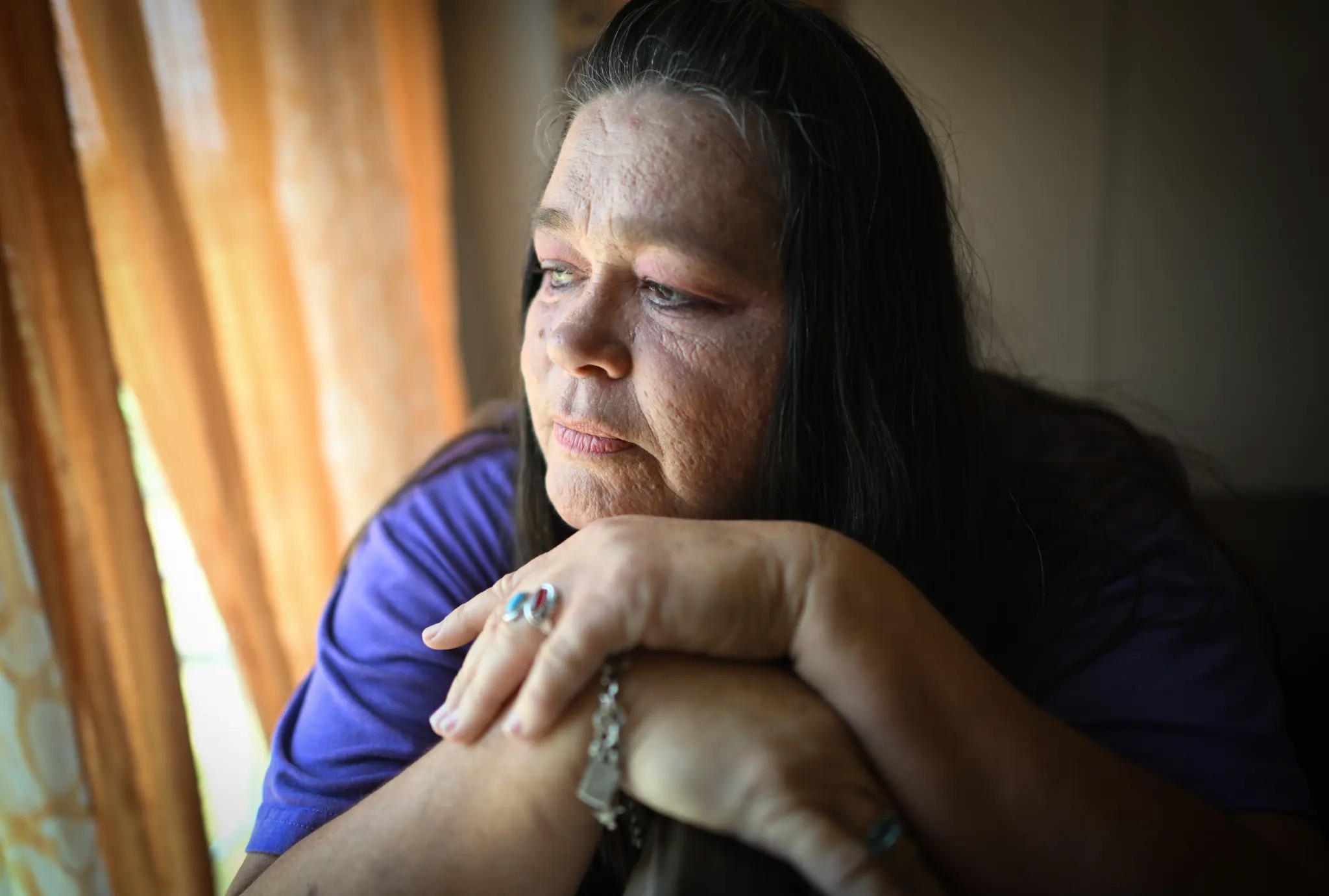
The first sign that Lynda Smith had epilepsy happened almost 20 years ago while she was driving down Interstate 30, near Hope, Arkansas, on her way to work at an HVAC installer.
First her right leg started shaking uncontrollably. Then her right arm did the same. She used her left arm and leg to veer off the highway and push on the brakes. She arrived at work dazed, bawling and still seizing. Her co-workers called an ambulance.
“That was the beginning,” she says.
At the time, Smith, now 50, had no health insurance and turned to a local community health center for help. Doctors tried treating her, but it wasn’t working. She was having up to six seizures a day.
One of the harshest adjustments was losing the ability to drive. Even harsher, she says, was that some providers treated her like she was faking it. Unable to work, she applied for Arkansas Medicaid and qualified as a low-income parent with minors at home.
With coverage, Smith could afford a specialist and more complex care. She got much better, though the medications often made her feel like a “zombie” and she wasn’t seizure-free.
Then, in 2017, she moved to Texas. She was born there, and wanted to be near family. She thought she could get Medicaid in the state, but even with little income, she can’t qualify and has been uninsured for eight years.
“I can go to any of the four states that border Texas and get Medicaid,” said Smith, who lives in Floresville, southeast of San Antonio. “In Texas, no ma’am.”
Lack of health insurance is a well-known barrier to medical care and is especially risky for people living with chronic conditions such as epilepsy. In Texas, the chances of going uninsured are greater because the state — unlike 40 other states — has not adopted Medicaid expansion to widen coverage of low-income adults.
That means some low-income Texans with epilepsy may not be eligible for Medicaid until their conditions constitute a severe disability, meaning they can no longer work or are expected to die. If Texas had expansion, adults with incomes up to 138% of the federal poverty level — or less than $22,000 a year for a household of one — would qualify for Medicaid.
Today, a single parent in Texas can’t qualify if she or he makes more than $1,300 a year.
Republican leaders in Texas have long opposed Medicaid expansion, although studies showing it leads to wider access to care, better health outcomes for many and more financial stability for providers, including hospitals. Republicans are concerned about the significant rise in Medicaid enrollment and costs and want to lessen dependence on the program. In 2022, Gov. Greg Abbott told Public Health Watch that expansion is “a tax increase waiting to happen … The best way to get health care insurance is through an employer.”
In a 2024 poll, 71% of Texans said they support Medicaid expansion.
“There could be such a difference in our patients’ lives if they had insurance,” said Rebecca Moreau, chief operating officer at Epilepsy Foundation Texas, which operates free epilepsy clinics around the state for uninsured adults living at or below 200% of the poverty level.
For years, such safety-net clinics, which are funded partly with state dollars, have been a lifeline for poor Texans with the brain disorder, allowing them to access basic neurology services and medications. But the clinics can’t afford to cover all treatment possibilities, such as surgery, even if it’s a patient’s only chance to live seizure-free.
“When you’re uninsured,” Moreau said, “treatment options decrease exponentially.”
Steep risks and barriers
About 3 million U.S. adults, including almost 300,000 Texans, have epilepsy, a chronic neurological disorder characterized by unpredictable seizures. Even with health coverage, research shows people living with it face barriers to continuous care, from high medical costs and unemployment rates to lack of transportation. Their risk of an early death is two to three times greater than the general public’s.

Rebecca Moreau, chief operating officer at Epilepsy Foundation Texas, stands in front of a quilt made by children who attend the foundation’s summer camp, which serves young people with epilepsy. Kim Krisberg
Epilepsy can affect people of any age, and there are many causes, including genetic factors, brain abnormalities and traumatic injury, according to the National Institute of Neurological Disorders and Stroke. About half don’t know the cause of their condition.
Not everyone with epilepsy suffers the same type of seizure, either. Some seizures make a person’s muscles wildly contract; others cause a sudden loss of muscle tone. Sometimes there’s no movement at all, yet an “absence seizure” can cause an abrupt loss of consciousness. From the outside, it looks like the person is daydreaming.
“Someone could have hundreds of those a day,” Moreau said. “A couple seconds each time, hundreds of times.”
Because epilepsy is classified on a spectrum, patients need individualized care and may try many different medications and combinations of therapy before finding a regimen that lets them live as seizure-free as possible. For more than a third of people with epilepsy, the disorder is drug-resistant and seizures continue despite treatment.
Affording the care is difficult, and employment options can be limited. Jobs that involve driving, heights or being near fire, for example, might be too dangerous for a person experiencing seizures.
The Americans with Disabilities Act offers workplace protections for people with epilepsy, but surveys show people with the disorder continue to report stigma and discrimination on the job; some research shows employers are less inclined to hire someone with epilepsy.
The situation means many people hide the condition from their employers, said Kimberly Martin, CEO of Epilepsy Foundation Central & South Texas, which also runs free epilepsy clinics for uninsured Texans — a total of six serving 79 counties.
“Get seizure-free, get a job, have a seizure, lose their job, lose their insurance and they’re back at our clinic,” said Martin. “We see this cycle over and over.”