When Lyubov Shpakova immigrated to Central Texas from Kazakhstan two years ago, she already had an advanced degree.
“I graduated with a bachelor’s and master’s degree with honors in the field of automation and control,” Shpakova said. “I completed a Ph.D. course in power engineering.”
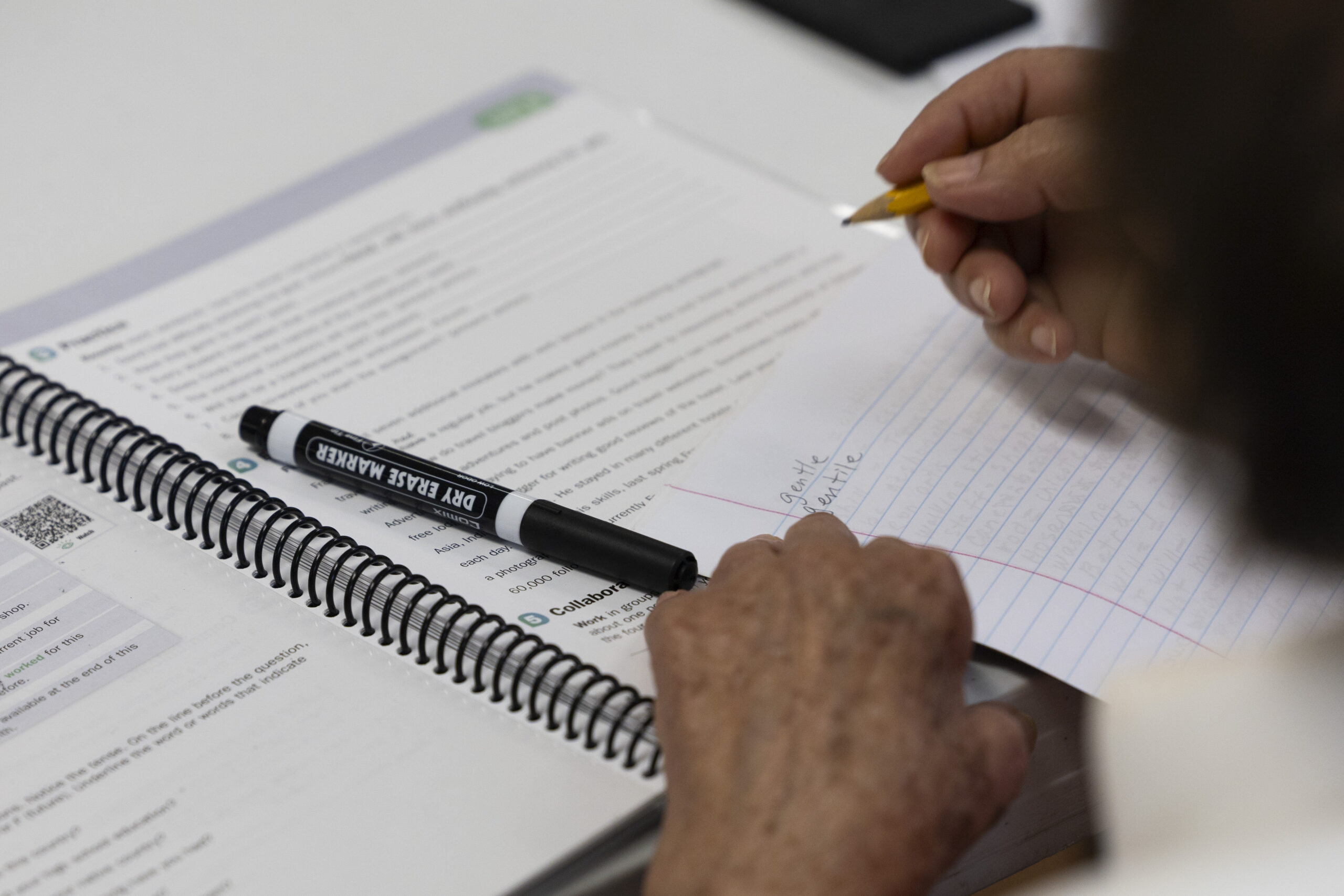
But despite her credentials, she hit roadblocks trying to find work. The first challenge was her English language skills.
“Because I’ve mostly learned academic English for my work … I felt real stress the first time I had to deal with everyday conversations,” she said.
Shpakova is not alone. Research shows about a fifth of college-educated immigrants in the U.S. — roughly 2 million people — are underemployed.
The Texas Workforce Commission estimates that over 103,000 people in Texas were born abroad and have at least a bachelor’s degree but still qualify for adult education services — meaning that despite their level of education, they need help with learning English or job training.
Community Action Inc. of Central Texas offers programs specifically geared toward what it calls Internationally Trained Professionals.
Angi Mudd, the organization’s English language and civics program manager, said immigrants with higher education often don’t anticipate how hard it will be for them to enter the U.S. workforce.
“It is a lot of career counseling,” Mudd said. “A lot of identifying specifically the skills that this student has and trying to make a connection in their community with employers that need someone in that area.”
The top obstacles to employment
Mudd said that immigrants trying to find jobs often run into four main problems, starting with the language barrier. The second is a lack of cultural knowledge around job applications in a U.S. context.
“It can be some very basic workforce culture type things that need to be taught,” she said. “We had a student who went in for an interview and stood up the whole time because they were never asked to sit down.”
The third barrier is a lack of professional connections. And the last obstacle to overcome is translating international credentials.
“We help get their credentials from their country evaluated here to see if it’s an equivalent,” Mudd said. “That way when they go apply they can show that their bachelor’s or their master’s degree is equivalent to a degree here.”
» MORE: How adult education programs are helping Texans
Without these services, immigrants often end up underemployed in a phenomenon sometimes called “brain waste,” according to Tamar Frolichstein-Appel, a senior employment services lead for Upwardly Global, a national group that partners with other organizations to help immigrants secure employment.
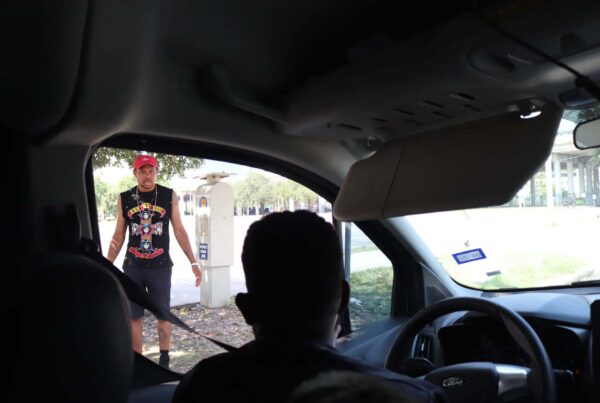
“They’re the folks you meet when you’re riding in an Uber or at Walmart,” she said. “If you get talking, you realize that they have vast skills and experience in a professional field, but they’re struggling to get a job.”
Over the last 20 years, Upwardly Global has worked with over 7,800 people in Texas. They partner with Community Action Inc., among other organizations, to help immigrants find jobs in healthcare, engineering, business and more.
A way to fill high-demand jobs
Jeanne Batalova, a senior policy analyst at the Migration Policy Institute, says these services have an impact not only on the individuals, but on the entire economy.
“Back in 2016, we estimated that every year, because of the underemployment of highly skilled immigrants, the United States loses about $40 billion in wages,” she said. “That translates into the loss of $10 billion in taxes — federal, state and local taxes.”
But tax dollars are not the only reason to get immigrants into the workforce. Mudd said people with relevant experience can help fill high-demand jobs.
“We have students that have taught in their country for 10-plus years. They come here and it’s so difficult to get into the education system,” she said. “But my daughter in high school sat in a computer lab for six weeks without a Spanish teacher.”
The same is true for medical professionals.
“We won’t have enough doctors very, very soon,” Frolichstein-Appel said. “So our work is about helping people to bring their skills, their experience, their training to the U.S. economy to benefit everyone.”
» GET MORE NEWS FROM AROUND THE STATE: Sign up for Texas Standard’s weekly newsletters
Both teachers and medical professionals require country-specific — and sometimes state-specific — credentials, and international degrees don’t always count. But, Mudd said, there are still ways to help get people on the right track.
“A lot of times what we’ll do with those teachers is we will get them into our para-educator class, which is free,” she said. “And that will get them a para-educator certification. It gets them into the school district. It gets them some experience in the United States.”
That is the stage of the process Lyubov Shpakova is at right now. She is working with Community Action Inc. to develop data science skills in the hopes that it will improve her job prospects.
“This program gives people a real opportunity to evaluate their work experience and integrate into the economy as quickly as possible,” she said. “Many of my classmates have already found permanent jobs or even started their own businesses.”