A new state law, Senate Bill 13, prohibits school library materials with profane content or indecent content from campuses.
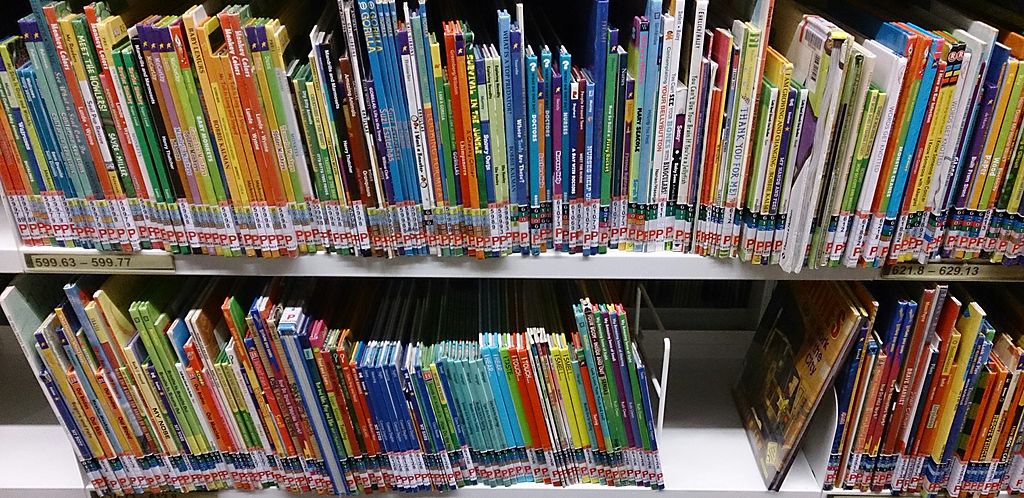
The law went into effect this school year, and it puts the onus on school staff to make sure materials are in compliance. It can be daunting task to make these determinations with hundreds of thousands of books in any given school library. For help, school staff are turning to ChatGPT.
Bayliss Wagner, who covers state politics for the Hearst Austin Bureau, said SB 13 specifically requires school boards to approve all requests for new library materials.
“One district that I focused on, Pearland outside of Houston, has 20,000 students. And so their purchase list for the month of November was 1,400 books,” she said. “The school board said it seems like the law wants us to review these books, but there’s no way we can read all of them. So they put the law, the language of SB 13 … into ChatGPT. And they asked it to let them know if any of the books on that list might flag a violation.”
But it’s unclear what standards ChatGPT is using to make the determination of which books would violate the law.
“There isn’t a lot of transparency,” Wagner said. “I did a test run, and it’ll sort of tell you, well, this has violence or it has content of a sexual nature. What’s really interesting is that with this lack of transparency, there’s also a risk for errors. We’ve heard about ChatGPT hallucinating.
“In one case in Pearland, one of the school board members, his name is Daniel Stuckey, said that one of the books, ChatGPT flagged it for ‘male nudity and locker room talk of a sexual nature.’ He looked into the book; he read the book. That wasn’t there.”
» GET MORE NEWS FROM AROUND THE STATE: Sign up for Texas Standard’s weekly newsletters
Wagner said school boards feel they have been given a huge workload to remain in compliance with this new law.
“They’re in meetings saying, ‘this is more than we can read.’ I think the use of AI is going to become more widespread,” she said. “There’s a company, for example, that actually processes books through AI. It looks online for news stories about different schools challenging or banning books. And it tells schools, ‘we’ll run your whole library and give you back a report, and then you can see what might violate these new laws.’”
There have also been examples of school districts closing their libraries temporarily until staff can better assess what books they have on the shelves.
“In New Braunfels, they were concerned about SB 13. They temporarily closed the libraries for I think two weeks to go through all the books,” Wagner said. “And then they told me that they used AI to help them in that review. So did Katy ISD and Leander ISD; they used AI to look for DEI content in books because of another law, SB 12, which bans DEI in schools.”
Despite critics’ concerns about AI giving school boards bad information, there are also people who are excited about this change.
“I’ve talked to administrators, including one in San Antonio, who are thrilled. They say this saves time for teachers and librarians,” Wagner said. “They feel that there are inappropriate books in schools and that it takes this kind of technology to be able to look through them because people simply don’t have time to do all of that.
“Sean Maika at Northeast ISD in San Antonio, he’s starting a pilot program with a software that does this kind of scan, and he’s very enthused about it.”