Texans are in full preparation mode as an arctic front bears down on the state.
While that might mean wrapping pipes and a trip to H-E-B for most, for others it includes enacting plans to protect some of our scaly neighbors.
Down in Corpus Christi, the Texas State Aquarium’s Center for Wildlife Rescue has activated its emergency response protocol to protect vulnerable coastal wildlife – such as sea turtles.
Jesse Gilbert, president and CEO of the Texas State Aquarium, joined Texas Standard to discuss just what that all entails. Listen to the interview above or read the transcript below.
This transcript has been edited lightly for clarity:
Texas Standard: So we had you on the show almost two years ago when the Wildlife Rescue Center was first coming to fruition. What sort of impact has the center made since it opened? I guess, especially in weather events like we’re anticipating to have this weekend.
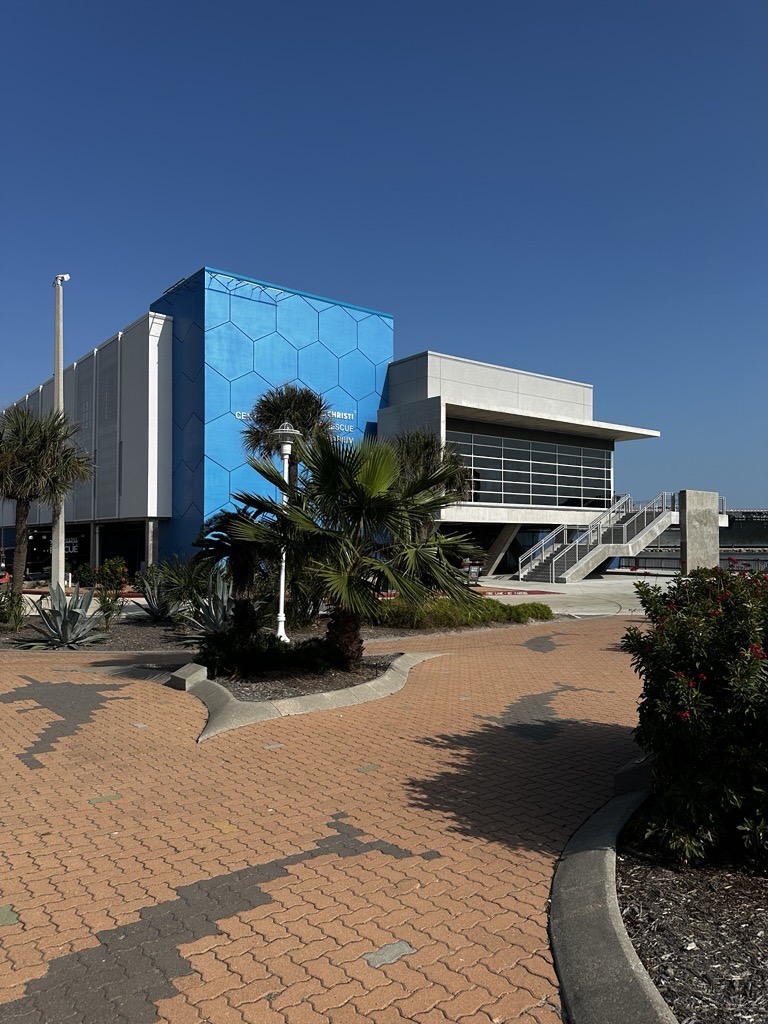
The Texas State Aquarium’s Center for Wildlife Rescue. Courtesy of the Texas State Aquarium
Jesse Gilbert: It has, you know, we’ve had a rescue program at the aquarium since really the mid-90s, but when the rescue center opened in 2023, it was opening as one of the largest programs in the country, the largest capacity in the country. And since we opened about two and a half years ago, we put that to the test with multiple sea turtle events.
The program’s grown substantially just since we opened the center. There’s a number of research initiatives on an event like what we’re going to experience over the weekend, what can we do to lessen the impact to wildlife – not just sea turtles, but other species.
And so working closely with our colleagues at Texas A&M, have really started to kind of really become the tip of the spear from a wildlife disaster standpoint, certainly in Texas and, really, the country. And that really all was because of the opening of the rescue center a few years ago.
Well, what does preparing look like for you guys? I mean, it’s not like you could put salt on the roads or something. I mean, there’s nothing you can do to make the water warmer for sea turtles.
That’s correct. So there’s a number of things that go into action.
The first is right after we opened the rescue center, we created the Wildlife Response Operations Center, which is the country’s only emergency operations center for wildlife disasters. And this being a wildlife disaster that we anticipate seeing this week and into early next week, we activated the Wildlife Response Operations Center that is a cooperative of the rescue program, but it’s also all of the state and federal resource agencies that handle wildlife in a disaster.
And so we will have a briefing, a large briefing meeting in the next day or two, just to make sure that everybody’s on the same page. The federal government has pre-positioned some personnel into the Coastal Bend to make that there’s enough manpower to pull off what could be a decent-sized event where it could be several hundred turtles.
Starting [Friday], we’ll start to really make sure that the water in the holding and rescue systems are warm enough to receive the animals. The rescue teams are doing walkthroughs of their intake procedures, how we catalog each animal that comes through. They are endangered species, so we have to keep very detailed records of what’s happening.
Once the front hits, we actually have a little bit of downtime because it takes… In this case, we anticipate about 24 hours for the seawater in the bay systems to drop temperature low enough to actually cause the stunning of the sea turtles.
So we don’t anticipate seeing actual sea turtles until sometime. I’d say Monday afternoon is what we’re narrowing in on right now.
» GET MORE NEWS FROM AROUND THE STATE: Sign up for Texas Standard’s weekly newsletters
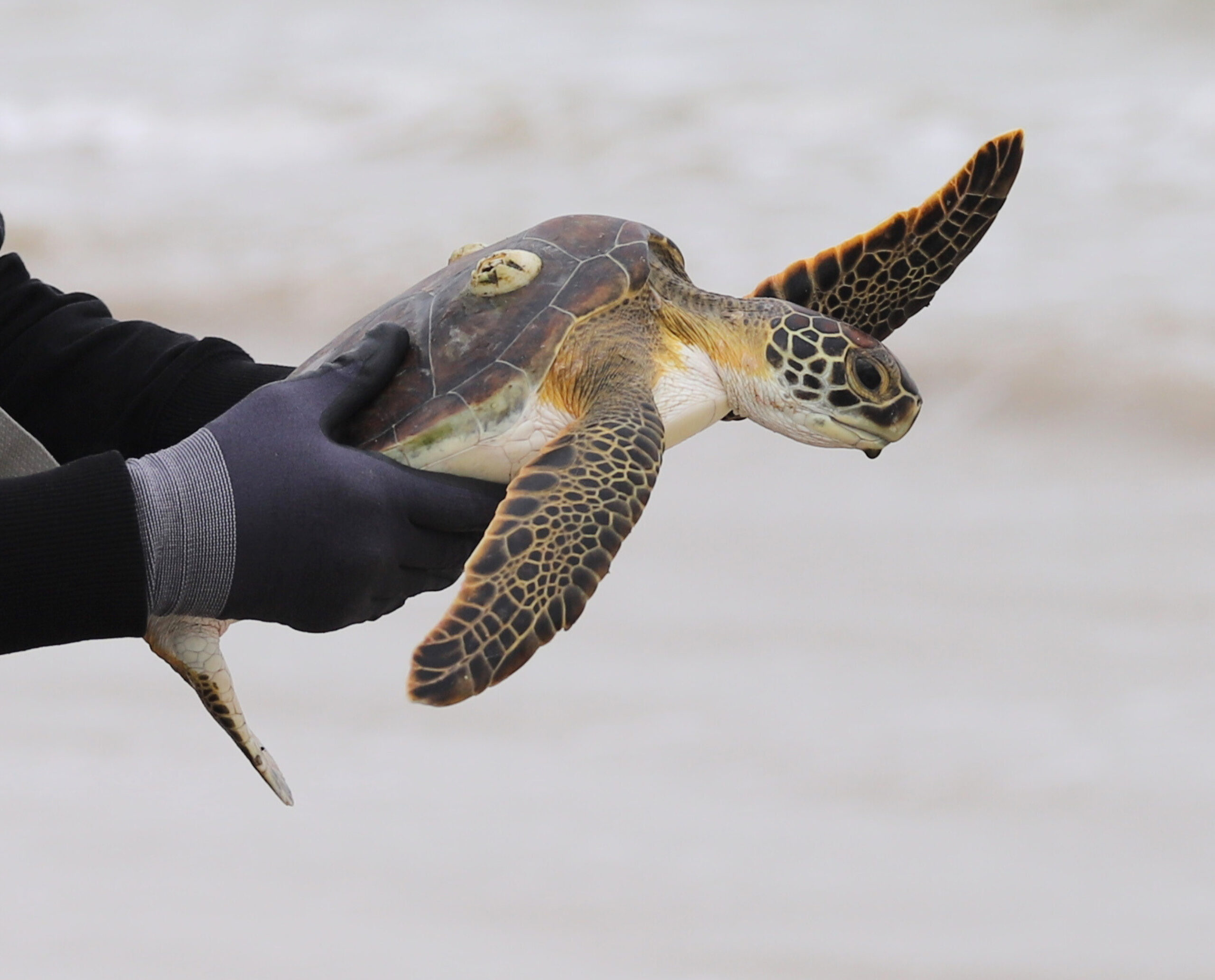
What does it look like when you actually find a cold-stunned turtle?
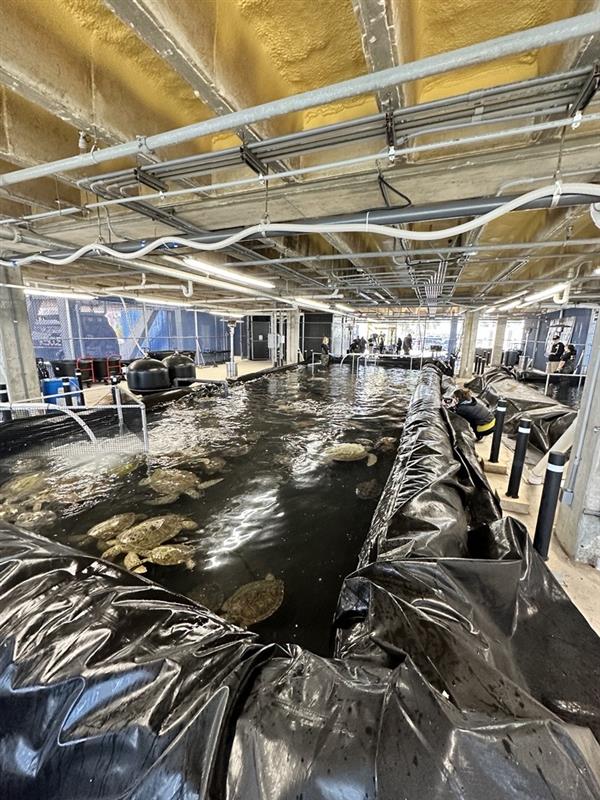
Courtesy of the Texas State Aquarium
They’re just unconscious. The best way to describe it, it’s almost like a hyperthermic situation.
They’re unconscious. They’re susceptible to predation by coyotes. They could get hit by boats. There’s a lot of different things that can happen.
And so the hardest thing for us really is when they get here and if they’re really, really cold, because they are cold-blooded animals, their heart activity is very, very slowed. And so sometimes it’s even difficult to see if they’ve made it through.
So we have different procedures, different warming center stages to make sure that the animals get the appropriate time to warm up.
If they are still alive, if they come to and that cardiac rhythm increases for us, we swim test them with lifeguards to make sure they can breathe and they’re not too unconscious. And then we just keep them at a stable temperature until we can get them back out into the gulf.
The cold-stunned sea turtles are really the big focus because that’s what you see a lot of, but what other animals might you encounter in this?
One of the challenges, and we’re going to be right on the fringe of this in the Coastal Bend, will be what the impact is to coastal fisheries. So, if the fish are cold-blooded animals, too, if the water dips down too low, they might have some real challenges.
We’re right on the cusp of whether or not we’ll hit that in the Coastal Bend. Typically, the terrestrial – the land-based animals – do a little bit better in the cold weather. I’m really hopeful and optimistic that the freeze line looks like it’s going to stall really just north of the Coastal Bend with the precipitation.
So we’re not anticipating a lot of challenges south of the Coastal Bend into the national park and, I would say, lower Texas coast, but we do anticipate some significant impact north of Port Aransas into the Matagorda Bay area, stuff like that.
And if someone finds an animal, reaching out to you is the best option?
There’s a toll free number. It’s 1-866-TURTLE-5. And when somebody finds a sea turtle, they can call that number. The system will kind of prompt them based on where they are geographically in Texas.
So that’s a Texas-wide number. And depending on where there at, that’ll ring into a dispatch area and we’ll get to the right people to go to the place.
Give me that number one more time.
1-866-TURTLE-5